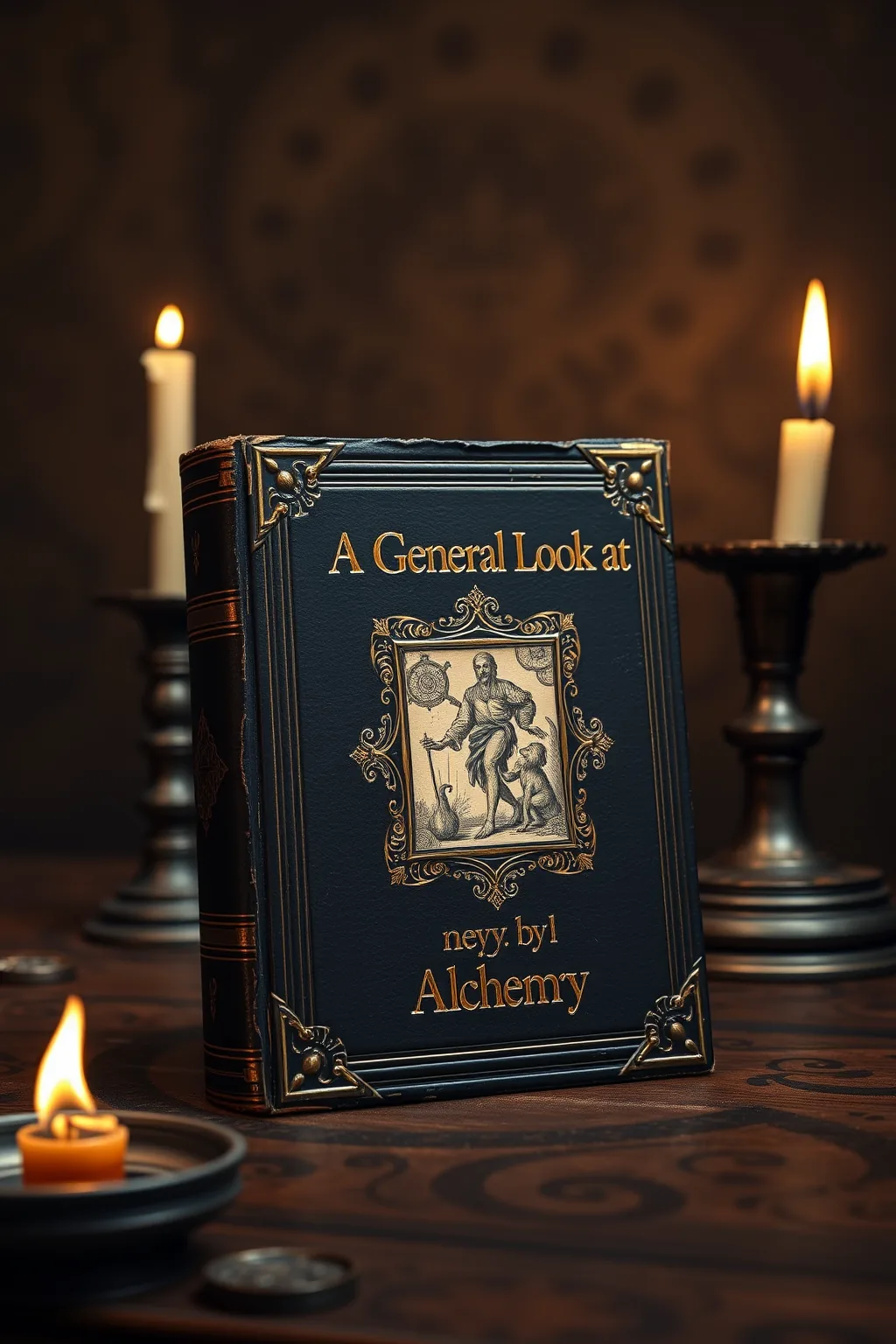
A General Look at Alchemy
 78
78

A General Look at Alchemy



Isolde Whitaker, Sacred Texts Editor: 'A General Look at Alchemy' offers a refreshingly accessible yet deeply insightful primer into the esoteric world of alchemical pursuit. Eschewing overly technical jargon, it masterfully guides the reader through the historical currents and conceptual bedrock of this ancient art. The exploration of key symbols like the seed and the Philosopher's Stone is particularly enlightening, revealing their profound spiritual significance beyond mere material transmutation. This work is an invaluable starting point for novices curious about Hermetic philosophy and alchemy, providing a solid foundation for further study. It successfully demystifies the subject, making its profound wisdom approachable for the modern seeker.
📝 Description
78
'A General Look at Alchemy' examines the historical development of alchemical thought, from ancient Egypt to later traditions.
This text examines the historical development of alchemy. It traces the art of transformation from its earliest known roots, mentioning figures like Hermes Trismegistus and connections to Biblical accounts. The book also touches upon later groups such as the Rosicrucians and their place within the alchemical tradition. It discusses key concepts central to the Great Work. These include the seven noble metals, the symbolic meaning of the seed, and the idea of the First Matter. The pursuit of the Philosopher's Stone and the recurring imagery of dragons are also analyzed.
The work aims to illuminate the philosophical and spiritual dimensions of alchemy. It suggests that the tradition's goals extend beyond the transmutation of base metals to encompass a form of spiritual perfection. The book invites readers to consider the connections between the material world and spiritual understanding. It is presented as a guide for those interested in understanding the underlying principles of this ancient practice.
Alchemy, as depicted in this book, is situated within a broader Hermetic tradition. This tradition emphasizes correspondences between the macrocosm and the microcosm, seeking a unified understanding of reality. The text's focus on transformation, both material and spiritual, aligns with Hermetic principles of ascent and perfection. Its historical scope, linking ancient Egyptian thought to later European esoteric movements, reflects the long lineage attributed to Hermetic wisdom. The aspiration for the Philosopher's Stone is often understood within this context as a symbol for achieving spiritual enlightenment or union with the divine.
💡 Why Read This Book?
Uncover the ancient secrets of transformation and spiritual perfection. This book offers a clear, concise introduction to alchemy's rich history and core concepts, from Hermes Trismegistus to the Philosopher's Stone. Ideal for seekers of hidden knowledge, students of Hermeticism, and anyone curious about the profound philosophical quest for inner and outer transmutation. Discover the symbolic language that bridges the material and the divine.
⭐ Reader Reviews
Honest opinions from readers who have explored this book.
❓ Frequently Asked Questions
What is the historical origin of alchemy as presented in this book?
This text traces alchemy's origins back to the mythical Egyptian sage Hermes Trismegistus, exploring its lineage through Biblical figures, the Rosicrucians, and its evolution into modern practices, offering a broad historical perspective.
What are some key alchemical concepts discussed?
The book delves into fundamental alchemical concepts such as the seven noble metals, the symbolic significance of the seed, the elusive First Matter, the ultimate goal of the Philosopher's Stone, and the recurring motif of dragons in alchemical symbolism.
Is this book suitable for beginners in alchemy?
Absolutely. 'A General Look at Alchemy' is designed as an introductory text, providing a clear and accessible overview of the subject's history, key figures, and foundational concepts for those new to alchemical studies.
What is the philosophical significance of alchemy according to this book?
The book emphasizes alchemy's pursuit of transformation not just of metals, but of the human soul and spirit, highlighting its role as a path to spiritual perfection and self-knowledge.
Can I find practical alchemical instructions in this book?
While it introduces core concepts and historical practices, this book primarily serves as a general overview and philosophical exploration of alchemy, rather than a practical guide for laboratory work.
🔮 Key Themes & Symbolism
The Hermetic Legacy
This book illuminates the foundational role of Hermes Trismegistus, the legendary 'Father of Alchemy,' in shaping the Western esoteric tradition. It explores how his teachings, often referred to as Hermeticism, provided the philosophical bedrock for alchemical pursuits, emphasizing principles of correspondence, transformation, and the unity of all things. Readers will gain an understanding of how this ancient wisdom influenced alchemical thought for millennia, connecting the earthly realm to the celestial, and laying the groundwork for the Great Work of spiritual and material perfection.
The Great Work: Symbols and Aspirations
Central to the alchemical quest is the concept of the Great Work, the arduous process of transmutation and purification. This text unpacks the symbolic language of alchemy, introducing essential elements like the seven noble metals, each representing distinct stages or qualities, the primordial First Matter, the source from which all transformations arise, and the ultimate goal, the legendary Philosopher's Stone. The ubiquitous presence of dragons is also explored, often signifying primal forces or the challenges inherent in the transformative journey, offering a deep dive into the collection of alchemical symbolism.
Alchemy Through the Ages
Journey through the vast historical range of alchemy, from its mythical origins attributed to figures like Hermes Trismegistus and its echoes in biblical narratives, to its more organized manifestations with the Rosicrucians, and its continuation into modern times. This exploration reveals alchemy not as a static practice, but as a living tradition that adapted and evolved, influencing diverse fields from medicine and metallurgy to philosophy and spirituality. Understanding this historical trajectory provides crucial context for appreciating the enduring relevance and many-sided nature of alchemical pursuits across different eras.
💬 Memorable Quotes
Direct passages from the work, attributed to the author.
“As above, so below; as below, so above.”
— A central to Hermetic philosophy, this principle underscores the interconnectedness of the macrocosm and microcosm, suggesting that the patterns and laws governing the universe are reflected within the individual.
“The seed contains the potential for the entire tree.”
— This metaphor speaks to the alchemical concept of primal potential and the idea that within the smallest, most basic elements lies the essence and blueprint for complex manifestation and growth.
“Transformation is the ultimate art.”
— This expresses the core aspiration of alchemy – not merely the changing of substances, but the profound metamorphosis of the self and the spiritual elevation of existence.
“Seek the gold within.”
— A profound alchemical directive, this implies that the true 'Philosopher's Stone' and the ultimate transformation are found not in external matter, but in the purification and perfection of the inner spiritual essence.
💡 Key Ideas
Editorial paraphrase of the work's core concepts — not direct quotes.
The beginning of wisdom is the desire to learn.
This quote highlights the crucial first step in any alchemical or spiritual endeavor: a genuine thirst for knowledge and understanding, essential for unlocking hidden truths.
🌙 Esoteric Significance
Tradition
This work is intrinsically linked to the Hermetic tradition, a mystical philosophy attributed to Hermes Trismegistus. It draws heavily on Hermetic principles of correspondence, unity, and the cyclical nature of transformation. Beyond Hermeticism, it touches upon Gnostic concepts of hidden knowledge and spiritual liberation, and the alchemical pursuit itself is widely recognized as a potent form of spiritual discipline aimed at purifying the soul and achieving union with the divine.
Symbolism
Alchemy is a language of symbols, and this book introduces many key ones. The seven metals (gold, silver, copper, iron, tin, lead, mercury) represent distinct planetary influences and stages of purification. The 'seed' symbolizes potential and the origin of life or matter. The 'First Matter' is the primordial, undifferentiated substance from which all creation arises. Dragons often represent primal forces, chaos, or the challenges of the Great Work, while the Philosopher's Stone embodies perfection, enlightenment, and the ultimate goal of spiritual and material transformation.
Modern Relevance
The core tenets of alchemy – transformation, purification, and the pursuit of perfection – resonate deeply in contemporary contexts. Its emphasis on the interconnectedness of all things and the potential for inner growth aligns with modern psychological and spiritual healing modalities. The alchemical process can be understood as a metaphor for personal development, overcoming limitations, and achieving a state of wholeness. Furthermore, the alchemical fascination with the hidden potential within seemingly mundane substances continues to inspire innovation and a deeper appreciation for the transformative power inherent in nature and consciousness.
👥 Who Should Read This Book
This book is an ideal starting point for the curious novice, offering a clear and engaging introduction to the complex world of alchemy. Scholars of ancient philosophy, Hermeticism, and esoteric traditions will find its historical overview and conceptual explanations valuable. Seekers of spiritual growth and hidden wisdom will be drawn to its exploration of transformation and the quest for inner perfection. Practitioners of esoteric arts, whether in meditation, ritual, or contemplative practices, may discover new layers of symbolic meaning and philosophical depth to enrich their work.
📜 Historical Context
This text emerges from a tradition deeply rooted in ancient Egypt, Greece, and the Hellenistic world, flourishing particularly from the late classical period through the Renaissance and beyond. Alchemy was not merely a proto-chemistry; it was a complex philosophical, spiritual, and mystical discipline deeply intertwined with Gnosticism, Neoplatonism, and early Christian mysticism. Figures like Zosimos of Panopolis, Jabir ibn Hayyan, and later the Rosicrucians contributed significantly to its development, embedding it within a collection of symbolism and allegorical interpretation. The quest for the Philosopher's Stone was often viewed as a metaphor for spiritual enlightenment and union with the divine. The era was characterized by a holistic worldview where the material and spiritual realms were seen as intimately connected, making alchemical pursuits a path to understanding the very fabric of creation and the divine order.
📔 Journal Prompts
Reflect on a personal 'base metal' in your life that you wish to transform into 'gold.' What steps can you take?
Consider the concept of 'As Above, So Below.' How do you see universal principles reflected in your own daily life?
What does the 'seed' symbolize in your personal journey? What dormant potential do you wish to cultivate?
If the Philosopher's Stone represents ultimate perfection, what does that concept mean to you personally?
Explore the meaning of 'dragons' in your own life. What challenges or primal forces do they represent?
🗂️ Glossary
Hermes Trismegistus
A legendary, syncretic Greco-Egyptian deity, considered the author of Hermetic texts and the 'Father of Alchemy,' embodying wisdom, magic, and divine revelation.
Philosopher's Stone
The legendary alchemical substance said to be capable of transmuting base metals into gold or silver, and often symbolizing spiritual enlightenment or perfection.
First Matter (Prima Materia)
The primordial, undifferentiated substance from which all physical and spiritual reality is believed to originate in alchemical theory; the chaotic potential of creation.
Seven Metals
The seven classical metals (gold, silver, mercury, copper, iron, tin, lead), each associated with a celestial body and representing distinct stages or qualities in the alchemical process of transmutation.
Rosicrucians
Members of a mystical and philosophical secret society that emerged in Europe in the early 17th century, known for their esoteric teachings blending alchemy, Kabbalah, and Christian mysticism.
This book appears in 2 collections
🔮 Readers Also Liked
Browse all →






![Easie Introduction to the Philosophers Magical Gold : To Which Is Added, Zor[o]asters Cave](/img/thumb/easie-introduction-to-the-philosophers-magical-gold-to-which-is-added-zor-o-asters-cave-thor-george.webp)


From the “Alchemy” Collection
View all →








More Free Alchemy & Hermeticism Books
View all →