Deepak Chopra
Deepak Chopra is an author and alternative medicine advocate known for blending Eastern philosophies with Western science, drawing both acclaim and criticism.
Deepak Chopra is an American author and advocate for alternative medicine and the New Age movement. Educated as a physician in India and the United States, he became a prominent figure in the 1990s, promoting a blend of yoga, meditation, nutrition, and Ayurvedic practices. His work often integrates concepts from quantum mechanics with spiritual and wellness theories, suggesting the mind's power to influence health, aging, and even reverse disease. This approach has made him a wealthy and well-known proponent of mind-body medicine, but it has also faced significant criticism from the scientific and medical communities, who often label his ideas as pseudoscience and his use of scientific terminology as misleading.
Chopra's career trajectory included leadership positions in hospitals and a significant involvement with the Transcendental Meditation (TM) movement under Maharishi Mahesh Yogi. After meeting the Maharishi, he shifted his focus towards Ayurvedic medicine, establishing health centers and promoting its principles. He later separated from the TM movement, citing concerns about its atmosphere and a desire for greater independence. He co-founded the Chopra Center for Wellbeing, continuing to offer programs that combine conventional and alternative health approaches. His public profile was significantly boosted by appearances on The Oprah Winfrey Show, leading to widespread recognition and sales of his books.
Early Life and Medical Training
Born in New Delhi, India, Deepak Chopra pursued medical studies, graduating from the All India Institute of Medical Sciences in 1969. He gained early experience working in rural India before emigrating to the United States in 1970. There, he completed his residency in internal medicine and a fellowship in endocrinology. He obtained his medical license in Massachusetts in 1973 and became board-certified in internal medicine, specializing in endocrinology. During his East Coast years, Chopra held teaching positions at Tufts, Boston University, and Harvard medical schools, and served as Chief of Staff at the New England Memorial Hospital before establishing a private practice.
Transition to Alternative Medicine and TM
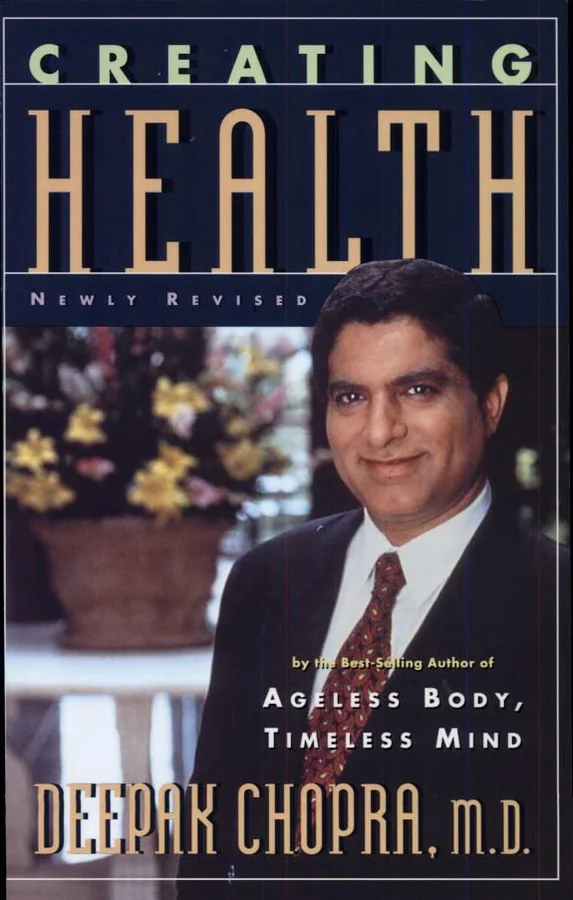
Chopra's path shifted significantly after meeting Ayurvedic physician Brihaspati Dev Triguna and becoming involved with Transcendental Meditation (TM) in the early 1980s. He adopted TM to address personal habits and subsequently met Maharishi Mahesh Yogi in 1985. This led him to leave his hospital position to establish the Maharishi Ayurveda Health Center. He became a spokesperson for the TM movement and was awarded the title 'Dhanvantari of Heaven and Earth' by the Maharishi. His early books, such as 'Quantum Healing' and 'Perfect Health,' introduced his ideas on mind-body medicine and healing through consciousness.
Mind-Body Medicine and Public Profile
In the 1990s, Chopra moved to California, taking on a leadership role at Sharp HealthCare's Center for Mind-Body Medicine. Around this time, he parted ways with the TM movement, with differing accounts suggesting reasons from organizational stress to philosophical differences. He co-founded the Chopra Center for Wellbeing, which offers a blend of conventional medicine and Ayurvedic principles, focusing on nutrition, sleep, and stress management. His public visibility surged following interviews on 'The Oprah Winfrey Show,' significantly boosting book sales and establishing him as a leading, albeit controversial, figure in alternative wellness.
Core Philosophy and Scientific Scrutiny
Chopra's central tenets propose that human consciousness, operating through a 'quantum mechanical body' composed of energy and information rather than matter, can influence physical health. He asserts that aging is malleable and that 'perfect health'—a state free from disease, pain, aging, and death—is attainable. He claims his methods can treat chronic diseases, including cancer, through 'quantum healing.' However, these claims have been widely criticized by medical and scientific professionals as pseudoscientific. Critics argue that Chopra misuses scientific terminology, particularly 'quantum,' to lend an air of legitimacy to unsubstantiated theories, often resulting in nothing more than placebo effects and potentially diverting individuals from evidence-based medical treatments.
Key Ideas
- Quantum healing: The concept that consciousness and mind-body connection, influenced by quantum principles, can heal illness and reverse aging.
- Perfect health: A state of being free from disease, pain, aging, and death, achievable through conscious control.
- Malleable aging: The belief that the aging process can be slowed, stopped, or reversed based on one's mental state.
- Integration of Ayurveda and modern science: An attempt to synthesize ancient Indian healing traditions with contemporary scientific understanding, particularly quantum physics.
Notable Quotes
“"human aging is fluid and changeable; it can speed up, slow down, stop for a time, and even reverse itself"”
“"perfect health", a condition "that is free from disease, that never feels pain", and "that cannot age or die"”