Creating health
 78
78

Creating health
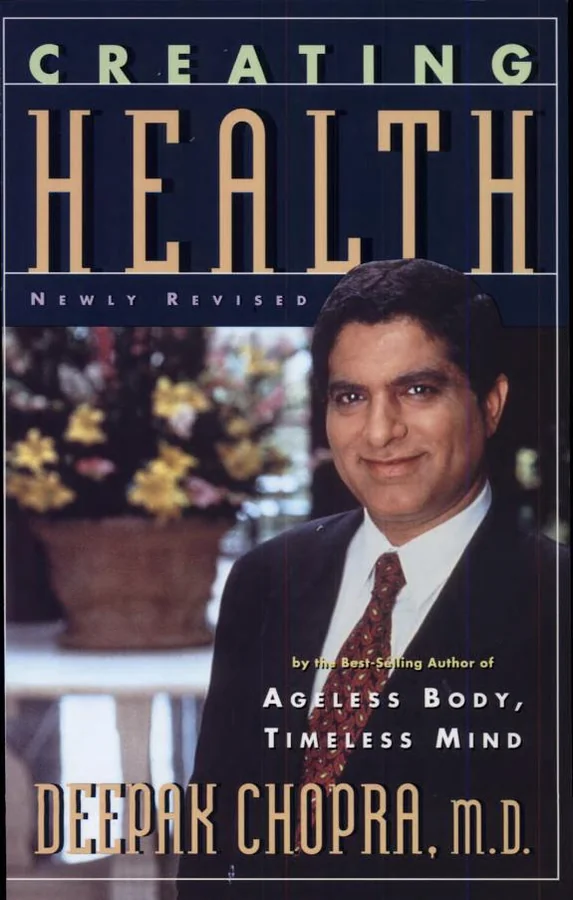
Deepak Chopra's *Creating Health* attempts to bridge the gap between quantum physics, ancient Indian philosophies, and the practice of medicine. The book's strength lies in its ambitious scope, aiming to present a unified theory of well-being. However, the accessibility of its core message can be hindered by dense theoretical explanations. While Chopra’s exploration of the mind’s role in physical health is compelling, the frequent invocation of quantum mechanics, without deep elaboration, can feel more like metaphorical scaffolding than a rigorous scientific underpinning. A notable section that illustrates the book's premise is its discussion on the body's innate healing intelligence, suggesting that conscious awareness can direct this intelligence towards restoration. This concept, though not entirely novel, is presented with Chopra’s characteristic blend of scientific jargon and spiritual inquiry. Ultimately, *Creating Health* offers a vision of self-directed wellness that, despite its occasional theoretical opacity, provides a foundational text for understanding the holistic potential of the human organism.
📝 Description
78
Deepak Chopra's 1985 book *Creating Health* proposed a mind-body framework for well-being.
First published in 1985, *Creating Health* by Deepak Chopra presents a perspective on achieving wellness that synthesizes mind-body principles with ancient wisdom. The book moves past standard medical views to examine the energetic and conscious aspects of health. It suggests that thoughts, emotions, and beliefs have a direct impact on physiological conditions. Chopra posits that optimal health is an achievable state, reached through deliberate practices and a shift in internal perspective. The author's argument is that the body has a natural ability to heal, an ability that can be accessed and strengthened by adhering to natural laws.
This work is for individuals who want a more complete approach to their health. It is especially relevant for those who feel that conventional medicine has not adequately addressed the connection between their physical, mental, and spiritual states. Readers interested in how consciousness, spirituality, and physical health interact will find it appealing. This includes people who study meditation, mindfulness, and alternative healing methods. Those dealing with ongoing health issues or looking to improve their general vitality may find useful insights here.
Published in 1985, *Creating Health* appeared as interest in mind-body medicine was growing. The book linked Western scientific ideas about stress and relaxation with Eastern philosophies, particularly Ayurveda. Chopra's work contributed to a wider cultural movement that began to merge these traditions. It challenged the separation of mind and body that had influenced Western thought for centuries, suggesting a more unified view of health and consciousness.
💡 Why Read This Book?
• Learn how to harness your intention for physical well-being, drawing on Chopra's concept of consciousness as a primary factor in health, as first detailed in his 1985 work. • Discover the principle of the body's innate healing intelligence, a concept explored in *Creating Health*, which suggests a proactive role for the mind in maintaining equilibrium. • Understand the mind-body connection not as separate entities but as a unified field, a perspective central to Chopra's philosophy presented in this book.
⭐ Reader Reviews
Honest opinions from readers who have explored this book.
❓ Frequently Asked Questions
What is Deepak Chopra's core message in Creating Health regarding the mind and body?
Chopra's core message in *Creating Health* is that the mind and body are not separate but interconnected aspects of a unified field. He proposes that consciousness, thoughts, and beliefs directly influence physical health, suggesting that by mastering our inner state, we can significantly impact our well-being.
When was Deepak Chopra's Creating Health first published, and what was the context?
*Creating Health* was first published in 1985. This period saw a growing interest in mind-body medicine and holistic health, moving beyond purely materialistic views of disease and recovery.
Does Creating Health offer practical exercises or just theory?
While rich in theory, *Creating Health* does offer practical implications and suggests approaches to health management rooted in consciousness and intention, encouraging readers to apply its principles to their daily lives.
How does Creating Health relate to Ayurvedic principles?
*Creating Health* draws heavily on Ayurvedic principles, particularly the concept of balance and the interconnectedness of mind, body, and spirit. Chopra integrates these ancient Indian medical concepts with modern scientific ideas.
Is Creating Health suitable for someone new to Deepak Chopra's work?
Yes, *Creating Health* serves as a foundational text for understanding Chopra's approach to well-being. It introduces many of the core concepts that he would later expand upon in subsequent works.
What is the 'conscious nature of reality' as discussed in Creating Health?
The 'conscious nature of reality' in *Creating Health* refers to the idea that consciousness is not merely a byproduct of the brain but a fundamental aspect of existence that can shape physical reality, including our health.
🔮 Key Themes & Symbolism
Consciousness and Physiology
The book posits that consciousness is not merely a passive observer but an active participant in shaping our physical reality, including our health. Chopra explores how mental states, beliefs, and intentions can directly influence physiological processes. This perspective challenges traditional Western medicine's focus on purely physical causes for disease, suggesting that the energetic and informational dimensions of consciousness play a central role in maintaining or restoring health. The work investigates the intricate feedback loops between the mind and the body's cellular and molecular functions.
The Body's Healing Intelligence
Central to Chopra's thesis in *Creating Health* is the concept of the body's inherent capacity for self-repair and healing. This innate intelligence, often dormant or obstructed, can be accessed and amplified through conscious awareness and alignment with natural principles. The book suggests that disease can be viewed as a signal of imbalance or a disruption in this natural healing flow. By understanding and working with this internal wisdom, individuals can foster resilience and promote their own well-being, moving beyond a reactive approach to health.
Mind-Body Unity
Chopra emphasizes the fundamental unity of mind and body, rejecting the Cartesian dualism that has historically separated them. *Creating Health* presents them as two sides of the same coin, an inseparable continuum where mental events have physical consequences and vice versa. This perspective underscores the importance of a holistic approach to health, where emotional, mental, and spiritual factors are considered as vital as physical ones. The book argues that true health is achieved when this unity is recognized and nurtured.
Energetic Equilibrium
Drawing from both Eastern traditions and modern physics, the book discusses health as a state of dynamic energetic equilibrium. It suggests that disease arises from disturbances or blockages in the body's subtle energy fields. Achieving and maintaining health involves restoring this balance through various practices, including meditation, mindful living, and conscious intention. This energetic perspective provides a framework for understanding how non-physical factors can manifest as physical symptoms and how interventions can address these subtle imbalances.
💬 Memorable Quotes
Direct passages from the work, attributed to the author.
“The body is a field of intelligence that is always striving for wholeness.”
— This statement captures Chopra's view of the body's inherent capacity for healing. It suggests that our physical form possesses a wisdom of its own, actively working towards optimal health unless obstructed by external or internal factors.
“Health is not the absence of disease, but a state of dynamic balance.”
— This interpretation challenges the common definition of health as merely being free from illness. It proposes a more active, vibrant state of well-being characterized by continuous equilibrium across all aspects of one's being.
“Our thoughts create our reality, and our reality shapes our biology.”
— This highlights the reciprocal relationship between our mental landscape and our physical health. It asserts that our subjective experiences and beliefs have a tangible impact on our physiological functioning and overall well-being.
“Healing is a process of remembering the body's natural state of perfection.”
— This evocative phrase suggests that the body inherently knows how to be healthy. The healing process, therefore, is less about imposing external remedies and more about reconnecting with and remembering this innate, perfect state.
💡 Key Ideas
Editorial paraphrase of the work's core concepts — not direct quotes.
The universe is made of consciousness, and we are part of that consciousness.
This quote points to the metaphysical underpinnings of Chopra's work, suggesting a non-materialistic view of existence. It implies that our individual consciousness is connected to a universal consciousness, influencing our perception and experience of reality, including health.
🌙 Esoteric Significance
Tradition
Chopra's work in *Creating Health* draws heavily from the Vedic tradition, particularly Ayurveda, which views health as a state of balance among mind, body, and spirit. It also echoes Neoplatonic and Hermetic ideas about the interconnectedness of all things and the power of consciousness to influence the material world. While not strictly adhering to a single esoteric lineage, it synthesizes elements from Eastern philosophies and Western metaphysical concepts to create a holistic model of well-being that emphasizes the spiritual or conscious dimension of existence.
Symbolism
The book frequently employs the concept of 'prana' or life force energy, a central symbol in yogic traditions, representing the vital essence that animates all living beings. Health is often symbolized as a state of harmonious flow of this energy, while disease is depicted as its blockage or imbalance. Another implicit symbol is the 'seed of perfection' within each individual, representing the innate blueprint for health that can be accessed through conscious awareness and alignment with natural laws.
Modern Relevance
The principles outlined in *Creating Health* remain highly relevant today, influencing contemporary fields such as positive psychology, mindfulness-based stress reduction (MBSR), and integrative medicine. Modern proponents of holistic well-being, biofeedback, and quantum healing often cite Chopra's foundational ideas. His emphasis on the power of intention and the mind-body connection continues to be explored by therapists, wellness coaches, and researchers investigating the psychosomatic aspects of health and the potential for consciousness-based healing modalities.
👥 Who Should Read This Book
• Individuals seeking to understand the profound connection between their thoughts, emotions, and physical health, moving beyond a purely biomedical model. • Readers interested in exploring the philosophical underpinnings of well-being, particularly those drawn to Eastern wisdom traditions like Ayurveda and their application to modern life. • Anyone looking to cultivate a more proactive and empowered approach to their health, seeking tools and perspectives to enhance their body's natural healing capabilities.
📜 Historical Context
Deepak Chopra’s *Creating Health*, published in 1985, arrived at a central moment in the popularization of mind-body medicine. The decade had seen a growing cultural and scientific curiosity about the connections between psychological states and physical health, fueled by figures like Herbert Benson, whose work on the relaxation response gained prominence in the late 1970s and early 1980s. Chopra’s approach, however, distinguished itself by more explicitly integrating concepts from Vedic philosophy and Ayurveda with emerging ideas in quantum physics. While researchers like Candace Pert were exploring the biological mechanisms of emotion, Chopra offered a more expansive, spiritualized framework. This period also saw a backlash against what some critics termed the 'New Age' movement, with its emphasis on consciousness and holistic healing. Despite potential criticisms of its theoretical leaps, *Creating Health* resonated with a public seeking alternatives to conventional medical paradigms, contributing significantly to the mainstreaming of holistic health ideas.
📔 Journal Prompts
The concept of the body's innate healing intelligence: how might this principle inform your current health practices?
Reflect on the relationship between your dominant thoughts and your physical sensations.
Consider the idea of 'prana' as a life force; where do you perceive its flow or stagnation in your daily life?
Analyze how the principle of mind-body unity challenges any dualistic perspectives you hold about yourself.
Explore the potential impact of conscious intention on a specific, minor physical discomfort you are experiencing.
🗂️ Glossary
Prana
In Vedic traditions, the vital life force or energy that animates all living beings. It is considered essential for health and well-being, and its flow can be influenced by thought, breath, and lifestyle.
Ayurveda
An ancient Indian system of medicine that focuses on holistic well-being, emphasizing balance between mind, body, and spirit. It provides guidelines for diet, lifestyle, and herbal remedies tailored to individual constitutions.
Mind-Body Connection
The concept that the mind (thoughts, emotions, beliefs) and the body (physical health, physiological processes) are intricately linked and influence each other reciprocally.
Consciousness
In Chopra's context, the fundamental fabric of reality, not merely a byproduct of the brain, but an active force that can shape physical experience and health.
Holistic Health
An approach to well-being that considers the entire person—physical, mental, emotional, and spiritual—rather than focusing solely on disease symptoms.
Energetic Equilibrium
A state of balance in the body's subtle energy fields, considered essential for optimal health. Imbalances are believed to contribute to illness.
Intention
The focused direction of one's will or mind towards a specific outcome. In this context, it is seen as a powerful tool for influencing health and healing.
🔮 Readers Also Liked
Browse all →









More by Deepak Chopra
All books →


More Free Spiritual Development Books
View all →