Ask The Kabala Oracle Cards
 71
71

Ask The Kabala Oracle Cards
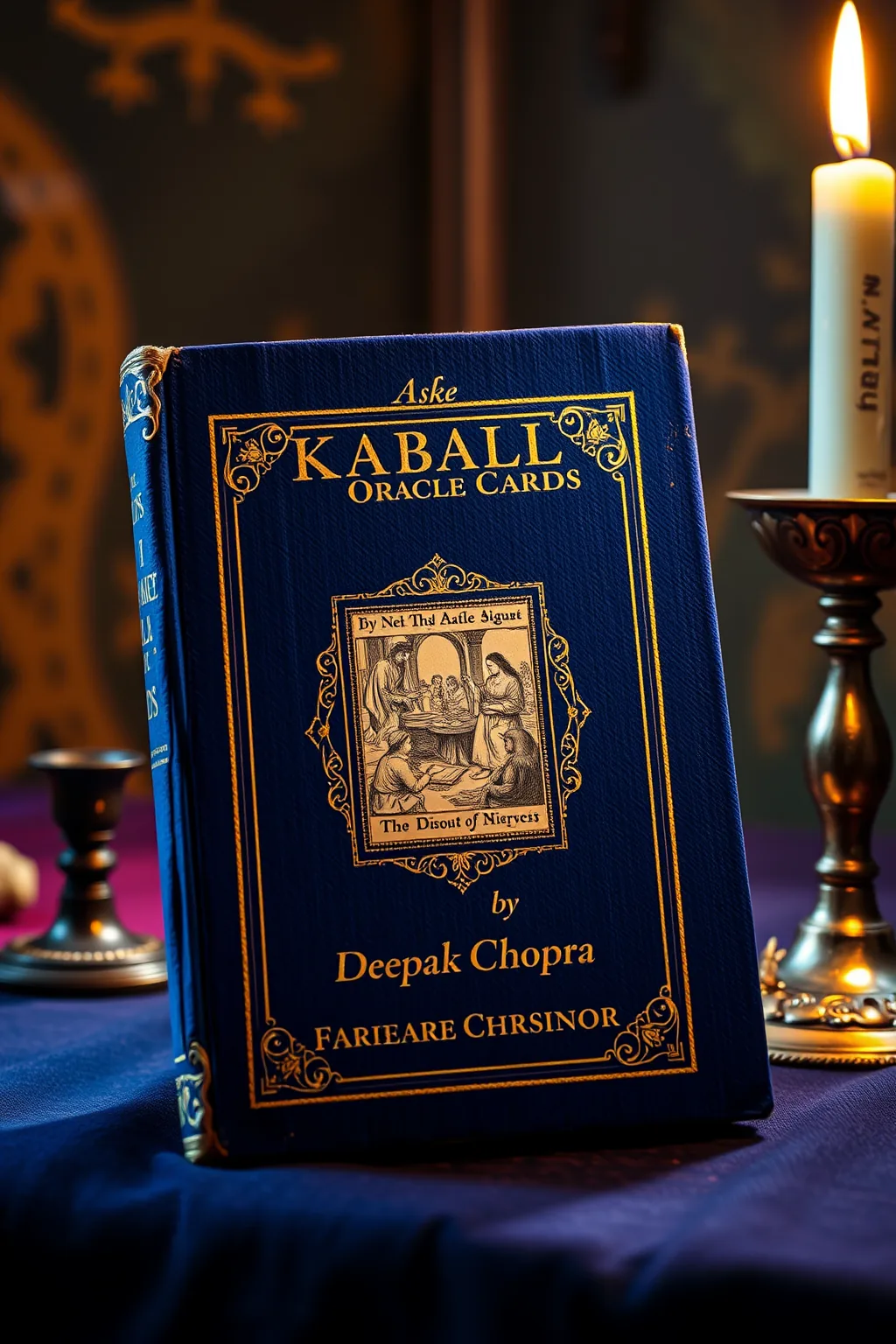
The "Ask The Kabala Oracle Cards" presents a curious blend of ancient mystical tradition and modern self-help apparatus. Deepak Chopra and Michael Zapolin’s 2006 deck attempts to distill the intricate, often dense, Kabbalistic system into a readily usable oracle. Its strength lies in its accessibility; by framing Kabbalah through card-based archetypes derived from Old Testament imagery, it offers a potential entry point for those intimidated by traditional Kabbalistic texts. However, this very simplification is also its limitation. The depth and nuanced philosophical underpinnings of Kabbalah are inevitably reduced, sometimes to the point of losing the distinctiveness of the tradition. The packaging, while appealing to a self-help audience, might obscure the serious spiritual inquiry that Kabbalah traditionally demands. The attempt to 'improve patterns of behavior' feels somewhat superficial when applied to such a profound system. Ultimately, it serves as an introductory curiosity rather than a deep dive into Kabbalistic thought.
📝 Description
71
Published in 2006, Ask The Kabala Oracle Cards translates Jewish mysticism into a practical guidance tool.
Deepak Chopra and Michael Zapolin created Ask The Kabala Oracle Cards to make Kabbalistic principles accessible through a deck of cards. The system translates archetypes from the Old Testament into a method for personal guidance and improving daily life. It aims to present Kabbalah not merely as a philosophy but as a way to refine behavior and enhance everyday experiences.
This oracle deck is for individuals interested in spiritual and personal growth via a Kabbalistic framework. It appeals to those who connect ancient traditions with modern self-help, especially through the symbolic language of the Hebrew Bible. Readers seeking a structured approach to understand their actions and life's deeper currents will find value in this work.
This work draws on Kabbalah, a Jewish mystical tradition with roots in medieval texts like the Zohar. Its 2006 publication coincided with a broader interest in esoteric spirituality and Eastern-influenced self-help. Chopra and Zapolin adapt these complex mystical ideas, particularly the Tree of Life diagram, into a secularized tool for self-awareness and behavioral insight. The book connects these ancient structures to personal growth pathways.
💡 Why Read This Book?
• Learn to connect with Kabbalistic archetypes by drawing cards, offering a unique method for daily spiritual reflection introduced in the 2006 publication. • Gain practical guidance on understanding personal behavior patterns through the lens of the Kabbalistic Tree of Life, a core concept explored in the book. • Explore the Old Testament's mystical symbolism as presented by Deepak Chopra and Michael Zapolin, facilitating a personal interpretation of ancient wisdom.
⭐ Reader Reviews
Honest opinions from readers who have explored this book.
❓ Frequently Asked Questions
What is Kabbalah and how do these cards relate to it?
Kabbalah is an esoteric Jewish mystical tradition. These cards, published in 2006, use Kabbalistic archetypes and symbolism from the Old Testament to offer guidance and personal insight.
Who are Deepak Chopra and Michael Zapolin in relation to this work?
Deepak Chopra, a well-known author on spirituality and alternative medicine, and Michael Zapolin collaborated to create the "Ask The Kabala Oracle Cards" in 2006.
Can I use these cards without prior knowledge of Kabbalah?
Yes, the cards are designed to be accessible. They aim to introduce users to Kabbalistic concepts and Old Testament archetypes in a simplified, guided format.
What kind of guidance can I expect from the Kabala Oracle Cards?
The cards are intended to provide insights into personal behavior patterns, life situations, and spiritual growth by drawing on Kabbalistic wisdom and symbolism.
Are these cards based on traditional Jewish Kabbalah?
While inspired by Kabbalistic principles and Old Testament imagery, the deck offers a contemporary, accessible interpretation aimed at a broad audience, rather than a strictly traditional approach.
When was "Ask The Kabala Oracle Cards" first published?
The "Ask The Kabala Oracle Cards" were first published on April 15, 2006.
🔮 Key Themes & Symbolism
Kabbalistic Archetypes
The cards translate the complex symbolic language of Kabbalah, particularly as it relates to the Old Testament, into accessible archetypes. These archetypes serve as visual representations of deeper spiritual and psychological principles. The work aims to make the wisdom embedded within the Kabbalistic Tree of Life understandable for personal application, allowing users to explore concepts like divine emanation and human consciousness through guided inquiry facilitated by the card imagery.
Personal Behavior Patterns
A central aim of the deck is to help users examine and potentially improve their patterns of behavior. By posing questions and interpreting the card draws, individuals are encouraged to reflect on their actions, motivations, and their impact. The Kabbalistic framework provides a structure for understanding these patterns within a broader spiritual context, suggesting that self-awareness is key to personal transformation and a more meaningful life.
Old Testament Symbolism
The book draws heavily on the mystical interpretations found within the Old Testament, reimagining its narratives and figures as symbolic guides. This approach connects contemporary seekers with ancient Hebrew wisdom, presenting the biblical text not just as history or scripture, but as a repository of profound psychological and spiritual truths. The cards offer a way to engage with this symbolism directly and personally.
Spiritual Guidance Tool
Designed as an oracle, the cards function as a tool for divination and self-reflection. They provide a structured method for individuals to seek answers or clarity on life's questions. The combination of Deepak Chopra's popular approach to spirituality and the esoteric tradition of Kabbalah positions the deck as a contemporary means of accessing spiritual insight and personal direction.
💬 Memorable Quotes
Direct passages from the work, attributed to the author.
“Kabala is a way of life.”
— This statement frames Kabbalah not merely as a philosophy or religious practice, but as an integrated approach to existence that influences daily actions and perceptions.
“obtain essential guidance along the way.”
— Suggests the cards serve as a practical resource for navigating life's challenges and decisions, offering direction derived from ancient mystical principles.
“exploring the mystical archetypes of the Old Testament”
— Highlights the method used by the cards: interpreting biblical figures and narratives as symbolic keys to understanding spiritual truths and personal growth.
“deepen your life and improve your patterns of behavior.”
— Articulates the dual purpose of engaging with the Kabbalah Oracle Cards: enhancing one's inner life and fostering positive changes in conduct.
“you, too, can be a part of this lifestyle”
— Emphasizes the accessibility and inclusive nature of the approach, inviting anyone interested to adopt the principles and practices of Kabbalah.
🌙 Esoteric Significance
Tradition
The work draws from the tradition of Kabbalah, a Jewish mystical system focused on understanding the nature of God and the universe through symbolic interpretation of the Torah. This particular iteration, however, adapts Kabbalistic concepts for a popular oracle deck, secularizing and simplifying its complex doctrines for a Western self-help audience, diverging from traditional rabbinical interpretations.
Symbolism
Key symbols include the Tree of Life, a diagram central to Kabbalah representing the structure of creation and divine emanation, and various archetypes derived from Old Testament narratives. These symbols are employed to offer insight into psychological states, life path, and potential behavioral shifts, moving beyond their traditional theological significance.
Modern Relevance
This work taps into the modern spiritual marketplace, where individuals seek accessible tools for personal growth. It speaks to contemporary practices in mindfulness, positive psychology, and self-divination, demonstrating how ancient esoteric systems are reinterpreted to address the needs of 21st-century seekers interested in spirituality outside traditional religious frameworks.
👥 Who Should Read This Book
• Individuals curious about Kabbalah but intimidated by its traditional texts, seeking an entry point through symbolic cards and guided interpretation. • Practitioners of self-help and personal development who wish to explore spiritual guidance methods beyond standard affirmations or journaling. • Students of comparative spirituality interested in how ancient esoteric traditions like Kabbalah are adapted for contemporary, secular audiences in the form of oracle decks.
📜 Historical Context
Published in 2006, "Ask The Kabala Oracle Cards" emerged during a period of significant popular interest in Western esotericism and self-help methodologies. Deepak Chopra, a prominent figure in this landscape, lent his name to popularize the deck. Kabbalah, though historically a complex Jewish mystical tradition with roots in medieval Spain and Provence, saw a surge in broader Western appeal throughout the late 20th century, often detached from its original religious context. This wave was influenced by figures like Philip Berg and his Kabbalah Centre, which offered simplified versions of Kabbalistic teachings to a global audience. The deck's approach, focusing on archetypes and personal guidance, aligns with this trend of making esoteric knowledge more accessible and adaptable for secular self-improvement, contrasting with more academic or strictly religious approaches to Kabbalah prevalent in earlier eras.
📔 Journal Prompts
The archetype of the Old Testament figure drawn, and its reflection in your current life patterns.
How the concept of essential guidance from Kabbalah might apply to a specific challenge you face.
Reflecting on the phrase 'Kabala is a way of life' and its potential impact on your daily choices.
The connection between deepening your life and the symbolic archetypes presented in the cards.
Exploring the idea of improving patterns of behavior through the lens of the Kabbalah Oracle.
🗂️ Glossary
Kabbalah
An esoteric system of Jewish mysticism that explores the divine nature and the creation of the universe through symbolic interpretation of religious texts, notably the Torah.
Archetypes
In this context, symbolic figures, characters, or concepts drawn from the Old Testament that represent fundamental aspects of human experience and spiritual principles.
Tree of Life
A central diagram in Kabbalah, composed of ten interconnected spheres (sefirot) and twenty-two paths, representing the structure of the cosmos and the divine emanations.
Old Testament
The first section of the Christian Bible, corresponding to the Hebrew Bible, containing historical accounts, laws, prophecies, and wisdom literature.
Oracle
A person or agency considered to be a source of divine wisdom or prophetic prediction; in this case, a deck of cards used for divination and guidance.
Patterns of Behavior
Recurring ways in which an individual acts or reacts in certain situations, which the cards aim to help users identify and potentially modify for personal growth.
Esoteric
Intended for or likely to be understood by only a small number of people with a specialized knowledge or interest; relating to mystical or occult beliefs.