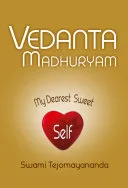
Vedanta Madhuryam
 71
71

Vedanta Madhuryam
Swami Tejomayananda’s Vedanta Madhuryam presents a familiar yet vital re-articulation of Advaita Vedanta’s core message: the discovery of the Self. The author’s strength lies in his direct, almost conversational, tone, cutting through dense philosophical jargon to highlight the sweetness of our true identity. The blurb’s assertion that only the 'undotted I' is truly 'free' is a compelling hook, drawing readers toward an interior exploration. However, the work’s brevity, while making it accessible, can also be a limitation. For instance, the exploration of how to practically *shift* from an ego-centered to a Self-centered perspective, beyond mere intellectual understanding, might leave some readers wanting more concrete guidance. A passage discussing the illusion of separation, perhaps using the analogy of waves on the ocean, effectively illustrates the non-dual perspective. Ultimately, Vedanta Madhuryam serves as a refreshing reminder of Vedanta’s central promise: liberation through self-knowledge.
📝 Description
71
Vedanta Madhuryam, by Swami Tejomayananda, clarifies the Advaita Vedanta concept of the Self.
Swami Tejomayananda's Vedanta Madhuryam explains Advaita Vedanta's core idea: the Self, or the 'undotted I,' is the ultimate source of happiness. This Self is always present, unchanging, and separate from temporary worldly things like relationships and possessions. The book guides readers to recognize and stay in this inner reality. This leads to a true sense of self, not based on ego but on spiritual understanding.
The book prioritizes direct experience and insight over just thinking about the philosophy. It is for spiritual seekers interested in Vedanta's main points, especially the nature of the Self (Atman). Individuals with some philosophical background who want to understand consciousness and its connection to the universe will find it useful. Those looking for practical advice on inner peace and letting go of material attachments will benefit from its teachings. It suits people who like a devotional yet philosophical path to self-discovery, highlighting the 'sweetness' (Madhuryam) of knowing one's true nature.
The teachings in Vedanta Madhuryam are part of the Advaita Vedanta tradition, an ancient Indian philosophy. Adi Shankara, in the 8th century CE, was a key figure who articulated its central idea: reality is non-dual, meaning Brahman (the Absolute) and Atman (the Self) are the same. Swami Tejomayananda, following the lineage of Swami Chinmayananda, continues this tradition. His work appears in a period when interest in Indian philosophies saw a revival, with many gurus presenting these ideas to a worldwide audience.
💡 Why Read This Book?
• Understand the concept of the 'undotted I' as your true Self, a core tenet of Advaita Vedanta, offering a unique perspective on identity beyond the ego. • Gain practical insight into detaching from fleeting worldly pleasures, as discussed in relation to the impermanence of 'near and dear' ones, providing tools for emotional resilience. • Experience the philosophical sweetness ('Madhuryam') of Vedanta, presented by Swami Tejomayananda, which can shift your focus from external seeking to inner contentment.
⭐ Reader Reviews
Honest opinions from readers who have explored this book.
❓ Frequently Asked Questions
What is the meaning of 'Madhuryam' in the book title?
'Madhuryam' is a Sanskrit word meaning 'sweetness' or 'loveliness.' In the context of Vedanta Madhuryam, it refers to the inherent sweetness and bliss found in realizing one's true Self, as taught by Advaita Vedanta.
Is Vedanta Madhuryam suitable for beginners in philosophy?
Yes, the book is designed to be accessible. Swami Tejomayananda's approach simplifies complex Vedantic ideas, making the concept of the Self understandable even for those new to Indian philosophy.
What is the 'undotted I' mentioned in the book?
The 'undotted I' is a metaphorical representation of the pure Self (Atman) in Vedanta. It signifies the unchanging, essential consciousness that is distinct from the fluctuating ego ('I' with dots) and the physical body.
How does the book contrast the Self with worldly relationships?
The book contrasts the eternal nature of the Self with the temporary and often painful nature of worldly relationships, which are seen as subject to change, loss, fear, and tears, ultimately disappearing.
What is the main goal of Vedanta as presented in this book?
The primary goal is to help the reader recognize their true nature as the Self, leading to a state of genuine contentment and freedom by shifting focus from the external ego to the internal, unchanging reality.
Who was Swami Tejomayananda?
Swami Tejomayananda is a spiritual leader and the current head of the Chinmaya Mission, a global organization dedicated to the study and dissemination of Vedanta, following in the footsteps of his guru, Swami Chinmayananda.
🔮 Key Themes & Symbolism
The Eternal Self
The book posits the existence of an eternal, unchanging Self, referred to metaphorically as the 'undotted I.' This Self is the source of true happiness, distinct from the transient physical body and the ego. Unlike the 'dotted I' (the ego-bound individual), the 'undotted I' is pure consciousness, unaffected by the vicissitudes of life. Realizing this Self is presented as the ultimate spiritual goal, offering liberation from suffering and a profound sense of belonging to oneself.
Detachment from Impermanence
Vedanta Madhuryam contrasts the enduring nature of the Self with the impermanence of worldly relationships and possessions. These external connections, while seemingly providing comfort, are ultimately transient and sources of fear and sorrow. The text advocates for a healthy detachment from these fleeting aspects of existence, not through renunciation, but through a deeper understanding of where true security and happiness reside – within the Self.
Spiritual Self-Centeredness
The book redefines 'self-centeredness' from a negative egoic trait to a positive spiritual state. True self-centeredness, in this Vedantic context, means being centered in one's true nature, the Self (Atman). This is achieved by shifting one's identification from the limited ego and physical body to the boundless, eternal consciousness. This realization leads to inner stability and freedom, irrespective of external circumstances.
The Sweetness of Realization
The title 'Madhuryam' highlights the inherent bliss and sweetness associated with recognizing the Self. The book suggests that this inner realization is the most profound and satisfying experience available to a human being. It's a sweetness that is not dependent on external factors but is an intrinsic quality of our true nature, waiting to be discovered through philosophical inquiry and contemplation.
💬 Memorable Quotes
Direct passages from the work, attributed to the author.
“The near and dear do bring some cheer in life, but costs dear, also bring a lot of fears and tears and will in time disappear.”
— This highlights the inherent impermanence and potential for suffering in attachments to external relationships. It serves as a catalyst for questioning the true source of lasting happiness, directing the seeker inward.
“Vedanta introduces this ever sweet Self to me and makes me truly Self-centred, and that is its beauty and fascination.”
— This explains the core function of Vedanta philosophy as presented in the book: to reveal the inherent sweetness of the Self and to guide the individual towards a state of being centered in this true identity, transforming one's perspective.
“It is 'my own sweet home', the only one I truly own.”
— This evocative metaphor emphasizes the inherent belonging and ownership one has with their true Self. It suggests that unlike any external possession or relationship, the Self is the only 'home' that is truly and eternally ours.
“However, there is one and only one thing which is the nearest, the most beloved... which never leaves us and is completely free!”
— This is a rhetorical device to draw the reader's attention to the singular, most important truth the book aims to convey: the eternal, ever-present, and liberated nature of the Self.
💡 Key Ideas
Editorial paraphrase of the work's core concepts — not direct quotes.
There is one and only one thing which is the nearest, the most beloved, the very source of happiness, which never leaves us and is completely free! It is the undotted 'I', my very own dearest Self.
This passage identifies the Self as the ultimate, ever-present source of joy and security. It contrasts the Self with transient external comforts, emphasizing its intrinsic, unfettered nature and its supreme importance.
🌙 Esoteric Significance
Tradition
This work is firmly rooted in the Advaita Vedanta tradition, a prominent lineage within Hindu darshana (philosophy). While not typically classified under Western esotericisms like Hermeticism or Kabbalah, Advaita Vedanta shares core non-dualistic principles with some mystical branches of these traditions, particularly in its emphasis on the identity of the individual soul (Atman) with the Absolute (Brahman). It departs from dualistic theologies by asserting the ultimate oneness of existence, a concept that can be considered esoteric in its counter-intuitive nature to everyday perception.
Symbolism
The central symbol is the 'undotted I,' representing the pure, unadulterated Self (Atman) distinct from the ego ('I' with conceptual 'dots'). The concept of 'home' symbolizes the Self as the ultimate place of rest and belonging. The contrast between 'near and dear' (transient, external relationships) and the Self (eternal, internal reality) functions symbolically to guide the practitioner's focus away from fleeting attachments towards enduring spiritual truth.
Modern Relevance
Contemporary spiritual seekers, mindfulness practitioners, and proponents of consciousness studies often draw upon Advaita Vedanta's insights. Thinkers exploring non-dual awareness, such as scholars in consciousness research or contemporary spiritual teachers like Eckhart Tolle (who often echoes Vedantic themes of presence and the observer), resonate with its core message. Practices focused on self-inquiry and recognizing the witness consciousness find a philosophical home in the teachings presented in Vedanta Madhuryam.
👥 Who Should Read This Book
• Aspiring students of Eastern philosophy seeking a clear introduction to Advaita Vedanta's concept of the Self. • Individuals experiencing dissatisfaction with material pursuits and looking for a philosophical basis for inner contentment. • Spiritual practitioners interested in understanding non-dualistic perspectives on consciousness and reality, complementing their existing practices.
📜 Historical Context
Vedanta Madhuryam emerges from the rich philosophical tradition of Advaita Vedanta, a major school of Hindu philosophy that reached its zenith in the 8th century CE with Adi Shankara. Shankara's commentaries synthesized Upanishadic thought, establishing the non-dualistic principle that Brahman (ultimate reality) and Atman (the individual Self) are one. Swami Tejomayananda, as the successor to Swami Chinmayananda, operates within the modern global dissemination of Vedanta, a movement significantly boosted by figures like Swami Vivekananda at the 1893 Parliament of Religions in Chicago. This period saw a Western intellectual curiosity towards Eastern philosophies, often contrasting with prevailing materialist or dualistic Western thought. While Vedanta gained traction, it also faced scrutiny and reinterpretation within academic and spiritual circles, sometimes being perceived as abstract or overly ascetic, a challenge later teachers like Tejomayananda sought to address by emphasizing its practical application and inherent sweetness.
📔 Journal Prompts
The 'undotted I' as the source of happiness: What qualities does this 'I' possess that external circumstances lack?
Reflecting on the impermanence of 'near and dear' relationships, how can this understanding foster equanimity?
Considering the concept of 'my own sweet home' as the Self, what does it mean to truly 'own' this inner reality?
The beauty and fascination of being 'truly Self-centred': How might this spiritual centering manifest in daily life?
Contrasting the cost of worldly cheer (fears and tears) with the freedom of the Self: What is the perceived trade-off?
🗂️ Glossary
Vedanta
A school of Indian philosophy derived from the Upanishads, focusing on the nature of ultimate reality (Brahman) and the Self (Atman). 'Vedanta' literally means 'end of the Vedas'.
Advaita Vedanta
A prominent sub-school of Vedanta emphasizing non-dualism, asserting that Brahman and Atman are identical, and the perceived multiplicity of the world is ultimately illusory (Maya).
Self (Atman)
The true, innermost Self or soul, understood in Advaita Vedanta as identical with Brahman, the unchanging, eternal consciousness underlying all existence.
Brahman
The ultimate reality, the Absolute, the supreme cosmic spirit, understood in Advaita Vedanta as the sole existence, identical with Atman.
Ego (Ahamkara)
In Vedanta, the sense of 'I-ness' or individuality that falsely identifies with the body, mind, and senses, creating the illusion of a separate self.
Maya
The cosmic illusion or power that conceals the true nature of reality (Brahman) and projects the appearance of a diverse and changing world.
Madhuryam
Sanskrit word meaning 'sweetness' or 'loveliness,' referring in this context to the inherent bliss and joy of realizing one's true nature as the Self.