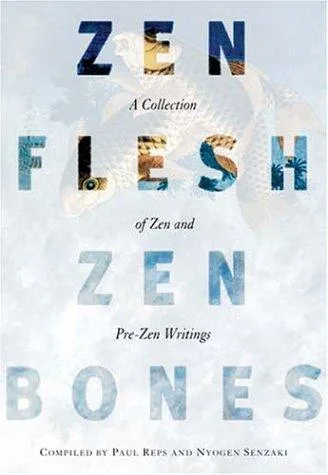
Zen flesh, Zen bones
 84
84

Zen flesh, Zen bones
Paul Reps' 1955 compilation, Zen Flesh, Zen Bones, offers a potent distillation of Zen Buddhist thought, prioritizing accessibility over academic rigor. Its strength lies in its unvarnished presentation of koans and essential teachings, allowing for direct engagement with paradoxical wisdom. The inclusion of "101 Zen Stories" provides relatable, albeit often bizarre, illustrations of Zen principles in action. However, the book's brevity and lack of extensive commentary mean that newcomers might struggle to contextualize the material without supplementary resources. The stark juxtaposition of the "Gateless Gate" koans with biographical sketches of patriarchs, while intended to illuminate, can sometimes feel abrupt. Despite this, the work remains a significant and compelling entry point into Zen for its sheer directness and enduring, challenging spirit.
📝 Description
84
Paul Reps compiled Zen Flesh, Zen Bones, first published in 1955, as an accessible anthology of Zen Buddhist literature.
This book is a curated collection of Zen Buddhist texts, not a scholarly analysis. Paul Reps assembled historical accounts, koans, and teachings to give readers a direct sense of Zen practice. The book's arrangement moves from basic stories to more challenging, paradoxical questions.
Zen Flesh, Zen Bones appeals to practitioners and those curious about Zen Buddhism outside of formal study or religious settings. It is for readers who prefer a plain presentation and are ready to grapple with ideas that defy everyday logic. People interested in the philosophical roots of Eastern spirituality, especially those seeking material for meditation and self reflection, will find it worthwhile.
Published in 1955, Zen Flesh, Zen Bones appeared as Western interest in Eastern philosophies grew after World War II. Reps' compilation provided a less dense introduction than academic texts, helping to popularize Zen koans and stories in the West. At the time, Buddhism was still largely unfamiliar to most Westerners, making this collection a significant entry point into non-Western spiritual traditions.
💡 Why Read This Book?
• You will encounter the "Gateless Gate" koan collection, a central text in Rinzai Zen, to understand its method of challenging rational thought through paradoxical questions. • You will gain insight into the life and teachings of Huineng, the Sixth Patriarch, through the "Platform Sutra of the Sixth Patriarch," learning about his influential approach to sudden enlightenment. • You will explore the practical application of Zen principles through "101 Zen Stories," observing how these teachings manifest in seemingly ordinary, often humorous, human situations.
⭐ Reader Reviews
Honest opinions from readers who have explored this book.
❓ Frequently Asked Questions
What is the historical significance of Paul Reps' Zen Flesh, Zen Bones?
Published in 1955, Zen Flesh, Zen Bones was instrumental in introducing Zen Buddhist concepts, particularly koans and stories, to a Western audience during a period of increasing interest in Eastern philosophies.
What are koans and where can I find them in Zen Flesh, Zen Bones?
Koans are paradoxical riddles or statements used in Zen practice to aid in achieving enlightenment. They are prominently featured in the "Gateless Gate" section of the book.
Is Zen Flesh, Zen Bones a primary source text for Zen Buddhism?
It is a compilation of primary source materials, including the "Platform Sutra of the Sixth Patriarch" and "The Gateless Gate," presented in an accessible format for a broader audience.
Who was Paul Reps in relation to Zen Buddhism?
Paul Reps was an American author and poet who compiled and translated numerous Zen Buddhist texts, making them available to Western readers in accessible collections like Zen Flesh, Zen Bones.
What is the 'Platform Sutra of the Sixth Patriarch'?
This is a foundational text within Zen Buddhism, attributed to the teachings of Huineng, the Sixth Patriarch, detailing his path to enlightenment and his unique understanding of the Dharma.
Does Zen Flesh, Zen Bones explain the historical development of Zen?
While it provides biographical sketches of key figures like Huineng, the book primarily focuses on presenting the teachings and stories directly, rather than offering a comprehensive historical analysis.
🔮 Key Themes & Symbolism
The Paradox of Koans
The "Gateless Gate" section is central to understanding the paradoxical nature of Zen inquiry. Koans, such as "What is the sound of one hand clapping?", are designed not for intellectual resolution but to break down the meditator's reliance on logic. Reps presents these as direct challenges, aiming to push the practitioner beyond dualistic thinking. The effectiveness of these riddles lies in their ability to halt the discursive mind, creating space for intuitive understanding or 'kensho' (seeing one's true nature).
Sudden Enlightenment (Huineng's Teachings)
The "Platform Sutra of the Sixth Patriarch" highlights the concept of 'sudden enlightenment,' a doctrine associated with Huineng. This teaching posits that enlightenment is not a gradual process of accumulation but an immediate realization accessible at any moment. Reps includes this to emphasize the Zen emphasis on direct, unmediated experience of the Buddha-nature inherent in all beings, contrasting with more gradualist approaches to spiritual realization.
Enlightenment in Everyday Life
"101 Zen Stories" illustrates how Zen principles manifest in mundane or even absurd situations. These narratives, unlike abstract philosophical treatises, show characters encountering moments of insight or folly that reflect core Zen ideas. They demonstrate that enlightenment is not confined to monastic settings but can arise unexpectedly in the midst of ordinary life, often through simple actions or encounters that reveal the nature of reality.
The Role of the Patriarchs
The inclusion of biographical sketches and teachings of Zen patriarchs, such as Bodhidharma and Huineng, grounds the collection in a historical lineage. These figures are presented as exemplars of Zen realization. Their stories serve to transmit the Dharma (teachings) and demonstrate the continuity of Zen practice from its origins in India to its development in China, establishing a tradition of authentic transmission.
💬 Memorable Quotes
Direct passages from the work, attributed to the author.
“A monk asked Ummon, 'What is the sound of one hand clapping?'”
— This is a famous koan from the "Gateless Gate" collection. It serves as a direct challenge to the rational mind, prompting the practitioner to seek understanding beyond conventional logic and sensory experience.
“When master Banzen was walking, he saw a frog.”
— This is an excerpt from "101 Zen Stories." It represents the collection's method of illustrating Zen principles through seemingly simple, everyday encounters that can hold deeper meaning.
“The Master said: 'The Buddha is in the mind.'”
— This represents a core tenet of Mahayana Buddhism, particularly emphasized in Zen: the inherent Buddha-nature within each individual. It suggests that realization comes from within, not from external sources.
“If you meet the Buddha on the road, kill him.”
— This provocative statement, often attributed to Zen masters, underscores the danger of clinging to concepts, even the concept of Buddha. It urges practitioners to transcend all fixed ideas and attachments.
💡 Key Ideas
Editorial paraphrase of the work's core concepts — not direct quotes.
The Sixth Patriarch said: 'Good, good! Do not plant your feet in the place of delusion.'
From the "Platform Sutra," this quote emphasizes the importance of maintaining clarity and non-attachment. It advises against becoming entangled in confused or mistaken views, encouraging a direct perception of reality.
🌙 Esoteric Significance
Tradition
This work draws heavily from the Mahayana Buddhist tradition, specifically the Chan (Zen) school that flourished in China and later spread to Japan and Korea. It aligns with the Mahayana emphasis on emptiness (sunyata), Buddha-nature, and the pursuit of enlightenment for all sentient beings. Reps' compilation, however, presents these teachings in a manner stripped of much of the ritual and scholasticism found in some Buddhist traditions, prioritizing direct experiential insight, a hallmark of Zen's esoteric approach.
Symbolism
The "Gateless Gate" itself functions as a potent symbol, representing the barrier that the rational mind erects against direct experience. Koans, like the sound of one hand, are symbolic linguistic tools designed to dismantle this barrier. The figure of the Sixth Patriarch, Huineng, symbolizes the potential for sudden awakening and the non-dualistic understanding of the Dharma, representing the transmission of true insight beyond scriptural literalism.
Modern Relevance
Contemporary mindfulness practices, secularized Buddhist approaches, and even certain schools of psychotherapy (like ACT - Acceptance and Commitment Therapy) echo principles found in Zen Flesh, Zen Bones. The focus on present moment awareness, acceptance of difficult thoughts (akin to koan practice), and the deconstruction of egoic narratives are directly influenced by the Zen tradition this book helped popularize. Thinkers and practitioners exploring non-dual awareness and the nature of consciousness continue to find inspiration in its stark presentation.
👥 Who Should Read This Book
• Seekers interested in the foundational texts of Zen Buddhism, particularly those unfamiliar with its terminology and practices, will find a clear entry point. • Students of comparative religion and philosophy can use this as a primary resource for understanding key Zen concepts like koans and the teachings of significant patriarchs. • Individuals engaged in contemplative practices looking for direct methods to challenge habitual thinking patterns will benefit from the koan and story structures presented.
📜 Historical Context
Zen Flesh, Zen Bones, published in 1955 by Paul Reps, arrived at an important moment for Western engagement with Eastern spirituality. The post-World War II era saw a surge in interest, partly fueled by the influential writings of D.T. Suzuki, who had been introducing Zen to America since the early 20th century. Reps' compilation offered a more condensed and accessible format than many scholarly works, featuring key texts like the "Gateless Gate" and the "Platform Sutra." This period also saw the rise of figures like Alan Watts, who further popularized Eastern philosophies. While Suzuki focused on philosophical exposition, Reps aimed for a more direct presentation of the core materials. The book's reception contributed significantly to Zen's growing presence in counter-cultural movements and spiritual exploration throughout the latter half of the 20th century.
📔 Journal Prompts
The "Gateless Gate" koan's challenge to logic.
Huineng's concept of "sudden enlightenment."
Moments of unexpected insight in "101 Zen Stories."
The role of the patriarchs in transmitting the Dharma.
The mind's tendency towards delusion.
🗂️ Glossary
Koan
A paradoxical anecdote or riddle used in Zen Buddhism to provoke enlightenment or to demonstrate the inadequacy of logical reasoning.
Zen
A school of Mahayana Buddhism emphasizing meditation, direct experience, and the attainment of enlightenment (satori) through intuitive understanding rather than scripture.
Patriarch
In Zen Buddhism, a lineage holder who has attained deep realization and is recognized as a successor in the transmission of the Dharma.
Dharma
In Buddhism, the teachings of the Buddha, the cosmic law, or the nature of reality.
Satori
A Japanese Buddhist term for sudden enlightenment or comprehension; a moment of profound spiritual insight.
Sunyata
A Sanskrit term meaning 'emptiness' or 'voidness,' a central concept in Mahayana Buddhism referring to the lack of inherent existence in all phenomena.
Buddha-nature
The inherent potential for enlightenment within all sentient beings, a core doctrine in Mahayana Buddhism.
🔮 Readers Also Liked
Browse all →







More by Paul Reps
All books →

More Free Occult Philosophy Books
View all →