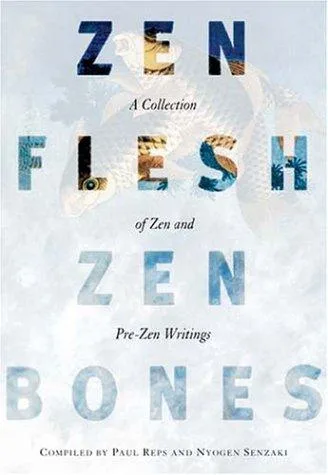
Zen flesh, Zen bones
 71
71

Zen flesh, Zen bones
Paul Reps' "Zen Flesh, Zen Bones" remains a curious and enduring artifact of Zen's introduction to the West. Its strength lies undeniably in the "101 Zen Stories" section, a collection of brief, often bewildering anecdotes that provide genuine flashes of insight into the Zen mind. These stories, like the one involving Bankei and his father, cut through intellectual pretense with a delightful directness. However, the anthology's structure, while offering variety, can feel somewhat disjointed. The abrupt shift from pithy stories to the more philosophical "Outline of Zen" or the narrative "The Master Goes to War" doesn't always cohere. The "Outline of Zen" itself, while informative, can feel dated in its presentation. Despite these structural quibbles, the book succeeds in its primary aim: to offer a potent, if sometimes fragmented, taste of Zen's unique flavor. It’s a collection that rewards patient browsing rather than linear consumption.
📝 Description
71
Paul Reps compiled Zen Flesh, Zen Bones in 1957, a collection of Zen Buddhist texts.
Zen Flesh, Zen Bones is an anthology of Zen Buddhist literature first published in 1957 by Paul Reps. The book is divided into four sections: '101 Zen Stories,' 'Outline of Zen,' 'The Master Goes to War,' and 'The Voice of the Turtle.' These parts offer a varied look at Zen, from short anecdotes and basic teachings to longer narratives and philosophical reflections. It aims to give readers a direct experience of Zen principles and practice. The stories, in particular, use paradox and parable to convey Zen ideas, appealing to those who learn through narrative and direct experience rather than purely abstract thought. This volume serves as an approachable introduction for individuals interested in Zen Buddhism, its practical aspects, and its philosophical ideas. It also speaks to students of religion, philosophy, and Eastern spiritual traditions.
Published in 1957, Zen Flesh, Zen Bones appeared as Western interest in Eastern philosophies grew. Zen Buddhism, especially, started to gain attention in the United States. D.T. Suzuki's work was significant in bringing Zen to a broader audience. Reps' compilation arrived when alternative spiritual paths were becoming more popular. It presented Zen in a way that was easy to understand but still authentic, differing from academic or rigid explanations. This book became a key way for many people in the West to begin engaging with Zen concepts.
💡 Why Read This Book?
• Gain direct exposure to the paradoxical nature of Zen through the "101 Zen Stories," which illustrate core principles like emptiness and non-duality through memorable, often humorous, anecdotes. • Understand the historical introduction of Zen to the West via Paul Reps' compilation, which emerged in the fertile ground of mid-20th century spiritual exploration. • Encounter the concept of "Mu" (nothingness) and its implications for perception, as explored in sections that challenge logical frameworks and encourage intuitive understanding.
⭐ Reader Reviews
Honest opinions from readers who have explored this book.
❓ Frequently Asked Questions
When was "Zen Flesh, Zen Bones" originally published?
Paul Reps' "Zen Flesh, Zen Bones" was first published in 1957, making it one of the earlier accessible collections of Zen literature for a Western audience.
What are the main sections included in "Zen Flesh, Zen Bones"?
The book is divided into four main parts: '101 Zen Stories,' 'Outline of Zen,' 'The Master Goes to War,' and 'The Voice of the Turtle,' offering a varied exploration of Zen.
Is "Zen Flesh, Zen Bones" suitable for absolute beginners to Buddhism?
Yes, the anthology's structure, especially the '101 Zen Stories,' makes it approachable for beginners seeking an intuitive grasp of Zen concepts without dense philosophical exposition.
Who was Paul Reps and what was his contribution?
Paul Reps was an American author and educator who compiled and edited "Zen Flesh, Zen Bones." He aimed to present Zen in a direct, accessible manner for Western readers, drawing from various sources.
Does the book explain Zen meditation techniques?
While the book doesn't offer explicit step-by-step meditation guides, the stories and teachings implicitly point towards the meditative state and the importance of present awareness cultivated through practice.
Are the "101 Zen Stories" historically accurate accounts?
The "101 Zen Stories" are primarily anecdotal and illustrative, designed to convey Zen principles through narrative rather than strict historical reportage. Their value lies in their spiritual and philosophical import.
🔮 Key Themes & Symbolism
The Paradox of Enlightenment
This anthology consistently challenges conventional logic to illuminate the nature of enlightenment. Through brief anecdotes and koan-like narratives, "Zen Flesh, Zen Bones" demonstrates how the ultimate realization often arrives through unexpected, paradoxical means. The stories, particularly those in the '101 Zen Stories' section, frequently depict masters responding to seekers' questions in ways that subvert expectations, forcing a confrontation with the limits of rational thought and opening a path to direct, intuitive understanding. This theme underscores Zen's emphasis on experiential wisdom over intellectual dogma.
The Practice of "Mu"
The concept of "Mu" (emptiness or non-being) is a recurring undercurrent, particularly in the more philosophical sections. "Zen Flesh, Zen Bones" presents "Mu" not as a nihilistic void, but as a fertile ground of potentiality, the ultimate reality that underlies all phenomena. The anthology uses this concept to dismantle attachments to fixed ideas and self-identity. By engaging with stories and teachings that touch upon "Mu," readers are encouraged to question their assumptions about existence and embrace a state of open awareness, free from conceptual limitations.
Direct Experience Over Doctrine
A central tenet woven throughout the collection is the primacy of direct, personal experience in the pursuit of truth. Paul Reps, through his selection, prioritizes narratives and teachings that bypass abstract theorizing. The "101 Zen Stories" and "The Master Goes to War" exemplify this by showcasing moments of sudden realization or profound understanding achieved through action, intuition, or even simple, everyday events. This theme serves as a critique of purely academic or dogmatic approaches to spirituality, advocating instead for an engaged, embodied encounter with reality.
The Beginner's Mind
The anthology implicitly and explicitly champions the attitude of "Shoshin" or beginner's mind. This involves approaching practice and life with openness, eagerness, and a lack of preconceptions, even when dealing with seemingly familiar concepts. The stories often feature characters, both students and masters, who embody this fresh perspective. By presenting these examples, "Zen Flesh, Zen Bones" encourages readers to shed ingrained assumptions and engage with the teachings and their own lives as if encountering them for the first time, fostering a more receptive and dynamic spiritual path.
💬 Memorable Quotes
Direct passages from the work, attributed to the author.
“A Buddha is pure spirit; the dharma is pure mind; the heart is pure emptiness. Therefore, when you see form, do not be misled by form. When you hear sound, do not be misled by sound.”
— This statement emphasizes the illusory nature of sensory perception. It guides the reader to look beyond the superficial, material world to grasp the underlying spiritual reality, aligning with the Zen principle of seeing the true nature of things.
“Have you eaten? Then wash your bowl.”
— This simple instruction, often attributed to Zen masters, points to the importance of mindfulness in everyday actions. It signifies completing a task fully and moving on with clarity, integrating practice into daily life.
“A monk asked Tozan, 'What is the meaning of Mu?' Tozan replied, 'It is like the silent thunder.'”
— This koan-like exchange illustrates the inadequacy of words to describe ultimate reality. 'Mu' (nothingness) is not a concept to be defined but an experience to be realized, and 'silent thunder' captures its paradoxical, ineffable nature.
“If you meet the Buddha on the road, kill him.”
— This provocative statement, often associated with Zen, warns against attachment to any form, including spiritual ideals or enlightened beings. It urges the practitioner to transcend even the concept of Buddhahood to achieve genuine liberation.
💡 Key Ideas
Editorial paraphrase of the work's core concepts — not direct quotes.
When a man tries to do something, he may succeed or he may fail. But freedom lies in the attempt.
This quote from 'The Master Goes to War' highlights the Zen focus on the process rather than the outcome. It suggests that liberation and value are found in the act of striving and engaging fully, regardless of the final result.
🌙 Esoteric Significance
Tradition
While Zen Buddhism is a distinct Mahayana tradition, "Zen Flesh, Zen Bones" engages with principles that resonate with broader esoteric and mystical concerns. Its emphasis on direct experience, the non-dual nature of reality, and the transcendence of conceptual thought aligns with certain Hermetic and Gnostic ideals of immediate gnosis. The paradoxical nature of its teachings and koans can be seen as a method for disrupting egoic structures, a common goal in many esoteric paths seeking direct apprehension of the divine or ultimate truth.
Symbolism
The concept of "Mu" (emptiness) serves as a central symbol, representing not a void but the unmanifest potential from which all arises, akin to the Hermetic concept of the Prima Materia. The "empty bowl" is another potent symbol, signifying receptivity, humility, and the readiness to receive wisdom without preconceived notions. The "silent thunder" used to describe "Mu" symbolizes the ineffable and paradoxical nature of ultimate reality, a truth that is both powerful and profoundly subtle, beyond ordinary sensory or intellectual grasp.
Modern Relevance
Contemporary mindfulness movements and secularized Buddhist practices frequently draw upon the accessible narratives and concepts presented in "Zen Flesh, Zen Bones." Therapists and coaches often utilize the paradoxical stories to illustrate psychological principles related to cognitive reframing and acceptance. Furthermore, artists and writers continue to find inspiration in its directness and its challenge to conventional perception, echoing the influence it had on mid-century counter-culture figures. The book remains a touchstone for anyone exploring non-dualistic perspectives or seeking practical wisdom.
👥 Who Should Read This Book
• Beginners to Zen Buddhism seeking an intuitive and engaging introduction, especially those who prefer learning through stories and parables over dense philosophical texts. • Students of comparative religion and philosophy interested in understanding the unique approach of Zen Buddhism as presented through its classic literature. • Individuals exploring alternative spiritual paths or seeking practical methods to cultivate mindfulness, reduce conceptual clutter, and foster direct experience in their lives.
📜 Historical Context
Published in 1957, "Zen Flesh, Zen Bones" arrived as Western interest in Eastern spirituality, particularly Zen Buddhism, was reaching a new peak. This period saw figures like D.T. Suzuki playing a central role in introducing Zen philosophy and practice to American intellectuals and artists, influencing movements like the Beat Generation. Reps' anthology provided a highly accessible entry point, contrasting with more academic texts. It emerged in an era where psychoanalysis was dominant, offering an alternative framework for understanding the human psyche and consciousness. The book's popularity coincided with a broader cultural questioning of Western materialism and a search for deeper meaning, making its direct, often paradoxical, teachings particularly appealing.
📔 Journal Prompts
The silent thunder of Mu: how does this paradox challenge your assumptions about reality?
Analyze the response of Master Sekito to the monk asking about the meaning of Mu.
Reflect on a time when "washing your bowl" after a task brought clarity.
Consider the implications of "If you meet the Buddha on the road, kill him" for your own spiritual pursuits.
Identify a Zen story from the collection that particularly subverted your expectations.
🗂️ Glossary
Mu
A central concept in Zen Buddhism, often translated as 'nothing,' 'not,' or 'non-being.' It represents the fundamental emptiness or void from which all phenomena arise, challenging conventional notions of existence and self.
Koan
A paradoxical anecdote or riddle used in Zen practice to provoke doubt, test understanding, and ultimately lead to enlightenment. Koans often defy logical analysis, forcing the student beyond rational thought.
Shoshin
Literally 'beginner's mind.' It refers to an attitude of openness, eagerness, and lack of preconceptions when approaching a subject or activity, even if one has previous experience.
Dharma
In Buddhism, this term broadly refers to the teachings of the Buddha, the cosmic law and order, or the fundamental nature of reality. In this context, it relates to the essence of Buddhist truth.
Bodhisattva
An enlightened being who postpones their own nirvana out of compassion to help all sentient beings achieve enlightenment. This concept is central to Mahayana Buddhism.
Satori
A Japanese Buddhist term for a sudden or intuitive enlightenment experience. It represents a direct, experiential understanding of the true nature of reality, often achieved through Zen practice.
Hakuin Ekaku
An influential 18th-century Japanese Zen monk, often considered the restorer of the Rinzai school. His teachings and koan system are foundational to much of modern Zen practice.
🔮 Readers Also Liked
Browse all →









More by Paul Reps
All books →

More Free Occult Philosophy Books
View all →