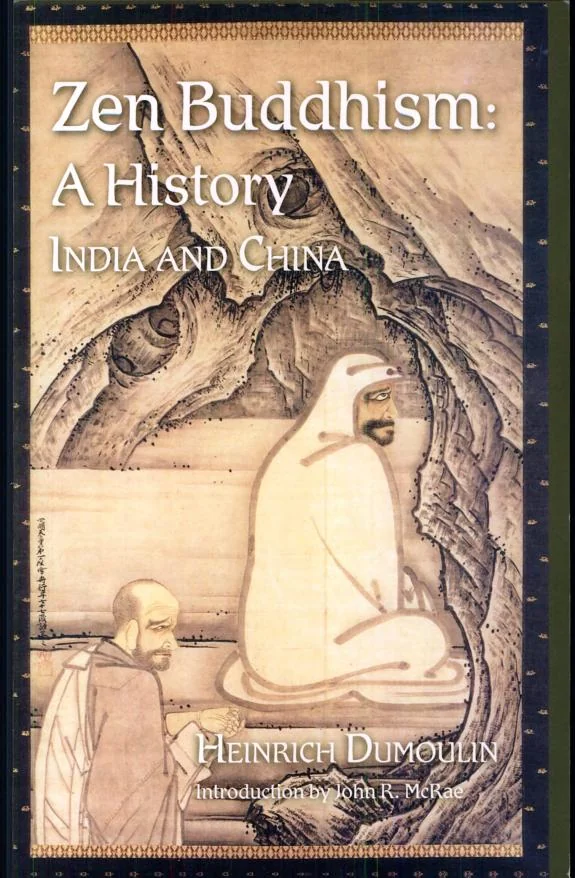
Zen Buddhism: India and China
 73
73

Zen Buddhism: India and China
Heinrich Dumoulin’s *Zen Buddhism: India and China* remains an essential, if dense, scholarly account of the tradition’s formative centuries. Its strength lies in its encyclopedic scope and rigorous academic approach, charting the complex philosophical lineage from Indian Mahayana to its maturation in Tang and Sung China. Dumoulin’s meticulous exposition of concepts like *prajna* and *sunyata* provides a clear framework for understanding Zen’s intellectual architecture. However, the sheer volume of detail can sometimes obscure the lived experience of Zen practice. A notable passage details the philosophical debates surrounding the transmission of the Dharma, highlighting the intellectual rigor involved. While indispensable for academic study, readers seeking a more experiential introduction might find it challenging. It serves as a foundational text for understanding Zen’s historical trajectory.
📝 Description
73
Heinrich Dumoulin's 1988 study traces Zen Buddhism from its Indian origins through its development in China.
Zen Buddhism: India and China by Heinrich Dumoulin provides a historical account of Zen's emergence and early growth. The book follows Zen's transmission from India, detailing its transformation within Chinese philosophical and cultural contexts. Dumoulin examines the core tenets and institutional developments of this Buddhist tradition up to the Sung period.
The work traces the evolution of Zen thought and practice, focusing on foundational principles and their subsequent adaptations. It discusses how Buddhist ideas were received and reshaped in China, absorbing influences from Taoism and Confucianism. This period, particularly up to the Sung dynasty, saw Zen become a distinct and significant school within Mahayana Buddhism. The book details the lineages of patriarchs and the doctrinal shifts that characterized Zen's formation.
Heinrich Dumoulin's work examines Zen Buddhism, a tradition rooted in contemplative practice and direct experiential understanding. It situates Zen within the Mahayana Buddhist lineage, highlighting its focus on realizing wisdom (*prajna*) and emptiness (*sunyata*) through methods like meditation (*zazen*). The book details how these practices and philosophical insights were transmitted and adapted across cultures, forming a significant spiritual path distinct from scholastic approaches. Its study of early Zen in India and China illuminates the formation of a contemplative tradition that emphasizes inner realization over scriptural dogma.
💡 Why Read This Book?
• Gain a granular understanding of the transmission of Buddhist thought from India to China, specifically examining the philosophical shifts that occurred, as detailed in the sections on the early patriarchs and doctrinal developments. • Grasp the core philosophical underpinnings of Zen, such as *sunyata* (emptiness) and *prajna* (wisdom), by tracing their evolution through specific Chinese schools discussed within the text. • Appreciate the historical context of Zen's emergence during the Tang and Sung periods, understanding its interaction with Taoism and Confucianism as presented in the historical narrative.
⭐ Reader Reviews
Honest opinions from readers who have explored this book.
❓ Frequently Asked Questions
When was Zen Buddhism first introduced to China from India?
While the precise date is debated, Heinrich Dumoulin's work situates the foundational transmission of Zen Buddhism to China around the 5th or 6th century CE, often attributed to the Indian monk Bodhidharma.
What were the key philosophical influences on early Zen in China?
The book explores how early Zen in China integrated core Buddhist concepts with existing Chinese philosophical traditions, notably Taoism and, to a lesser extent, Confucianism, adapting them to its unique emphasis on direct experience.
Which Chinese dynasties are most significant in the development of Zen Buddhism according to Dumoulin?
Dumoulin highlights the Tang Dynasty (618–907) as a crucial period for Zen's establishment and diversification, followed by continued development and refinement during the Sung Dynasty (960–1279).
What is the role of meditation (zazen) in the Zen tradition as described?
The work emphasizes meditation, or *zazen*, as the central practice in Zen Buddhism, serving as the primary means for realizing enlightenment and understanding the nature of reality, often prioritized over scriptural study.
Does the book cover the spread of Zen beyond China?
This specific volume, 'Zen Buddhism: India and China,' focuses primarily on the foundational period up to the Sung Dynasty in China. Later developments and its spread to other East Asian countries are typically covered in subsequent volumes or related works.
Who is considered the key figure in transmitting Zen from India to China?
Heinrich Dumoulin's study identifies Bodhidharma as the pivotal figure credited with transmitting Zen Buddhism from India to China, initiating the lineage of patriarchs within Chinese Zen.
🔮 Key Themes & Symbolism
Transmission of Dharma
This theme examines the critical journey of Buddhist teachings, particularly the emphasis on direct mind-to-mind transmission of the Dharma, from its Indian origins to its assimilation and transformation in China. It highlights figures like Bodhidharma and the lineage of patriarchs who played key roles. The work scrutinizes how concepts were reinterpreted and practiced within a new cultural milieu, moving beyond purely scholastic Buddhism towards an experiential path.
Indian Philosophical Roots
Dumoulin traces the lineage of Zen back to Indian Mahayana Buddhist philosophical schools. It examines concepts such as *sunyata* (emptiness) and *prajna* (wisdom), exploring how these foundational ideas were carried and adapted. Understanding these Indian roots is crucial for appreciating the intellectual and spiritual framework upon which Chinese Zen was built, providing context for its later distinctive expressions.
Integration with Chinese Thought
A significant aspect of the book is how Zen, upon arriving in China, engaged with and was influenced by indigenous philosophical traditions, primarily Taoism. This section explores the synergy between Zen's emphasis on spontaneity and naturalness and Taoist principles. The work illustrates how this integration shaped Zen's unique character, differentiating it from its Indian predecessors and contributing to its widespread appeal in China.
The Sung Period Developments
The book culminates its historical survey with the Sung period (960–1279), a time when Zen became a dominant force in Chinese Buddhism. It details the emergence of distinct Zen schools, the codification of practices, and the flourishing of Zen art and literature. This era represents a mature phase where Zen had fully established its identity and wide impact on East Asian culture.
💬 Memorable Quotes
Direct passages from the work, attributed to the author.
“Bodhidharma is traditionally seen as the founder of Zen in China.”
— This statement points to the foundational role of Bodhidharma in the historical narrative of Zen's transmission. It signifies a key transition point where Indian Buddhism began to take on a distinct Chinese form.
“Zen integrates Buddhist emptiness with Taoist naturalness.”
— This interpretation captures the syncretic nature of Chinese Zen, illustrating how it blended the Mahayana concept of emptiness (*sunyata*) with the Taoist appreciation for naturalness and spontaneity.
“The Sung period saw the crystallization of major Zen schools.”
— This refers to the historical period where distinct lineages and teachings within Chinese Zen became more clearly defined and influential, marking a significant stage in its institutional and doctrinal development.
💡 Key Ideas
Editorial paraphrase of the work's core concepts — not direct quotes.
The essence of Zen is the direct experience of enlightenment.
This paraphrased concept highlights Zen's core emphasis on immediate, intuitive realization rather than intellectual understanding or adherence to doctrine. It underscores the practice-oriented nature of Zen.
Meditation (zazen) is the primary vehicle for awakening.
This paraphrase emphasizes the central importance of seated meditation in the Zen path, positioning it as the principal method for achieving insight and spiritual liberation within the tradition.
🌙 Esoteric Significance
Tradition
While Zen Buddhism is primarily an East Asian spiritual tradition, its emphasis on direct experience, mind-to-mind transmission, and the realization of an immanent Buddha-nature has points of resonance with certain esoteric currents within Western mysticism. Esoteric traditions often seek hidden knowledge or direct spiritual apprehension beyond exoteric dogma. Zen’s focus on awakening through non-conceptual understanding and its lineage-based transmission can be seen as paralleling the initiatory paths found in Hermeticism or Gnosticism, albeit with distinct cultural and philosophical frameworks.
Symbolism
Key symbols in Zen, as explored in Dumoulin’s work, include the empty circle (ensō), representing enlightenment, emptiness, and the void, often drawn spontaneously. Another significant motif is the lineage chart, visually mapping the unbroken transmission of the Dharma from master to disciple, emphasizing the personal connection over scriptural authority. The Bodhi tree, under which the Buddha attained enlightenment, also serves as a foundational symbol for awakening and the realization of ultimate truth.
Modern Relevance
Contemporary thinkers and practitioners in mindfulness, psychology, and even certain branches of Western contemplative practice draw implicitly or explicitly on the principles and history of Zen Buddhism as outlined by Dumoulin. Mindfulness-based stress reduction (MBSR) programs, for instance, often incorporate meditation techniques derived from Zen. Furthermore, scholars and practitioners interested in comparative spirituality continue to reference Dumoulin’s meticulous historical analysis to understand the cross-cultural transmission of profound spiritual ideas and practices.
👥 Who Should Read This Book
• Academic researchers in religious studies and East Asian philosophy seeking a detailed historical and doctrinal account of Zen's formative centuries. • Students of Buddhism interested in the lineage and philosophical development from Indian Mahayana through its establishment in China up to the Sung period. • Contemplative practitioners aiming to deepen their understanding of the historical context and theoretical underpinnings of Zen meditation practices like *zazen*.
📜 Historical Context
Heinrich Dumoulin's *Zen Buddhism: India and China* emerged in an era of burgeoning Western academic interest in Eastern religions. Published in its first English edition in 2005, it builds upon decades of scholarship concerning the transmission and evolution of Buddhist thought. The work situates Zen within the intellectual range of Mahayana Buddhism, a tradition that itself underwent significant philosophical development in India before reaching China. Dumoulin meticulously details the period of transmission, often attributed to Bodhidharma in the 5th or 6th century CE, and the subsequent flourishing of Zen during the Tang (618–907) and Sung (960–1279) dynasties. This was a time when Chinese Buddhism was actively syncretizing with indigenous philosophies like Taoism. While Dumoulin's work is a comprehensive overview, it engages with a scholarly tradition that includes figures like D.T. Suzuki, whose more interpretive writings on Zen also significantly shaped Western perceptions. The reception of such detailed historical accounts has been crucial for academic study, providing a counterpoint to more devotional or purely philosophical introductions to Zen.
📔 Journal Prompts
The concept of *sunyata* (emptiness) as presented in the Indian origins of Zen.
Bodhidharma's role in transmitting the Dharma to China.
The influence of Taoism on Zen's development during the Tang Dynasty.
The practice of *zazen* as a direct means to enlightenment.
The significance of the Sung period for the establishment of Zen schools.
🗂️ Glossary
Bodhidharma
The semi-legendary Indian monk credited with transmitting Zen Buddhism from India to China, considered the first patriarch of Chinese Zen.
Prajna
A Sanskrit term meaning wisdom or insight, particularly the profound, non-conceptual wisdom that understands the true nature of reality.
Sunyata
A central Mahayana Buddhist concept, often translated as emptiness, referring to the lack of inherent existence in all phenomena.
Zazen
The Japanese term for seated meditation, considered the core practice in Zen Buddhism for achieving insight and enlightenment.
Tang Dynasty
A major Chinese dynasty (618–907 CE) during which Zen Buddhism flourished and became a distinct and influential tradition.
Sung Dynasty
A Chinese dynasty (960–1279 CE) that followed the Tang, during which Zen continued to develop and became deeply integrated into Chinese culture.
Dharma
In Buddhism, the teachings of the Buddha, the cosmic law and order, or the ultimate truth. In Zen, it also refers to the direct transmission of enlightenment.
This book appears in 1 collection
🔮 Readers Also Liked
Browse all →









From the “Zen Buddhism” Collection
View all →









More Free Occult Philosophy Books
View all →