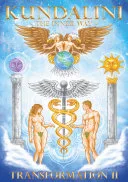
Kundalini - Der Innere Weg
 80
80

Kundalini - Der Innere Weg
Markus Schmidt's "Kundalini - Der Innere Weg" bravely attempts to reframe a profoundly Eastern concept within a Western psychological and experiential framework. The book's strength lies in its earnest effort to democratize the understanding of Kundalini, moving it from the exclusive domain of ancient Indian texts to something accessible through personal narrative and a European lens. Schmidt’s inclusion of diverse personal accounts is commendable, offering a mosaic of experiences that counter the idea of a single, prescribed path. However, the work occasionally falters in its depth when discussing specific yogic or tantric techniques, sometimes appearing to simplify complex practices for the sake of broader accessibility. A particularly notable section explores the potential psychological integration of Kundalini experiences, moving beyond purely spiritual interpretations. While ambitious and inclusive, the book could benefit from a more rigorous engagement with the philosophical underpinnings of the traditions it seeks to integrate. It offers a valuable, albeit sometimes generalized, introduction for those seeking a less dogmatic approach to this potent energy.
📝 Description
80
Markus Schmidt's 2020 book, "Kundalini - Der Innere Weg," examines Kundalini beyond traditional Indian yoga.
Markus Schmidt's "Kundalini - Der Innere Weg" (2020) presents Kundalini energy from a perspective that extends beyond its common association with Indian yogic practices. Schmidt intends to connect the ancient Indian understanding of this force with a more individualized, Western approach to inner energy. The book argues that experiencing Kundalini is not a uniform event, urging readers to incorporate their own specific truths and experiences into their comprehension.
This book is for individuals curious about Kundalini who find purely traditional explanations lacking. It appeals to those seeking a combined approach, merging Eastern ideas with Western psychological concepts and personal accounts. Readers interested in esoteric topics viewed through a lens that values individual insight and varied viewpoints will find "Der Innere Weg" particularly useful. It is suited for students of inner sciences who appreciate diverse interpretations.
Schmidt places Kundalini not only within the context of Patanjali's Yoga Sutras but also within a broader European esoteric tradition. While acknowledging the extensive existing literature on Kundalini, especially from Indian sources, the book consciously aims for an alternative perspective. This includes incorporating personal testimonies and philosophical ideas that might connect more directly with a Western audience, making it accessible and applicable to contemporary life.
This work situates Kundalini within a discourse that acknowledges its roots in Indian traditions like Yoga Sutras, but it actively seeks to weave in elements from European esoteric thought. It bridges ancient Indian concepts with modern Western psychological frameworks and personal experiential accounts. The book's approach is characteristic of contemporary spiritual literature that aims to synthesize diverse traditions for a Western audience, making esoteric concepts more relatable and applicable to contemporary life and individual understanding.
💡 Why Read This Book?
• You will gain an understanding of Kundalini that integrates Eastern philosophy with Western psychological perspectives, offering a more personalized framework than traditional texts alone, by referencing Schmidt's 2020 publication, "Kundalini - Der Innere Weg". • Learn to view Kundalini not as a singular, dogmatic path but as a diverse phenomenon supported by varied personal accounts, a concept central to Schmidt's exploration of "Der Innere Weg". • Discover practical avenues for exploring your own inner energetic potential through a lens that acknowledges European esoteric traditions alongside Indian ones, as presented in the book's comparative approach.
⭐ Reader Reviews
Honest opinions from readers who have explored this book.
❓ Frequently Asked Questions
What makes "Kundalini - Der Innere Weg" different from traditional Kundalini books?
Markus Schmidt's book distinguishes itself by offering a perspective that integrates Eastern traditions with Western psychological viewpoints and personal experiences, aiming for broader accessibility beyond purely Indian esoteric lineages.
Who is the primary audience for this book?
The book appeals to individuals interested in Kundalini who seek a more personalized and integrated understanding, especially those familiar with Western esoteric thought or psychological exploration.
When was "Kundalini - Der Innere Weg" first published?
The book "Kundalini - Der Innere Weg" by Markus Schmidt was first published on April 16, 2020.
Does the book focus solely on Indian Kundalini practices?
No, Schmidt explicitly aims to present Kundalini from a European perspective, incorporating personal experiences and a broader philosophical outlook beyond exclusively Indian traditions.
What is the core message of "Der Innere Weg"?
The core message emphasizes that each individual holds their own truth regarding Kundalini experiences, encouraging a synthesis of diverse perspectives and personal insights on the "inner path."
Are there specific techniques taught in the book?
While the book explores concepts related to Kundalini activation and experience, it primarily focuses on providing a conceptual framework and integrating diverse accounts rather than detailing specific yogic or tantric techniques.
🔮 Key Themes & Symbolism
Holistic Kundalini Experience
The work challenges the notion of a single, definitive Kundalini experience. Schmidt emphasizes integrating diverse accounts, including those from a Western viewpoint, suggesting that the activation and understanding of this energy are deeply personal. This approach moves beyond rote memorization of ancient texts, inviting readers to consider how Kundalini manifests within their own lives and psychological landscapes, aligning with the book's 2020 publication date and its focus on contemporary relevance.
European Esoteric Integration
A significant theme is the re-contextualization of Kundalini within a European esoteric framework. Unlike many texts that remain strictly within Indian yogic or tantric lineages, "Der Innere Weg" seeks to find parallels and points of connection with Western mystical traditions. This allows for a more inclusive dialogue, appealing to readers who may find traditional Eastern terminology or practices less resonant with their cultural or philosophical background.
Personal Truth and Inner Path
Schmidt champions the idea that each individual possesses an inherent truth about their spiritual and energetic experiences. The 'Innere Weg' or 'Inner Way' signifies a personal journey of discovery, where the author's own extensive experience and those of others serve as guideposts rather than rigid doctrines. This theme underscores the subjective nature of spiritual awakening and the importance of self-discovery.
Psychological Dimensions
The book explores the psychological implications of Kundalini phenomena, offering a bridge between esoteric energy work and modern psychological understanding. It addresses how intense spiritual experiences, such as those related to Kundalini, can be integrated into one's psyche, potentially leading to profound personal growth and transformation. This psycho-spiritual approach is a hallmark of its contemporary relevance.
💬 Memorable Quotes
Direct passages from the work, attributed to the author.
“Kundalini - Der Innere Weg" illuminates the energy not just from the Indian tradition.”
— This statement highlights the book's central thesis: to broaden the discourse on Kundalini beyond its well-established roots in India, suggesting a more universal or cross-cultural exploration.
“My goal was to create a work that presents Kundalini from a European perspective.”
— This reflects the author's specific intention to reframe the topic, making it more accessible and relatable to a Western audience by considering their unique cultural and philosophical contexts.
“Each person carries their own truth within them.”
— This emphasizes the book's core philosophy of individual experience and subjective reality in the exploration of profound energetic and spiritual phenomena like Kundalini.
“Not just my own viewpoint, but also reports from others with Kundalini experiences.”
— This points to the book's methodology, which relies on a diversity of lived experiences and testimonials, creating a many-sided and inclusive portrayal of the subject.
“The "Inner Way" is about integrating one's unique truth.”
— This concept underscores the personal nature of spiritual development, suggesting that the path to understanding Kundalini is an internal journey guided by one's own authentic experiences and insights.
🌙 Esoteric Significance
Tradition
While deeply rooted in the concept of Kundalini originating from Indian Yoga and Tantra, "Der Innere Weg" consciously seeks to transpose this energy onto a broader esoteric landscape, one that implicitly includes Western traditions of alchemy and inner transformation. It doesn't strictly adhere to a single lineage like Hermeticism or Gnosticism but rather draws from the *spirit* of inner exploration prevalent across many esoteric paths, aiming for a synthesis that acknowledges diverse cultural expressions of the same fundamental life force.
Symbolism
The primary symbol is Kundalini itself, often depicted as a coiled serpent at the base of the spine, representing dormant spiritual potential. Schmidt likely explores associated symbols such as the chakras as energetic centers along the spine, and the Sushumna nadi as the central energetic pathway. The concept of the "inner path" itself functions symbolically, representing a personal, internal journey of awakening and integration, distinct from external rituals or dogma.
Modern Relevance
This work is relevant to contemporary spiritual seekers who are exploring energy work, consciousness studies, and alternative healing modalities. It appeals to practitioners of various somatic therapies and mindfulness practices that touch upon subtle energy systems. Thinkers and groups focused on the integration of spiritual experiences with psychological well-being, such as those involved in transpersonal psychology or integral spirituality, would find Schmidt's approach particularly pertinent.
👥 Who Should Read This Book
['• Seekers of Kundalini knowledge who feel traditional Indian texts are inaccessible or too dogmatic, looking for a more integrated, Western-influenced perspective.', '• Students of comparative mysticism and esoteric traditions interested in how core energetic concepts are interpreted across different cultural and philosophical frameworks.', '• Individuals undergoing significant personal transformation or energetic shifts who are seeking context and validation from diverse experiential accounts.']
📜 Historical Context
Published in 2020, Markus Schmidt's "Kundalini - Der Innere Weg" emerged during a period of increased interest in non-Western spiritual traditions within Western esoteric circles, yet also amidst a growing desire for integration with contemporary psychological frameworks. While the study of Kundalini has deep roots in Indian philosophy, particularly within Vedanta and Tantra, Schmidt's work consciously departs from a purely academic or traditionalist approach. It sits within a broader trend of comparative mysticism and the popularization of esoteric concepts, often seen in the works of authors like Helena Blavatsky or later figures in the New Age movement, though Schmidt's focus is more specific and experiential. The book's European perspective implicitly contrasts with the vast body of literature originating from figures like Swami Vivekananda or Paramahansa Yogananda, who were instrumental in introducing yogic philosophy to the West in the late 19th and early 20th centuries. Schmidt’s work can be seen as part of a later wave seeking to de-exoticize and personalize these energies.
📔 Journal Prompts
Reflect on the "European perspective" on Kundalini presented in "Der Innere-"Weg."
Consider the concept of "personal truth" in relation to your own inner energetic experiences.
How does Schmidt's emphasis on "Der Innere Weg" differ from a purely technique-driven approach?
Analyze the role of diverse reports in understanding Kundalini, as discussed in the book.
Explore the potential psychological integration of Kundalini phenomena as outlined by Schmidt.
🗂️ Glossary
Kundalini
A primordial cosmic energy, often symbolized as a coiled serpent, believed to reside at the base of the spine. Its awakening is associated with profound spiritual, psychological, and physical transformation.
Der Innere Weg
German for "The Inner Way." Refers to a personal, internal path of spiritual development and self-discovery, emphasizing subjective experience over external dogma.
Chakras
Energy centers within the subtle body, typically aligned along the spine, believed to govern various physical, emotional, and spiritual functions. Kundalini's ascent is often described in relation to these centers.
Nadis
Channels or pathways within the subtle body through which life force energy (prana) flows. The three main nadis are Ida, Pingala, and Sushumna, with Sushumna being the central channel.
Esoteric
Relating to or accessible only by a relatively small number of people with a specialized knowledge or interest; often pertaining to mystical or hidden spiritual truths.
Prana
The vital life force or energy that flows through the nadis in the subtle body. It is considered the animating principle of all beings.
European Perspective
An interpretation or approach to a subject (in this case, Kundalini) that draws from the philosophical, psychological, and cultural traditions characteristic of Europe, distinct from purely Eastern viewpoints.