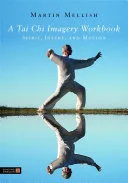
A Tai Chi Imagery Workbook
 82
82

A Tai Chi Imagery Workbook
Martin Mellish’s *A Tai Chi Imagery Workbook* attempts to demystify Tai Chi for a Western audience, a noble goal given the art's often opaque philosophical underpinnings. Mellish’s strategy of employing poetic and humorous imagery is its primary strength. For example, the conceptualization of movements through everyday, relatable scenarios offers an accessible entry point. However, the book sometimes struggles to balance its evocative language with the necessary precision for biomechanical understanding. While the hundreds of photos and drawings are helpful, their integration with the text could be more seamless. The explanation of biomechanical realities, though present, occasionally feels secondary to the imagery, leaving some practitioners wanting a more robust scientific grounding. Ultimately, Mellish provides an engaging, if sometimes uneven, bridge between the esoteric and the practical in Tai Chi.
📝 Description
82
Martin Mellish published A Tai Chi Imagery Workbook in 2011, aiming to translate Tai Chi principles into accessible imagery for Westerners.
Published in 2011, Martin Mellish's A Tai Chi Imagery Workbook translates the core principles of Tai Chi into evocative imagery for Western practitioners. The book moves beyond simple physical instruction, seeking to convey the art's essence through poetic language, humor, and relatable metaphors. It functions as a workbook, actively engaging the reader in the learning process.
This resource benefits a wide range of individuals. It is especially helpful for those finding traditional Tai Chi instruction abstract or difficult. Westerners looking for a more intuitive grasp of movement practices will find the imagery useful. The book's insights extend beyond Tai Chi, benefiting anyone involved in physical disciplines or aiming to integrate mindful movement into daily life. Those who appreciate a blend of art, science, and philosophy in their studies will connect with its approach.
Published in the early 21st century, this workbook emerged during a period of increasing Western interest in Eastern practices like Tai Chi. While many texts focused on technical aspects, Mellish's work addresses the challenge of translating complex Eastern philosophical concepts into understandable and experiential terms for a Western audience. It uses modern pedagogical methods alongside traditional insights to bridge the conceptual gap.
💡 Why Read This Book?
• Gain a unique interpretive framework for Tai Chi movements through Mellish’s distinctive imagery, offering insights not found in purely technical manuals. • Understand the biomechanical principles underlying Tai Chi forms, presented with visual aids and explanations that connect physical action to imagined scenarios, as seen in the 2011 publication. • Apply metaphorical thinking derived from Tai Chi principles to enhance everyday activities and other movement practices, moving beyond the confines of a single discipline.
⭐ Reader Reviews
Honest opinions from readers who have explored this book.
❓ Frequently Asked Questions
When was A Tai Chi Imagery Workbook first published?
A Tai Chi Imagery Workbook by Martin Mellish was first published on June 15, 2011. This date places it within a period of increasing Western interest in accessible interpretations of Eastern practices.
What makes this Tai Chi book different from others?
This book differentiates itself by using poetic, humorous, and evocative imagery to explain Tai Chi's essence, making it more intuitive for Westerners, unlike texts focused solely on technical execution.
Does the book include visual aids for learning?
Yes, the workbook is richly illustrated with hundreds of photos and drawings. These visuals are intended to complement the textual explanations and imagery, aiding comprehension of the movements and concepts.
Can this book be used by people new to Tai Chi?
Absolutely. The book is designed to make Tai Chi accessible, particularly for those unfamiliar with its traditional philosophical context, by translating its principles into relatable imagery.
What kind of movement practices can benefit from this book?
While focused on Tai Chi, the book's emphasis on imagery and mindful movement can benefit a wide range of practices, including yoga, dance, martial arts, and even general physical rehabilitation or daily activities.
Who is Martin Mellish and what is his background?
Martin Mellish is the author of A Tai Chi Imagery Workbook. While detailed biographical information isn't provided in the blurb, his work suggests a deep understanding of Tai Chi and an ability to translate its complexities for a wider audience.
🔮 Key Themes & Symbolism
Imagery as Embodiment
The core of Mellish's approach lies in the transformative power of imagery. The workbook proposes that by engaging the imagination with specific, often whimsical, mental pictures – such as 'a reed in the wind' or 'a cloud passing' – practitioners can bypass intellectual barriers and directly access the physical sensations and energetic flows of Tai Chi. This method aims to cultivate a deeper, more intuitive embodiment of the movements, fostering a connection between mind and body that transcends mere rote memorization of forms. The book presents imagery not as decorative metaphor, but as a functional pedagogical tool for achieving authentic Tai Chi practice.
Bridging East and West
Published in 2011, the book tackles the challenge of translating the deeply rooted philosophical and cultural nuances of Tai Chi for a Western audience. Mellish employs language and concepts that are intended to resonate with individuals from different cultural backgrounds, avoiding jargon that might alienate beginners. The humor and poetic descriptions serve to soften the potential intimidation factor of Eastern martial arts. This bridging effort is crucial for the wider dissemination and understanding of practices like Tai Chi, making its benefits accessible beyond its traditional cultural origins.
Biomechanics through Metaphor
Beyond the poetic, Mellish grounds his imagery in the practicalities of human movement. The workbook meticulously explains the underlying biomechanical realities that support the effectiveness of Tai Chi postures and transitions. Each evocative image is linked to specific physical actions, joint alignments, and energetic pathways. This dual focus ensures that practitioners are not only inspired but also technically informed. The integration of hundreds of photos and drawings further supports this by visually demonstrating how abstract concepts manifest in concrete physical form, offering a comprehensive learning experience.
Holistic Approach to Practice
A Tai Chi Imagery Workbook advocates for a holistic understanding of movement, suggesting that the principles explored can extend far beyond the practice studio. The book encourages readers to see Tai Chi not just as a set of exercises but as a way of moving and being that can inform daily life. By fostering a greater awareness of body mechanics, balance, and internal energy through imaginative engagement, the workbook aims to cultivate a more integrated self. This perspective promotes a mindful approach to all physical activities and interactions with the environment.
💬 Memorable Quotes
Direct passages from the work, attributed to the author.
“Communicating its essence in poetic, evocative, and humorous images.”
— This phrase highlights the book's innovative pedagogical strategy. It moves beyond dry technical instruction to engage the reader's imagination and emotions, suggesting that understanding Tai Chi's core principles is best achieved through sensory and artistic means.
“Apply to movement practices of all kinds and to daily life.”
— This indicates the broad applicability of the concepts presented. The workbook's lessons are not confined to Tai Chi, but offer transferable insights for enhancing body awareness, coordination, and mindfulness in any physical activity or everyday situation.
“Hundreds of photos and drawings, and detailed explanations of the biomechanical realities.”
— This points to the book's comprehensive nature, blending visual aids with scientific explanation. It assures the reader that the evocative imagery is supported by concrete anatomical and physiological information, catering to both intuitive and analytical learners.
“Makes the benefits of Tai Chi directly available to Westerners.”
— This statement underscores the book's primary objective: to clarify Tai Chi for a non-Eastern audience. It promises an accessible entry point, translating complex philosophical and physical concepts into a format readily understood and integrated by Western practitioners.
“Innovative book makes the benefits of Tai Chi directly available.”
— The term 'innovative' suggests a departure from conventional teaching methods. It signals that readers can expect a fresh perspective and a unique approach to learning Tai Chi, focusing on accessibility and direct application of its benefits.
🌙 Esoteric Significance
Tradition
While Tai Chi originates from Taoist principles and Chinese martial arts traditions, Mellish's workbook frames its practices within a broader spectrum of mind-body disciplines relevant to Western esoteric interests. It aligns with traditions that emphasize internal cultivation, energy flow (Qi), and the interconnectedness of mind, body, and spirit, such as Hermeticism or certain branches of Neoplatonism, albeit without direct textual lineage. The emphasis on visualization and intentionality connects it to meditative practices found across various esoteric schools seeking direct experiential knowledge.
Symbolism
The workbook likely employs archetypal imagery common in esoteric thought, translated into Tai Chi contexts. Concepts such as 'emptiness' (a Taoist ideal) can be seen as analogous to concepts of the Void or the Unmanifest in Western traditions. The flowing, circular movements themselves symbolize cycles of creation and dissolution, or the dynamic interplay of Yin and Yang, a fundamental concept in many esoteric cosmologies. Imagery of natural elements like 'clouds' or 'water' serves as symbolic representations of yielding, adaptability, and the unseen forces governing existence.
Modern Relevance
Contemporary thinkers and practitioners in fields like somatic psychology, embodied cognition, and integrative bodywork find value in Mellish's approach. His method of using accessible imagery to unlock deeper physical understanding speaks to modern therapeutic modalities that seek to bypass purely cognitive processing. Schools focusing on mindfulness-based movement, trauma-informed practices, and cross-cultural approaches to wellness can draw upon this work to enhance their own teaching methodologies, demonstrating the enduring relevance of bridging traditional arts with contemporary learning styles.
👥 Who Should Read This Book
• Beginning Tai Chi students seeking an intuitive grasp of forms and principles beyond rote memorization. • Experienced practitioners interested in deepening their internal connection and exploring new avenues of embodied understanding through imaginative techniques. • Individuals engaged in other somatic disciplines (e.g., yoga, dance, martial arts) looking for cross-disciplinary insights into movement, balance, and mindful physical expression.
📜 Historical Context
Martin Mellish's *A Tai Chi Imagery Workbook*, published in 2011, emerged during a period of significant global diffusion of Eastern practices. While Tai Chi had been established in the West for decades, with figures like Benjamin Lo popularizing its study, there remained a persistent gap in translating its deeper philosophical and energetic dimensions. Mellish's work arrived as a response to this need, seeking to bridge the conceptual divide that often left Western practitioners struggling with the art's more esoteric aspects. Unlike purely technical manuals or historical treatises, Mellish’s approach utilized a pedagogical strategy rooted in evocative imagery and humor, aiming for intuitive understanding rather than rote memorization. This contrasts with the more direct, often martial-focused, instruction prevalent in some circles, and sidesteps the purely philosophical texts that might deter beginners. The early 21st century saw numerous books on mindfulness and embodied practice, but Mellish's specific focus on Tai Chi through this unique lens offered a distinct contribution.
📔 Journal Prompts
The 'emptying the cup' imagery and its application to learning new forms.
Reflecting on the 'cloud hands' movement as a metaphor for adaptability.
How the book's imagery connects biomechanical principles to daily activities.
The role of humor in accessing deeper layers of physical practice.
Visualizing the 'reed in the wind' concept for balance and resilience.
🗂️ Glossary
Qi (Chi)
The vital life force or energy believed in traditional Chinese culture to flow through all living things. In Tai Chi, cultivating and directing Qi is central to practice.
Yin and Yang
The fundamental Taoist concept of dualistic, complementary forces that interact to form the dynamic whole of the universe. In Tai Chi, movements often embody the interplay between these forces.
Form
A set sequence of Tai Chi movements, practiced continuously. Different styles have distinct forms, often categorized by the number of movements (e.g., 24-form, 108-form).
Embodiment
The process of experiencing and integrating physical sensations, movements, and awareness within the body. In Tai Chi, embodiment goes beyond physical execution to internal feeling.
Proprioception
The sense of the relative position of one's own parts of the body and strength of effort being employed in movement. Enhanced proprioception is a key benefit of Tai Chi.
Imagery
The use of mental pictures or visualizations to enhance understanding, practice, or internal experience. Mellish utilizes imagery as a primary teaching tool in this workbook.
Biomechanics
The study of the mechanical laws relating to the movement or structure of the human body. The book connects Tai Chi imagery to these underlying physical principles.