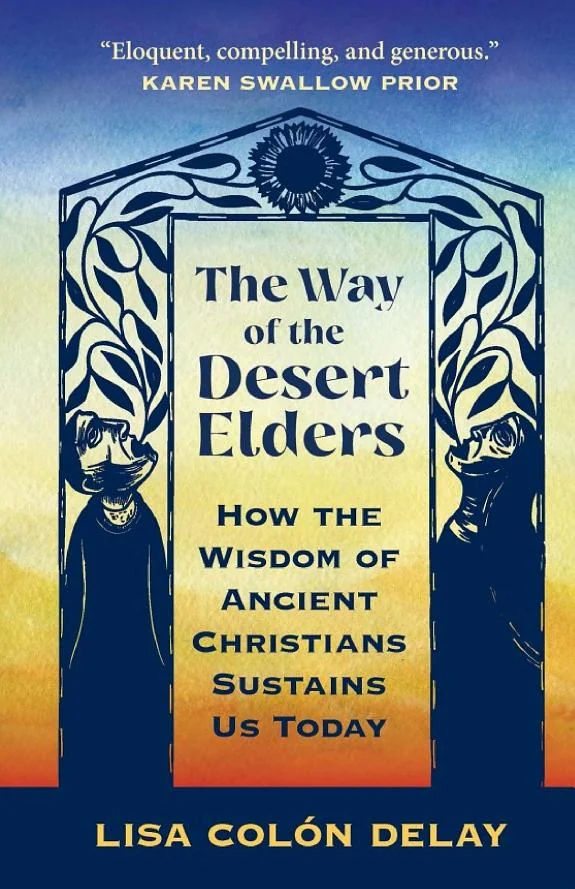
The Way of the Desert Elders
 81
81

The Way of the Desert Elders
Lisa ColÓn Delay's "The Way of the Desert Elders" offers a refreshingly direct engagement with the foundational figures of Western contemplative practice. Rather than presenting hagiography, Delay grounds her analysis in the practicalities of ascetic life and the psychological rigor required. A notable strength is the detailed examination of *apatheia*, moving it from a passive state to an active cultivation of inner equilibrium. However, the book occasionally feels dense, with its academic tone potentially deterring readers less familiar with patristic literature. The section discussing the *nous* (mind/intellect) as the seat of spiritual perception is particularly illuminating, offering a concrete understanding of ancient interiority. This is a valuable resource for those who prefer historical depth over speculative spiritualizing.
📝 Description
81
Lisa ColÓn Delay's 2023 book examines the spiritual practices of early Christian ascetics.
The Way of the Desert Elders provides a detailed look at the contemplative traditions of early Christian monks and hermits. It moves past simple explanations to offer a scholarly examination of the core ideas and practices that shaped these early spiritual movements. The author covers the ascetic disciplines, psychological insights, and theological foundations that defined the lives of these early pioneers.
The book is meant for those seriously studying Western mysticism, religious history scholars, and individuals wanting to connect their spiritual practices to historical roots. It is for readers who prefer a thorough, evidence-based approach to esoteric studies, favoring a focused understanding derived from primary sources over broader, less defined spiritual concepts.
ColÓn Delay places the subject in the late antique period, a time of considerable spiritual activity in the Mediterranean region. The text examines the emergence of Christian monasticism in Egypt and the Levant, noting influences from earlier Greek philosophies and Eastern ascetic traditions. It acknowledges connections to the intellectual environment of figures like Plotinus and the Neoplatonists, whose ideas on transcendence and spiritual ascent influenced various spiritual paths of the time.
This work situates itself within the lineage of Christian contemplative practice, tracing its roots to the desert fathers and mothers of late antiquity. These early ascetics, often living in isolation, developed rigorous methods for spiritual purification and direct experience of the divine. Their emphasis on stillness, prayer, and detachment from worldly concerns laid the groundwork for much of subsequent Western mystical theology and practice, influencing monastic rules, mystical writings, and prayer traditions across centuries.
💡 Why Read This Book?
• Gain a concrete understanding of *hesychia* as a practical method for spiritual centering, as detailed in the book's analysis of monastic silence. • Learn about the desert fathers' disciplined approach to overcoming passions, moving beyond abstract virtue to actionable ascetic techniques. • Discover the historical roots of *theosis* within late antiquity, appreciating how figures like St. Anthony the Great pursued divine likeness through rigorous practice.
⭐ Reader Reviews
Honest opinions from readers who have explored this book.
❓ Frequently Asked Questions
What specific practices did the desert elders employ to achieve spiritual discipline?
The desert elders employed a range of ascetic disciplines, including prolonged fasting, vigils, manual labor, and intense prayer. They focused on cultivating stillness (*hesychia*) and freedom from passions (*apatheia*) through constant vigilance over their thoughts and emotions.
Who are considered the primary 'Desert Elders' discussed in the book?
The book likely discusses prominent figures such as St. Anthony the Great, often considered the father of Christian monasticism, as well as Macarius the Great, and the Desert Mothers like Syncletica of Alexandria.
What is the concept of 'theosis' as presented by the desert elders?
Theosis, or divinization, is the concept that human beings can become like God through divine grace and dedicated spiritual effort. The desert elders saw this as the ultimate goal of the ascetic life, a transformation of the soul.
What historical period does 'The Way of the Desert Elders' primarily cover?
The work focuses on the late antique period, roughly from the 3rd to the 5th centuries CE, a time when early Christian monasticism flourished, particularly in the desert regions of Egypt and Syria.
How does the book differentiate itself from modern interpretations of asceticism?
It differentiates itself by focusing strictly on the historical context and original teachings of the desert elders, emphasizing their rigorous, often severe, practical methods rather than contemporary, potentially diluted, understandings of spiritual discipline.
What role did the concept of 'apatheia' play in the desert elders' teachings?
*Apatheia* was central, representing a state of inner peace and freedom from disturbing emotions and desires. It was not apathy, but a disciplined equanimity achieved through spiritual struggle and divine assistance.
🔮 Key Themes & Symbolism
Ascetic Discipline
The text meticulously details the physical and psychological disciplines employed by the desert elders. This includes fasting, vigils, solitude, and manual labor as tools for self-mastery and spiritual purification. It emphasizes that these were not mere hardships but structured practices aimed at detaching the individual from worldly distractions and the tyranny of the passions, creating a space for divine encounter. The rigorous nature of these practices highlights a commitment to tangible, embodied spiritual work.
Inner Stillness (Hesychia)
A core focus is the cultivation of *hesychia*, or profound inner stillness. The book explains how the elders sought to quiet the incessant chatter of the mind, viewing it as a necessary precursor to discerning spiritual truths. This wasn't passive quietude but an active, vigilant state, achieved through prayer and contemplation. The elders' methods for achieving this state are presented as practical techniques for spiritual focus and interior peace.
Spiritual Discernment
The work explores the elders' sophisticated understanding of spiritual discernment, or *diakrisis*. They developed a keen awareness of the different types of thoughts and spiritual influences, distinguishing between those that were beneficial and those that were demonic or ego-driven. This involved intense self-awareness and reliance on divine guidance, enabling them to read through the inner landscape with great precision.
Theosis and Divine Union
The ultimate aim of the desert elders' practices was *theosis*, or divinization – a state of becoming like God through grace. The book explains this not as a mystical impossibility but as the natural culmination of a life dedicated to spiritual purification and union with the divine will. It details how the elders understood this process as a gradual transformation of the soul, fostered by their asceticism and prayer.
💬 Memorable Quotes
Direct passages from the work, attributed to the author.
“The desert fathers sought *apatheia*, not as indifference, but as a stable inner disposition free from emotional disturbance.”
— This highlights that the elders' aim was not to become unfeeling, but to achieve a state of balanced emotional and psychological equilibrium, essential for clear spiritual perception and consistent practice.
“Solitude was the crucible for forging spiritual strength and encountering the divine directly.”
— This interpretation emphasizes that the elders viewed isolation not as punishment or loneliness, but as a necessary condition for intense spiritual development and a direct, unmediated relationship with God.
“Constant prayer was the engine driving the process of *theosis*.”
— This suggests that the elders saw continuous prayer not merely as a devotional act, but as the active, ongoing force that facilitated the soul's transformation towards divine likeness.
“Vigilance over thoughts was paramount to preventing spiritual deception.”
— This points to the elders' understanding that the battle for the soul occurred primarily within the mind, and that careful attention to one's thoughts was the primary defense against negative influences.
“The ascetic life was a deliberate stripping away of the superfluous to reveal the essential.”
— This interpretation frames the elders' austerity as a process of simplification, designed to remove external and internal clutter that obscured one's true spiritual nature and divine connection.
🌙 Esoteric Significance
Tradition
This work is deeply rooted in the Christian contemplative tradition, specifically the early desert monasticism that served as a wellspring for Western esotericism. It predates and informs later movements like Hesychasm, Christian Kabbalah, and even certain Hermetic interpretations that value inner transformation through disciplined practice. The emphasis on the direct experience of the divine and the purification of the soul aligns with core esoteric principles of immanent divinity and spiritual ascent.
Symbolism
Key symbols include the desert itself, representing spiritual desolation and purification, a place stripped bare for divine encounter. Water, though scarce, symbolizes divine grace and spiritual refreshment. The solitary cell represents the withdrawal from the world for intense inner work and the cultivation of *hesychia*. These symbols are not merely allegorical but are understood as potent forces in the spiritual journey of the ascetic.
Modern Relevance
Contemporary practitioners of contemplative prayer, mindfulness, and trauma-informed spiritual care draw heavily on the principles articulated by the desert elders. Thinkers and authors in the modern contemplative Christian movement, as well as those exploring secularized versions of ascetic practice, find valuable models in Delay's work for cultivating inner peace, emotional resilience, and a deeper connection to the self and the transcendent. The emphasis on psychological discernment remains highly relevant.
👥 Who Should Read This Book
• Students of early Christian history and monasticism seeking primary source understanding beyond secondary interpretations. • Contemplative practitioners looking to ground their practice in historical ascetic methods and the wisdom of the desert fathers. • Scholars of comparative religion interested in the origins of asceticism and its influence on Western spiritual traditions.
📜 Historical Context
"The Way of the Desert Elders" emerges from the intellectual milieu of late antiquity, specifically the burgeoning Christian monastic movement in the 3rd and 4th centuries CE. This era witnessed a profound shift in spiritual emphasis, with many seeking radical detachment from the Roman world's perceived decadence. The desert fathers and mothers, figures like St. Anthony the Great (c. 251–356 CE), established the foundational principles of eremitic and cenobitic life. Their practices were influenced by earlier Hellenistic ascetic traditions and Stoic philosophy, particularly regarding self-control and the pursuit of virtue. This movement stood in contrast to more Gnostic or Origenist theological debates of the time, focusing on practical, lived spirituality rather than purely speculative doctrine. The writings of figures like Palladius and Cassian later disseminated these teachings throughout the Mediterranean, influencing the development of Western monasticism profoundly.
📔 Journal Prompts
The desert elders' conception of *apatheia* as active inner equilibrium.
The role of solitude in cultivating spiritual awareness.
The practice of vigil and its purpose in the ascetic life.
The discernment of thoughts as a tool for spiritual growth.
The pursuit of *theosis* through disciplined living.
🗂️ Glossary
Apatheia
A state of inner calm and freedom from disturbing passions and emotions, achieved through disciplined spiritual practice. It is not indifference, but a stable equilibrium of the soul.
Hesychia
Greek for stillness, quietude, or inner silence. It refers to the practice of achieving a state of profound peace and contemplation by quieting the mind's incessant chatter.
Theosis
The Eastern Orthodox concept of deification or divinization, meaning becoming like God through grace. It is the ultimate goal of the spiritual life for many ascetics.
Asceticism
A set of rigorous practices, including fasting, prayer, and self-denial, undertaken to achieve spiritual discipline, purification, and closer union with the divine.
Nous
A Greek term referring to the intellect or mind, often understood in spiritual contexts as the highest faculty of the soul, capable of direct apprehension of divine truths.
Diakrisis
Spiritual discernment; the ability to distinguish between different spiritual influences, thoughts, and impulses, particularly between those that are from God and those that are not.
Eremitic
Relating to a hermit or hermits; characterized by solitude and withdrawal from the world for religious purposes, as practiced by the desert elders.
This book appears in 1 collection
🔮 Readers Also Liked
Browse all →








From the “Desert Fathers” Collection
View all →







More Free Occult Philosophy Books
View all →