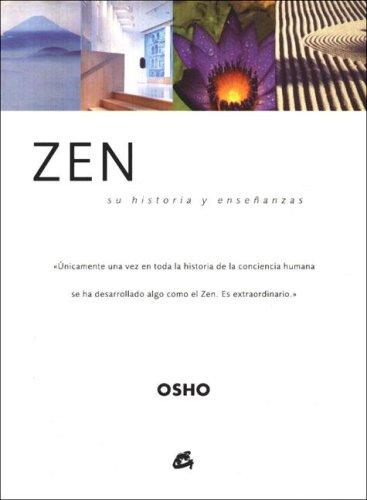
Zen

 79
79

Zen
Bhagwan Rajneesh’s "Zen" offers a peculiar entry point into a tradition often perceived as austere. The book’s strength lies in Rajneesh’s ability to render complex Zen ideas accessible, if not always palatable, through vibrant, often startling, discourse. His challenge to the intellect, particularly his critique of intellectualizing spirituality, is a consistent thread. He pushes the reader to confront the limitations of logic, a vital step for anyone seeking genuine insight beyond mere academic study. However, the book occasionally suffers from Rajneesh’s personal interpolations, which can sometimes overshadow the Zen principles he purports to explain. The constant invocation of his own experiences, while intended to illustrate, can feel repetitive. A particularly illustrative section concerns his reinterpretation of the *koan* "What is the sound of one hand clapping?", which he uses to highlight the futility of seeking singular, definitive answers from a dualistic mind. Ultimately, "Zen" serves as a potent, if idiosyncratic, invitation to direct experience, urging a departure from conceptual understanding.
📝 Description
79
Bhagwan Rajneesh delivered discourses on Zen between 1977 and 1980, published in 1984.
Bhagwan Rajneesh's "Zen" is a compilation of talks given between 1977 and 1980. These discourses, released in 1984, examine the core ideas of Zen Buddhism. Rajneesh approaches the subject with his characteristic mix of philosophical questioning, personal stories, and challenging statements aimed at established thinking. The book's goal is to shake up conventional viewpoints, encouraging direct personal experience over the accumulation of doctrine.
This work is for individuals looking for an unconventional path to spiritual awakening. It will appeal to those tired of rigid religious systems and open to an active, experiential way of understanding consciousness. Readers interested in how Eastern spirituality developed in the West during the late 20th century will find context here. It is for the person ready to question their own beliefs and engage with teachings that focus on inner change rather than outward conformity.
Published in 1984, "Zen" appeared during a time of significant Western interest in Eastern mysticism. Rajneesh, also known as Osho, was a prominent figure in this movement. His interpretations of Zen, often diverging from traditional Buddhist doctrine, contributed to a broader popularization of concepts like Vipassanā and Zen in the West. This period saw a growing appetite for spiritual texts that offered alternative perspectives to established Western thought.
💡 Why Read This Book?
• Understand the Zen emphasis on direct experience: Learn how Rajneesh uses paradox and humor, drawing from his discourses between 1977-1980, to illustrate the Zen path of immediate awareness, moving beyond mere intellectual grasp. • Explore the concept of sudden enlightenment (*satori*): Discover Rajneesh's perspective on achieving *satori*, contrasting it with gradual spiritual paths and emphasizing the role of present moment awareness as discussed in the book. • Challenge your reliance on logic: Engage with Rajneesh's critique of the intellect's limitations, exemplified through his use of *koans* as tools to bypass rational thought and foster intuitive insight, as presented in the 1984 publication.
⭐ Reader Reviews
Honest opinions from readers who have explored this book.
❓ Frequently Asked Questions
What is the primary message of Bhagwan Rajneesh's "Zen"?
The primary message is that Zen is not a philosophy to be understood intellectually, but a direct experience of being. Rajneesh encourages living in the present moment and using paradoxical methods, like koans, to transcend the limitations of the rational mind and achieve sudden enlightenment (satori).
When was Bhagwan Rajneesh's "Zen" first published?
Bhagwan Rajneesh's "Zen" was first published in 1984, compiling discourses given by the mystic between 1977 and 1980.
How does Rajneesh's interpretation of Zen differ from traditional Zen Buddhism?
Rajneesh's interpretation often incorporates more personal anecdotes and a provocative, challenging style than traditional Zen. While respecting core concepts like mindfulness and direct experience, he emphasizes 'sudden enlightenment' and uses paradox more overtly to dismantle the ego and intellectualizing tendencies.
What is a koan, according to this book?
According to Rajneesh in "Zen," a koan is not a riddle to be solved logically. Instead, it is a device intended to exhaust the rational mind, creating a state of confusion that can paradoxically lead to intuitive insight or satori.
Is this book suitable for beginners interested in Zen?
Yes, it can be suitable for beginners open to an unconventional approach. However, readers should be prepared for a dynamic teaching style and potential departure from more orthodox interpretations. It's best for those seeking a provocative rather than purely academic introduction.
What historical period does the book's content reflect?
The book reflects the period of Rajneesh's discourses between 1977 and 1980, a time of significant Western interest in Eastern spiritual traditions and the growth of his international following.
🔮 Key Themes & Symbolism
Direct Experience Over Intellect
The work consistently argues that true understanding of Zen transcends philosophical analysis. Rajneesh asserts that the intellect, with its dualistic nature and reliance on logic, acts as a barrier to enlightenment. He uses anecdotes and paradoxical statements, drawn from his discourses delivered between 1977 and 1980, to demonstrate how engaging directly with life's moments, rather than dissecting them, is the path to *satori* (sudden enlightenment).
The Present Moment as the Key
A central theme is the radical importance of living fully in the 'here and now.' Rajneesh criticizes the human tendency to dwell on the past or worry about the future, viewing these as illusions that distract from the reality of existence. The book encourages readers to find liberation not in future spiritual attainment, but in the immediate experience of consciousness, unburdened by temporal concerns.
Koans as Mind-Exhausting Tools
Rajneesh reinterprets Zen *koans*, such as the famous 'sound of one hand clapping,' not as puzzles requiring intellectual solutions but as devices designed to push the mind to its limits. By presenting unsolvable paradoxes, the aim is to induce a state where the rational faculty collapses, making space for a non-conceptual, intuitive realization of truth, as discussed in discourses from the late 1970s.
Challenging Spiritual Convention
This work is characterized by Rajneesh's iconoclastic approach to spirituality. He actively deconstructs religious dogma and societal conditioning, urging individuals to question all established beliefs. The book reflects his broader movement's aim to foster a new consciousness free from the constraints of tradition, presented through provocative lectures first compiled in 1984.
💬 Memorable Quotes
Direct passages from the work, attributed to the author.
“Zen is not a religion; it is the art of dying to the self.”
— This statement highlights Rajneesh's view of Zen as an experiential practice focused on transcending the ego. It suggests that true spiritual realization involves a dissolution of the limited self, rather than adherence to external doctrines or rituals.
“The moment you know you are meditating, you are no longer meditating.”
— This illustrates the Zen emphasis on effortless awareness. Rajneesh points out that the act of self-consciously 'knowing' one is meditating introduces an observer and breaks the state of pure, unselfconscious presence that characterizes true meditation.
“Enlightenment is not a goal to be achieved, but a state to be realized.”
— This concept reframes spiritual pursuit. Instead of striving for a future attainment, Rajneesh suggests enlightenment is an inherent reality that can be uncovered by shedding illusions and recognizing the present state of being.
“A koan is a device to kill the intellect.”
— This concise statement captures Rajneesh's functional view of koans. They are presented not as philosophical questions but as tools to dismantle the analytical mind, which he believed obstructs direct spiritual insight.
“The greatest deception man suffers is from his own thoughts.”
— This points to the Buddhist concept of *dukkha* (suffering) arising from attachment and aversion, largely fueled by mental constructs. Rajneesh implies that liberation comes from recognizing the illusory nature of one's own thought processes.
🌙 Esoteric Significance
Tradition
While drawing heavily on Zen Buddhist concepts, Rajneesh's "Zen" deviates from strict Mahayana tradition by incorporating elements of psychological analysis and a more direct, often confrontational, teaching style. It aligns with a broader esoteric trend in the 20th century that sought to make ancient wisdom accessible and relevant to modern Western sensibilities, often through charismatic teachers who synthesized diverse spiritual influences.
Symbolism
The book frequently engages with the symbolism of *koans*, such as the 'sound of one hand clapping,' which represents the paradoxical nature of reality that defies logical explanation. The concept of 'dying to the self' functions symbolically, signifying the dissolution of the egoic structure to reveal a deeper, unconditioned awareness, a core tenet in many mystical traditions.
Modern Relevance
Rajneesh's work, including "Zen," continues to influence contemporary mindfulness movements, self-help literature, and even therapeutic approaches that emphasize present-moment awareness and challenging cognitive distortions. Thinkers and practitioners in fields ranging from transpersonal psychology to secularized meditation practices often engage with his ideas, albeit sometimes critically, for their emphasis on direct experience and psychological liberation.
👥 Who Should Read This Book
• Seekers of unconventional spiritual paths: Individuals disillusioned with traditional religious dogma will find Rajneesh's provocative approach refreshing, offering a direct challenge to conventional thinking about enlightenment. • Students of comparative spirituality: Those studying the cross-pollination of Eastern and Western thought in the late 20th century will gain insight into Rajneesh's unique synthesis and its reception. • Practitioners exploring mindfulness and awareness: Readers interested in deepening their meditation practice beyond rote techniques can learn from Rajneesh's emphasis on effortless presence and direct experience, as discussed in discourses from 1977-1980.
📜 Historical Context
Bhagwan Rajneesh's "Zen," first published in 1984, emerged during a period of intense Western engagement with Eastern spiritualities. The late 1970s and early 1980s saw figures like Maharishi Mahesh Yogi and others popularizing meditation and yoga, creating a fertile ground for Rajneesh's teachings. His provocative style and large commune in Oregon, established by 1981, attracted significant media attention and controversy, contrasting sharply with the more subdued approaches of contemporaries like Thich Nhat Hanh, who also published widely on Zen during this era. Rajneesh's work often courted criticism for its perceived departure from orthodox Buddhist principles, particularly his emphasis on psychological liberation and individual experience over traditional monastic discipline. The book's reception was polarized, mirroring the broader societal debate surrounding his movement and its impact on Western perceptions of Eastern mysticism.
📔 Journal Prompts
The art of dying to the self: How does this concept challenge your current understanding of identity?
Living in the present moment: Identify one recurring thought pattern that pulls you away from the now.
The function of koans: Reflect on a paradox you've encountered that resisted logical explanation.
Direct experience vs. intellectual understanding: How might your pursuit of knowledge hinder your direct perception?
Zen as an art: What everyday activity could you approach with the mindful awareness suggested in the text?
🗂️ Glossary
Satori
A Japanese Buddhist term for a sudden or intuitive enlightenment or insight. In Rajneesh's context, it represents a direct, non-conceptual realization of truth, often achieved through sudden realization rather than gradual progress.
Koan
A paradoxical anecdote or riddle used in Zen Buddhism to provoke doubt and test a student's progress in Zen practice. Rajneesh emphasizes their use in exhausting the rational mind.
Mindfulness
A state of active, open attention on the present. It involves acknowledging and accepting feelings, thoughts, and sensations without judgment. Rajneesh promotes an effortless form of this awareness.
Ego
In this context, the sense of self, often seen as an illusion or a construct based on memories and identification. Rajneesh's teachings aim at transcending the ego to realize a deeper, universal consciousness.
Duality
The concept of division into two opposing or contrasting parts, such as good/evil, self/other. Zen aims to move beyond this perceived separation towards a non-dualistic understanding of reality.
Discourse
A formal discussion or conversation. In the context of this book, it refers to the spoken lectures or talks given by Bhagwan Rajneesh that were later compiled.
Zen
A school of Mahayana Buddhism originating in China. Zen emphasizes meditation, intuition, and direct experience of reality over scripture or doctrine, aiming for sudden enlightenment.
🔮 Readers Also Liked
Browse all →









More by Bhagwan Rajneesh
All books →





More Free Occult Philosophy Books
View all →