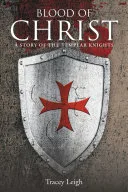
Blood of Christ
 72
72

Blood of Christ
Tracey Leigh’s Blood of Christ tackles the well-trodden ground of the Knights Templar’s demise with a speculative twist. The premise—that a significant contingent escaped King Philip IV’s clutches in 1307 with their secrets intact—is immediately compelling. Leigh’s depiction of the Templars as custodians of profound mysteries, rather than mere soldiers, offers a fresh perspective. The novel excels in building suspense around their escape from La Rochelle, painting a vivid picture of their desperate flight. However, the shift in focus to Sheriff D. Wyatt Coltrain in modern-day Texas feels somewhat abrupt, introducing a contemporary mystery that, while intended to connect past and present, risks diluting the historical intrigue. The strength lies in the palpable sense of urgency surrounding the Templars’ 1307 departure. The narrative's primary limitation is the somewhat jarring transition to the modern-day plot, which may disorient readers invested solely in the historical element. The work explores the enduring legacy of the Templars, suggesting their influence continues to ripple through time. Blood of Christ is a solid, if uneven, exploration of Templar lore, best for those who enjoy historical 'what-ifs' with a touch of conspiracy.
📝 Description
72
Tracey Leigh's Blood of Christ imagines the Knights Templar escaping France in 1307 with sacred mysteries.
Blood of Christ is a historical fiction novel detailing the Knights Templar's escape from France in 1307. The story follows their secret departure from La Rochelle, carrying important artifacts and hidden knowledge, as they evade King Philip IV's pursuit. Leigh's narrative presents a scenario where a faction of the Templars successfully disappears, thwarting their pursuers who could not determine their destination or plans, even under duress.
The novel is set during the historical suppression of the Knights Templar, an event King Philip IV initiated in 1307. Burdened by debt to the order, Philip accused them of heresy and fabricated crimes to seize their assets and authority. While history records widespread arrests and trials leading to the Templars' downfall across Europe, Leigh's work considers a different outcome for a significant group.
Readers interested in historical puzzles, especially those concerning the Knights Templar and their supposed secret lore, will appreciate this story. It appeals to those who like narratives that combine historical settings with speculative ideas and secret organizations. The premise engages readers who enjoy tales of ancient orders, hidden riches, and covert actions.
This novel engages with the enduring esoteric tradition surrounding the Knights Templar, a tradition that views them not merely as a medieval military order but as guardians of hidden wisdom and sacred lineage. The narrative taps into the lore of lost Templar treasures and their potential survival beyond their historical suppression. It suggests that certain secrets and traditions persist outside official historical accounts, potentially influencing subsequent esoteric movements and maintaining a continuity of concealed knowledge.
💡 Why Read This Book?
• Gain insight into the historical context of the Knights Templar's persecution starting in 1307, understanding the political machinations that led to their downfall. • Explore the speculative concept of the Templars successfully escaping with their sacred treasures and knowledge, imagining a hidden continuity of their order. • Experience a narrative that blends historical events with a modern-day mystery, following a sheriff in Singristy County, Texas, as he becomes entangled in the Templars' ancient secrets.
⭐ Reader Reviews
Honest opinions from readers who have explored this book.
❓ Frequently Asked Questions
What historical event does Blood of Christ by Tracey Leigh primarily focus on?
The novel centers on the historical persecution and suppression of the Knights Templar, particularly their flight from France in 1307 under King Philip IV.
When was Blood of Christ first published?
Blood of Christ by Tracey Leigh was first published on July 10, 2015.
What is the main speculative element in the book?
The book speculates that a significant group of Knights Templar successfully escaped the persecution, vanishing with their sacred mysteries and treasures.
Where does the Knights Templar's escape in the book begin?
The narrative depicts the Knights Templar setting sail from the port of La Rochelle in France in 1307.
Who is the modern-day protagonist introduced in the blurb?
The blurb introduces D. Wyatt Coltrain, the sheriff of Singristy County, Texas, who becomes involved in the unfolding mystery.
What kind of treasures are the Templars believed to be protecting?
The book refers to 'sacred mysteries and treasures,' hinting at esoteric knowledge and potentially significant artifacts beyond material wealth.
🔮 Key Themes & Symbolism
Templar Escape Narrative
The central theme revolves around the imagined successful escape of the Knights Templar from King Philip IV’s persecution in 1307. It posits that, contrary to historical accounts of widespread capture and dissolution, a core group managed to evade their pursuers, carrying with them the order's most guarded secrets and treasures. This narrative explores the possibility of a hidden continuity for the Templars, suggesting their influence persisted underground or in distant lands, away from the reach of the French crown and the Papacy.
Preservation of Esoteric Knowledge
Blood of Christ examines the idea that the Templars were more than military monks; they were custodians of profound, possibly Gnostic or Hermetic, wisdom. Their flight is framed not just as survival but as a mission to safeguard this knowledge from destruction or corruption. The book explores how such esoteric traditions might be passed down through secret societies, influencing later historical events and spiritual movements, often operating just beyond the veil of mainstream history.
The Persistence of Mystery
The novel plays on the enduring mystique surrounding the Knights Templar. It highlights how, despite centuries of historical inquiry and speculation, many questions about their true purpose, their alleged hidden wealth, and their ultimate fate remain unanswered. The narrative suggests that some secrets are deliberately buried or protected, making them subjects of perpetual fascination and the source of ongoing intrigue, even manifesting in modern-day events.
Power and Persecution
The book examines the dynamics of political power, religious authority, and the persecution of perceived threats. King Philip IV's actions against the Templars serve as a case study in how rulers might exploit accusations and force to consolidate power and seize assets. Leigh's work implicitly questions the veracity of the charges leveled against the Templars, presenting them as victims of a politically motivated purge rather than genuine heretics.
💬 Memorable Quotes
Direct passages from the work, attributed to the author.
“Seven centuries later, an early morning telephone call draws D. Wyatt Coltrain, sheriff of Singristy County, Texa”
— This sentence marks the abrupt transition from the historical flight of the Templars to a contemporary mystery, signaling that the ancient secrets are about to resurface in the modern world.
“these protectors of sacred mysteries and treasures vanish into history”
— This phrase captures the core speculative premise of the novel: that the Templars' disappearance was not an end but a deliberate act of concealment, preserving their esoteric legacy.
“despite the efforts of the king to extract the details of their plans by torturing captured knights”
— This highlights the brutal historical context of the Templar suppression in 1307 and underscores the Templars' purported loyalty and resolve in protecting their secrets, even under extreme duress.
“Setting sail from that countrys port in La Rochelle in 1307”
— This specific detail grounds the fictional escape in a verifiable historical location and date, lending a sense of authenticity to the speculative narrative of the Templars' departure.
“uncovers the history of the Knights Templar as they flee persecution”
— This opening statement clearly defines the book's primary subject matter: the historical events surrounding the Templars' downfall, framed through the lens of their active flight and resistance.
🌙 Esoteric Significance
Tradition
The work engages with traditions that view the Knights Templar as inheritors or guardians of ancient esoteric knowledge, often linking them to Gnosticism, Hermeticism, or Catharism. It operates within a lineage of esoteric thought that sees powerful institutions as potential suppressors of hidden spiritual truths. The narrative suggests that the Templars' 'sacred mysteries' might represent a form of pre-Christian wisdom or a synthesis of various mystical traditions, preserved outside the mainstream Church's control. This perspective aligns with occult philosophies that posit secret societies as conduits for maintaining spiritual lineages through history.
Symbolism
Central to the book's esoteric underpinnings is the concept of 'sacred mysteries and treasures.' This likely refers not only to material wealth but also to symbolic artifacts and hidden teachings. Symbols associated with the Templars, such as the Templar cross, the Baphomet (though often misattributed or misunderstood), and the Holy Grail, are often invoked in esoteric interpretations. The act of 'vanishing' itself becomes symbolic of transcendence, representing the ability of spiritual knowledge to elude material power and physical destruction, persisting in an unseen realm or through clandestine transmission.
Modern Relevance
Contemporary esoteric circles, particularly those interested in conspiracy theories, secret societies, and alternative histories, continue to draw inspiration from narratives like Blood of Christ. Thinkers and practitioners in fields such as Rosicrucianism, Freemasonry (which has historical links, albeit debated, to Templar traditions), and various New Age spiritualities often explore Templar lore for symbolic meaning and historical continuity. The idea of a hidden Templar influence appeals to modern quests for lost wisdom and secret lineages, suggesting that ancient esoteric orders may have shaped historical events more profoundly than is commonly acknowledged.
👥 Who Should Read This Book
• Readers fascinated by the Knights Templar and historical conspiracies: Those intrigued by the mysteries surrounding the order's downfall and the speculation about their hidden agenda will find the novel's premise compelling. • Fans of historical fiction with speculative elements: Individuals who enjoy narratives that blend documented historical events with imaginative 'what if' scenarios will appreciate the imagined escape and continuation of the Templar legacy. • Seekers of esoteric narratives: Readers interested in themes of hidden knowledge, secret societies, and the preservation of ancient wisdom will find the exploration of the Templars' 'sacred mysteries' particularly engaging.
📜 Historical Context
Tracey Leigh's Blood of Christ is situated within the dramatic historical events of the early 14th century, specifically the suppression of the Knights Templar. In 1307, King Philip IV of France, deeply indebted to the order, orchestrated their arrest on charges of heresy, blasphemy, and sodomy. This widespread persecution, sanctioned by Pope Clement V, led to the torture and execution of many Templars and the eventual dissolution of the order in 1312. The intellectual climate of the era was marked by burgeoning monarchical power clashing with established religious and chivalric institutions. Leigh’s narrative posits a counter-history, imagining a successful escape from this purge, particularly from the port of La Rochelle. This fictional divergence from historical reality speaks to a long-standing fascination with the Templars, fueled by their wealth, secrecy, and the controversial nature of their demise. While contemporaries like Dante Alighieri were alive during this period, the direct engagement with Templar lore by major literary or philosophical figures of the time was limited, with most accounts being contemporary chronicles or papal bulls rather than speculative fiction.
📔 Journal Prompts
The Knights Templar's flight from La Rochelle in 1307
Sheriff D. Wyatt Coltrain's discovery of ancient secrets
The nature of the 'sacred mysteries and treasures' they protected
Philip IV's motivation for persecuting the Templars
The enduring legacy of secret societies throughout history
🗂️ Glossary
Knights Templar
A medieval Catholic military order founded around 1119, prominent from the 12th to the 14th century. Officially known as the Poor Fellow-Soldiers of Christ and of the Temple of Solomon, they were known for their military prowess, financial activities, and eventual suppression.
La Rochelle
A port city on the Atlantic coast of France. In 1307, it was a significant harbor from which the Knights Templar, facing imminent arrest, are depicted in the novel as making their escape.
King Philip IV of France
Also known as Philip the Fair, he reigned from 1285 to 1314. He played an important role in the downfall of the Knights Templar, driven by financial need and a desire to consolidate royal power.
Sacred Mysteries
In an esoteric context, these refer to hidden or secret spiritual knowledge, doctrines, or rituals not generally accessible to the public. The Templars are often mythologized as keepers of such profound secrets.
Singristy County, Texas
A fictional location serving as the setting for the modern-day portion of the novel, where Sheriff D. Wyatt Coltrain becomes involved in uncovering the Templars' legacy.
Persecution
The systematic mistreatment, oppression, or violence directed against a group, in this case, the Knights Templar, accused of heresy and other crimes by King Philip IV and later condemned by the Church.
Esoteric
Intended for or likely to be understood by only a small number of people with a specialized knowledge or interest. Often relates to mystical or spiritual traditions kept secret.