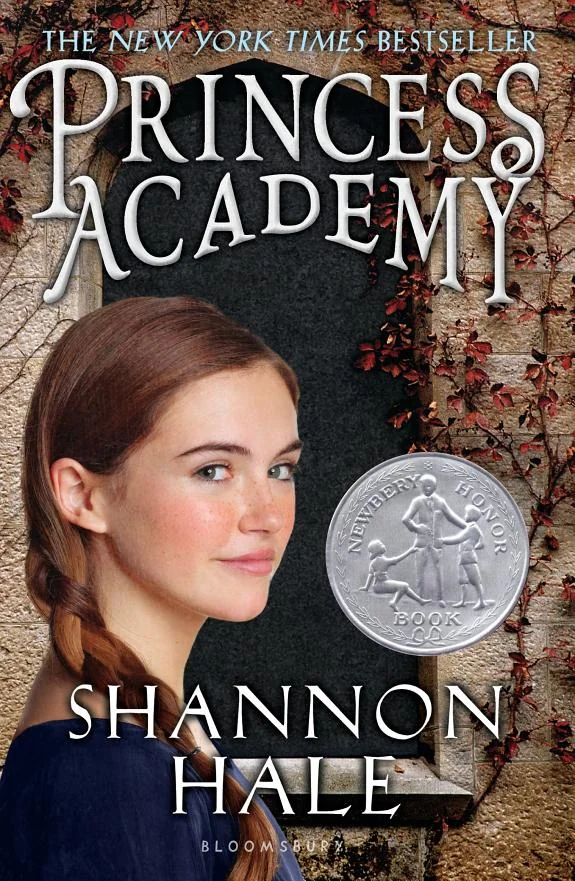
Princess Academy
 74
74

Princess Academy
Shannon Hale’s Princess Academy, upon its 2007 release, presented a refreshing departure from typical princess narratives by grounding its protagonist, Miri, in a realistic, albeit fantastical, educational setting. The novel excels in its portrayal of Miri’s intellectual awakening and her unexpected aptitude for diplomacy and strategy, a far cry from passive damsels. The meticulously detailed world of Asland and its unique cultural practices, such as the quarrying of stone, lend a tangible quality to the story. However, the strict adherence to a young adult audience sometimes results in a simplification of complex interpersonal dynamics; the motivations of some of the rival characters, while functional to the plot, lack the nuanced depth one might find in more mature fiction. The sequence where Miri must use her understanding of quarrying to solve a critical problem for the kingdom is a standout moment, demonstrating Hale’s ability to integrate specific world-building elements into the core conflict. Princess Academy offers a compelling, character-driven experience that rewards close attention to detail.
📝 Description
74
Shannon Hale's 2007 novel follows Miri, a quarry worker's daughter, sent to a royal academy.
Princess Academy, published in 2007, tells the story of Miri, a girl from a remote mountain quarry community. She is chosen to attend the Princess Academy in the capital city, an unusual path for someone of her background. Her education goes beyond learning courtly manners; she discovers her own capabilities and her deep connection to her homeland.
The novel is for young readers who enjoy narratives about personal development, finding oneself, and the difficulties of adapting to new social environments. It specifically appeals to those interested in stories that examine the conflict between established customs and a person's individual desires. The book was recognized as a Newbery Honor Book and an ALA Notable Children's Book.
While not overtly religious or occult, the book touches on esoteric themes through its focus on inherent potential and the idea that formal education can reveal latent talents. Miri's journey involves understanding her own inner strength and how her background shapes her perception. The narrative suggests that true growth comes from recognizing and honoring one's roots, even when in unfamiliar or formal settings, mirroring concepts of self-realization found in various wisdom traditions.
💡 Why Read This Book?
• Gain insight into the power of education to reveal latent talents, as Miri discovers her aptitude for diplomacy and strategy at the Princess Academy, a skill honed through rigorous academic challenges. • Experience the tension between societal expectations and personal identity, observing Miri’s journey to assert her unique voice and heritage within the formal structure of the academy. • Understand the symbolic weight of stone and quarrying, as these elements become integral to the plot, representing Miri's strength, her village's livelihood, and a source of unexpected solutions.
⭐ Reader Reviews
Honest opinions from readers who have explored this book.
❓ Frequently Asked Questions
What is the primary setting of Princess Academy?
The primary setting is the Kingdom of Asland, specifically within the Princess Academy located near the capital city, and Miri's home village in the mountains.
Who is the protagonist of Princess Academy?
The protagonist is Miri, a fourteen-year-old girl from a remote mountain village who is chosen to attend the Princess Academy.
What kind of training do the girls receive at the academy?
The girls receive training in courtly manners, diplomacy, history, and various academic subjects, preparing them for potential royal marriages or influential positions.
What makes Princess Academy unique compared to other princess stories?
It focuses on education, intelligence, and diplomacy rather than solely on romance or magical abilities, grounding the story in Miri's intellect and resourcefulness.
What is the significance of the quarry in the book?
The quarry is central to Miri's village's economy and her own identity. It symbolizes strength, hard work, and a connection to her roots, becoming a source of problem-solving.
When was Princess Academy first published?
Princess Academy was first published on April 17, 2007.
🔮 Key Themes & Symbolism
Education as Empowerment
The novel profoundly explores how formal education can be a tool for empowerment, particularly for individuals from marginalized backgrounds. Miri, initially a village girl, finds her voice and potential amplified through the rigorous curriculum of the Princess Academy. This theme moves beyond simple schooling, highlighting how knowledge acquisition, critical thinking, and strategic learning can unlock previously unrecognized abilities, allowing Miri to navigate complex social and political situations. The academy's purpose is not just to train princesses, but to cultivate leadership and intellect.
Identity and Belonging
Princess Academy studies the struggle for identity when one is removed from familiar surroundings. Miri grapples with maintaining her mountain heritage while adapting to the sophisticated culture of the court. The narrative questions whether true identity is shaped by one's origins or by the choices one makes and the skills one acquires. The girls at the academy represent various backgrounds, creating a microcosm where belonging is earned through merit and connection, not just birthright.
The Value of Labor
Contrary to typical fairy tales, this book emphasizes the dignity and importance of manual labor and practical skills. The quarrying that Miri’s village is known for is not depicted as primitive, but as a sophisticated and essential industry. Miri's understanding of stone and her connection to her village’s work become crucial assets, demonstrating that practical knowledge holds as much, if not more, value than courtly etiquette in certain situations. This challenges the perception of 'useful' skills.
Diplomacy and Strategy
The academy's curriculum, as experienced by Miri, focuses heavily on developing diplomatic skills and strategic thinking. The narrative showcases how understanding people, history, and communication are vital for leadership. Miri's success hinges not on charm alone, but on her ability to analyze situations, anticipate consequences, and employ reasoned arguments, reflecting a more cerebral approach to influence and governance than often portrayed in similar stories.
💬 Memorable Quotes
Direct passages from the work, attributed to the author.
“The stone remembers.”
— This phrase suggests a deeper connection to the natural world and the history embedded within the earth, hinting at an intuitive understanding or a hidden wisdom associated with the quarry.
“It is not just about being a princess, but about being a leader.”
— This statement redefines the traditional concept of a princess, emphasizing qualities of leadership, intellect, and responsibility over mere lineage or appearance.
“You have the voice of the mountain in you.”
— This metaphorical quote highlights Miri's connection to her heritage and the strength derived from her upbringing, contrasting it with the artificiality of court life.
“The greatest danger to any kingdom is not an enemy at the gate, but ignorance within the walls.”
— This highlights the book's emphasis on knowledge and education as paramount for societal stability and effective governance, framing ignorance as a critical threat.
💡 Key Ideas
Editorial paraphrase of the work's core concepts — not direct quotes.
Miri, you are a princess. You are to be a lady of the court.
This line signifies the societal expectation placed upon Miri and the other girls, defining their future roles based on perceived status and the academy's purpose.
🌙 Esoteric Significance
Tradition
While not explicitly adhering to a single esoteric lineage, Princess Academy can be viewed through a lens informed by Hermetic principles, particularly the concept of 'As Above, So Below,' relating the microcosm of the academy to the macrocosm of the kingdom. The emphasis on education and self-mastery aligns with the Hermetic pursuit of gnosis and the transformation of the self. The book also touches upon archetypal feminine power, a theme explored in various mystical traditions, by showcasing female intellect and agency as primary forces.
Symbolism
The stone quarried by Miri's village serves as a potent symbol. In many traditions, stone represents stability, foundation, and the earth's enduring strength. Its quarrying can symbolize the process of excavating hidden truths or potential within oneself. The academy itself can be seen as a crucible, a place where raw potential (the unpolished stone) is shaped and refined into something of societal value (a finished gem or structure), reflecting alchemical processes of transformation.
Modern Relevance
Contemporary discussions around education reform and the development of 'soft skills' like critical thinking and emotional intelligence echo the core themes of Princess Academy. Thinkers in positive psychology and leadership development might find Miri's journey a compelling narrative for illustrating how structured learning environments can foster resilience and strategic acumen. The book's focus on a protagonist who derives power from her intellect and connection to her roots appeals to modern ideals of authentic leadership and the importance of cultural heritage.
👥 Who Should Read This Book
• Young readers interested in stories where intelligence and education are the primary tools for success, offering an alternative to tales focused solely on romance or magic. • Individuals exploring themes of self-discovery and identity formation, particularly those who have experienced transitions or felt like outsiders in new environments. • Educators and parents seeking literature that highlights the value of academic rigor, practical skills, and the empowerment that comes from learning and intellectual growth.
📜 Historical Context
Shannon Hale's Princess Academy, released in 2007, arrived during a significant boom in young adult literature, a genre that saw increasing critical acclaim and commercial success. The novel stood out by focusing on intellectual development and practical skills within a royal academy setting, diverging from more common romance-centric princess narratives. Its recognition as a Newbery Honor Book in 2008, a prestigious award from the Association for Library Service to Children, solidified its place within contemporary children's literature. This period also saw authors like J.K. Rowling achieving global phenomenon status with series like Harry Potter, which, while different in genre, also explored themes of education, hidden potential, and the challenges of growing up in extraordinary circumstances. The critical reception and enduring popularity of Princess Academy suggest it tapped into a desire for stories that celebrated intelligence and resourcefulness in young female protagonists.
📔 Journal Prompts
Miri's voice of the mountain, its significance in her identity.
The academy's curriculum and its role in shaping potential.
Reflect on the symbolism of the quarry and its connection to inner strength.
Compare and contrast the formal education at the academy with Miri's village knowledge.
The diplomatic challenges faced by Miri and the strategies she employed.
🗂️ Glossary
Asland
The fictional kingdom where the Princess Academy is located. It is characterized by a structured society and a focus on education for its future leaders.
Princess Academy
A prestigious institution within Asland dedicated to educating young women, not necessarily of royal birth, for positions of influence and potential marriage into royal families.
Quarry
A place where stone is extracted from the earth. In the book, it is central to Miri's village economy and symbolizes her heritage and strength.
Diplomacy
The art and practice of conducting negotiations between representatives of states or groups. In the book, it's a key skill taught at the academy.
Courtly Manners
The refined behavior, etiquette, and social graces expected of individuals in royal or noble circles, a significant part of the academy's curriculum.
Mountain Village
Miri's home, representing a contrasting environment to the sophisticated court, emphasizing a connection to nature and practical labor.
Newbery Honor Book
An award given by the Association for Library Service to Children to distinguished children's books, signifying critical literary merit.
This book appears in 1 collection
🔮 Readers Also Liked
Browse all →









From the “Telepathy” Collection
View all →







More Free Occult Philosophy Books
View all →