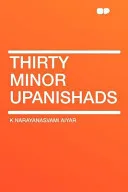
Thirty Minor Upanishads
 83
83

Thirty Minor Upanishads
K. Narayanasvami Aiyar’s "Thirty Minor Upanishads" offers a commendable effort in presenting these less-discussed Vedic texts. The commitment to avoiding OCR errors is a significant strength, providing a cleaner reading experience than many digital reproductions. A particular passage in the 'Maitrayaniya Upanishad' section, discussing the nature of the self as distinct from the body, is rendered with unusual clarity. However, the book's primary limitation lies in its lack of deep interpretive commentary. While the transcription is faithful, readers seeking extensive scholarly analysis or contextualization beyond the textual surface might find it wanting. The edition functions best as a reliable source text rather than a comprehensive guide. It serves as a valuable, if unadorned, window into a specific segment of Hindu scripture.
📝 Description
83
K. Narayanasvami Aiyar's 2012 edition presents thirty Sanskrit philosophical texts beyond the principal Upanishads.
This volume collects thirty Sanskrit philosophical texts, offering a view into Hindu thought beyond the more commonly studied Upanishads. K. Narayanasvami Aiyar's careful transcription ensures accuracy, making these dialogues accessible to a wider audience. The edition prioritizes clarity in presenting these ancient philosophical discussions.
It is suited for students of comparative religion, philosophy, and Eastern mysticism who wish to grasp the wider scope of Upanishadic writings. Those interested in texts concerning yoga, renunciation, and specific deities will find particular use. Scholars examining the development of Indian philosophical traditions will also benefit from its contents.
The Upanishads, written over centuries, form a core of Vedanta philosophy. While the "major" Upanishads date from approximately 800-200 BCE, these "minor" works often represent later thoughts and interpretations. Aiyar's work, first published in 2012, situates these texts within the larger field of Indian spiritual literature.
These "minor" Upanishads, often overlooked compared to their "major" counterparts, reveal a more diverse and later development of Vedantic thought. They frequently focus on practical aspects of spiritual realization, including specific yogic techniques and the nature of consciousness, sometimes in ways that resonate with proto-tantric or devotional streams within Hinduism. Their inclusion provides a richer understanding of the varied paths and philosophical inquiries that arose within the broader Upanishadic tradition.
💡 Why Read This Book?
• Gain access to esoteric philosophical dialogues not typically covered in introductory Vedanta, such as the specific yogic disciplines outlined in the 'Yogatattva Upanishad', offering unique meditative techniques. • Understand the development of Upanishadic thought beyond the classical period by examining texts that may reflect later philosophical and ascetic movements within Hinduism. • Appreciate the textual integrity of ancient Sanskrit works, as Aiyar's edition prioritizes accurate transcription over automated processes, preserving the nuances of the original 'Atma-bodha Upanishad'.
⭐ Reader Reviews
Honest opinions from readers who have explored this book.
❓ Frequently Asked Questions
What distinguishes 'Thirty Minor Upanishads' from the principal Upanishads?
The 'minor' Upanishads, like those in this collection, often focus on specific yogic practices, sectarian deities, or later philosophical interpretations, unlike the more foundational metaphysical inquiries of the principal Upanishads like the Brihadaranyaka or Chandogya.
Who was K. Narayanasvami Aiyar?
K. Narayanasvami Aiyar was an Indian scholar and translator known for his work on Sanskrit texts. His dedication to accurate transcription is evident in this edition, which was first published in 2012, building on earlier scholarly efforts.
Are these Upanishads considered less important than the major ones?
Not necessarily less important, but they often address more specialized topics or reflect later stages of philosophical development. They offer a broader perspective on the diverse spiritual landscape of ancient India.
What is the significance of avoiding OCR in this book?
Avoiding Optical Character Recognition (OCR) means the text was likely transcribed manually or through more advanced methods, reducing the introduction of typos and errors common in older, scanned texts, thus preserving textual integrity.
Does this book explain the practice of Yoga?
Yes, several Upanishads within this collection, such as the 'Yogatattva Upanishad', specifically detail yogic principles and practices, offering insights into the philosophical underpinnings of these disciplines.
When was this collection originally compiled or translated?
While K. Narayanasvami Aiyar's edition was first published in 2012, the original Sanskrit texts themselves were composed over centuries, with many 'minor' Upanishads reflecting later periods than the major ones.
🔮 Key Themes & Symbolism
The Nature of Reality (Brahman)
The collection looks at the concept of Brahman, the ultimate, unchanging reality underlying the universe. Texts like the 'Maha Upanishad' explore the relationship between the individual soul (Atman) and this supreme consciousness, often through allegorical narratives and philosophical discourse. The focus is on realizing the non-dualistic nature of existence and transcending the illusion of multiplicity.
Yogic Disciplines and Practices
Several Upanishads within this compilation, notably the 'Yogatattva Upanishad', provide detailed explanations of yogic techniques. These range from breath control (pranayama) and meditation (dhyana) to specific postures (asana) and the purification of subtle energy channels. The aim is to achieve control over the mind and body, leading to spiritual insight and liberation.
The Path to Liberation (Moksha)
The texts collectively outline various paths and philosophies leading to 'moksha', or liberation from the cycle of birth and death. This involves understanding the true nature of the self, detachment from worldly desires, and the realization of one's unity with Brahman. Different Upanishads may emphasize knowledge (jnana), devotion (bhakti), or action (karma) as integral components of this path.
Self-Inquiry and Renunciation
Upanishads such as the 'Niralamba Upanishad' focus intensely on self-inquiry ('Atma-vichara') as a means to understand consciousness and the self. They often advocate for renunciation ('sannyasa') not merely as an external act but as an internal state of detachment from ego and material possessions, leading to profound spiritual understanding.
💬 Memorable Quotes
Direct passages from the work, attributed to the author.
“He who knows the Atman knows Brahman.”
— This concise statement, often found in Upanishadic thought, highlights the core Vedantic principle of the identity between the individual soul (Atman) and the universal consciousness (Brahman).
“The mind is the cause of bondage and liberation.”
— This reflects the emphasis on mental discipline and control found in many yogic and Vedantic texts. It suggests that the internal state of the mind is the primary factor determining one's spiritual freedom or enslavement.
“The world is an illusion, Brahman is the reality.”
— This expresses the concept of Maya, the illusory nature of the phenomenal world, and points towards the ultimate truth of non-dualistic reality (Brahman) as the sole existence.
“Yoga is the cessation of the fluctuations of the mind.”
— A direct reference to Patanjali's Yoga Sutras, this highlights the objective of yogic practice: to achieve a state of mental stillness and clarity through disciplined effort.
“True knowledge is realizing oneself as pure consciousness.”
— This captures the goal of Upanishadic wisdom – the direct experiential realization of the self as unchanging, attributeless consciousness, distinct from the perishable body and mind.
🌙 Esoteric Significance
Tradition
These texts belong to the Vedantic tradition within Hinduism, a lineage deeply rooted in mystical and philosophical inquiry. They are considered esoteric because their teachings often require deep contemplation and direct experience, moving beyond mere intellectual understanding to reveal the nature of ultimate reality and the self. They fit within the broader stream of Indic mystical thought that seeks union with the divine or ultimate truth.
Symbolism
Key symbols include the 'Om' syllable, representing the primordial sound and the totality of existence, and the 'lotus', often symbolizing purity, spiritual awakening, and the unfolding of consciousness. The concept of 'fire' (Agni) frequently appears, symbolizing purification, transformation, and the divine presence within.
Modern Relevance
Contemporary spiritual seekers and practitioners of yoga and meditation often engage with these texts. Thinkers in modern Vedanta and comparative philosophy continue to analyze their teachings. Practices derived from Upanishadic yoga, focusing on mindfulness and self-realization, are globally popular, demonstrating the enduring relevance of these ancient insights for personal transformation.
👥 Who Should Read This Book
• Students of comparative religion and philosophy seeking to understand the diversity within Hindu scripture beyond the core texts. • Practitioners of yoga and meditation interested in the philosophical foundations and esoteric interpretations of their disciplines. • Scholars of Sanskrit and Indian intellectual history looking for accurate transcriptions of lesser-known but significant philosophical works.
📜 Historical Context
The Upanishads, originating in ancient India between the 8th and 4th centuries BCE for the earlier strata, represent a key shift in Vedic thought, moving from ritualistic concerns to philosophical speculation. While the 'principal' Upanishads like the Brihadaranyaka and Chandogya laid the groundwork for Vedanta, the 'minor' Upanishads, often compiled later (some potentially as late as the medieval period or even later), explore more specialized themes. K. Narayanasvami Aiyar's edition, published in 2012, draws upon scholarship that contextualizes these texts within the broader development of Hindu philosophical schools. During the era when these minor texts likely emerged or gained prominence, philosophical discourse also included the rise of Buddhist and Jain traditions, offering alternative paths to liberation. The reception of these texts has historically been within monastic orders and scholarly circles, gradually filtering into wider spiritual practice.
📔 Journal Prompts
The concept of Brahman as presented in the 'Maha Upanishad'.
The yogic disciplines detailed in the 'Yogatattva Upanishad'.
The path to liberation (moksha) described across these texts.
The meaning of self-inquiry (Atma-vichara) in the 'Niralamba Upanishad'.
The symbolism of the lotus flower in spiritual awakening.
🗂️ Glossary
Atman
The individual soul or self, often considered identical to Brahman in Advaita Vedanta philosophy. It represents the true, eternal essence of a being.
Brahman
The ultimate, unchanging reality or absolute consciousness that underlies all existence in Hinduism. It is the supreme cosmic spirit.
Moksha
Liberation from the cycle of birth, death, and rebirth (samsara). It is the ultimate spiritual goal in Hinduism, achieved through various paths like knowledge, devotion, or yoga.
Maya
The illusion or cosmic play that conceals the true nature of reality (Brahman) and makes the phenomenal world appear as real and separate.
Sannyasa
The practice of renunciation of worldly life, often undertaken by ascetics in Hinduism, signifying detachment from material possessions and ego.
Yoga
A spiritual discipline encompassing physical, mental, and spiritual practices aimed at achieving union with the divine or ultimate reality. Literally means 'union'.
Pranayama
A specific yogic practice involving the regulation and control of breath, considered vital for purifying the body and mind.