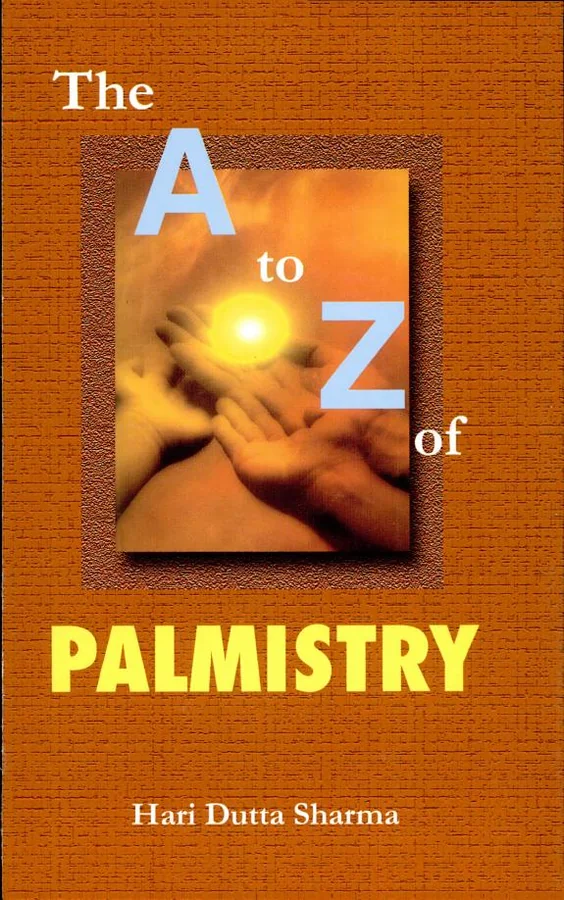
A to Z of Palmistry
 76
76

A to Z of Palmistry
Hari Dutta Sharma’s A to Z of Palmistry offers a methodical exploration of hand-reading, eschewing flamboyant prophecy for a structured lexicon. Its strength lies in its exhaustive cataloging; the sheer volume of lines, markings, and hand types detailed is impressive, providing a solid reference point. However, this systematic approach sometimes leads to a dry presentation, where the interpretive nuances can feel reduced to checklist items. A particular passage detailing the subtle variations in the headline's slope and its correlation to intellectual pursuits illustrates both the book's thoroughness and its potential for over-categorization. Ultimately, Sharma provides a valuable, albeit dense, compendium for the dedicated student of palmistry.
📝 Description
76
Hari Dutta Sharma published A to Z of Palmistry in 1995, detailing palmistry's interpretive elements.
Hari Dutta Sharma's 1995 book provides a systematic catalog of palmistry's interpretive elements. It breaks down hand-reading into detailed explanations of lines, mounts, shapes, and markings. The volume serves as a reference, aiming to give readers the vocabulary and understanding needed for palm interpretation. This work is for serious students of chiromancy seeking a structured approach beyond simple introductions. It appeals to those interested in self-analysis through the physical hand, and practitioners looking to enhance their interpretive skills. Readers familiar with esoteric studies or comparative divination will find its methodical nature useful.
The book covers fundamental concepts like the primary lines (Life, Head, Heart) and secondary lines (Fate, Sun, Mercury). It also details various mounts (Venus, Jupiter, Saturn) and their significance. Sharma explains hand shapes such as Earth, Air, Fire, and Water hands, and discusses minor markings like stars, crosses, and islands. Sharma's method stresses how these elements connect, advocating for holistic readings over isolated interpretations.
Published in the mid-1990s, A to Z of Palmistry emerged during a time of renewed interest in Western esoteric traditions. Sharma's work draws from classical Greek, Roman, and Indic Hasta Samudrika Shastra. It offers a more academic approach compared to some earlier spiritualist texts. The book positions itself within a growing body of occult scholarship, contributing to the lineage of palmistry literature.
💡 Why Read This Book?
• Understand the intricate system of palmistry beyond basic lines, learning to identify and interpret specific markings like the Rascette lines and their associated meanings, a detail often glossed over in simpler guides. • Gain a systematic framework for analyzing hand shapes, such as the distinct characteristics of a 'Conic' hand versus a 'Spatulate' hand, allowing for a more nuanced initial assessment of a person's innate disposition. • Explore the concept of palm mounts and their influence, moving beyond the major lines to understand how elevations like the Mount of Apollo or the Mount of Luna contribute to a holistic interpretation, as detailed in the book's extensive mount section.
⭐ Reader Reviews
Honest opinions from readers who have explored this book.
❓ Frequently Asked Questions
When was A to Z of Palmistry first published?
A to Z of Palmistry by Hari Dutta Sharma was first published in 1995. This edition represents a significant contribution to palmistry literature during the mid-1990s.
What are the main lines covered in A to Z of Palmistry?
The book meticulously covers the primary lines: the Life Line, Head Line, and Heart Line. It also delves into numerous secondary lines such as the Fate Line, Sun Line, and Mercury Line.
Does A to Z of Palmistry discuss hand shapes?
Yes, Hari Dutta Sharma dedicates considerable attention to classifying and interpreting different hand shapes, including elemental types like Earth, Air, Fire, and Water hands, and their corresponding personality traits.
Are minor markings like stars and crosses explained?
Certainly. The work provides detailed explanations for various minor markings found on the palm, including stars, crosses, squares, triangles, and islands, detailing their potential interpretations.
Is this book suitable for beginners in palmistry?
While comprehensive, its systematic and detailed nature makes it an excellent resource for dedicated beginners seeking a thorough grounding, though it may be dense for those seeking only a casual introduction.
What is the historical context of this book's publication?
Published in 1995, it emerged during a resurgence of interest in esoteric studies, offering a structured, almost encyclopedic approach to palmistry that contrasts with more mystical or anecdotal texts.
🔮 Key Themes & Symbolism
Systematic Interpretation of Hand Features
The core of Sharma's work lies in its systematic approach to interpreting the palm. It moves beyond generalized readings to offer a granular breakdown of every discernible feature. This includes not just the major lines (Life, Head, Heart) but also their subtle variations, breaks, and slopes. Furthermore, the book details the significance of the mounts, the fleshy pads on the palm, and how their development or flatness indicates specific character traits and potentials. The concept of assigning meaning to each specific marking, from a simple cross to a complex star, forms the bedrock of its interpretive method.
Hand Shapes as Foundational Indicators
A significant theme is the classification and interpretation of overall hand shapes. Sharma categorizes hands into elemental types—Earth, Air, Fire, and Water—and also discusses more specific forms like the conic, spatulate, or square hand. Each shape is linked to fundamental personality archetypes and inclinations. For instance, a 'Water' hand might suggest emotional depth and intuition, while an 'Air' hand points to intellectual curiosity and communication skills. This foundational analysis is presented as crucial for understanding the individual before examining the finer details of the palm.
The Language of Lines and Markings
The book functions as a lexicon for the 'language' of the palm. It meticulously lists and defines numerous lines beyond the main three, such as the Apollo Line (success), Mercury Line (communication), and various sister lines or influence lines. Equally important are the minor markings—grilles, stars, crosses, triangles, islands, and dots—each assigned specific interpretations, often dependent on their location. Sharma emphasizes that these markings are not static but can appear, disappear, or change, suggesting a dynamic interplay between fate and free will.
Holistic Reading of the Hand
Sharma advocates for a holistic approach, stressing that no single line or marking should be interpreted in isolation. A to Z of Palmistry guides the reader to synthesize information from the hand shape, the mounts, the major lines, and the minor markings to form a coherent portrait. The interplay between these elements is key. For example, a strong Heart Line might be modified by the presence of a grille on the Mount of Venus, suggesting emotional expression tempered by insecurity. This integrated perspective is presented as essential for accurate and meaningful palmistry.
💬 Memorable Quotes
Direct passages from the work, attributed to the author.
“The Life Line is not merely an indicator of longevity, but also vitality and physical constitution.”
— This highlights that the Life Line's meaning extends beyond mere lifespan, encompassing the individual's energy levels and inherent physical resilience.
“A star appearing on the Mount of Jupiter suggests pride and ambition, potentially leading to success.”
— This focuses on a specific marking (star) and its placement (Mount of Jupiter), linking it directly to aspirational qualities and their potential positive outcomes.
“The Head Line, when clear and long, indicates a well-developed intellect and capacity for logical thought.”
— This interpretation emphasizes the clarity and length of the Head Line as direct indicators of intellectual prowess and rational thinking abilities.
“Islands on the Heart Line can signify periods of emotional turmoil or blockage.”
— This points to a specific mark (island) on a major line (Heart Line), connecting it to challenges and hindrances in the emotional and relational spheres.
“The texture and flexibility of the hand itself offer clues to the native's temperament.”
— This suggests that the physical characteristics of the hand, such as its feel and pliability, provide fundamental insights into a person's core disposition and character.
🌙 Esoteric Significance
Tradition
A to Z of Palmistry primarily aligns with the Western tradition of chiromancy, which has roots stretching back to ancient Greece and Rome. It also incorporates elements suggestive of Indic palmistry (Hasta Samudrika Shastra), particularly in its detailed cataloging of lines and markings. While not explicitly tied to Hermeticism or Kabbalah, its systematic approach to understanding hidden patterns within a physical form can be seen as resonating with the Hermetic principle of 'As Above, So Below', viewing the hand as a microcosm reflecting the macrocosm of the individual's destiny and character.
Symbolism
Key symbols include the major lines – Life, Head, and Heart – each representing fundamental human experiences: vitality and physical being, intellect and thought, and emotion and relationships, respectively. The mounts, such as the Mount of Jupiter (ambition, leadership) and the Mount of Luna (imagination, intuition), symbolize inherent potentials and influences. Minor markings like the star (sudden event, often positive when well-placed) or the cross (obstacles, sometimes spiritual significance) act as specific hieroglyphs, offering nuanced commentary on the broader patterns indicated by the hand's structure.
Modern Relevance
Contemporary practitioners of palmistry, particularly those focused on psychological interpretation or self-discovery, find Sharma's work invaluable as a detailed reference. Its systematic cataloging appeals to modern sensibilities that seek structured knowledge. While the esoteric landscape has diversified, Sharma's approach provides a foundational lexicon that can be integrated into various modern practices, from comparative divination studies to somatic psychology explorations that examine the body as a map of experience.
👥 Who Should Read This Book
• Aspiring palmists seeking a comprehensive, systematic reference guide that details every significant line, mount, and marking on the hand. • Students of esoteric traditions interested in comparative divination who wish to understand the detailed mechanics of Western palmistry as presented in the late 20th century. • Individuals engaged in self-study of divination arts looking for a structured approach to interpret the physical hand as a map of personality and potential.
📜 Historical Context
The publication of Hari Dutta Sharma's A to Z of Palmistry in 1995 occurred during a period where esoteric studies were gaining broader, albeit often superficial, traction. While not a direct response to the burgeoning occult revival fueled by figures like Doreen Valiente or the popularization of Tarot by the Rider-Waite deck, Sharma's work offered a more academic, systematic counterpoint to the often-vague pronouncements found in popular New Age literature. It emerged in a landscape where traditional Western esoteric disciplines were being re-examined, drawing parallels with Indic traditions like Hasta Samudrika Shastra. Unlike the more mystical interpretations prevalent in some circles, Sharma's approach was grounded in detailed classification, aiming for a quasi-scientific rigor within the art of palmistry. Its reception was likely within dedicated circles of occultists and diviners seeking a comprehensive reference, distinguishing it from more accessible, mainstream introductions.
📔 Journal Prompts
The Mount of Venus’s prominence and its relationship to the palm’s texture.
Variations in the Head Line's starting point and its potential interpretations.
The appearance and meaning of the Rascette lines at the wrist.
Comparing the symbolism of a star versus a cross on the Mount of Apollo.
Reflecting on the Life Line's relationship to the Mount of Luna.
🗂️ Glossary
Mounts
The fleshy, raised pads on the palm located beneath the fingers and at the base of the palm. Each mount is associated with a planet and specific character traits or potentials (e.g., Mount of Jupiter relates to ambition and leadership).
Lines
The major and minor creases on the palm. The primary lines (Life, Head, Heart) are considered most significant, while secondary lines (Fate, Sun, Mercury) offer further details about specific aspects of life.
Markings
Specific symbols or patterns formed by lines or on the skin of the palm, such as stars, crosses, squares, islands, or triangles. Their interpretation depends heavily on their location and context.
Hand Shapes
The overall form and proportions of the hand, often categorized into elemental types (Earth, Air, Fire, Water) or specific shapes (e.g., Spatulate, Conic), which provide a general indication of personality.
Chirognomy
The study of the shape, size, and general characteristics of the hand and fingers, often considered the broader study of hand analysis, distinct from chiromancy (line reading).
Chiromancy
The practice of interpreting the lines and markings on the palm of the hand to gain insight into a person's character, past, present, and potential future.
Rascette Lines
The horizontal crease lines found at the base of the palm, near the wrist. Traditionally, they are associated with health, vitality, and longevity, with unique interpretations for each line.
This book appears in 1 collection
🔮 Readers Also Liked
Browse all →








From the “Palmistry” Collection
View all →








More Free Occult Philosophy Books
View all →