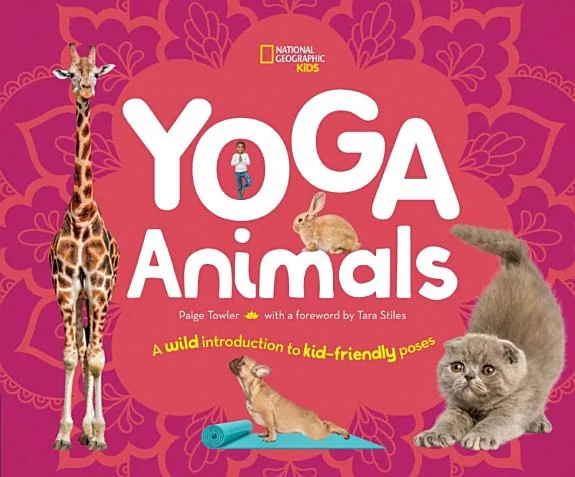
Yoga Animals
 83
83

Yoga Animals
Paige Towler's *Yoga Animals* succeeds admirably in its stated goal: making yoga accessible and delightful for young children. The book’s strength lies in its direct, visual approach. Pairing child-friendly yoga poses with corresponding animal imagery is an intuitive and engaging method that bypasses the often abstract nature of yoga philosophy for younger minds. The inclusion of a short poem adds a gentle lyrical quality. However, the book's primary limitation is its simplicity; while perfect for absolute beginners, it offers little depth for those seeking to explore the more nuanced aspects of yoga or its spiritual underpinnings. The 'Cobra Pose' section, for instance, is clear and visually appealing but stops short of discussing the symbolic resonance of the cobra in yogic traditions. Ultimately, *Yoga Animals* is a charming, functional primer for introducing children to physical postures and the concept of mindful movement.
📝 Description
83
Paige Towler's 2020 book, Yoga Animals, translates yoga poses into animal forms for young children.
Yoga Animals, published in 2020, makes yoga accessible for young children by linking classic postures to animal movements. The book presents simple, step-by-step instructions for each pose, illustrated with photographs of animals mimicking the postures. This approach aims to encourage physical activity and mindfulness in children.
Parents, educators, and caregivers can use this book to introduce yoga and mindfulness practices to kids. It is especially useful for families looking for calming activities after a busy day. Children who are drawn to animals and movement will likely find the book's concept engaging, helping them build a positive foundation in physical and mental well-being.
The core idea is the direct connection between yoga asanas and animal actions. Each pose is associated with a specific animal, showing how its physical shape resembles the yogic posture. This method simplifies learning for children and highlights yoga's benefits beyond physical exercise, such as fostering mindfulness and self-regulation for holistic childhood development.
While Yoga Animals uses the ancient practice of yoga, its presentation aligns with a modern trend of child-focused wellness literature. The book's publication in 2020 places it within a contemporary context where yoga and mindfulness for children have gained popularity. It echoes early childhood education methods that employ animal analogies for teaching and encouraging imitation, a technique used since the early 20th century.
💡 Why Read This Book?
• You will learn to guide children through yoga poses using animal analogies, a technique inspired by the book's direct correlation of asanas to animal forms, making yoga practice intuitive for young minds. • You will discover how to use the book's visual cues, specifically the photographs of animals mimicking poses, to encourage children's physical engagement and understanding of yoga. • You will gain a practical method for introducing mindfulness and calm to children, leveraging the book's structure that links animal movements to the practice of self-regulation.
⭐ Reader Reviews
Honest opinions from readers who have explored this book.
❓ Frequently Asked Questions
What age group is Yoga Animals best suited for?
Yoga Animals is best suited for preschool and early elementary-aged children, typically between the ages of 3 and 8. The simple instructions and animal-based analogies are designed for this developmental stage.
Are the yoga poses in Yoga Animals safe for children?
Yes, the poses presented in Yoga Animals are simplified and adapted for children, focusing on basic movements that are generally safe and beneficial for young bodies.
What are the main benefits of using Yoga Animals with children?
The book promotes physical activity, flexibility, balance, and body awareness. It also introduces mindfulness and helps children develop coping mechanisms for stress or overstimulation.
Does Yoga Animals explain the deeper philosophy of yoga?
No, Yoga Animals focuses primarily on the physical postures and their animal counterparts for a young audience. It introduces the concept of mindfulness but does not delve into complex yogic philosophy.
What kind of instructions are provided for the yoga poses?
The book provides simple, step-by-step instructions that are easy for children to follow, often accompanied by visual aids of animals demonstrating the poses.
Is Yoga Animals suitable for a classroom setting?
Absolutely. Its engaging format and clear instructions make it an excellent resource for teachers introducing yoga and mindfulness in a classroom or group setting.
🔮 Key Themes & Symbolism
Animal-Yoga Analogies
The core of Yoga Animals lies in its clever mapping of yoga postures to familiar animal movements. This approach transforms abstract physical exercises into imitative play. For instance, the 'lion' pose encourages a powerful exhalation and open-mouthed expression, while the 'kitten' pose promotes a gentle spinal arch. This theme taps into children's natural affinity for animals, making the practice of yoga feel less like instruction and more like imaginative exploration. It’s a pedagogical strategy rooted in experiential learning, making complex movements relatable and memorable.
Childhood Mindfulness
Beyond physical postures, the book introduces foundational concepts of mindfulness to young children. By encouraging them to 'stretch like a cobra' or 'calm down after a long day,' it subtly guides them toward self-awareness and emotional regulation. The animal poses serve as anchors for present-moment awareness, teaching children to focus on their breath and body sensations. This theme is crucial in early development, equipping children with tools to manage energy levels and cultivate inner peace through simple, animal-inspired exercises.
Early Introduction to Well-being
Yoga Animals acts as a gateway to a lifelong practice of physical and mental well-being for children. The book's accessible format, published in 2020, caters to a modern understanding of holistic child development. It emphasizes that practices like yoga are not just for adults but can be integrated into daily life from a young age. By presenting yoga through the engaging lens of animals, it aims to foster a positive association with movement, self-care, and emotional balance, setting a foundation for healthy habits.
Imaginative Play and Learning
This book champions the power of imaginative play as a vehicle for learning. Each animal pose is an invitation for a child to embody a creature, fostering creativity and storytelling. The accompanying poems further enhance this imaginative aspect. The connection between the animal's form and the yoga pose encourages observation and critical thinking in a child-friendly manner. This theme highlights how playful engagement can be an effective educational tool, making learning enjoyable and deeply ingrained.
💬 Memorable Quotes
Direct passages from the work, attributed to the author.
“Roar like a lion!”
— This phrase directly invites the child to embody the energy and sound of a lion, serving as a simple, actionable instruction for a specific yoga pose and its associated expression.
“Arch like a kitten!”
— This evokes the gentle, flexible movement of a kitten stretching, translating it into a clear cue for a specific yoga posture that emphasizes spinal flexibility.
“Stretch like a cobra!”
— This command uses the familiar image of a cobra's posture to guide children into a yoga pose, focusing on the extension and strength involved in the movement.
“Let these creatures inspire your young ones to get moving, practice mindfulness, or calm down after a long day.”
— This statement articulates the dual purpose of the book: encouraging physical activity through animal imitation while also introducing the benefits of yoga for emotional regulation and relaxation.
“Simple step-by-step instructions explain the kid-friendly moves.”
— This highlights the book's pedagogical approach, emphasizing clarity and ease of understanding for its young target audience, ensuring accessibility for all children.
🌙 Esoteric Significance
Tradition
While *Yoga Animals* does not explicitly align with a specific esoteric lineage like Hermeticism or Theosophy, it draws upon the foundational principles of Hatha Yoga, one of the oldest branches of Yoga, which is itself deeply intertwined with various yogic and tantric traditions. The book simplifies these ancient practices for a modern, young audience, focusing on the physical (asana) and breath (pranayama) aspects often emphasized in introductory yoga. It presents yoga as a tool for well-being, mirroring how many esoteric traditions utilize physical and mental disciplines for self-cultivation.
Symbolism
The primary symbolism in *Yoga Animals* resides in the animal forms themselves. Each animal represents not just a physical posture but also inherent qualities: the lion's courage, the cobra's grounded power, the kitten's flexibility. These animals act as archetypal symbols that children can readily grasp, connecting them to their own nascent emotional and physical expressions. The human child imitating the animal becomes a microcosm, learning to integrate these symbolic qualities into their own being through embodied practice.
Modern Relevance
Contemporary approaches to child psychology and education increasingly emphasize the benefits of mindfulness, somatic practices, and emotional intelligence. *Yoga Animals* speaks directly to this trend, offering a simple, engaging entry point for children. Thinkers and practitioners focused on child development, trauma-informed care, and holistic education find value in its method. It provides a tangible tool for parents and educators seeking to foster resilience and self-regulation in young children in an accessible, non-dogmatic way.
👥 Who Should Read This Book
• Parents and guardians seeking engaging ways to introduce their young children (ages 3-8) to physical activity, mindfulness, and calm. • Early childhood educators and yoga instructors looking for a resource to make yoga sessions fun and accessible for preschoolers and kindergarteners. • Caregivers interested in fostering children's body awareness, flexibility, and emotional regulation through playful, animal-themed activities.
📜 Historical Context
Published in 2020, Paige Towler's *Yoga Animals* emerges within a burgeoning field of children's wellness literature. The early 21st century has seen a significant rise in resources aimed at introducing yoga and mindfulness to young audiences, driven by increasing awareness of mental health and emotional regulation needs in childhood. This period also marked a wider acceptance of yoga beyond its traditional spiritual roots, incorporating it into physical education and therapeutic practices. While yoga's origins are ancient, its popularization for children often employs simplified, playful methods. In this context, *Yoga Animals* aligns with contemporary pedagogical trends that use animal analogies—a method employed in various educational spheres since at least the mid-20th century—to make complex concepts accessible. Its reception has been within the sphere of parenting and early childhood education resources, rather than academic discourse on yoga philosophy.
📔 Journal Prompts
The 'Lion Pose' and its roar: How does embodying this animal affect your energy?
Reflecting on the 'Kitten Pose,' explore the feeling of gentle spinal movement.
Connecting the 'Cobra Pose' to the animal's posture: what sensations arise in your body?
Consider the book's aim: How can animal poses help children manage their energy levels?
The relationship between animal imitation and practicing mindfulness, as presented in the book.
🗂️ Glossary
Asana
A physical posture or pose in yoga. In *Yoga Animals*, each asana is represented by an animal's movement.
Mindfulness
The practice of paying attention to the present moment without judgment. The book encourages this through focused, animal-inspired movements.
Hatha Yoga
A branch of yoga that focuses on physical postures and breathing techniques. *Yoga Animals* simplifies Hatha Yoga poses for children.
Self-Regulation
The ability to manage one's emotions, behavior, and physical reactions. The book suggests yoga poses can aid in calming children.
Asanas
Plural of Asana. Refers to the various physical postures practiced in yoga.
Pranayama
The practice of breath control in yoga. While not explicitly detailed, mindful breathing is implied in the calming aspects of the poses.
Meditation
A practice where an individual uses a technique – such as mindfulness or focusing the mind on a particular object, thought, or activity – to train attention and awareness, and achieve a mentally clear and emotionally calm and stable state. The book introduces foundational elements for children.
This book appears in 1 collection
🔮 Readers Also Liked
Browse all →









From the “Hatha Yoga” Collection
View all →






More Free Occult Philosophy Books
View all →