Bildatlas der Akupunktur
 81
81

Bildatlas der Akupunktur
Yu-Lin Lian's "Bildatlas der Akupunktur" presents a meticulous, almost cartographic, approach to the acupuncture system. Its strength lies undeniably in its visual clarity; the illustrations are precise, offering a valuable reference for locating points. The integration of classical theory with practical application, as seen in the detailed point indications, is commendable. However, the work sometimes feels overly encyclopedic, potentially overwhelming for absolute beginners who might benefit from more introductory narrative. A passage detailing the specific energetic qualities of Stomach 36 (Zusanli), for instance, is highly informative but assumes a foundational knowledge of Qi dynamics. For experienced practitioners, it functions as an excellent, if dense, anatomical and energetic atlas. It succeeds as a detailed visual lexicon for a complex system, though it does not offer a novel theoretical framework beyond established TCM principles.
📝 Description
81
Yu-Lin Lian's 2009 Bildatlas der Akupunktur maps the body's energetic pathways with detailed illustrations.
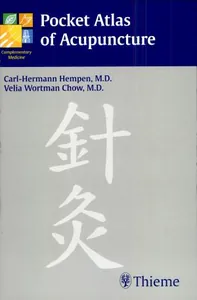
Published in 2009, Yu-Lin Lian's Bildatlas der Akupunktur (Pictorial Atlas of Acupuncture) offers a comprehensive visual and textual guide to acupuncture points and their associated meridian channels. The atlas presents anatomical and energetic information in a clear, structured format, aiming to clarify the precise location, therapeutic indications, and practical uses of many acupuncture points. It combines theoretical foundations with actionable applications for practitioners and students.
This resource is primarily intended for those studying or practicing Traditional Chinese Medicine (TCM) and acupuncture. It serves those who need a precise, image-rich reference to better comprehend the body's energetic system. Healthcare professionals, including acupuncturists, herbalists, and physiotherapists interested in complementary medicine, will find the detailed illustrations and explanations useful. Researchers and scholars focusing on Asian medical systems and esoteric anatomy may also benefit from its systematic approach.
While published in 2009, Lian's work is grounded in centuries of Chinese medical practice, a tradition that gained significant international recognition in the late 20th century. The book builds upon this lineage, presenting a systematic view of acupuncture's energetic map. It reflects a long-standing interest in understanding the body's subtle energies and their influence on health, a concept central to many esoteric traditions that seek to harmonize internal and external forces.
💡 Why Read This Book?
• Gain precise anatomical and energetic knowledge of over 300 acupuncture points, understanding their specific functions and therapeutic applications as detailed in the atlas's point-by-point descriptions. • Grasp the intricate flow of Qi through the 12 primary meridians and extraordinary vessels, visualizing their pathways and interconnections as presented in the book's detailed meridian charts. • Enhance practical acupuncture skills by referencing the atlas's clear, verifiable point locations and indications, drawing directly from the systematic approach established by Yu-Lin Lian's 2009 publication.
⭐ Reader Reviews
Honest opinions from readers who have explored this book.
❓ Frequently Asked Questions
What is the primary focus of Bildatlas der Akupunktur?
The primary focus is providing a detailed visual and textual reference for acupuncture points and their associated meridian pathways, aiming for clarity in location, indications, and therapeutic uses.
Who is the intended audience for this book?
It is intended for practitioners and students of Traditional Chinese Medicine (TCM), acupuncturists, herbalists, physiotherapists, and researchers interested in Asian medical systems and esoteric anatomy.
When was Bildatlas der Akupunktur first published?
The book was first published in 2009 by author Yu-Lin Lian.
Does the book explain the theory behind acupuncture?
Yes, it integrates theoretical underpinnings of Qi and meridian theory with practical application, though its primary emphasis is on the anatomical and energetic mapping of points.
Are there specific meridians or points detailed in the atlas?
Yes, the atlas systematically details the 12 primary meridians, their associated extraordinary vessels, and over 300 acupuncture points, including their functions and therapeutic uses.
What makes this atlas different from other acupuncture books?
Its strength lies in its systematic, visual approach, offering precise illustrations and a structured presentation of points and meridians, serving as a detailed reference guide.
🔮 Key Themes & Symbolism
Meridian System Mapping
The atlas meticulously maps the 12 primary meridians and the extraordinary vessels, illustrating the energetic pathways that traverse the body. It emphasizes the interconnectedness of these channels, presenting acupuncture not as isolated point treatments but as interventions within a complex, flowing system. The visual representations are crucial for understanding how Qi circulates and where blockages might occur, offering practitioners a framework for diagnosis and treatment based on energetic topography. The detailed charts serve as a foundational element for any serious study of acupuncture's energetic architecture.
Acupuncture Point Energetics
Each acupuncture point is presented with its precise location, its energetic function (e.g., tonifying, dispersing, clearing), and its primary therapeutic indications. This goes beyond simple anatomical placement, studying the 'spirit' or energetic quality of each point. The atlas provides insights into how specific points can influence particular organs, emotions, or physiological processes, reflecting the nuanced understanding developed over centuries of practice. This detailed classification is essential for selecting appropriate points for specific health concerns.
Integration of Theory and Practice
Lian's work bridges classical TCM theory with the practical demands of clinical application. It consolidates traditional knowledge, making it accessible through clear diagrams and concise descriptions. The atlas serves as a bridge for students and practitioners to connect theoretical concepts like Yin/Yang, Qi, and Blood with tangible points and palpable meridians. This integration is vital for developing a holistic understanding and effective therapeutic strategy, grounding esoteric concepts in observable anatomical and energetic frameworks.
Visual Reference for TCM
As a "Bildatlas" (Pictorial Atlas), the visual component is paramount. The book functions as a high-quality reference tool, offering detailed anatomical illustrations that highlight the precise location of acupuncture points. These visuals are critical for practitioners to ensure accuracy in needling and moxibustion. The clarity of the diagrams allows for a deeper appreciation of the spatial relationships between points and their corresponding energetic pathways, serving as an indispensable visual aid for learning and practice.
💬 Memorable Quotes
Direct passages from the work, attributed to the author.
“The precise location of acupuncture points is fundamental to effective treatment.”
— This statement underscores the book's core principle: anatomical accuracy is paramount. It suggests that without correct point identification, the energetic and therapeutic effects of acupuncture cannot be reliably achieved.
“Each point possesses distinct energetic properties that influence the body's Qi.”
— This highlights the nuanced understanding of acupuncture points beyond mere anatomical markers. It points to the energetic qualities and specific actions each point has on the vital life force (Qi) within the body.
“Understanding the flow of Qi is key to mastering acupuncture.”
— This interpretation stresses the dynamic aspect of acupuncture. It suggests that a practitioner must comprehend the movement and circulation of vital energy (Qi) to effectively apply therapeutic interventions.
💡 Key Ideas
Editorial paraphrase of the work's core concepts — not direct quotes.
Meridians form an intricate network connecting superficial points to internal organs.
This paraphrase emphasizes the systemic nature of acupuncture. It explains how the channels (meridians) act as conduits, linking external points to internal physiological functions and organ systems.
This atlas provides a systematic guide to the body's energetic map.
This paraphrase positions the book as a comprehensive resource. It suggests that the work offers a structured and organized presentation of the body's energetic pathways and points, serving as a map for practitioners.
🌙 Esoteric Significance
Tradition
While grounded in the empirical and theoretical framework of Traditional Chinese Medicine, which itself possesses esoteric dimensions concerning Qi and spirit, "Bildatlas der Akupunktur" primarily functions as a highly detailed anatomical and energetic atlas. Its lineage is deeply rooted in classical Chinese medical texts dating back millennia, emphasizing the circulation of vital energy (Qi) and its relationship to health and disease. It departs from more purely philosophical or spiritual interpretations by focusing on the tangible, mappable aspects of the energetic body, making esoteric concepts accessible through precise visual and textual data.
Symbolism
The meridians themselves are symbolic, representing the unseen energetic pathways that connect the physical body with its vital life force. Each acupuncture point carries symbolic weight, often related to its anatomical location (e.g., points on the head symbolizing consciousness or mental states) or its energetic action (e.g., a point symbolizing 'calming the spirit'). The very act of mapping these points and channels can be seen as a form of esoteric cartography, charting the microcosm of the human body according to energetic principles rather than solely physical structures.
Modern Relevance
Contemporary practitioners of acupuncture, TCM, and even integrative medicine draw heavily on the systematic approach exemplified by works like Lian's atlas. Its detailed point locations and indications are crucial for modern clinical practice, informing everything from basic needling techniques to advanced diagnostic protocols. Thinkers and schools exploring the intersection of consciousness, energy medicine, and physiology often reference the meridian system as a verifiable energetic map, making this atlas a key resource for understanding these connections in contemporary practice.
👥 Who Should Read This Book
• **Acupuncture Students and Interns:** Those beginning their formal training in TCM will find this atlas an indispensable visual and textual reference for learning point locations, meridians, and basic indications. • **Experienced Acupuncturists:** Practitioners seeking to refine their anatomical knowledge, refresh their understanding of specific points, or consult a reliable atlas for complex cases will benefit from its detailed accuracy. • **Holistic Health Practitioners:** Individuals in complementary and alternative medicine fields, such as shiatsu therapists or energetic healers, can use this resource to understand the foundational energetic map of the body as understood in TCM.
📜 Historical Context
Published in 2009, "Bildatlas der Akupunktur" emerges in an era where Traditional Chinese Medicine (TCM) had already achieved significant global recognition. The mid-to-late 20th century saw a surge in Western interest, partly fueled by geopolitical shifts and scientific inquiry into acupuncture's efficacy, notably following James Reston's experience in China in 1971. This period also saw the formalization of TCM education in Western institutions, creating a demand for comprehensive reference materials. While acupuncture's theoretical underpinnings originate in ancient China, texts like Lian's represent a modern effort to systematize and present this knowledge in accessible formats, often building upon the foundational work of earlier physicians and scholars who sought to bridge Eastern and Western medical paradigms. The reception of TCM texts globally has generally been positive among alternative medicine practitioners, though mainstream medical acceptance has varied, with ongoing debates regarding its mechanisms.
📔 Journal Prompts
The energetic function of Gallbladder 34 (Yanglingquan) in influencing tendons.
Visualizing the path of the Lung Meridian from its origin to its termination.
The therapeutic indications for Pericardium 6 (Neiguan) and its connection to the chest.
How the concept of Qi flow relates to the anatomical depiction of the meridians.
Comparing the energetic qualities of two points located on the same meridian.
🗂️ Glossary
Qi
The fundamental concept of vital energy or life force that circulates throughout the body in Traditional Chinese Medicine, influencing all physiological and spiritual functions.
Meridian
An invisible pathway or channel through which Qi and Blood circulate in the body, connecting acupuncture points and linking the exterior to the interior.
Acupoint
Specific locations on the meridians where Qi is concentrated, used in acupuncture and acupressure for therapeutic purposes.
TCM
Traditional Chinese Medicine, a holistic system of healthcare developed over thousands of years, encompassing acupuncture, herbal medicine, diet, and other therapies.
Indications
The specific conditions, symptoms, or diseases for which a particular acupuncture point is traditionally used in treatment.
Extraordinary Vessels
A group of eight channels in TCM that have unique functions and connections, supplementing the 12 primary meridians in regulating Qi and Blood.
Tonify
A therapeutic method in TCM aimed at strengthening or supplementing deficient Qi, Blood, or Yin/Yang.