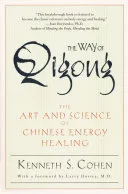
The Way of Qigong
 84
84

The Way of Qigong
Kenneth S. Cohen’s *The Way of Qigong* offers a thorough examination of a practice often reduced to mere exercise. Cohen, a scholar and practitioner, meticulously traces Qigong's lineage, moving beyond superficial descriptions to reveal its depth as a sophisticated mind-body healing system. His explanation of Qi, the vital life force, and its manipulation through breath and intention is particularly lucid, providing a framework for understanding Qigong's therapeutic potential. The book's strength lies in its scholarly rigor, grounding esoteric concepts in historical context and observed efficacy, especially regarding its use in treating severe illnesses. A potential limitation is that the sheer breadth of information might feel overwhelming for absolute beginners seeking only simple routines. However, Cohen's detailed exploration of the energetic principles and historical applications makes this an invaluable resource for serious students. It serves as an essential primer for anyone wishing to comprehend Qigong beyond the physical postures.
📝 Description
84
Kenneth S. Cohen's 2018 book introduces Qigong, a Chinese mind-body system.
The Way of Qong offers a detailed introduction to the Chinese practice of Qigong, a system that integrates mind, body, and spirit. It uses gentle movements, breath control, and focused intention to improve vitality, aid healing, and encourage spiritual growth. The book explains how Qigong can address physical health issues and bolster the immune system, drawing from centuries of observation and use in Chinese culture. It is for anyone interested in holistic health practices, traditional Chinese medicine, or mind-body disciplines. Whether you are new to Qigong or have some experience, this book provides practical advice and theoretical background for reducing stress, building energy, and advancing spiritual understanding.
Cohen examines Qigong within its historical context, tracing its origins back thousands of years to Taoist and Buddhist traditions in China. The book details how these practices evolved and became a significant part of Chinese culture and medicine. It addresses the central concept of 'Qi,' or vital life force, and how Qigong cultivates it through specific exercises. The text also explains the energetic pathways, or meridians, in the body and how Qigong influences them to create balance, remove blockages, and harmonize the mind and body for better health and awareness.
Qigong is an ancient Chinese practice rooted in Taoist and Buddhist traditions, developed over millennia as a method for cultivating vital life force, or 'Qi.' It involves specific movements, breathing techniques, and mental focus aimed at harmonizing the body's energetic system, often understood through the concept of meridians. This practice is considered a cornerstone of traditional Chinese medicine and spiritual development, seeking to promote health, longevity, and inner balance. Cohen's book situates Qigong within this rich historical and philosophical lineage, making its principles accessible to a modern audience.
💡 Why Read This Book?
• Understand the foundational concept of Qi, the vital life force central to Qigong, and how its cultivation through specific movements and breathwork, as detailed in Cohen's work, can directly impact personal energy levels and well-being. • Gain insight into Qigong's historical role in Chinese medicine, learning how practices developed over thousands of years, as explored in the book's historical context section, have been applied to prevent and treat disease. • Discover practical applications for managing stress and enhancing physical health by learning about specific Qigong forms and their energetic mechanisms, providing actionable techniques not found in general wellness literature.
⭐ Reader Reviews
Honest opinions from readers who have explored this book.
❓ Frequently Asked Questions
What is Qigong and how does it differ from Tai Chi?
Qigong is an ancient Chinese practice encompassing gentle movements, breath control, and meditation to cultivate vital life force (Qi). While related and often overlapping, Tai Chi is a specific martial art form derived from Qigong, characterized by its flowing, continuous sequences of postures.
Can Qigong really help with serious health conditions?
The book details how Qigong has been used in China for thousands of years, and more recently in conjunction with modern medicine, to aid in healing and managing conditions like cancer and immune disorders, suggesting significant therapeutic potential.
Is Qigong difficult to learn?
The Way of Qigong presents Qigong as accessible, with practices ranging from simple to complex. Cohen emphasizes that consistent practice, even of basic forms, yields benefits, making it learnable for individuals of varying physical abilities.
What is the role of intention in Qigong practice?
Intention, or focused mind, is a critical component of Qigong. The book explains how directing one's mental focus, often visualizing Qi flow or specific energetic effects, amplifies the physical movements and breathwork, enhancing their therapeutic impact.
When was 'The Way of Qigong' first published?
The first edition of Kenneth S. Cohen's 'The Way of Qigong' was published on December 4, 2018, reflecting a modern compilation of ancient knowledge.
What is 'Qi' in the context of Qigong?
Qi (pronounced 'chee') is a fundamental concept in traditional Chinese culture, referring to vital life force, energy, or breath that animates all living things. Qigong practices aim to cultivate, balance, and direct this energy.
🔮 Key Themes & Symbolism
Qi Cultivation and Flow
The central theme is the understanding and cultivation of Qi, the vital life force. Cohen elaborates on how specific Qigong exercises, integrating breath and movement, are designed to enhance the circulation of Qi through the body's energetic pathways. This focus moves beyond mere physical exercise to address the energetic underpinnings of health, offering a method for harmonizing internal energies and promoting vitality.
Mind-Body Integration for Healing
This work emphasizes the profound connection between mental states and physical well-being. It details how Qigong's disciplined focus and intentionality serve to bridge the mind and body, fostering a state conducive to healing and disease prevention. The book illustrates this through examples of its application in treating various ailments, highlighting Qigong's role as a holistic approach.
Historical and Cultural Roots
The book meticulously traces Qigong's origins and evolution within Chinese culture, situating it within Taoist and Buddhist traditions. Cohen explores its historical significance not just as a health practice but as an integral part of Chinese philosophy and medicine, providing context for its enduring efficacy and global appeal.
Energetic Anatomy and Physiology
A significant aspect is the exploration of the body's energetic systems, often described through concepts like meridians and acupoints. Cohen explains how Qigong practices interact with this subtle anatomy, aiming to clear blockages, balance Yin and Yang energies, and optimize physiological function, offering an alternative framework to Western biomedical models.
💬 Memorable Quotes
Direct passages from the work, attributed to the author.
“Qigong is an integrated mind-body healing method practiced in China for thousands of years.”
— This foundational statement frames Qigong not as a simple physical regimen but as a comprehensive system that harmonizes mental, physical, and energetic aspects for therapeutic outcomes.
“The Chinese have long treasured qigong for its effectiveness both in healing and in preventing disease.”
— This highlights the dual role of Qigong within its cultural context: as a proactive wellness practice and a reactive therapeutic modality, underscoring its deep integration into traditional Chinese health paradigms.
“Renowned qigong master and China scholar Kenneth S. Cohen explains...”
— This description of the author positions him as both a skilled practitioner and an academic authority, suggesting the book offers both practical wisdom and scholarly depth on the subject of Qigong.
“More recently they have used it in conjunction with modern medicine to cure cancer, immune system disorders, and other life-threatening conditions.”
— This points to the contemporary relevance and adaptability of Qigong, indicating its integration into advanced medical treatments and its potential to complement Western approaches for serious health challenges.
“Now in this fascinating, comprehensive volume, renowned qigong master and China scholar Kenneth S. Cohen explains...”
— This phrasing suggests the book provides an authoritative and extensive guide to Qigong, making complex ancient knowledge accessible to a modern audience through the author's dual expertise.
🌙 Esoteric Significance
Tradition
The Way of Qigong is deeply rooted in Taoist internal alchemy and traditional Chinese medicine, which can be considered esoteric systems focused on cultivating vital energy (Qi) and harmonizing the body's energetic field. It aligns with traditions that view the physical body as a microcosm of the universe, governed by principles like Yin and Yang and the Five Elements. Cohen's work bridges these ancient practices with modern understandings of health and consciousness.
Symbolism
Key symbols in Qigong, often explored in texts like this, include the concept of Qi itself, representing the invisible life force. The circulation of Qi through meridians can be visualized as a symbolic river system within the body. The integration of breath, mind, and movement symbolizes the unity of spirit, mind, and body, a core tenet in many esoteric traditions aiming for wholeness and enlightenment.
Modern Relevance
Contemporary thinkers and practitioners in fields like somatic psychology, integrative medicine, and mindfulness-based stress reduction draw upon the principles elucidated in works like Cohen's. The emphasis on self-healing, energy cultivation, and the mind-body connection speaks to modern wellness movements and therapeutic approaches seeking non-pharmacological interventions for stress, chronic illness, and overall well-being.
👥 Who Should Read This Book
• Individuals interested in traditional Chinese medicine and holistic health approaches will find a comprehensive overview of Qigong's theory and practice. • Practitioners of other mind-body disciplines, such as yoga or Tai Chi, can deepen their understanding of energy cultivation and internal energetics. • Those seeking practical methods for stress reduction, improved physical vitality, and enhanced mental clarity will discover actionable techniques and foundational knowledge.
📜 Historical Context
Published in 2018, *The Way of Qigong* emerged during a period of heightened global interest in mind-body practices and traditional Chinese medicine. Qigong itself boasts a lineage stretching back millennia, evolving from ancient Taoist and Buddhist meditative and therapeutic techniques. By the late 20th century, Qigong experienced a significant revival in mainland China, partly as a response to public health needs and partly due to government endorsement, though this also led to periods of controversy and regulation of various Qigong schools. Cohen's work enters this landscape as a scholarly yet accessible synthesis, bridging the gap between academic understanding and practical application. It arrived at a time when Western science was increasingly investigating the physiological effects of practices like Qigong, moving beyond anecdotal evidence. While figures like Lin Yutang had previously introduced Chinese philosophy and health concepts to the West, Cohen's detailed focus on Qigong's specific mechanisms and historical trajectory offered a more in-depth resource for contemporary practitioners and researchers.
📔 Journal Prompts
The concept of Qi cultivation as presented in the book.
The historical applications of Qigong in Chinese healing traditions.
Your personal experience with mind-body integration techniques.
The role of breathwork in energy circulation according to Cohen's explanations.
Potential benefits of Qigong for disease prevention discussed in the text.
🗂️ Glossary
Qi (Chi)
The fundamental concept of vital life force, energy, or breath that animates all living things in traditional Chinese philosophy and medicine. Qigong aims to cultivate and balance Qi.
Meridians
Specific pathways or channels within the body through which Qi is believed to flow, analogous to a circulatory or nervous system, crucial for health and vitality.
Nei Qi
Internal Qi, the vital energy generated and circulated within the body through practices like Qigong, as distinct from external environmental energies.
Yin and Yang
The fundamental Taoist concept of complementary, interconnected opposites (e.g., passive/active, dark/light) whose dynamic balance is essential for health and harmony.
Tao (Dao)
The fundamental principle of the universe in Taoism; the 'Way' or 'Path' that governs all existence. Qigong is often seen as a practice aligned with the Tao.
Dan Tian
Energy centers within the body, typically located in the abdomen, considered reservoirs for Qi cultivation and development in Qigong and other internal arts.
Wuji
A state of primal stillness or emptiness, often considered the origin point before the manifestation of Yin and Yang; a foundational concept in Qigong meditation.