Witchcraft & second sight in the Highlands & islands of Scotland

 81
81

Witchcraft & second sight in the Highlands & islands of Scotland
Campbell's 'Witchcraft & Second Sight' offers a starkly empirical collection of Highland and Island beliefs, a welcome antidote to romanticized notions of Scottish occultism. His careful cataloging of spectral visions and sorcerous practices, gathered before the turn of the 20th century, provides a vital ethnographic record. The strength lies in its breadth of documented cases and beliefs, presenting them without overt judgment. However, the sheer volume of anecdotal evidence, while valuable, can at times feel undigested, lacking deeper analytical synthesis. A particularly striking section details the various omens and portents associated with death and disaster, illustrating the pervasive nature of premonition in islander life. This work stands as a foundational, albeit uninterpreted, archive for anyone serious about the region's magical history.
📝 Description
81
Published in 1902, John Gregorson Campbell's collection details Scottish Highland and Island witchcraft and second sight.
This volume meticulously documents folklore and practices surrounding witchcraft and second sight in the Scottish Highlands and Islands. First published in 1902, it draws upon extensive fieldwork and oral traditions collected by John Gregorson Campbell. The book is a compilation of beliefs, tales, and reported phenomena, not a theoretical treatise. It offers a glimpse into a world where the supernatural was an accepted part of daily life.
Scholars of folklore, Celtic studies, and the history of magic will find this book a primary resource. It is also of interest to those involved in the psychical research movement of the late 19th and early 20th centuries, and individuals seeking authentic accounts of Scottish folk beliefs. The work appeals to readers who value empirical collection over speculative theory.
Campbell's work emerged during a period of intense interest in folklore and psychical phenomena. The late Victorian era saw a surge in collecting oral traditions to preserve cultural heritage. Simultaneously, the burgeoning field of psychical research sought to validate experiences of telepathy and clairvoyance. Campbell's recording aligns with this broader academic and cultural moment.
Campbell's work is situated within the late Victorian and early 20th-century interest in folklore and psychical research. This era saw a concerted effort to document oral traditions and investigate phenomena like telepathy and clairvoyance, often with a desire to preserve vanishing cultural practices. The book's focus on 'second sight' and witchcraft aligns with a broader tradition of exploring altered states of consciousness and folk magic, seeking empirical evidence for what was often dismissed by mainstream science.
💡 Why Read This Book?
• Learn about the specific manifestations of 'second sight' as documented by Campbell, understanding its perceived function and limitations in Highland communities before 1902. • Gain insight into the actual folk practices and beliefs surrounding witchcraft in the Scottish Highlands, moving beyond popular stereotypes through Campbell's collected testimonies. • Appreciate the historical context of psychical research in the late 19th century by examining Campbell's meticulous fieldwork and his contribution to documenting supernatural phenomena.
⭐ Reader Reviews
Honest opinions from readers who have explored this book.
❓ Frequently Asked Questions
What is 'second sight' as described in Campbell's book?
In 'Witchcraft & Second Sight,' 'second sight' refers to a form of clairvoyance or precognition prevalent in the Scottish Highlands and Islands. Campbell documents numerous accounts of individuals experiencing visions of future events, distant occurrences, or the presence of spirits.
When was John Gregorson Campbell's research on Scottish witchcraft first published?
John Gregorson Campbell's 'Witchcraft & Second Sight in the Highlands & Islands of Scotland' was first published in 1902, compiling decades of his fieldwork and collected oral traditions.
Does the book contain actual spells or rituals for witchcraft?
While the book details beliefs surrounding witchcraft, including alleged practices, charms, and curses, it primarily functions as an ethnographic record of folklore rather than a practical grimoire for performing rituals.
What is the 'good folk' mentioned in the context of Highland folklore?
The 'good folk' is a euphemism commonly used in Highland and Island folklore to refer to the fairies or supernatural beings. Using such respectful terms was believed to ward off their potential ill-will or interference.
How does Campbell's work relate to the psychical research movement?
Campbell's collection of accounts on second sight and witchcraft aligns with the late 19th and early 20th-century psychical research movement, which sought to systematically study and document paranormal phenomena through empirical observation.
Is this book a historical account or a guide to modern witchcraft?
This book is primarily a historical and ethnographic account of past beliefs and practices in the Scottish Highlands and Islands, first published in 1902. It documents folklore, not modern witchcraft traditions.
🔮 Key Themes & Symbolism
The Nature of Second Sight
Campbell meticulously documents the various forms and functions of 'second sight' as understood in the Highlands and Islands. This wasn't merely fortune-telling but often included premonitions of death, visions of distant events, and the perception of spectral presences. The work details how this faculty was considered a natural, albeit often burdensome, gift, with specific individuals known for their 'sight.' It explores beliefs about its inheritance, its connection to certain locations, and the societal implications of possessing such an ability, presenting it as a genuine perceptual faculty within the community's worldview.
Folklore of Highland Witchcraft
This section compiles extensive lore concerning witchcraft, distinguishing it from generalized superstition. Campbell records beliefs about the methods witches employed, their purported pacts, the nature of curses, and methods of counteraction. It details the societal fear and suspicion directed towards individuals accused of sorcery, alongside accounts of protective charms and rituals practiced by the general populace. The work captures a nuanced understanding of witchcraft not as an organized religion, but as a complex interplay of fear, malice, and folk magic within the social fabric of the era.
Supernatural Beings and Beliefs
Beyond witchcraft and second sight, the book surveys a broader spectrum of supernatural beliefs prevalent in the region. This includes extensive information on fairies, often referred to euphemistically as 'the good folk,' their interactions with humans, and the rules governing these encounters. Campbell also documents beliefs surrounding other entities, omens, and the spiritual landscape that permeated daily life. The collection emphasizes how these beliefs were not abstract notions but were deeply integrated into the practical concerns of agriculture, health, and social relations.
Ethnographic Methodology
A significant aspect of the book is Campbell's approach to data collection. Working in the late 19th century, he aimed for a systematic recording of oral traditions and eyewitness accounts concerning witchcraft and second sight. The work implicitly showcases the principles of early ethnographic fieldwork, prioritizing direct testimony and local belief systems. This method provides a valuable, albeit unmediated, window into the collective consciousness of the communities he studied, offering a counterpoint to more academic or external interpretations of Highland culture.
💬 Memorable Quotes
Direct passages from the work, attributed to the author.
“The second sight is not a faculty for seeing the future, but rather for seeing things beyond the normal range of vision.”
— This interpretation highlights Campbell's emphasis on 'second sight' as a form of expanded perception rather than simple precognition. It suggests a reality where unseen elements – spiritual, distant, or future – are accessible to certain individuals, positioning it as a distinct sensory modality.
“Fairies were often referred to as 'the good folk' to avoid offending them.”
— This captures a specific linguistic and cultural practice documented by Campbell. The use of a respectful euphemism demonstrates a pervasive belief in the power and potential malevolence of supernatural beings, where linguistic politeness served as a form of magical protection.
“Omens of death were widely recognized and interpreted by islanders.”
— This interpretation underscores the integration of supernatural signs into daily life. It reflects a worldview where the natural and supernatural realms were intertwined, with specific events or phenomena serving as recognized portents of significant, often grim, future occurrences.
“Campbell gathered extensive accounts of alleged sorcery from multiple Highland and Island locales.”
— This statement emphasizes the empirical and widespread nature of Campbell's research. It suggests that his documentation of witchcraft beliefs and practices was not isolated but drawn from a broad geographical and cultural base within Scotland.
💡 Key Ideas
Editorial paraphrase of the work's core concepts — not direct quotes.
Accusations of witchcraft were often rooted in misfortune or social discord.
This paraphrased concept points to the social dynamics underlying accusations of sorcery. It suggests that witchcraft was frequently invoked as an explanation for calamities or interpersonal conflicts, reflecting a societal need to assign blame and understand misfortune within a magical framework.
🌙 Esoteric Significance
Tradition
Campbell's work does not align with a specific established esoteric lineage like Hermeticism or Kabbalah. Instead, it functions as a primary source document for the study of indigenous folk magic and animistic belief systems prevalent in the Scottish Highlands and Islands. Its significance lies in preserving a pre-modern worldview where the spiritual and material realms were seamlessly integrated, offering a counterpoint to the more structured, philosophical, and often Western European-centric esoteric traditions.
Symbolism
The 'second sight' itself acts as a primary symbol, representing an expanded perceptual faculty that transcends ordinary human senses, allowing access to hidden realities or future events. Fairies, or 'the good folk,' symbolize powerful, often capricious, elemental forces that inhabit the liminal spaces of the natural world and interact with humanity according to ancient, unwritten laws. Curses and charms function as symbolic expressions of will and intent, demonstrating the belief in the power of focused thought and ritual action to influence outcomes in the physical world.
Modern Relevance
Contemporary practitioners of eclectic witchcraft, neo-paganism, and those interested in Celtic shamanism draw upon Campbell's documentation. His work provides authentic source material for understanding historical beliefs about nature spirits, divination, and folk healing. Modern folklorists and cultural historians also utilize his research to analyze the persistence of superstition, the social function of magic, and the psychological aspects of belief in the face of modernity, particularly in regional and marginalized communities.
👥 Who Should Read This Book
• Students of Celtic folklore and mythology seeking primary source material on historical beliefs about magic and the supernatural in Scotland. • Researchers in psychical studies interested in early 20th-century documentation of clairvoyance and precognition outside of formal laboratory settings. • Enthusiasts of Scottish history and culture looking for an authentic, unvarnished account of Highland and Island folk traditions and their relationship with the unseen world.
📜 Historical Context
John Gregorson Campbell's 'Witchcraft & Second Sight in the Highlands & Islands of Scotland,' first published in 1902, emerged from a fertile period of folkloric and psychical investigation. The late 19th century saw a concerted effort across Europe to document oral traditions before they disappeared, a movement exemplified by figures like Andrew Lang, who was deeply interested in comparative mythology and psychical phenomena. Campbell’s work fits squarely within this scholarly milieu, as well as the burgeoning field of psychical research, which sought empirical validation for experiences beyond conventional scientific understanding. His meticulous collection of testimonies from the Highlands and Islands provided valuable data for researchers like Frederic W. H. Myers. While not directly engaging with the occult revivalists like Aleister Crowley, Campbell's work offered raw material that informed broader understandings of folk magic and supernatural belief in Britain, presenting a stark contrast to more esoteric or ceremonial magical traditions of the time.
📔 Journal Prompts
The various accounts of 'second sight' documented by Campbell.
The perceived methods and societal impact of witchcraft as described.
The specific beliefs surrounding 'the good folk' and their interactions.
Campbell's approach to collecting and presenting oral traditions.
The connection between misfortune and accusations of sorcery in the text.
🗂️ Glossary
Second Sight
A term used in the Scottish Highlands and Islands to describe a form of clairvoyance or precognition, enabling individuals to perceive events, spirits, or futures beyond normal sensory perception.
The Good Folk
A common euphemism used in Scottish folklore for fairies or supernatural beings, employed to avoid attracting their attention or incurring their displeasure.
Witchcraft
In the context of the book, refers to the belief in and alleged practice of malevolent magic, sorcery, or dealings with supernatural entities to cause harm or influence events.
Charms
Objects or recited words believed to possess protective or beneficial magical properties, used to ward off evil, illness, or misfortune.
Omens
Signs or events believed to portend future occurrences, particularly significant or often negative events like death or disaster.
Sorcery
Often used interchangeably with witchcraft, it specifically refers to the practice of magic, especially the kind that is believed to be evil or harmful.
Folk Belief
Traditional beliefs, customs, and practices passed down through generations within a community, often relating to the supernatural, healing, or daily life.
🔮 Readers Also Liked
Browse all →






![The Works of Edgar Allan Poe [68 stories, 31 poems]](/img/thumb/the-works-of-edgar-allan-poe-68-stories-31-poems-edgar-allan-poe-092903.webp)


More by Campbell, John Gregorson
All books →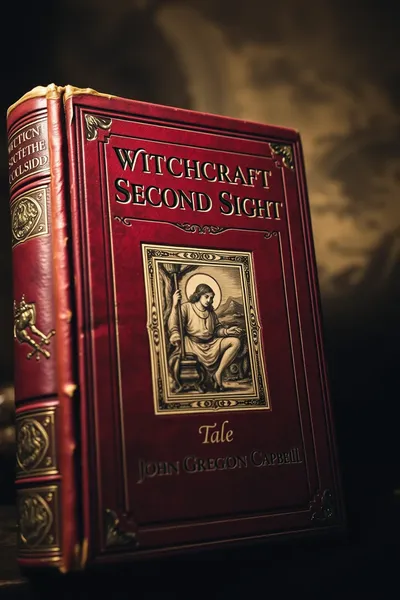

More Free Occult Philosophy Books
View all →