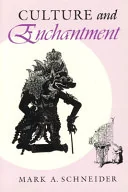
Culture and Enchantment
 73
73

Culture and Enchantment
Schneider’s contention that enchantment has merely relocated from the natural to the cultural arena offers a compelling rejoinder to Max Weber’s influential thesis on disenchantment. The book's strength lies in its rigorous comparison between contemporary cultural theorists and 17th-century natural philosophers, revealing striking parallels in their methods and the intellectual puzzles they faced. Schneider argues persuasively that the cultural critic today operates in an environment where the inexplicable, once the province of natural magic, now resides in the interpretation of social signs and symbols. A limitation, however, is that while the argument is intellectually stimulating, it could benefit from more concrete, vivid examples of contemporary 'cultural enchantment' beyond the theoretical scaffolding. The discussion of how students of culture 'operate in social and intellectual circumstances similar to those of seventeenth-century natural philosophers' is particularly insightful. Ultimately, Culture and Enchantment provides a valuable theoretical framework for understanding the enduring presence of the marvelous in secularized societies.
📝 Description
73
Mark A. Schneider's 1993 book argues enchantment migrated from nature to culture.
Culture and Enchantment challenges Max Weber's idea that modern society is entirely disenchanted. Schneider proposes that while magic may have left the natural world, it found a new home within culture itself. He suggests that how we analyze contemporary culture echoes the intellectual atmosphere of 17th-century natural philosophy, a time when the world still held a sense of wonder and mystery.
The book connects with sociological theory from the early 20th century, especially Weber's work on secularization. Schneider reconsiders enchantment not as something lost, but as something transformed and relocated. This perspective offers an alternative to modernist views that assumed magic had vanished. It was published in 1993, a time when postmodernism and cultural theory were gaining traction, allowing the book to offer a distinct viewpoint on societal changes at the end of the 20th century.
This work engages with the philosophical underpinnings of modernity's perceived loss of the magical. It counters the idea that rationalism has fully extinguished enchantment. Instead, Schneider suggests that the forces once associated with the occult and supernatural have been reconfigured within the structures of modern cultural interpretation and fascination. This perspective resonates with traditions that explore the enduring presence of non-rational or symbolic modes of understanding, even within seemingly scientific or secular frameworks.
💡 Why Read This Book?
• Gain a new perspective on secularization theory by understanding how enchantment persists in the cultural sphere, a concept first articulated by Schneider in relation to modern social analysis. • Grasp the parallels between contemporary cultural studies and 17th-century natural philosophy, recognizing how observers of phenomena, whether natural or cultural, grapple with the inexplicable. • Explore the idea of 'cultural enchantment' as a modern equivalent to earlier forms of wonder, challenging the notion that scientific progress has entirely banished magic from human experience.
⭐ Reader Reviews
Honest opinions from readers who have explored this book.
❓ Frequently Asked Questions
What is the central argument of Mark A. Schneider's Culture and Enchantment?
The book argues that enchantment, the sense of confronting inexplicable phenomena, has not disappeared due to scientific progress but has shifted from the natural world to the cultural arena. Schneider likens contemporary cultural analysis to 17th-century natural philosophy in its approach to the wondrous.
How does Culture and Enchantment relate to Max Weber's ideas?
It directly challenges Max Weber's thesis that modern life is disenchanted, meaning stripped of magic and mystery by scientific rationalization. Schneider proposes that enchantment survives, albeit in a different form and location.
What historical period is used as a point of comparison?
The book frequently compares the intellectual circumstances of contemporary cultural theorists to those of 17th-century natural philosophers, highlighting similarities in how they observe, interpret, and grapple with phenomena that elude simple explanation.
What does Schneider mean by 'enchantment' in a cultural context?
In a cultural context, 'enchantment' refers to the persistent human tendency to perceive inexplicable qualities, mystery, or wonder in social phenomena, rituals, beliefs, or artifacts, even in a scientifically rationalized world.
Who would benefit from reading Culture and Enchantment?
Scholars and students of sociology, cultural studies, history of science, and those interested in hermeticism and the enduring presence of the uncanny and the marvelous in modern life will find this work valuable.
When was Culture and Enchantment first published?
The book was first published on December 15, 1993, placing its theoretical interventions within the context of late 20th-century cultural and sociological discourse.
🔮 Key Themes & Symbolism
Migration of Enchantment
The core thesis posits that enchantment, previously associated with the inexplicable workings of the natural world, has migrated into the field of culture. This means that while science may explain natural phenomena, the human experience of wonder, mystery, and the uncanny now often attaches itself to social constructs, rituals, beliefs, and cultural artifacts. Schneider argues that this shift does not signify a loss of enchantment but a transformation of its locus, requiring new analytical approaches similar to those early natural philosophers used to understand the cosmos.
Cultural Analysis as Modern Natural Philosophy
Schneider draws a compelling parallel between contemporary cultural theorists and 17th-century natural philosophers. Just as figures like Newton or Boyle observed and theorized about the natural world, seeking underlying principles and grappling with phenomena that defied easy categorization, modern cultural analysts observe social behaviors, symbols, and meanings. The book suggests that both endeavors, separated by centuries, share a similar intellectual posture: confronting complex systems and attempting to articulate the inexplicable, thereby re-enchanting the observed domain.
The Enduring Power of the Uncanny
Despite the rationalizing forces of modernity and scientific advancement, the book contends that the human encounter with the uncanny—that which is strangely familiar yet alien—persists. This uncanny quality, once attributed to supernatural forces in nature, now manifests in the constructed realities of culture. Whether through myth, ritual, or the interpretation of social signs, the sense of encountering something beyond immediate comprehension remains a fundamental aspect of human experience, demonstrating the resilience of enchantment.
Critique of Secularization
Culture and Enchantment offers a nuanced critique of the widespread belief that secularization inevitably leads to a wholly disenchanted world. By relocating enchantment to culture, Schneider suggests that the narrative of modernity as a simple progression from magic to science is incomplete. The book implies that the very act of cultural interpretation, with its inherent subjectivity and symbolic layering, can be a source of enchantment, offering a counter-narrative to purely rationalist explanations of human society.
💬 Memorable Quotes
Direct passages from the work, attributed to the author.
“enchantment—the sense that we are confronted by inexplicable phenomena—persists in the world today, although it has shifted from the natural to the cultural arena.”
— This central idea frames the book's argument: magic hasn't died, it's just changed its address. Schneider proposes that the feeling of encountering the mysterious is now found in our social lives and cultural products, not just the stars or the sea.
“students of culture today operate in social and intellectual circumstances similar to those of seventeenth-century natural philosophers.”
— This comparison highlights the book's methodological approach. It suggests that the work of understanding complex social phenomena today requires a similar mindset of inquiry, observation, and interpretation that early scientists applied to the natural world.
“Max Weber viewed modern life as disenchanted, an arena from which scientific inquiry had banished magic.”
— This sets up the intellectual debate Schneider engages with. He uses Weber's influential concept of disenchantment as a foil to introduce his own theory that magic and wonder are not absent but have transformed their domain.
“Schneider argues... enchantment... has shifted from the natural to the cultural arena.”
— This concise statement expresses the book's core reorientation. It pinpoints the new location of perceived magic and mystery, moving the discussion from the physical universe to the human-made world of signs and meanings.
💡 Key Ideas
Editorial paraphrase of the work's core concepts — not direct quotes.
Schneider argues intriguingly that enchantment... persists in the world today...
This paraphrase captures the book's provocative thesis. It directly challenges the common assumption that modernity equates to a complete loss of the magical, suggesting instead a more complex and enduring relationship with the inexplicable.
🌙 Esoteric Significance
Tradition
While not explicitly rooted in a single esoteric lineage like Hermeticism or Kabbalah, Culture and Enchantment appeals to esoteric thought by validating the human experience of wonder and the inexplicable, which traditional esoteric systems often seek to explore or harness. It departs from strict dogma by focusing on the sociological and cultural mechanisms through which enchantment operates in contemporary society, rather than prescribed magical practices or metaphysical doctrines. The work aligns with esoteric traditions in its recognition that rationality alone does not encompass the entirety of human perception or experience.
Symbolism
The book doesn't focus on specific esoteric symbols in the manner of a grimoire or alchemical text. Instead, its symbolism lies in the conceptual shift it proposes. The 'natural arena' can be seen as representing the pre-modern, empirically observable world that was once imbued with magical significance. The 'cultural arena' symbolizes the modern, constructed reality of signs, meanings, and social constructs, which now serve as the stage for perceived enchantment. The act of 'migration' itself functions symbolically, representing a transformation rather than an extinction of magical consciousness.
Modern Relevance
Schneider's thesis finds contemporary relevance in fields exploring the sociology of belief, the psychology of perception, and the impact of media and digital culture. Thinkers interested in how conspiracy theories, fandoms, or even certain forms of art and performance can evoke a sense of the uncanny and inexplicable in contemporary audiences draw upon this foundational idea. It provides a framework for understanding phenomena such as the resurgence of interest in the occult, the perceived 'magic' of technology, or the power of narrative to create immersive, enchanting experiences, demonstrating its ongoing utility for analyzing modern life.
👥 Who Should Read This Book
• Sociologists and cultural theorists studying secularization, modernity, and the persistence of belief systems, who will gain a new framework for analyzing how the sense of wonder survives scientific rationalization. • Students of hermeticism and esoteric traditions seeking to understand the broader cultural context in which their interests are situated, offering insights into how 'enchantment' functions outside of formal magical practices. • Anyone interested in the history of ideas, particularly the intellectual debates surrounding Max Weber and the nature of modern consciousness, who will find a sophisticated critique of disenchantment narratives.
📜 Historical Context
Published in 1993, Mark A. Schneider's Culture and Enchantment emerged during a period of intense theoretical debate in sociology and cultural studies, directly engaging with the legacy of Max Weber. Weber's influential concept of 'disenchantment' (Entzauberung), articulated in the early 20th century, posited that the rise of rationalization and scientific thought in modernity had systematically expelled magic, mystery, and supernatural explanations from human experience. Schneider's work offered a significant counter-argument, not by denying rationalization, but by proposing that enchantment had not vanished but merely migrated. He contended that the cultural sphere itself—through symbols, rituals, and social narratives—had become the new repository for the inexplicable and the wondrous. This perspective placed Schneider in dialogue with postmodernist thinkers who questioned grand narratives of progress and explored the complexities of meaning-making in late modernity. His re-framing of cultural analysis as akin to 17th-century natural philosophy implicitly challenged purely positivist approaches dominant in some social sciences, aligning him with traditions that valued interpretive depth and the exploration of subjective experience.
📔 Journal Prompts
The migration of enchantment from the natural to the cultural arena.
The intellectual circumstances shared by 17th-century natural philosophers and contemporary cultural analysts.
Contemporary examples of phenomena perceived as 'enchanted' within the cultural sphere.
The persistence of the uncanny in secularized societies.
The relationship between scientific inquiry and the experience of wonder.
🗂️ Glossary
Disenchantment
A concept, notably associated with Max Weber, describing the process by which modern societies, through the rise of science, rationality, and bureaucracy, lose their magical, spiritual, or mysterious qualities.
Enchantment
The subjective experience of encountering phenomena that evoke a sense of wonder, mystery, the inexplicable, or the uncanny, often associated with pre-rational or magical worldviews.
Natural Arena
Refers to the physical, observable world of nature, which in pre-modern societies was often perceived as imbued with magic and supernatural forces.
Cultural Arena
Represents the field of social constructs, symbols, rituals, beliefs, and human-made meanings, which Schneider argues has become the primary locus for experiencing enchantment in modern times.
Natural Philosophers (17th Century)
Early scientists and thinkers of the 17th century who studied the natural world, often grappling with phenomena that were not yet fully explained by empirical methods, similar to how cultural theorists analyze social phenomena today.
Secularization Thesis
The sociological theory suggesting that as societies become more modern and scientific, religious belief and practice decline in influence and importance.
Uncanny
A feeling of strangeness or mystery evoked by something that is simultaneously familiar and unfamiliar, often associated with the unsettling or the subtly eerie.
This book appears in 1 collection
🔮 Readers Also Liked
Browse all →









From the “Enchantment” Collection
View all →






More Free Occult Philosophy Books
View all →