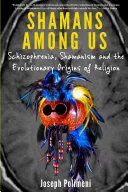
Shamans Among Us: Schizophrenia, Shamanism and the Evolutionary Origins of Religion
 77
77

Shamans Among Us: Schizophrenia, Shamanism and the Evolutionary Origins of Religion
Joseph Polimeni's "Shamans Among Us" offers a bold, albeit controversial, thesis: that schizophrenia is the modern face of shamanism. The author meticulously traces the potential evolutionary lineage of these altered states, moving beyond a strictly biomedical model to embrace anthropological and historical perspectives. A particular strength lies in the detailed comparison of symptoms and societal roles between contemporary patients and ancient shamans. However, the work's primary limitation is its occasional tendency to overstate its case, potentially downplaying the genuine suffering associated with severe psychosis. For instance, Polimeni's interpretation of the 2012 publication date as a turning point for this discourse, while contextual, risks minimizing individual distress. Despite this, the book remains a significant contribution, prompting readers to reconsider deeply ingrained assumptions about mental illness and human potential. It is a challenging, essential read for anyone interested in the fringes of consciousness.
📝 Description
77
Joseph Polimeni's 2019 book reinterprets schizophrenia as a modern echo of ancient shamanic roles.
Joseph Polimeni's "Shamans Among Us" proposes that schizophrenia symptoms are not solely pathological but represent a contemporary manifestation of an innate human capacity for accessing non-ordinary reality. The book challenges conventional psychiatric views by drawing parallels between the experiences of individuals diagnosed with schizophrenia and the historical functions of shamans in early human societies. Polimeni argues that these individuals, often ostracized in modern times, once held vital roles within their communities for spiritual guidance and practical well-being.
The work examines the evolutionary advantage this capacity for altered states of consciousness might have offered, linking it to the origins of religion and the development of complex social structures. It engages with theories of human evolution and the historical integration of shamanic practices and practitioners into societies. Polimeni uses anthropological studies and historical accounts to build his case for the persistent presence of shamanic potential within the human psyche across vast stretches of time.
This book enters a discourse that views certain psychological states, often pathologized by modern Western medicine, as potentially representing access to non-ordinary realities or archaic human capacities. It aligns with traditions that explore the spiritual and transformative aspects of intense inner experiences, suggesting that the shamanic path, with its emphasis on altered perception and connection to unseen realms, offers a framework for understanding phenomena like psychosis outside a purely clinical model. The work connects these ideas to evolutionary psychology and the development of early religious traditions.
💡 Why Read This Book?
• Understand the evolutionary roots of altered states of consciousness, learning how early human societies might have integrated experiences now labeled as psychosis, as discussed in the historical context sections. • Gain a new perspective on the definition of disease by examining how conditions like schizophrenia could be re-contextualized through the lens of shamanism, challenging conventional psychiatric models. • Explore the potential functional role of altered perceptions in human development, offering insights into the origins of religion and collective consciousness, a core argument presented by Polimeni.
⭐ Reader Reviews
Honest opinions from readers who have explored this book.
❓ Frequently Asked Questions
Is 'Shamans Among Us' a medical textbook or an anthropological study?
It is primarily an anthropological and historical exploration that reinterprets psychological phenomena. While it discusses schizophrenia, it approaches it from an evolutionary and cross-cultural perspective rather than a clinical medical one.
What year was Joseph Polimeni's book first published?
The book 'Shamans Among Us: Schizophrenia, Shamanism and the Evolutionary Origins of Religion' by Joseph Polimeni was first published on December 1, 2012.
Does the book claim all people with schizophrenia are shamans?
No, the book suggests that the experiences of individuals with schizophrenia can be understood as a modern manifestation of the capacities and roles once fulfilled by tribal shamans, not a direct equivalence.
What is the main argument regarding schizophrenia and shamanism?
The central argument is that schizophrenia symptoms represent an enduring, innate human capacity for accessing non-ordinary reality, a capacity that was crucial for the survival and spiritual development of early human cultures through shamanic practices.
What historical periods or cultures are discussed in relation to shamanism?
The book draws upon anthropological evidence and historical accounts of early human societies and tribal cultures to illustrate the prevalence and importance of shamanic roles across different historical contexts.
How does the book connect schizophrenia to the origins of religion?
It proposes that the altered states of consciousness and spiritual insights experienced by individuals with shamanic capacities, which Polimeni links to schizophrenia, were fundamental to the development of early religious beliefs and practices.
🔮 Key Themes & Symbolism
Schizophrenia as Shamanic Manifestation
The core thesis posits that the experiences characteristic of schizophrenia, such as vivid hallucinations and profound altered states of consciousness, are not merely pathological symptoms but rather traces of ancient shamanic capacities. Polimeni argues that these capacities were vital for early human societies, enabling communication with the spirit world, healing, and divination. The book reframes psychosis not as a breakdown, but as a potential gateway to non-ordinary realities, a perspective historically valued in shamanic traditions.
Evolutionary Origins of Religion
The work connects the emergence of religious thought and practice to the presence of individuals with shamanic abilities. It suggests that the evolutionary success of early humans was partly due to these individuals who could interpret dreams, navigate altered states, and provide spiritual guidance. This perspective situates religion as a fundamental aspect of human evolution, deeply intertwined with the very consciousness Polimeni associates with schizophrenia and shamanism.
Redefining 'Disease' and Consciousness
Polimeni challenges the modern Western medical model's definition of disease, particularly concerning mental states. By comparing schizophrenia to shamanism, the book advocates for a broader understanding of consciousness and altered states, suggesting that what is pathologized today might have been functional and even revered in ancestral societies. This re-evaluation encourages a reconsideration of the boundaries between sanity, altered experience, and spiritual insight.
The Social Role of the 'Other'
The book explores how early human communities integrated individuals who experienced profound altered states. Unlike contemporary marginalization, these individuals, the shamans, often held central roles vital to the community's cohesion and survival. Polimeni examines this historical dynamic to highlight a lost societal function for those who experience intense subjective realities, suggesting a profound shift in human social organization.
💬 Memorable Quotes
Direct passages from the work, attributed to the author.
“Schizophrenia patients are no less than the modern manifestation of tribal shamans.”
— This statement expresses the book's central, provocative claim: that the psychological experiences associated with schizophrenia today mirror the ancient roles and capacities of shamans, vital figures in early human cultures.
“Today's schizophrenia patients are no less than the modern manifestation of tribal shamans, people vital to the success of early human cultures.”
— This interpretation of the quote emphasizes the functional and evolutionary significance Polimeni attributes to these altered states, positioning them as essential for ancestral human societal success, not mere pathology.
“While it can cause terrible distress, it doesn't fit the mold of a classic medical disease.”
— This highlights the book's critique of conventional diagnostic frameworks. It suggests that the subjective experience and societal role of schizophrenia diverge from typical understandings of illness, prompting a search for alternative explanations.
“Spanning human history and including discussions of evolution, the definition of disease, and the nature of psychosis.”
— This indicates the broad scope of Polimeni's inquiry, demonstrating the book's interdisciplinary approach that integrates evolutionary theory, anthropology, and philosophy of mind to explore psychosis.
💡 Key Ideas
Editorial paraphrase of the work's core concepts — not direct quotes.
The work explores the evolutionary advantage this might have conferred, linking it to the origins of religion and the development of complex social structures.
This paraphrased concept points to the book's thesis regarding the adaptive significance of shamanic experiences, arguing they played a central role in the development of human spirituality and societal organization.
🌙 Esoteric Significance
Tradition
This work does not adhere strictly to a single esoteric lineage but draws inspiration from comparative mythology, depth psychology (particularly Jungian archetypes), and anthropological studies of shamanism. It can be seen as contributing to a modern esoteric synthesis that seeks to reintegrate 'altered states' and 'spiritual experiences' into a holistic understanding of the human psyche, moving beyond rigid dogma towards an experiential and evolutionary framework.
Symbolism
The central symbolic motif is the shaman as an intermediary, a figure who bridges the mundane and the non-ordinary realms. The book implicitly uses the concept of 'psychosis' as a modern, often negative, symbol for a capacity that was historically a source of power and community guidance. Hallucinations and altered perceptions become symbols of access to deeper, perhaps collective, layers of consciousness, historically interpreted through a spiritual or magical lens.
Modern Relevance
Polimeni's work speaks to contemporary discussions in transpersonal psychology, psychedelic research, and neo-shamanic movements. Thinkers and practitioners exploring the therapeutic potential of altered states, or seeking to understand spiritual experiences outside conventional religious structures, find validation in his arguments. It informs modern understandings of consciousness, challenging the dichotomy between the 'normal' and the 'abnormal'.
👥 Who Should Read This Book
• Students of comparative religion and mythology: Gain a novel framework for understanding the origins of religious practices and the societal roles of spiritual practitioners across cultures. • Researchers in anthropology and evolutionary psychology: Discover a fresh perspective on the adaptive function of altered states of consciousness and their potential link to early human development. • Individuals questioning conventional psychiatric models: Find arguments and historical context that challenge the purely pathological view of conditions like schizophrenia, exploring alternative interpretations.
📜 Historical Context
Published in 2012, Joseph Polimeni's "Shamans Among Us" emerged during a period of increasing critique of psychiatric diagnostic models, particularly the DSM. It entered a discourse already engaged by thinkers like R.D. Laing, who in the 1960s challenged the medicalization of schizophrenia, though Laing's focus was more existential. Polimeni's work distinguished itself by grounding its argument in evolutionary anthropology and the specific functions of shamanism in pre-modern societies. While not directly engaging with specific contemporaries in its core argument, the book implicitly positions itself against purely biological or neurochemical explanations for psychosis, aligning with broader trends in the social sciences that sought to understand mental phenomena within cultural and historical contexts. The work's reception likely appealed to those within esoteric and anthropological circles already questioning mainstream psychological paradigms.
📔 Journal Prompts
The concept of the 'modern manifestation of tribal shamans' and its implications for contemporary experience.
Reflect on the historical integration of altered states of consciousness within early human cultures.
Consider how the definition of 'disease' might shift when viewed through evolutionary and anthropological lenses.
Analyze the potential societal functions of individuals experiencing psychosis, as described in the book's historical context.
Explore the link between shamanic capacities and the origins of religious beliefs.
🗂️ Glossary
Shamanism
A religious practice characterized by the belief in and ability to interact with a spirit world, typically through altered states of consciousness induced by drumming, chanting, or other methods. Shamans often serve as healers, diviners, and intermediaries for their communities.
Schizophrenia
A serious mental disorder characterized by disruptions in thought processes, perceptions, emotional responsiveness, and social interactions. Symptoms can include delusions, hallucinations, disorganized speech, and diminished emotional expression.
Psychosis
A mental state characterized by a loss of contact with reality, often involving hallucinations (seeing or hearing things that aren't there) and delusions (firmly held false beliefs).
Altered States of Consciousness (ASC)
Any mental state significantly different from a normal waking state, often characterized by changes in perception, sense of self, and thought processes. Shamanic trance states are a prime example.
Evolutionary Origins of Religion
The study of how religious beliefs, practices, and institutions may have developed and persisted throughout human evolution, often linked to cognitive abilities, social structures, and psychological needs.
Non-ordinary reality
A term used to describe subjective experiences or areas of consciousness that differ from everyday consensus reality, often accessed through altered states, dreams, or spiritual practices.
Pathology
The study of the causes and effects of diseases. In a broader sense, it refers to abnormal conditions or deviations from a standard or healthy state.