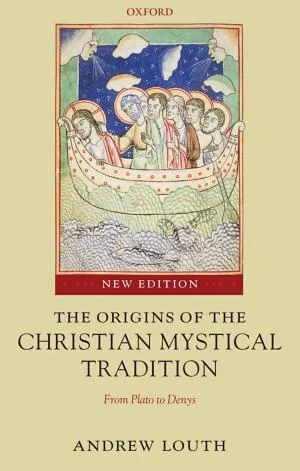
The Origins of the Christian Mystical Tradition
 82
82

The Origins of the Christian Mystical Tradition
Andrew Louth's exploration of Christian mystical origins offers a rigorous academic survey, tracing the tradition's roots back to Platonic thought and forward through seminal figures. The book's strength lies in its detailed examination of philosophical influences on early Christian thinkers, particularly its nuanced portrayal of figures like Origen and Gregory of Nyssa. Louth effectively demonstrates how these early theologians adapted and transformed existing philosophical concepts into a distinct Christian mystical framework. A limitation, however, is the dense academic prose, which may present a barrier for readers less familiar with patristic literature or Neoplatonism. The section detailing Gregory of Nyssa's concept of *epektasis* (stretching forth) serves as a particularly compelling illustration of the book's analytical depth, showing how spiritual desire is understood as an unending movement towards God. Louth’s work is a significant scholarly contribution for those dedicated to understanding the intellectual foundations of Christian contemplative practice.
📝 Description
82
Andrew Louth's 2007 book traces the intellectual roots of Christian mysticism.
Andrew Louth's 2007 study meticulously charts the intellectual lineage of Christian mysticism, moving beyond a simple chronological account. The book examines how philosophical currents, particularly Platonic thought, shaped the early development of Christian contemplative traditions. Louth scrutinizes the interpretations and spiritual practices of key figures, revealing the complex interplay of ideas that formed this enduring spiritual path. He situates Christian mysticism within a broader intellectual landscape, demonstrating its engagement with and departure from Hellenistic philosophy. The early centuries of Christianity were a period of intense theological formulation and philosophical debate. Figures like Origen and Gregory of Nyssa were not working in a vacuum; they were actively engaging with Neoplatonic ideas, adapting them to a Christian worldview. This book provides critical context for understanding these interactions.
The work dissects concepts such as theosis (divinization), apophatic theology (via negativa), and the contemplative ascent. Louth details how the understanding of the soul's journey towards God evolved, influenced by figures like Plotinus and later synthesized by thinkers such as Augustine of Hippo. The book highlights the tension between immanence and transcendence in Christian experience and the various methods developed to bridge that gap. This volume is valuable for students of Christian spirituality, theological history, and comparative mysticism, as well as for individuals interested in the historical evolution of prayer and meditation within a Christian framework.
This book examines the development of Christian contemplative practices, which sought direct experience of the divine. Early Christian mystics, influenced by Neoplatonic philosophy, adapted these ideas to their faith. They developed methods for the soul's ascent towards God, often through asceticism and apophatic theology, aiming for a union or divinization. Louth's work details how these ideas coalesced into a distinct tradition within Christianity, focusing on the inner life and direct knowledge of God.
💡 Why Read This Book?
• Gain a precise understanding of how Platonic philosophy, particularly the concept of the Forms, influenced early Christian mystics like Origen and Augustine in their pursuit of divine knowledge, a foundational element not always clearly articulated in later traditions. • Explore the historical development of *theosis* (divinization) as presented by Gregory of Nyssa, providing a concrete, ancient model for spiritual transformation that goes beyond generic spiritual growth narratives. • Discern the intellectual debates surrounding apophatic theology, as detailed in Louth's analysis of thinkers who sought to describe God through negation, offering a specific method for approaching the ineffable.
⭐ Reader Reviews
Honest opinions from readers who have explored this book.
❓ Frequently Asked Questions
What is the primary philosophical influence on the Christian mystical tradition discussed by Andrew Louth?
Andrew Louth identifies Platonic philosophy as the primary philosophical influence. He traces how concepts from Plato and later Neoplatonists like Plotinus were adapted by early Christian thinkers such as Origen and Augustine to articulate their mystical experiences and theology.
Which key figures does Andrew Louth examine in 'The Origins of the Christian Mystical Tradition'?
The book extensively examines figures like Plato, Plotinus, Origen, Gregory of Nyssa, and Augustine of Hippo. Louth analyzes their specific contributions and how their ideas shaped the trajectory of Christian mystical thought.
What is 'theosis' as described in the context of this book?
Theosis, or divinization, is a central concept explored in the book. It refers to the Christian belief that believers can become like God through grace and participation in divine life, a concept significantly developed by figures like Gregory of Nyssa.
Does the book cover the Gnostic influences on Christian mysticism?
While Louth focuses heavily on Platonic and Neoplatonic influences, the work implicitly addresses the broader Gnostic milieu by examining how early Christian thinkers differentiated their doctrines from competing spiritual systems of the era, including certain Gnostic interpretations.
When was 'The Origins of the Christian Mystical Tradition' first published?
Andrew Louth's 'The Origins of the Christian Mystical Tradition' was first published on January 25, 2007. This allows for its analysis within the context of modern scholarship on patristics and mysticism.
What is apophatic theology, as discussed in Louth's work?
Apophatic theology, also known as via negativa, is an approach to describing God by what God is not, rather than what God is. Louth explores how this method was employed by early Christian mystics to approach the ineffable divine nature.
🔮 Key Themes & Symbolism
Platonic Foundation
Louth meticulously details how Platonic philosophy, particularly the theory of Forms and the concept of the intelligible realm, provided the foundational intellectual architecture for early Christian mystics. Thinkers like Origen and Augustine did not simply adopt these ideas but critically engaged with them, reinterpreting the Forms as aspects of divine creation and the ultimate reality of God. This section illuminates how a non-Christian philosophical system was foundational to articulating Christian spiritual ascent and the pursuit of divine knowledge, moving beyond simple allegory to a sophisticated metaphysical framework.
Theosis and Divinization
Central to the book is the concept of *theosis*, or divinization, prominently explored through the work of Gregory of Nyssa. This theme examines the Christian aspiration to become like God, not through self-deification, but through grace and participation in the divine life. Louth illustrates how this doctrine evolved from earlier Christian thought and its Neoplatonic antecedents, presenting a dynamic understanding of spiritual progress as an unending journey of transformation and union with the divine presence.
Apophatic Theology
The book examines the practice of apophatic theology, or the via negativa, where the divine nature is approached by negating all finite concepts and attributes. Louth demonstrates how figures like Pseudo-Dionysius the Areopagite, and earlier thinkers engaging with similar ideas, used this method to articulate the ineffable and transcendent quality of God. This approach is presented not as a denial of God's presence, but as a recognition of divine mystery that transcends human comprehension, guiding the mystic towards direct, intuitive apprehension.
Contemplative Ascent
Louth maps the various models of the soul's journey towards God. This 'contemplative ascent' involves purification, illumination, and union. The book analyzes how different Christian traditions and figures envisioned this process, often drawing parallels with Plato's allegory of the cave or Plotinus's stages of emanation and return. The emphasis is on the disciplined, often arduous, path of spiritual development aimed at direct experience of the divine.
💬 Memorable Quotes
Direct passages from the work, attributed to the author.
“The tradition of Christian mysticism begins with figures who were deeply engaged with Greek philosophy.”
— This statement highlights the book's core argument: that Christian spirituality did not emerge in a vacuum but was profoundly shaped by pre-existing philosophical frameworks, particularly Platonism, which provided the language and concepts for articulating mystical experiences.
“Origen's allegorical interpretations of scripture were crucial for developing spiritual senses.”
— This interpretation underscores Origen's method of reading the Bible not just for its literal meaning but for deeper, spiritual truths, which became a reference for mystical exegesis and for understanding scripture as a pathway to divine encounter.
“The via negativa seeks to approach God by acknowledging what God is not.”
— This statement defines apophatic theology, emphasizing its method of using negation to point towards the transcendent and ineffable nature of the divine, a key strategy for mystics grappling with the limits of language and intellect.
💡 Key Ideas
Editorial paraphrase of the work's core concepts — not direct quotes.
Gregory of Nyssa's concept of epektasis: the soul is always stretching forth towards God.
This paraphrased concept points to Gregory's idea that spiritual life is characterized by perpetual desire and growth, an unending movement towards God rather than a static state of attainment. It emphasizes the dynamic and aspirational nature of the mystical journey.
Augustine synthesized Platonic ideas with Christian doctrine, emphasizing the inner journey.
This paraphrased concept signifies Augustine's a central role in integrating Neoplatonic thought into Christian theology, particularly his focus on the soul's inward turn to find God within, influencing centuries of Western Christian contemplation.
🌙 Esoteric Significance
Tradition
This work fits squarely within the Western Esoteric tradition's interest in the philosophical and spiritual underpinnings of major religious systems. While Louth's approach is scholarly and historical, the subject matter—Christian mysticism—aligns with esoteric pursuits of direct divine knowledge and spiritual transformation. It departs from more occult interpretations by focusing on historical and philosophical lineage rather than practical ritual or hidden teachings, yet it provides the essential intellectual history for many later esoteric developments.
Symbolism
Key symbols explored include the Platonic Forms, reinterpreted as divine ideas or archetypes within the Christian framework, representing the perfect blueprint of creation. The concept of the 'Divine Darkness' or the 'Cloud of Unknowing' serves as a symbol for the apophatic approach, representing the ineffable, supra-rational nature of God that can only be approached through negation and silent contemplation. The soul's ascent is also a potent symbol for the journey of spiritual purification and union.
Modern Relevance
Contemporary contemplative practices, both within and outside formal Christian denominations, often draw implicitly or explicitly on the traditions Louth examines. Thinkers and spiritual directors interested in the historical depth of prayer and meditation find value in understanding these foundational concepts. Furthermore, comparative mystics and philosophers of religion continue to engage with Louth's analysis of how diverse philosophical and religious ideas were synthesized in early Christianity, offering insights for contemporary interfaith dialogue and spiritual exploration.
👥 Who Should Read This Book
• Students of theology and religious history seeking a scholarly account of the philosophical foundations of Christian mysticism, particularly its Platonic and Neoplatonic influences. • Individuals interested in the historical development of contemplative prayer and spiritual practices, who wish to understand the intellectual context of figures like Origen and Augustine. • Scholars of comparative religion and philosophy who want to examine the synthesis of Hellenistic thought with early Christian doctrine to form a distinct mystical tradition.
📜 Historical Context
Published in 2007, Andrew Louth's work entered a scholarly landscape already rich with studies on Christian origins and mysticism. However, it distinguished itself by its focused examination of the Platonic roots and the rigorous tracing of specific philosophical influences on key figures like Origen and Gregory of Nyssa. This period saw continued academic interest in the patristic era and the Hellenistic philosophical currents that informed early Christian thought. Louth's book provided a valuable synthesis for scholars, building upon but also offering new perspectives compared to earlier works by scholars such as Werner Jaeger or Henri-Charles Puech. The reception within academic circles was positive, acknowledging its detailed scholarship and clear exposition of complex philosophical ideas, though its academic depth meant it was primarily aimed at specialists rather than a general audience.
📔 Journal Prompts
The Platonic concept of the Forms as interpreted by Origen.
Gregory of Nyssa's understanding of *epektasis* and perpetual spiritual growth.
The role of apophatic theology in approaching the divine nature.
Augustine's emphasis on the inner journey to discover God.
Tracing the influence of Plotinus on early Christian mystical thought.
🗂️ Glossary
Theosis
A central doctrine in Eastern Orthodox theology and a key concept in Christian mysticism, referring to the process of becoming like God, or divinization, through grace and participation in divine life.
Apophatic Theology
Also known as the via negativa, this theological approach describes God by stating what God is not, emphasizing divine transcendence and ineffability beyond human conceptualization.
Neoplatonism
A school of philosophy founded by Plotinus in the 3rd century AD, heavily influenced by Plato, which posits a hierarchical reality emanating from a single, transcendent source (The One).
Origen
An early Christian scholar and theologian (c. 185–c. 254 AD) known for his allegorical interpretation of scripture and his philosophical engagement with Platonic ideas, influencing early Christian mysticism.
Gregory of Nyssa
A 4th-century bishop and theologian, considered one of the Cappadocian Fathers, instrumental in developing the doctrine of *theosis* and exploring the concept of unending spiritual progress (*epektasis*).
Allegory
A literary device where characters, events, or settings represent abstract ideas or moral qualities. Origen famously used allegory to interpret the Bible for spiritual meaning.
Contemplation
A form of prayer or meditation focused on achieving a deep, intuitive apprehension of divine truth and presence, often involving stillness and interior focus.
🔮 Readers Also Liked
Browse all →








More Free Occult Philosophy Books
View all →