Witchcraft and sorcery in Ovambo

 71
71

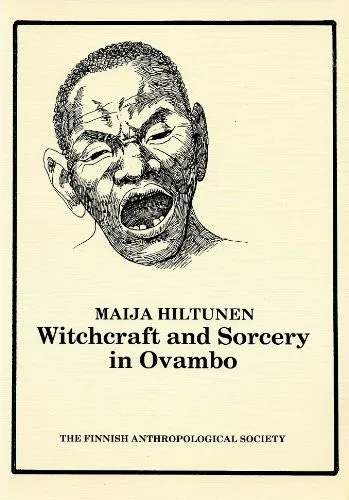
Witchcraft and sorcery in Ovambo
Maija Hiltunen's exploration of Ovambo witchcraft and sorcery offers a sober, academic counterpoint to sensationalized accounts of magic. Her meticulous documentation of practices and beliefs, particularly concerning the diagnostic methods employed by healers and diviners, provides a solid foundation. However, the dense prose, while accurate, can make for challenging reading, occasionally obscuring the very human stories behind the rituals. A particularly striking section details the social ramifications of accusations of sorcery, illustrating how such claims could reconfigure community relationships. While lacking the evocative language of some ethnographic works, Hiltunen’s factual approach yields a valuable, if unvarnished, study.
📝 Description
71
Maija Hiltunen's study looks at witchcraft and sorcery in Ovambo culture.
This research examines the practices and beliefs surrounding witchcraft and sorcery in Ovambo culture, located in southern Africa. It moves past simple definitions to show the complex roles these traditions held in community life, social regulation, and understanding the universe. The work is built on ethnographic research and historical records.
It considers concepts like divination, healing ceremonies, and the social interactions that came with accusations of harmful magic. The book shows how these parts fit into the daily life and worldview of the Ovambo people, giving a full picture of their spiritual and social structures. Understanding the political and social context of the late 20th century is important for grasping these traditional practices.
This book contributes to the study of African indigenous religions, specifically focusing on the role of sorcery beliefs within Ovambo society. It sits within a broader academic tradition of examining magic and witchcraft not as superstition, but as integral systems of knowledge and social organization in various cultures. The work provides detailed ethnographic accounts that help readers understand how these practices functioned within a specific cultural framework, distinct from Western magical traditions.
💡 Why Read This Book?
• Gain an understanding of Ovambo divination practices as detailed in the book, offering a specific methodology distinct from Western esoteric traditions. • Learn about the social function of sorcery accusations within Ovambo communities, providing concrete examples of how belief systems impact social structures in the late 20th century. • Explore the specific roles of healers and diviners as presented by Hiltunen, contrasting their societal positions with those in other cultural contexts.
⭐ Reader Reviews
Honest opinions from readers who have explored this book.
❓ Frequently Asked Questions
What are the primary cultural groups discussed in Witchcraft and Sorcery in Ovambo?
The book focuses on the Ovambo people, a Bantu-speaking ethnic group primarily found in northern Namibia and southern Angola. The research examines their specific traditions of witchcraft and sorcery.
When was the research for this book conducted?
While first published in 1986, the ethnographic research underlying Maija Hiltunen's work would have been conducted in the decades prior, reflecting a specific period of study in southern Africa.
Does the book discuss specific rituals or ceremonies?
Yes, the work details various rituals and ceremonies associated with Ovambo witchcraft and sorcery, including divination practices and healing methods, providing insight into their practical application.
What is the academic discipline of the author, Maija Hiltunen?
Maija Hiltunen is an academic researcher, likely an anthropologist or ethnographer, given the subject matter and methodological approach of her study on Ovambo culture.
How does this book differ from general books on African witchcraft?
This book offers a focused, in-depth ethnographic study of one specific cultural group, the Ovambo, rather than a broad overview. It emphasizes detailed observation and cultural context.
What is the significance of the term 'Ovambo'?
'Ovambo' refers to a group of related Bantu-speaking peoples who inhabit parts of Namibia and Angola. The book explores their unique cultural and spiritual practices.
🔮 Key Themes & Symbolism
Social Dynamics of Sorcery
The study meticulously outlines how accusations of sorcery served as a mechanism for social control and conflict resolution within Ovambo communities. It details how perceived malevolent magic was linked to misfortune, illness, and death, and how diviners were consulted to identify perpetrators. This section highlights the intricate web of social relationships, kinship, and power structures that influenced these accusations and their outcomes, demonstrating that sorcery beliefs were deeply embedded in the fabric of daily life and community governance.
Divination and Healing
Central to the work is an examination of the diverse methods of divination and healing practiced by Ovambo specialists. Hiltunen describes the tools and techniques employed, such as the casting of bones or the interpretation of dreams, used to diagnose spiritual ailments or uncover the source of witchcraft. The book details the roles of healers, often distinct from sorcerers, who used their knowledge of herbs and spiritual practices to counteract malevolent forces and restore balance. This theme underscores the practical, therapeutic aspect of these traditions.
Worldview and Cosmology
The book elucidates the Ovambo understanding of the cosmos, where spiritual forces, ancestors, and the actions of sorcerers played significant roles in shaping human destiny. It explains how beliefs about witchcraft and sorcery were integrated into a broader worldview that sought to explain the unpredictable nature of life and maintain harmony between the human and spiritual realms. This includes an exploration of the perceived boundaries between the natural and supernatural and the entities that inhabited them.
Ethnographic Methodology
Hiltunen's approach emphasizes rigorous ethnographic observation and detailed reporting. The study is grounded in fieldwork, presenting factual accounts of practices, beliefs, and social interactions. This focus on empirical data provides a scholarly foundation for understanding Ovambo sorcery, distinguishing it from speculative or sensationalist interpretations and offering a model for cultural analysis within the field of religious studies and anthropology.
💬 Memorable Quotes
Direct passages from the work, attributed to the author.
“Diviners were consulted to identify the source of misfortune.”
— This highlights the diagnostic function of divination within Ovambo culture, emphasizing its role in attributing events, particularly negative ones, to specific spiritual causes or agents.
“Accusations of sorcery could drastically alter social standings.”
— This points to the significant social power wielded by beliefs in sorcery, showing how alleged witchcraft could lead to ostracism, conflict, or a reordering of relationships within the community.
“Healing practices aimed to counter malevolent spiritual influences.”
— This emphasizes the therapeutic and protective aspects of certain spiritual practitioners, who actively worked to neutralize the harmful effects attributed to sorcerers and other negative spiritual forces.
“The Ovambo worldview integrated spiritual and material realities.”
— This suggests a holistic understanding of existence, where unseen spiritual forces and tangible events were intrinsically connected, shaping perceptions and actions.
“Field research documented specific practices and beliefs.”
— This speaks to the methodological foundation of the work, indicating that its conclusions are based on direct observation and detailed recording of cultural phenomena.
🌙 Esoteric Significance
Tradition
While not strictly within a Western esoteric lineage like Hermeticism or Kabbalah, Hiltunen's work contributes to the broader study of esoteric phenomena by providing a detailed ethnography of a non-Western magical tradition. It allows for comparative analysis with Western occultism, particularly in understanding the universal human impulse to explain misfortune and seek agency through ritual and belief. The Ovambo system, with its emphasis on unseen forces and specialized practitioners, offers a different manifestation of what could be broadly termed 'esoteric knowledge' – knowledge of hidden causes and powers.
Symbolism
The book implicitly deals with potent symbols inherent in Ovambo sorcery beliefs. For instance, the concept of 'witchcraft' itself acts as a powerful symbol of hidden danger and social disruption. Specific tools used in divination, such as casting lots or interpreting natural phenomena, function symbolically to bridge the gap between the observable world and the hidden spiritual causes of events. The very act of identifying a sorcerer carries symbolic weight, representing the community's attempt to impose order and meaning onto chaos.
Modern Relevance
Contemporary scholars of religion and anthropology continue to reference detailed ethnographic works like Hiltunen's for understanding the diversity of human belief systems. While direct modern esoteric practitioners might not universally engage with Ovambo sorcery, the study's insights into social dynamics, healing, and the psychological aspects of belief remain relevant. Thinkers exploring comparative magic, the anthropology of religion, and the social functions of ritual can draw upon its grounded observations.
👥 Who Should Read This Book
• Anthropologists and ethnographers seeking detailed case studies of African spiritual practices and social structures. • Students of comparative religion interested in understanding diverse cultural approaches to magic, healing, and cosmology. • Researchers focused on the late 20th-century socio-cultural history of Southern Africa and the persistence of traditional belief systems.
📜 Historical Context
Published in 1986, Maija Hiltunen's study emerged during a critical period for Southern Africa, marked by decolonization movements and evolving academic perspectives on African religions. The late 20th century saw a growing academic interest in challenging colonial-era biases and presenting indigenous belief systems on their own terms. Hiltunen's work fits within this trend of detailed ethnographic description, moving away from earlier, often ethnocentric, interpretations of African magic. It provides a counterpoint to more generalized or sensationalized accounts prevalent in popular literature. While specific contemporary scholarly debates surrounding her work are not detailed in the book's initial publication, its factual, anthropological approach aligned with the rigorous standards of ethnographic research of the era. It contributed to a growing corpus of literature that treated African spiritual practices with academic seriousness.
📔 Journal Prompts
Reflect on the role of divination in Ovambo society as described in the text.
Consider the social consequences of sorcery accusations within the Ovambo context.
Analyze the methods employed by Ovambo healers for countering malevolent forces.
How did the Ovambo worldview integrate spiritual and material realities?
Examine the ethnographic methodology used by Maija Hiltunen in this study.
🗂️ Glossary
Ovambo
A group of Bantu-speaking peoples inhabiting northern Namibia and southern Angola. The book focuses on their specific cultural and spiritual traditions.
Sorcery
The practice of magic, especially malevolent magic, often believed to involve supernatural powers and potentially harmful intent. In the Ovambo context, it was linked to misfortune and illness.
Witchcraft
Belief in individuals possessing supernatural powers to cause harm, often through innate ability rather than learned spells. The Ovambo understanding of witchcraft informed social relations and conflict.
Divination
The practice of seeking knowledge of the future or the unknown by supernatural means. In Ovambo culture, it was crucial for diagnosing the causes of illness and misfortune.
Healers
Individuals who practiced traditional medicine and spiritual remedies, often working to counteract the effects of sorcery or illness within the community.
Cosmology
A system of beliefs that explains the origin, structure, and workings of the universe. The Ovambo cosmology encompassed spiritual forces, ancestors, and the role of magic.
Ethnography
The scientific description of the customs of individual peoples and cultures. Hiltunen's work is an ethnographic study of Ovambo traditions.
🔮 Readers Also Liked
Browse all →








More by Maija Hiltunen
All books →

More Free Magic & Ritual Books
View all →