Good magic in Ovambo
 76
76

Good magic in Ovambo
Maija Hiltunen's *Good Magic in Ovambo* presents a detailed examination of spiritual practices within the Ovambo culture, focusing on their beneficial applications. The book's strength lies in its systematic approach to understanding the efficacy of these rituals, moving beyond mere description to analyze underlying principles. Hiltunen avoids sensationalism, offering a sober and academic appraisal of Ovambo cosmology and its practical manifestations. A particular point of interest is the exploration of how intention is woven into ritual action, a concept Hiltunen illustrates through specific examples of protective ceremonies. However, the work could benefit from a more direct engagement with contemporary anthropological debates concerning the representation of indigenous spiritualities, a nuance that feels somewhat underdeveloped given the 1993 publication date. Ultimately, *Good Magic in Ovambo* serves as a valuable, if somewhat narrowly focused, academic resource on a specific cultural domain of magic.
📝 Description
76
Maija Hiltunen's 1993 book examines the constructive spiritual and ritual practices of the Ovambo people.
Published in 1993, Maija Hiltunen's work meticulously documents the spiritual and ritual practices of the Ovambo people, who live in northern Namibia and southern Angola. The book analyzes the underlying principles that define these practices as 'good magic,' meaning magic intended for beneficial or protective purposes. Hiltunen moves beyond simple ethnographic reporting to investigate the efficacy of ritual within its specific cultural context. The research offers insights into how the Ovambo conceptualize and engage with spiritual forces for personal and communal well-being. It provides a counterpoint to earlier, less respectful analyses of African spiritual systems. The work contributes to a more complete understanding of ritual efficacy by engaging with anthropological traditions that sought to interpret the logic of belief and practice in non-Western societies. It also touches upon the ethical dimensions of spiritual power.
This study enters the discourse on comparative spirituality by detailing Ovambo practices, which are often categorized under African indigenous religions. It engages with anthropological approaches to understanding belief systems outside Western frameworks. The focus on 'good magic' connects it to broader discussions on the ethics of spiritual power and the practical application of ritual for positive outcomes. The work contributes to a more respectful and analytical understanding of non-Western magical traditions.
💡 Why Read This Book?
• Understand the nuanced concept of 'good magic' as practiced by the Ovambo people, learning how intention and specific ritual actions are believed to create beneficial outcomes, as detailed in Hiltunen's analysis of protective ceremonies. • Gain insight into the role of ancestral spirits and life force within Ovambo cosmology, appreciating their function as mediators of spiritual power and their integration into daily life. • Explore specific divination and healing rituals documented by Hiltunen, offering concrete examples of how spiritual forces are engaged for communal and personal well-being within a specific African cultural context.
⭐ Reader Reviews
Honest opinions from readers who have explored this book.
❓ Frequently Asked Questions
What is the primary focus of Maija Hiltunen's 'Good Magic in Ovambo'?
The book primarily focuses on the spiritual and ritualistic practices of the Ovambo people, specifically examining the principles and applications of what is termed 'good magic' – rituals intended for constructive, beneficial, or protective purposes.
When was 'Good Magic in Ovambo' first published?
The book was first published in 1993, offering a scholarly examination of Ovambo spiritual traditions during a period of increasing academic interest in indigenous African religions.
What distinguishes 'good magic' in the Ovambo context?
'Good magic' in the Ovambo context refers to spiritual practices and rituals aimed at fostering well-being, protection, and constructive outcomes for individuals and the community, as opposed to harmful or manipulative spiritual actions.
Who are the Ovambo people?
The Ovambo are an ethnic group predominantly found in northern Namibia and southern Angola, with distinct cultural and linguistic traditions that include rich spiritual and ritualistic practices explored in the book.
Does the book offer practical instructions for performing Ovambo magic?
No, the book is an academic and ethnographic study. It analyzes and explains Ovambo magical practices, their cultural context, and their perceived efficacy, rather than providing instructional guides for practitioners.
What kind of knowledge can a reader expect to gain from this book?
Readers can expect to gain a deeper understanding of a specific non-Western spiritual system, including its cosmology, the function of ancestral spirits, and the practical application of rituals for community welfare.
🔮 Key Themes & Symbolism
Ritual Efficacy and Intention
The work meticulously examines how Ovambo culture conceptualizes the effectiveness of ritual. A central theme is the interplay between precise ritual action, the invocation of spiritual forces, and the power of focused intention. Hiltunen illustrates how specific ceremonies are designed not merely as symbolic gestures but as potent means to achieve tangible outcomes, whether for healing, protection, or communal harmony. The 'good' in 'good magic' is directly tied to this principle of constructive efficacy.
Ancestral Spirits and Mediation
A significant aspect explored is the role of ancestral spirits in the Ovambo spiritual framework. These ancestors are not distant figures but active mediators, bridging the human and spiritual realms. The book details how rituals often involve appeasing, honoring, or petitioning these spirits to influence worldly affairs. Understanding this ancestral connection is key to grasping the Ovambo approach to spiritual power and its benevolent application.
Cosmology and Life Force
Hiltunen studies the Ovambo understanding of the cosmos and the fundamental life force that permeates it. This includes how different spiritual entities and energies are perceived and how human beings can interact with them. The concept of life force is integral to the practice of 'good magic,' as rituals often aim to channel, protect, or enhance this vital energy for the betterment of individuals and the community.
Integration of Spirituality and Daily Life
Unlike some spiritual systems that are compartmentalized, the magic described in *Good Magic in Ovambo* is deeply interwoven with the fabric of everyday existence. The book demonstrates how rituals, from healing ceremonies to protective measures, are not isolated events but are integrated into social structures, agricultural cycles, and personal concerns, reflecting a holistic worldview.
💬 Memorable Quotes
Direct passages from the work, attributed to the author.
“The efficacy of Ovambo magic is deeply connected to the clarity of the practitioner's intention.”
— This highlights a core principle that ritual effectiveness relies not just on performing the correct actions, but on the mental and spiritual focus behind those actions. Intention acts as a directional force for the spiritual energies invoked.
“Ancestral spirits serve as crucial intermediaries between the living and the divine.”
— This points to the hierarchical and relational nature of Ovambo spirituality, where communication and appeals to the spiritual realm often pass through venerated deceased relatives, who hold influence and understanding.
“Protective rituals are designed to create spiritual boundaries against malevolent influences.”
— This emphasizes the proactive and defensive nature of 'good magic,' illustrating how practitioners actively work to safeguard individuals and the community from perceived spiritual dangers and negative energies.
“The Ovambo worldview integrates spiritual forces into the practicalities of agricultural success and communal health.”
— This suggests that Ovambo spiritual practices are not abstract but are directly applied to ensure the material and physical well-being of the community, linking the sacred to tangible aspects of life.
“Ritual success is often measured by its demonstrable benefit to the collective.”
— This underscores the communal orientation of Ovambo magic, where the ultimate validation of a ritual's power lies in its positive impact on the group, rather than solely on individual gain or esoteric knowledge.
🌙 Esoteric Significance
Tradition
This work engages with the esoteric significance of indigenous African spiritual traditions, particularly within the context of comparative religion and anthropology of magic. It fits within a lineage of scholarship that seeks to understand the universal principles of ritual efficacy and spiritual technology across diverse cultures, rather than aligning strictly with Western esoteric lineages like Hermeticism or Kabbalah. It offers a distinct perspective on how spiritual forces are perceived and manipulated for constructive ends, enriching the broader esoteric discourse.
Symbolism
Key symbols in Ovambo magic often relate to the natural world and the human body, reflecting a deep connection to the environment and the tangible aspects of life. For example, specific herbs or animal parts might symbolize protection or vitality, while patterns painted on the body could represent spiritual boundaries or invocations. The concept of 'life force' itself acts as a potent symbol, representing the animating principle that rituals aim to harness and direct for beneficial outcomes.
Modern Relevance
Contemporary thinkers and practitioners in fields such as Afrocentric spirituality, comparative ritual studies, and shamanism can draw valuable insights from *Good Magic in Ovambo*. The book's detailed exploration of ritual efficacy, the role of intention, and the integration of spiritual practice into daily life offers a model for understanding and potentially adapting such principles in modern contexts. It provides a concrete case study for those interested in non-Western approaches to spiritual technology and well-being.
👥 Who Should Read This Book
• Students of comparative religion and anthropology: They will find a detailed ethnographical account of Ovambo spiritual practices, offering insights into indigenous cosmologies and ritual systems. • Researchers of African indigenous religions: The book provides specific data and analysis on Ovambo magic, contributing to a broader understanding of spiritual traditions in Southern Africa. • Individuals interested in the philosophy of magic and ritual efficacy: Readers seeking to understand how different cultures conceptualize and enact beneficial spiritual power will find Hiltunen's examination of intention and ritual action useful.
📜 Historical Context
Maija Hiltunen's *Good Magic in Ovambo*, published in 1993, emerged during a period of significant academic re-evaluation of African indigenous religions. The preceding decades had seen a surge in anthropological studies aiming to understand the complexities of African spiritual systems beyond colonial biases. Hiltunen's work contributes to this discourse by focusing on the functional and ethical dimensions of Ovambo ritual, specifically the concept of 'good magic.' This approach implicitly engages with the broader academic currents of the time that sought to validate indigenous knowledge systems and understand their internal logic. It can be seen as part of a post-colonial academic movement that prioritized the perspectives of the studied cultures. While direct engagement with specific contemporary scholars is not detailed in the book's abstract, its methodology aligns with ethnographic traditions that emphasized participant observation and cultural relativism, offering a contrast to earlier, more judgmental anthropological accounts.
📔 Journal Prompts
The role of ancestral spirits in mediating Ovambo spiritual power.
How intention shapes the efficacy of 'good magic'.
The integration of protective rituals into daily Ovambo life.
Conceptualizing life force within Ovambo cosmology.
Distinguishing 'good magic' from other spiritual practices in the Ovambo context.
🗂️ Glossary
Ovambo
An ethnic group primarily residing in northern Namibia and southern Angola, known for their distinct cultural and linguistic heritage, including a rich tradition of spiritual practices.
Good Magic
In the context of the book, this refers to spiritual practices and rituals undertaken with the intention of creating positive, beneficial, or protective outcomes for individuals and the community.
Ritual Efficacy
The belief and understanding within a culture that specific rituals and actions produce desired tangible or spiritual results, a central theme explored in relation to Ovambo practices.
Ancestral Spirits
Spiritual entities recognized in many indigenous traditions, including the Ovambo, who are believed to be deceased relatives that can mediate between the living and the spiritual realm.
Life Force
An animating principle or energy believed to be inherent in living beings and the cosmos, which spiritual practices may seek to channel, protect, or enhance.
Divination
The practice of seeking knowledge of the future or the unknown by supernatural means, explored within the context of Ovambo ritual practices documented in the book.
Protective Ceremonies
Rituals specifically designed to ward off harm, negative influences, or spiritual attacks, forming a key component of 'good magic' within Ovambo culture.
🔮 Readers Also Liked
Browse all →








More by Maija Hiltunen
All books →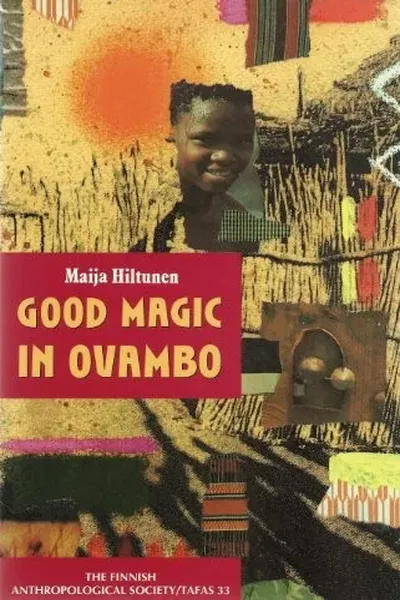

More Free Magic & Ritual Books
View all →