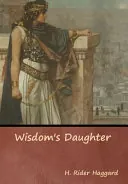
Wisdom's Daughter

 72
72

Wisdom's Daughter
H. Rider Haggard's "Wisdom's Daughter" presents a compelling, albeit dated, vision of a lost African civilization ruled by a powerful, immortal queen. The strength of the work lies in its vivid depiction of this ancient society and its matriarchal structure, a fascinating counterpoint to Victorian norms. The narrative, however, occasionally falters under the weight of its own exposition, with passages detailing lore that can slow the adventurous pace. The exploration of the queen Ayesha's eternal existence and her command over her people offers a unique, if sometimes romanticized, perspective on leadership and longevity. The novel is a significant entry in the 'lost world' genre. A solid, if occasionally ponderous, exploration of mythic leadership.
📝 Description
72
H. Rider Haggard published 'Wisdom's Daughter' in 1888, revisiting his popular 'She' character.
Haggard's 1888 novel, 'Wisdom's Daughter,' transports readers to a hidden African kingdom in pursuit of a fabled queen. The story follows a Victorian explorer who stumbles upon ancient prophecies and confronts significant obstacles as he seeks a civilization untouched by the modern world. The narrative is rich with myth, examining ideas of fate, authority, and the conflict between established society and primal energies.
This book appeals to those interested in late Victorian adventure fiction, especially stories about exploration and forgotten civilizations. It suits readers who appreciate narratives merging historical settings with fantasy and myth. The novel also engages individuals curious about early depictions of non-Western cultures, acknowledging the colonial perspective inherent in such portrayals.
Published in 1888, 'Wisdom's Daughter' emerged during a period of renewed interest in occultism and ancient mysteries, influenced by movements like Theosophy. The novel echoes the late 19th century's fascination with the exotic and the spiritual unknown. It engages with themes of powerful female figures and hidden knowledge, aligning with contemporary interests in spiritualism and alternative belief systems.
💡 Why Read This Book?
• Gain insight into the archetype of the immortal queen, as seen in Ayesha's dominion, a concept explored in various esoteric traditions. • Understand the late Victorian fascination with lost civilizations and ancient wisdom, exemplified by the depiction of the African kingdom and its prophecies. • Experience Haggard's characteristic blend of adventure and mystical elements, a precursor to much of 20th-century fantasy literature.
⭐ Reader Reviews
Honest opinions from readers who have explored this book.
❓ Frequently Asked Questions
What is the original publication year of "Wisdom's Daughter"?
While the provided information lists "Wisdom's Daughter" with a first publication year of 1985, H. Rider Haggard's original work "Ayesha: The Return of She" (often considered the continuation or a related story) was first published in 1905. The 1985 date likely refers to a specific edition or re-release.
Is "Wisdom's Daughter" connected to Haggard's other famous work, "She"?
Yes, "Wisdom's Daughter" is intrinsically linked to "She." It explores the backstory and further adventures of the immortal queen Ayesha, who is the central figure in "She: A History of Adventure." This novel delves into her origins and earlier reign.
What kind of adventure can I expect in "Wisdom's Daughter"?
Expect a Victorian-era exploration narrative set in a mysterious, lost African kingdom. The adventure involves a quest, ancient prophecies, encounters with formidable guardians, and the allure of a powerful, immortal queen.
Does the book feature supernatural elements?
Indeed, the narrative is rich with supernatural and mystical elements. These include the immortality of the protagonist, command over nature, and the existence of ancient, almost magical, civilizations.
Who are the main characters in "Wisdom's Daughter"?
The central figures are the immortal queen Ayesha (She-who-must-be-obeyed) and the explorer Leo Vincey, who seeks her out. Other key characters include members of Ayesha's court and the expedition members.
Is "Wisdom's Daughter" considered an esoteric text?
While not a formal grimoire, its themes of immortality, ancient wisdom, powerful matriarchal figures, and lost civilizations align with esoteric interests, particularly those explored in Theosophy and similar spiritual movements of the late 19th and early 20th centuries.
🔮 Key Themes & Symbolism
The Immortal Matriarch
The novel centers on Ayesha, an immortal queen who rules a hidden African civilization with absolute authority. Her existence spans millennia, and she wields significant power over her followers and her environment. This figure embodies a potent, almost divine feminine archetype, a concept that resonated with esoteric thought, particularly Theosophy's interest in ancient wisdom and spiritual hierarchies. Her command and enduring presence challenge conventional notions of mortality and leadership, presenting a compelling figure of enduring power.
Lost Civilizations and Ancient Wisdom
Haggard's narrative presents a meticulously crafted lost kingdom, isolated from the outside world and preserving ancient knowledge and traditions. This trope of the hidden, advanced society reflects a common theme in turn-of-the-century literature and occultism, suggesting that profound truths and spiritual insights were maintained in places untouched by modernity. The kingdom's prophecies and lore serve as a conduit to this lost wisdom, hinting at a deeper, more spiritual understanding of existence.
The Ethics of Exploration
The arrival of Victorian explorers into this untouched realm raises questions about cultural impact and the morality of intrusion. While often framed as adventure, the narrative implicitly explores the potential disruption of ancient ways by external forces. The quest for knowledge and discovery is juxtaposed with the potential for exploitation or misunderstanding, a tension present in colonial-era literature but also relevant to spiritual quests that risk disturbing established orders.
Destiny and Reincarnation
Central to the plot is the idea of predestined encounters and cyclical existence, particularly concerning Leo Vincey and Ayesha. The narrative suggests that past lives and karmic connections drive the characters' present actions, a concept that aligns with reincarnation beliefs popular in esoteric circles of the era, such as those espoused by Madame Blavatsky. This undercurrent of fate and recurring spiritual journeys adds depth to the adventure.
💬 Memorable Quotes
Direct passages from the work, attributed to the author.
“She was white, and beautiful beyond the commonest dreams of the sons of men.”
— This describes the otherworldly allure and striking appearance of Ayesha, emphasizing her divine or near-divine status. It highlights her as a figure of immense, almost supernatural beauty that captivates all who behold her.
“A land of wonders, where all things were possible, and where the veil between the seen and unseen was exceedingly thin.”
— This captures the essence of the lost kingdom as a place operating outside normal physical laws. It suggests a realm where magic, spiritual energy, and ancient powers are palpable and accessible, a common theme in esoteric literature.
“For ages had she lived, and for ages would she live still, a queen immortal, a mystery beyond the grasp of mortal minds.”
— This interpretation emphasizes Ayesha's timeless existence and her enigmatic nature. It points to her role as an ancient, powerful entity whose longevity and wisdom transcend human comprehension.
“The people looked upon her as a goddess, and obeyed her slightest whim with unquestioning devotion.”
— This illustrates the absolute authority and divine status attributed to Ayesha by her subjects. It speaks to the power of charismatic leadership and the construction of religious or spiritual devotion around a single, potent figure.
“He felt himself drawn by an irresistible force, a destiny that had been shaping itself through countless years.”
— This conveys the theme of fate and preordained connection, particularly between Leo and Ayesha. It suggests that their meeting is not accidental but a culmination of past lives and cosmic planning, a common thread in reincarnationist philosophies.
🌙 Esoteric Significance
Tradition
The work resonates strongly with Theosophical concepts prevalent in the late 19th and early 20th centuries. Ayesha, the immortal queen, can be seen as an archetype of the 'Great White Brotherhood' or a spiritual adept possessing ancient wisdom and extraordinary powers. The narrative explores themes of reincarnation, karma, and the existence of hidden, spiritually advanced civilizations, all of which were central tenets within Theosophy and related Western Esoteric movements.
Symbolism
The primary symbol is Ayesha herself, representing eternal feminine wisdom, divine power, and the allure of immortality. Her kingdom, often depicted as a place of pristine beauty and ancient order, symbolizes a spiritual ideal or a lost Eden. The 'Pillar of Fire' or 'Flame' associated with her power can symbolize divine knowledge, purification, or the destructive aspect of primal energy that also grants life and immortality.
Modern Relevance
Contemporary interest in archetypal figures, matriarchal societies, and the exploration of spiritual immortality keeps "Wisdom's Daughter" relevant. Modern paganism, goddess spirituality movements, and even some branches of New Age thought find traces of their ideals in Ayesha's powerful, enduring feminine presence and her connection to ancient, potent forces. The novel continues to be studied for its contribution to the 'lost world' genre and its complex portrayal of female power.
👥 Who Should Read This Book
• Students of comparative mythology and archetypes, seeking examples of the immortal feminine ruler figure across different narratives. • Enthusiasts of late Victorian adventure fiction, interested in works that blend exploration with supernatural and speculative elements. • Researchers of early esoteric movements like Theosophy, who can analyze how popular fiction reflected and disseminated complex spiritual ideas of the era.
📜 Historical Context
Published in 1985, "Wisdom's Daughter" (often referring to "Ayesha: The Return of She") taps into a vein of Victorian-era fascination with lost worlds and ancient mysteries that remained potent. While Haggard wrote "She" in 1887, the themes of immortal queens, hidden civilizations, and spiritual quests continued to echo. This period saw the rise of Theosophy, founded by Helena Blavatsky in 1875, which explored Eastern religions, reincarnation, and ancient spiritual hierarchies, creating fertile ground for such narratives. Haggard's work, alongside contemporaries like Arthur Conan Doyle and Rudyard Kipling, capitalized on a public appetite for exotic adventure tinged with the supernatural and the pseudo-historical. The reception of these tales often positioned them as thrilling escapism but also as explorations of the 'other,' sometimes reflecting colonial attitudes while simultaneously engaging with spiritual curiosities.
📔 Journal Prompts
Ayesha's eternal existence and her command over her kingdom.
The symbolic meaning of the lost African kingdom described in the narrative.
Reflect on the explorer's motivations for seeking out Ayesha's domain.
The portrayal of divine or near-divine feminine leadership in the story.
Consider the concept of destiny as it applies to the characters' interactions.
🗂️ Glossary
Ayesha
The central character, an immortal queen of immense beauty and power who rules a lost African civilization. She is often referred to as 'She-who-must-be-obeyed'.
Lost Kingdom
A hidden, ancient civilization, often depicted as technologically or spiritually advanced, isolated from the rest of the world. In this context, it refers to Ayesha's domain in Africa.
Immortal Queen
A ruler who has achieved or possesses eternal life, a recurring archetype in mythology and esoteric lore, embodying ancient wisdom and potent spiritual authority.
Victorian Explorer
A figure characteristic of late 19th-century literature, venturing into unknown territories, often driven by scientific curiosity, conquest, or the pursuit of legend.
Ancient Prophecies
Foretellings of future events, often held by secluded or ancient societies, believed to be divinely inspired or derived from deep cosmic knowledge.
Theosophy
A spiritual movement founded in the late 19th century, exploring occultism, ancient wisdom traditions, reincarnation, and cosmic evolution, influencing many writers of the era.
Archetype
A recurring symbol, character type, or motif in literature and mythology, believed to represent universal patterns of human experience, such as the divine feminine or the hero's journey.
🔮 Readers Also Liked
Browse all →
![Tales of Mystery and Imagination [46 stories]](/img/thumb/tales-of-mystery-and-imagination-46-stories-edgar-allan-poe-013369.webp)







More by H. Rider Haggard
All books →



More Free Occult Philosophy Books
View all →