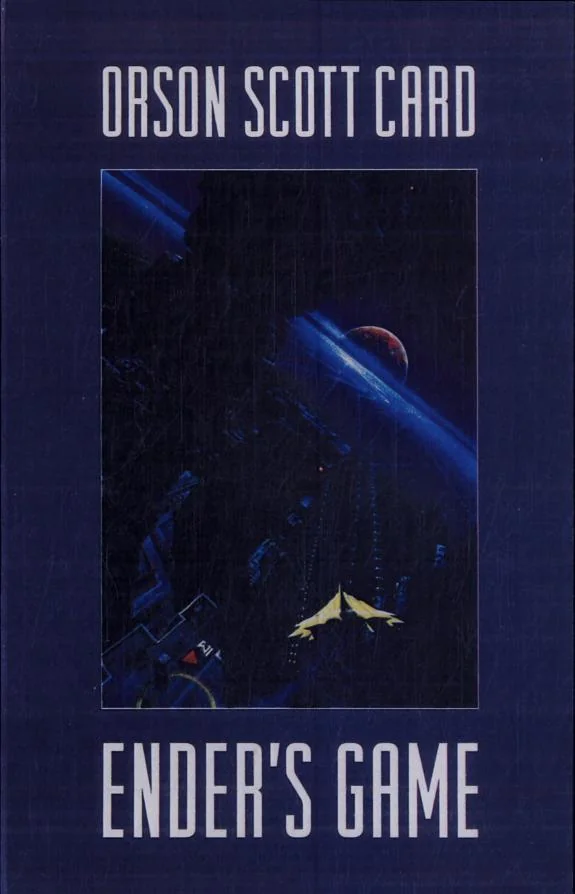
Ender's Game
 82
82

Ender's Game
Orson Scott Card's *Ender's Game* is less a space opera and more a chilling examination of child soldiery and the Machiavellian use of intellect. The novel’s strength lies in its unflinching portrayal of Ender Wiggin’s psychological burden. Card masterfully depicts the isolation and manipulation Ender endures, particularly during his time at Battle School, making the reader complicit in his calculated survival. The infamous "final exam" sequence, where Ender unknowingly commits xenocide, is a stark illustration of the book's ethical ambiguity. However, the narrative occasionally falters in its pacing, with some training montages feeling repetitive. The ending, while impactful, relies on a sudden revelation that, for some readers, might feel slightly abrupt. Despite these minor criticisms, *Ender's Game* remains a powerful exploration of the cost of war and the terrifying potential of a genius pushed to its limits. It is a stark, compelling work that questions the very definition of victory.
📝 Description
82
Orson Scott Card published Ender's Game in 1985, centering on a child groomed for interstellar war.
The story follows Andrew "Ender" Wiggin, a gifted child trained at Battle School and Command School for a war against the alien Formics. He endures rigorous simulations and psychological manipulation to become a military commander. The novel examines the immense pressure of leadership, the moral questions of war, and the isolating effects of intense training. Ender's strategic genius is honed through these experiences, forcing him to confront difficult choices.
Card's narrative delves into the psychological toll of raising a child soldier and the ethical compromises made in the name of survival. The training methods at Battle School reflect a heightened focus on simulation and strategic thinking, influenced by the technological advancements of the 1980s. The book also mirrors the geopolitical tensions of the Cold War era in its depiction of a world facing existential threat.
*Ender's Game* is read for its exploration of child development under extreme stress and its questioning of the justification for war. It considers the nature of empathy and understanding, even towards an enemy, and how true leadership requires more than just tactical skill.
While primarily a science fiction novel, *Ender's Game* touches upon esoteric themes through its examination of consciousness, empathy, and the manipulation of perception. Ender's unique ability to understand his enemies, even to the point of identifying with them, hints at a deeper, almost mystical connection. The training simulations, while presented as technological, function as a crucible for spiritual or psychological transformation, forcing Ender to confront primal fears and develop a profound self-awareness. The book questions the nature of sentience and the ethical implications of controlling or destroying another species, suggesting a universal consciousness at play.
💡 Why Read This Book?
• Understand the psychological pressures of extreme training regimens by examining Ender Wiggin's experience at Battle School, a simulated environment designed to break and rebuild its cadets. • Explore the ethics of warfare and alien contact through the lens of the Formics and the "enemy's way of thinking" concept, which forces a re-evaluation of empathy in conflict. • Witness the manipulation of child prodigies as strategic assets, a core theme revealed in the "final exam" that underscores the book's critique of military expediency.
⭐ Reader Reviews
Honest opinions from readers who have explored this book.
❓ Frequently Asked Questions
When was Ender's Game first published?
Ender's Game was first published in 1985. It was later expanded from an earlier short story of the same name that appeared in Analog magazine in 1977.
What is the primary conflict in Ender's Game?
The primary conflict is humanity's struggle for survival against an alien race known as the Formics, or 'Buggers.' The story focuses on identifying and training a commander capable of defeating them.
Who are the main alien antagonists in Ender's Game?
The main alien antagonists are the Formics, colloquially referred to as 'Buggers.' They are an insectoid species that attacked Earth previously, prompting humanity's preemptive war.
What is Battle School in Ender's Game?
Battle School is a futuristic orbital training facility where gifted children are educated and trained in military strategy and warfare for the war against the Formics. It is located in orbit around Earth.
What is the significance of the 'Dragon Army'?
The Dragon Army is a fictitious unit Ender Wiggin commands during his training. It's significant because Ender uses unconventional tactics and fosters strong camaraderie, leading it to victory against superior forces.
Does Ender's Game have a happy ending?
The ending of Ender's Game is complex. While humanity is saved and Ender is recognized as a hero, he is also deeply traumatized by his actions, particularly the xenocide he unknowingly committed.
🔮 Key Themes & Symbolism
The Burden of Genius
Ender Wiggin’s extraordinary intellect is presented not as a gift, but as a relentless burden. From a young age, he is singled out and subjected to intense psychological and physical pressures designed to mold him into a military commander. The narrative emphasizes how his genius isolates him, forcing him into morally compromising situations and demanding sacrifices that no child should face. This theme explores the societal tendency to exploit exceptional talent, often at the expense of the individual's well-being, a concept that resonates within discussions of precognition and destiny in esoteric thought.
Strategic Empathy
A core tenet of Ender's success is his ability to understand his enemies so thoroughly that he can defeat them. This 'enemy's way of thinking' transcends mere tactical analysis; it requires a profound, almost empathic, immersion into the adversary's mindset. This concept challenges conventional notions of warfare, suggesting that true victory comes not from destruction but from comprehension. In esoteric traditions, this mirrors the idea of understanding the 'shadow self' or the opposing forces within the cosmos to achieve balance and enlightenment.
Manufactured Conflict
The novel scrutinizes the manipulation of individuals and situations for strategic gain. Ender and his peers are constantly tested and provoked, their environments engineered to produce specific outcomes. The "final exam" is the most extreme example, where Ender unknowingly commits xenocide. This theme raises questions about free will versus determinism, and the ethical implications of using simulated realities or orchestrated events to achieve desired ends, echoing Gnostic ideas of illusion and the struggle for true awareness.
The Nature of the Enemy
The Formics, initially depicted as monstrous aliens, are revealed to be a complex species with their own motivations and forms of communication. Ender's eventual understanding of them as sentient beings, rather than mere threats, is crucial to the narrative's resolution. This exploration of the 'other' challenges xenophobic tendencies and aligns with esoteric principles of universal interconnectedness and the dissolution of perceived boundaries between different forms of life.
💬 Memorable Quotes
Direct passages from the work, attributed to the author.
“The perfect commander, he thought, doesn't fight. He doesn't have to. The war is won before it begins.”
— This reflects Ender's ultimate strategic philosophy. It posits that true mastery lies not in engaging in conflict, but in orchestrating circumstances and understanding dynamics to such a degree that opposition becomes irrelevant or impossible.
“When I'm old and I haven't done anything to help the world, I'm going to feel bad.”
— This sentiment underscores Ender's inherent drive to make a difference and his fear of wasted potential. It speaks to a deep-seated moral compass and a desire for purpose, even amidst immense personal hardship.
💡 Key Ideas
Editorial paraphrase of the work's core concepts — not direct quotes.
In the moment when I truly understand my enemy, understand him well enough to defeat him, then in that very moment I also love him.
This quote captures Ender's unique approach to conflict. It suggests that deep understanding, even of an adversary, can lead to a form of empathy or recognition that transcends simple animosity, highlighting a sophisticated strategy rooted in comprehension.
I have to think of them as enemies. I have to think of them as the enemy. I have to think of them as the enemy.
This quote reveals the intense mental discipline Ender must employ to succeed in his training and the war. It highlights the psychological toll of dehumanizing an opponent for the sake of perceived necessity, a constant internal battle.
The enemy's way of thinking is the only weapon that matters.
This paraphrased concept emphasizes the novel's focus on psychological and strategic warfare over brute force. Ender's ability to adopt and understand the enemy's perspective is presented as the ultimate key to victory.
🌙 Esoteric Significance
Tradition
While not explicitly tied to a single esoteric lineage, *Ender's Game* appeals to Gnostic themes of a flawed demiurge (the military command structure), a trapped divine spark (Ender's potential), and the struggle against an illusory world (the simulated battles). The concept of understanding the 'enemy's way of thinking' also echoes Hermetic principles of "As Above, So Below," suggesting that understanding the macrocosm (the Formics) is key to mastering the microcosm (Ender's own psyche and the conflict). The narrative critiques rigid, hierarchical systems that obscure ultimate truth.
Symbolism
The "Dragon Army" symbolizes a united force forged through unconventional leadership, overcoming initial prejudice and disparity. The "Little Doctor" (a toy Ender creates) represents a desire for control and a connection to a lost, innocent self, a tangible manifestation of his inner world. The "Descolada virus" (from the Spanish for 'un-stuck') and its eventual antidote symbolize a transformative plague that forces evolution and understanding upon a species, mirroring esoteric concepts of spiritual purification through trial.
Modern Relevance
Contemporary thinkers in transhumanism and artificial intelligence ethics often cite *Ender's Game* when discussing the potential for engineered super-intelligence and the moral quandaries of creating beings solely for warfare. Its exploration of psychological manipulation and the desensitization of young minds remains relevant in discussions about child soldiers and the impact of violent media. The book's themes also appear in discourse on comparative mythology and alien contact scenarios, particularly regarding the challenges of interspecies communication and understanding.
👥 Who Should Read This Book
• Aspiring strategists and leaders interested in the psychological aspects of command, particularly how pressure and isolation forge decision-making capabilities. • Students of ethics and philosophy examining the moral ambiguities of warfare, the concept of 'just war,' and the treatment of non-human intelligence. • Readers of speculative fiction who appreciate narratives that explore the societal manipulation of gifted individuals and the profound personal cost of extraordinary talent.
📜 Historical Context
Orson Scott Card's *Ender's Game*, released in 1985, arrived during a period marked by anxieties surrounding nuclear proliferation and the ongoing Cold War, themes subtly mirrored in its depiction of humanity's desperate struggle against the Formics. The novel also emerged alongside a burgeoning interest in personal computing and simulation technology, which informed its portrayal of Battle School's advanced training methods. Card's work garnered significant critical acclaim, winning both the Nebula Award and the Hugo Award for Best Novel, positioning it within the mainstream of science fiction discourse. It engaged with contemporary philosophical debates on the ethics of warfare and child development, contrasting with the more space-opera-focused narratives prevalent at the time. Authors like Joe Haldeman, whose *The Forever War* (1974) also explored the psychological costs of prolonged military engagement, represented a similar thematic vein, though Card focused more intensely on the precocious genius and manipulative aspects of child soldiery.
📔 Journal Prompts
Ender Wiggin's "enemy's way of thinking": how can understanding opposing viewpoints foster resolution rather than conflict?
The psychological cost of Battle School: reflect on the impact of extreme training environments on identity.
The 'Dragon Army's' success: analyze the elements of cohesive teamwork and unconventional leadership.
The burden of Ender's genius: consider the societal exploitation of exceptional talent.
Xenocide and empathy: explore the ethical implications of war and the recognition of alien sentience.
🗂️ Glossary
Formics
An insectoid alien species, also known as 'Buggers,' who are humanity's primary antagonists in the interstellar war. Their motivations and nature are central to the novel's ethical explorations.
Battle School
An orbital military academy where gifted children are trained in strategy and combat. It is depicted as a highly competitive and psychologically demanding environment designed to identify and hone future commanders.
Buggers
The derogatory nickname given to the Formics by humans. The term reflects humanity's fear and dehumanization of the alien race, a prejudice Ender eventually overcomes.
The Enemy's Way of Thinking
A strategic principle emphasized by Ender's trainers, suggesting that true victory requires understanding an opponent's mindset, motivations, and tactics as deeply as one's own.
Geneva Convention on the Treatment of Non-Human Sentient Beings
A fictional international treaty referenced in the book that outlines ethical guidelines for dealing with alien species, highlighting the moral complexities of the interstellar conflict.
Mazer Rackham
A legendary, semi-retired military commander who serves as Ender Wiggin's final mentor at Command School. He is instrumental in training Ender for the ultimate confrontation with the Formics.
Xenocide
The deliberate and systematic extermination of an entire alien race. Ender Wiggin commits this act unknowingly at the climax of the novel, leading to profound guilt and reflection.
🔮 Readers Also Liked
Browse all →









More by Orson Scott Card
All books →




More Free Occult Philosophy Books
View all →