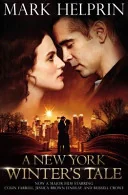
A New York Winter's Tale
 76
76

A New York Winter's Tale
Mark Helprin's 'A New York Winter's Tale' is a deliberately anachronistic romance, a fairy tale masquerading as a New York story. Its strength lies in its ambitious prose and the sheer audacity of its premise: a love so potent it might stop time. The depiction of a snow-choked Manhattan in 1916 offers a vivid, almost tangible atmosphere. However, the novel occasionally falters under the weight of its own myth-making. Peter Lake's quest to cheat death for Beverly Penn, while central, sometimes strains credulity, even within its own fantastical logic. A particularly resonant passage occurs when Peter confronts the limitations of his newfound abilities, highlighting the core tension between desire and reality. Ultimately, 'A New York Winter's Tale' is a grand, if sometimes uneven, testament to the enduring power of love and the stories we tell ourselves to survive.
📝 Description
76
Mark Helprin's 2014 novel, A New York Winter's Tale, is a love story where a burglar tries to master time.
Set in a snow-covered New York City, Mark Helprin's 2014 novel follows Peter Lake, an Irish burglar, and Beverly Penn, a young woman dying of consumption. Their impossible love drives Peter to attempt to control time itself. The story weaves together realism and elements of magical realism. It addresses themes of redemption, mortality, and the strength of affection.
The prose in this novel is lyrical, and the narrative moves beyond typical genre expectations. It will appeal to readers who enjoy allegorical tales, romantic stories with a supernatural bent, and examinations of deep human connection. Those familiar with Helprin's earlier books, like 'Winter's Tale' (1983), will recognize recurring themes and stylistic choices.
Published in 2014, 'A New York Winter's Tale' connects to a literary tradition that uses the fantastical to explore human truths. This approach echoes authors who employ magical realism to examine deeper realities. Helprin's novel, while grounded in New York, participates in this broader literary conversation. It uses supernatural elements to question the nature of destiny and the power of human will.
💡 Why Read This Book?
• Learn about the concept of 'stopping time' as a literary device to explore the limits of love and desire, as seen in Peter Lake's pursuit of Beverly Penn. • Experience a unique portrayal of New York City in 1916, an era marked by both burgeoning modernity and lingering historical undercurrents, depicted through Helprin's evocative prose. • Understand how the novel uses the motif of consumption not just as a plot point but as a symbol for decay and the ephemeral nature of life, prompting reflection on mortality.
⭐ Reader Reviews
Honest opinions from readers who have explored this book.
❓ Frequently Asked Questions
What is the central premise of A New York Winter's Tale?
The book follows Peter Lake, an Irish burglar, who falls in love with Beverly Penn, a young woman dying of consumption. Their powerful affection drives Peter to attempt to stop time and defy death.
When was A New York Winter's Tale first published?
A New York Winter's Tale was first published in 2014, becoming a bestseller and a significant release for author Mark Helprin.
What is the significance of the snow in the novel?
The perpetual snow in the novel symbolizes a kind of magical stasis or suspension of normal reality, creating a unique atmosphere and enabling the fantastical elements of the story to unfold.
Are there supernatural elements in A New York Winter's Tale?
Yes, the novel incorporates elements of magical realism, with Peter Lake seeking to control time and overcome death, blurring the lines between the natural and the supernatural.
What is the historical setting of A New York Winter's Tale?
The novel is primarily set in New York City during the winter of 1916, an era of significant technological advancement and social change in America.
Who are the main characters in A New York Winter's Tale?
The principal characters are Peter Lake, an Irish burglar, and Beverly Penn, a young woman afflicted with consumption, whose love story forms the core of the narrative.
🔮 Key Themes & Symbolism
Love's Power Over Time
The narrative posits that love, particularly the profound connection between Peter Lake and Beverly Penn, possesses a force capable of altering fundamental laws of nature, including the progression of time. This theme explores whether extraordinary affection can achieve the impossible, challenging mortality and seeking to suspend moments of happiness indefinitely. It questions the boundaries of human will when driven by deep emotional bonds, presenting a quasi-mystical interpretation of love's potential.
Redemption and Second Chances
Peter Lake's journey is framed as one of profound redemption. Initially an Irish burglar, his encounter with Beverly Penn inspires a transformation. He seeks not just to save her life but to fundamentally alter his own trajectory, aiming for a new existence free from past transgressions. This theme is explored through his extraordinary efforts, suggesting that even a life marked by crime can find purpose and absolution through selfless love and sacrifice.
Mortality and the Ephemeral
The novel confronts the inevitability of death, personified by Beverly Penn's consumption. This illness serves as a constant reminder of life's fragility and the transient nature of existence. The narrative grapples with how individuals confront their own mortality or the mortality of loved ones. Peter's desperate attempt to stop time is a direct response to this existential threat, highlighting the human desire to preserve what is precious against the relentless march of decay.
The City as a Living Entity
New York City, particularly under a blanket of snow, functions as more than just a setting; it becomes an active participant in the story. The city is depicted with a sense of ancient magic and potent atmosphere, capable of both concealing and revealing its inhabitants' destinies. The snow itself creates a dreamlike, almost otherworldly environment where the extraordinary can occur, imbuing the urban landscape with a mystical quality.
💬 Memorable Quotes
Direct passages from the work, attributed to the author.
“Peter Lake attempts to rob a fortress-like mansion on the Upper West Side. Though he thinks it is empty, the daughter of the house is home.”
— This opening sets the stage for the unlikely romance, introducing the protagonists and the initial conflict that sparks their extraordinary connection against a backdrop of wealth and vulnerability.
“It is a love so powerful that Peter will be driven to stop time and bring back the dead.”
— This highlights the central, almost divine, ambition of Peter's quest. It elevates their affection beyond mere romance into a force that challenges the natural order of life and death.
“A New York Winter's Tale is the story of that extraordinary journey.”
— This succinctly frames the novel not just as a love story, but as an epic quest undertaken by Peter, emphasizing its scope and the extraordinary nature of his endeavors.
“One night in New York, a city under siege by snow...”
— This establishes the unique, almost surreal, atmosphere of the novel, where a powerful natural event creates a stage for magical occurrences and intense human drama.
“...a young girl dying of consumption.”
— This introduces the element of mortality that drives the narrative's central conflict, underscoring the urgency and stakes of Peter Lake's love and his desire to overcome death.
🌙 Esoteric Significance
Tradition
While not explicitly aligned with a single esoteric tradition, 'A New York Winter's Tale' draws from a broad stream of Western esotericism, particularly its Hermetic and Gnostic inclinations that explore the potential for human consciousness to transcend material limitations. The idea of manipulating time and overcoming death echoes alchemical pursuits and Gnostic notions of spiritual liberation from the constraints of the material world. It engages with the archetype of the questing hero, seeking forbidden knowledge or power—in this case, the power over life and death—driven by love rather than ego.
Symbolism
The pervasive snow functions as a powerful symbol, representing a mystical suspension of ordinary reality, a magical veil that allows for the impossible to occur. Beverly Penn's consumption is a potent symbol of mortality and the decay inherent in the physical world, a state that Peter Lake seeks to overcome. The labyrinthine nature of New York City itself, especially in winter, can be seen as a symbol of the soul's journey through life's complexities, with hidden paths and unexpected encounters leading toward transformation or oblivion.
Modern Relevance
Contemporary thinkers exploring the intersection of consciousness, reality, and narrative often find resonance in Helprin's work. The novel’s exploration of love as a force capable of altering perceived reality aligns with certain post-Jungian psychological interpretations and New Age philosophies that emphasize the power of intention and emotional states. Modern practitioners of narrative therapy or those interested in the philosophical implications of consciousness might study the book's structure and themes as examples of how stories can shape our understanding of what is possible.
👥 Who Should Read This Book
• Lovers of literary fiction who appreciate lush prose and allegorical storytelling, seeking a narrative that transcends conventional romance. • Readers interested in explorations of time, mortality, and the potential for love to defy natural laws, examining these themes through a fantastical lens. • Those drawn to atmospheric settings and novels that imbue urban landscapes with a sense of magic and mystery, particularly New York City in a historical context.
📜 Historical Context
Mark Helprin’s ‘A New York Winter’s Tale,’ published in 2014, arrived in a literary landscape still influenced by the magical realism that had captivated readers since the latter half of the 20th century, a movement significantly shaped by authors like Gabriel García Márquez. While Helprin’s work is distinctly American, rooted in the specificities of New York City, it shares with magical realism a willingness to blend the fantastical with the everyday. The novel’s thematic concerns—love defying death, the malleability of time—also echo perennial philosophical and spiritual inquiries that have persisted throughout Western thought, from ancient myths to more contemporary speculative fiction. The early 20th century, specifically 1916, the novel's setting, was a period of rapid industrialization and burgeoning modernity, a stark contrast to the timeless, almost mythical quality Helprin imbues in his narrative. This juxtaposition allows the fantastical elements to stand out more vividly against a backdrop of historical specificity.
📔 Journal Prompts
Peter Lake's attempt to stop time for Beverly Penn: explore the ethical dimensions of such a desire.
The symbolism of the perpetual snow in New York: what does this unnatural weather suggest about reality within the narrative?
Beverly Penn's consumption: reflect on how physical decay serves as a catalyst for extraordinary action.
The concept of redemption for Peter Lake: how does his love for Beverly facilitate a transformation?
New York City as a character: analyze its role in shaping events and atmosphere.
🗂️ Glossary
Consumption
An archaic term for tuberculosis, a serious infectious disease that primarily affects the lungs. In the novel, it represents a fatal illness that serves as a primary antagonist.
Magical Realism
A literary genre where fantastical elements are presented in an otherwise realistic setting, treated by characters and narrative as normal, blurring the lines between the ordinary and the extraordinary.
Irish Burglar
Refers to Peter Lake's profession and heritage. It establishes his outsider status within the affluent New York setting and hints at a life of transgression.
Stopping Time
The literal and symbolic act Peter Lake attempts, representing a desire to halt mortality, preserve a moment, or exert ultimate control over existence through the power of love.
Upper West Side
A prestigious residential neighborhood on Manhattan's West Side in New York City. It signifies wealth and established society, a contrast to Peter Lake's background.
Winter of 1916
The specific historical period when the novel is set, a time of significant industrial growth and cultural change in America, preceding major global conflicts.
Allegory
A story, poem, or picture that can be interpreted to reveal a hidden meaning, typically a moral or political one. This novel functions allegorically regarding love, life, and death.
This book appears in 1 collection
🔮 Readers Also Liked
Browse all →








From the “Reincarnation” Collection
View all →




More Free Occult Philosophy Books
View all →