Mark Helprin is an American-Israeli novelist and conservative commentator known for his literary style and engagement with philosophical and political themes.
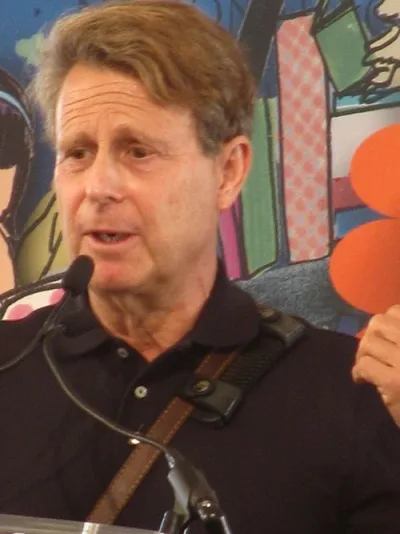
Mark Helprin, born in 1947, is an American-Israeli novelist, journalist, and conservative commentator. He holds degrees from Harvard University and pursued postgraduate studies at Princeton and Oxford. Helprin also served in the Israeli military. His literary career spans novels, short stories, and children's books, often characterized by a unique style and thematic depth. He has also been a contributor to various publications and a vocal commentator on cultural and political issues.
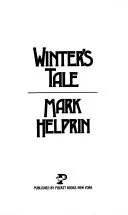
Helprin's writing philosophy emphasizes revitalizing existing ideas rather than pure invention, drawing inspiration from classical authors. His notable novels include "Winter's Tale" and "A Soldier of the Great War." Beyond his fiction, he has authored "Digital Barbarism," a defense of copyright and cultural values, which sparked considerable debate. He is recognized for his literary achievements, including awards and fellowships, and his works have been translated internationally.
Literary Philosophy and Style
Mark Helprin describes his creative process as starting with something small and focusing on revitalizing and combining existing elements rather than inventing entirely new concepts. He likens this to remembering and altering, noting that artists do not create new colors but rather new combinations of them. He states that he belongs to no specific literary school or movement. His inspirations include classical figures such as Dante, Shakespeare, Melville, and Mark Twain. This approach suggests a deep engagement with literary tradition and a belief in the transformative power of reinterpretation and synthesis.
Notable Works and Themes
Helprin's literary output includes novels like "Refiner's Fire" (1977), "Winter's Tale" (1983), "A Soldier of the Great War" (1991), and "Paris in the Present Tense" (2017). His short story collections include "A Dove of the East & Other Stories" (1975) and "Ellis Island & Other Stories" (1981). He has also written children's books illustrated by Chris Van Allsburg. His works often explore themes of life, love, war, and the human condition, with "Winter's Tale" being recognized as a significant work of American fiction. His novel "Freddy and Fredericka" is a satire, and "In Sunlight and in Shadow" is described as a tribute to New York City.
Commentary and Intellectual Stance
Beyond his fiction, Helprin is a conservative commentator and Senior Fellow at the Claremont Institute. He has engaged in public discourse on topics such as intellectual property, notably with his book "Digital Barbarism" (2009), which defended copyright against digital challenges and generated significant debate. His writings have appeared in major publications like The Wall Street Journal, The New York Times, and The Atlantic. Helprin's public commentary often reflects a concern for cultural preservation and the value of humanistic traditions against perceived modern distortions.
Key Ideas
- Literary creation as revitalization and recombination, not pure invention.
- Defense of intellectual property rights and cultural values against digital erosion.
- The enduring significance of humanistic traditions in the face of modernity.
Notable Quotes
“belongs to no literary school, movement, tendency, or trend”
“always starts with something very small”
“I can sit down to write a story just by thinking of the first two words of a Scott Fitzgerald story: 'This Jonquil'—it's a woman's name. This always gets me in the mood to write. We create nothing new—no one has ever imagined a new color—so what you are doing is revitalizing. You are remembering, then combining, altering. Artists who think they're creating new worlds are simply creating tiny versions of this world.”
“I Dodged the Draft and I Was Wrong”
“Digital Barbarism is not as much a defense of copyright as it is an attack upon a distortion of culture that has become a false savior in an age of many false saviors. Despite its lack of mechanical perfections, humanity, as stumbling and awkward as it is, is far superior to the machine. It always has been and always will be, and this conviction must never be surrendered. But surrender these days is incremental, seems painless, and comes so quietly that warnings are drowned in silence.”
Books by
3 free public domain books · Read online or download