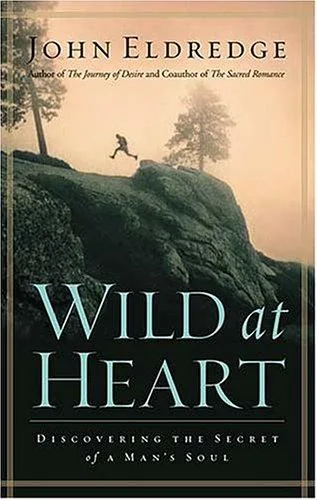
Wild at Heart
 72
72

Wild at Heart
John Eldredge's *Wild at Heart* attempts a bold excavation of the masculine soul, urging readers to confront the "wound" that dulls their God-given "wildness." The book’s strength lies in its passionate articulation of a deep yearning for adventure and purpose, a sentiment many men likely feel but struggle to name. Eldredge’s concept of the "good fight" and the "beauty to rescue" offers a compelling, almost mythic, framework for male identity. However, the work's reliance on a specific, often narrowly defined, Christian worldview can feel exclusionary for those outside that tradition. The constant framing of internal struggles as a direct spiritual warfare, while powerful for believers, can sometimes oversimplify the complex interplay of psychology, culture, and personal history. A passage discussing the "wound" and its effect on a man's capacity for passion, though central, sometimes feels more like a broad assertion than a deeply explored psychological phenomenon. Ultimately, *Wild at Heart* offers a potent, if spiritually particular, call to reclaim a vital aspect of self.
📝 Description
72
John Eldredge's 2001 book, Wild at Heart, addresses the suppressed wild nature of masculine identity.
Originally published in 2001, Wild at Heart examines what author John Eldredge identifies as the core of masculine identity and its often hidden, wild essence. Eldredge, a co-founder of Ransomed Heart Ministries, argues that men must reclaim their God-given desires and passions to win the battle for their souls. The book aims to reveal the deep longing for adventure, beauty, and conflict that Eldredge believes is innate in every man. It functions less as a practical manual and more as an exploration of the wounded male spirit, advocating for a return to wholeness.
The book targets men who feel estranged from their own vitality, believing they have been subdued by societal pressures or personal pain. It speaks to those who sense a greater purpose beyond their current circumstances, a desire for something more authentic and grand. While primarily written for men, its exploration of suppressed passion and the search for true selfhood may also connect with women interested in understanding the male psyche or exploring archetypal energies. It is for individuals questioning conventional ideas of success and fulfillment.
Emerging in the early 2000s, Wild at Heart appeared during a time of renewed focus on masculine spirituality and identity. It followed earlier men's movements and shared common ground with works like Robert Bly's *Iron John*, which also addressed archetypal masculinity. Eldredge's work, however, is grounded in a Christian framework, emphasizing a spiritual struggle and the recovery of a divinely intended wildness. This resonated within evangelical and charismatic Christian circles looking to reconcile faith with psychological and spiritual well-being, sparking considerable discussion on masculinity in religious contexts.
Wild at Heart draws on a Christian understanding of the soul and its innate desires, framing a spiritual battle for men to reclaim a divinely ordained 'wildness.' This approach intersects with broader discussions of masculine archetypes and the integration of faith with personal psychological and spiritual health. It positions the Christian life as a grand adventure, a core aspect of which is recovering a man's God-given passions and his true, untamed nature as intended by the Creator.
💡 Why Read This Book?
• You will gain a framework for understanding suppressed masculine desires, learning about Eldredge's concept of the "wild at heart" and its three core longings: a battle to fight, an adventure to live, and a beauty to rescue. • You will explore the idea of the "wound" as presented by Eldredge, understanding how personal and societal experiences can lead men to suppress their innate vitality and quest for meaning. • You will encounter a specific Christian perspective on masculine identity, potentially offering a renewed sense of spiritual purpose and a call to wholeness rooted in the "Gospel" narrative as the ultimate healing story.
⭐ Reader Reviews
Honest opinions from readers who have explored this book.
❓ Frequently Asked Questions
What is the core message of John Eldredge's 'Wild at Heart'?
The book's core message is that men are inherently "wild at heart," possessing a God-given spirit yearning for adventure, a battle to fight, and a beauty to rescue, which is often suppressed by life's wounds. It calls men to reclaim this authentic self.
Who is the intended audience for 'Wild at Heart'?
The primary audience is men who feel a disconnect from their own vitality or a sense of being dulled by life. It also appeals to women seeking to understand the male psyche and those exploring spiritual or psychological wholeness.
When was 'Wild at Heart' first published?
'Wild at Heart' was first published in 2001, emerging during a period of increased discussion around masculine identity and spirituality.
Does 'Wild at Heart' offer practical advice or is it more theoretical?
While it explores theoretical concepts of masculine identity and spiritual wounding, it is presented as an exploration and a call to awareness rather than a step-by-step practical guide. Its aim is to awaken a longing for a more authentic life.
What is the role of Christianity in 'Wild at Heart'?
Christianity is central to Eldredge's thesis. The book frames masculine identity and its healing within a Christian worldview, interpreting desires and wounds through the lens of the "Gospel" and spiritual warfare.
What does Eldredge mean by the 'wound' in 'Wild at Heart'?
The 'wound' refers to the negative experiences and traumas in a man's life that cause him to suppress his inherent passions, desires, and his "wild at heart" nature, leading to a less vibrant existence.
🔮 Key Themes & Symbolism
The Wild Masculine Spirit
Eldredge posits that men are "wild at heart," possessing an innate, untamed spirit that longs for adventure, a significant challenge, and the protection of something beautiful. This core essence, often suppressed by societal conditioning or personal trauma, is seen as divinely ordained. The work encourages men to recognize and embrace this primal energy, viewing its suppression not as maturity, but as a wound that diminishes life's vibrancy. This theme contrasts the perceived need for men to conform to passive roles with their inherent drive for action and passion.
The Core Wound and Healing
A central concept is the "wound" that causes men to disown their innate desires. These wounds, stemming from childhood experiences or broader cultural narratives, lead to a life lived in "survival mode" rather than authentic expression. Eldredge suggests that true healing comes not from mere psychological adjustment but from a spiritual restoration. The "Gospel" is presented as the ultimate narrative that can mend these deep fractures, allowing men to reclaim their capacity for passion, courage, and engagement with life's grander purposes.
The Battle and the Adventure
The book frames life as an epic narrative, essential for the masculine spirit. Men are depicted as hardwired for conflict and exploration – a "good fight" to engage in and a grand "adventure" to embark upon. Eldredge argues that the absence of these elements leads to a stagnant existence. He calls men to identify the true battles worth fighting and the adventures that will ignite their souls, suggesting that embracing these quests is fundamental to living a full and purposeful life aligned with their created nature.
Beauty and Rescue
Intertwined with the call to battle and adventure is the theme of "beauty to rescue." Eldredge suggests that the masculine spirit is inherently protective and drawn to beauty, whether it be in nature, relationships, or ideals. This archetype is not about possessiveness but about a noble calling to safeguard and cherish what is precious. The book implies that a man's capacity to engage with and protect beauty is a sign of his spiritual health and his ability to live out a more complete, God-given purpose.
💬 Memorable Quotes
Direct passages from the work, attributed to the author.
“The wound that has wounded us most deeply is the wound of the father.”
— This statement highlights a core belief that the relationship with one's father, or the absence thereof, is a primary source of damage to a man's sense of self and his ability to embrace his own 'wild' nature.
“A man’s heart is like a woman’s, only wilder.”
— This interpretation suggests that while both genders possess deep emotional capacities, the masculine heart is characterized by a more untamed, adventurous, and passionate drive that is often at the root of male identity.
“The Bible is not a book of rules; it is a book of life.”
— Eldredge frames the scriptures not as a rigid code of conduct, but as a narrative of God's engagement with humanity, offering a grand story of redemption and purpose that speaks to the deepest longings of the soul.
“The enemy wants to steal your story.”
— This speaks to the concept of spiritual warfare, where external forces or internal doubts seek to undermine a man's sense of purpose, identity, and his personal narrative of faith and adventure.
“You are not your own. You belong to God.”
— This emphasizes a foundational Christian tenet of surrender and belonging, positing that true freedom and purpose are found not in self-ownership but in recognizing one's identity as created and claimed by a higher power.
🌙 Esoteric Significance
Tradition
While not strictly adhering to a single esoteric lineage like Hermeticism or Kabbalah, *Wild at Heart* draws heavily from archetypal psychology and Jungian concepts, filtered through a Christian lens. It echoes Gnostic ideas of a true self suppressed by a fallen world and a divine spark within. The emphasis on a "battle" and reclaiming a lost, primal essence aligns with certain Gnostic narratives of spiritual awakening and liberation from mundane constraints.
Symbolism
The "wildness" itself functions as a potent symbol, representing an untamed, vital life force akin to the archetype of the Divine Child or the Warrior. The "wound" symbolizes the damage inflicted by the mundane or "demiurgic" forces that seek to stifle this inner light. The "beauty to rescue" can be seen as a symbol of the soul's yearning for transcendence and the sacred, a call to protect and uphold divine ideals in a flawed reality.
Modern Relevance
The work's exploration of archetypal masculinity and the "wounded masculine" continues to influence contemporary discussions within evangelical Christianity and broader men's spiritual movements. Thinkers and practitioners focusing on men's discipleship, the integration of faith and psychology, and the recovery of authentic identity often cite or engage with Eldredge's concepts, particularly the idea of a divinely ordained "adventure" and the "battle" for the soul.
👥 Who Should Read This Book
• Men experiencing a sense of spiritual or emotional stagnation, seeking to understand a deeper longing for purpose and adventure, particularly those open to a faith-based exploration of identity. • Christian leaders and counselors looking for resources that address the "wounded masculine" and offer a framework for spiritual and psychological wholeness rooted in evangelical theology. • Individuals interested in how archetypal concepts of masculinity are integrated within contemporary religious discourse, offering a bridge between psychological theory and spiritual practice.
📜 Historical Context
Published in 2001, *Wild at Heart* emerged within a field of burgeoning Christian self-help literature and a renewed cultural conversation about masculinity. It followed seminal works like Robert Bly's *Iron John* (1990), which explored archetypal masculinity through myth, but Eldredge's approach was distinctively rooted in a conservative evangelical theology. The book gained significant traction within Christian circles, resonating with those seeking to reconcile their faith with a sense of masculine identity often perceived as suppressed by modern culture. It appeared during a period where authors like Gary Thomas (*Sacred Marriage*, 2000) were also exploring spiritual dimensions of relationships and personal lives. The book’s reception was largely positive among its target audience, though its specific theological framework and direct claims about spiritual warfare sometimes drew critique from more liberal theological perspectives or secular psychology.
📔 Journal Prompts
The "wound" and its impact on your "wild at heart" nature.
What "adventure" is your soul calling you to embark upon?
Reflect on the "beauty" you feel compelled to rescue or protect.
Identify the "good fight" that aligns with your deepest sense of purpose.
How does the "Gospel" narrative speak to the "wound" you carry?
🗂️ Glossary
Wild at Heart
The inherent, untamed, and passionate spirit within men, believed to be divinely given and essential for a full life. It is characterized by a longing for adventure, a battle to fight, and a beauty to rescue.
The Wound
Refers to the deep emotional or spiritual damage experienced by men, often from childhood, that causes them to suppress their innate desires and live a less vibrant, "survival-mode" life.
Survival Mode
A state of existence where one is primarily focused on getting by and avoiding pain, rather than actively pursuing life's passions, adventures, and deeper callings.
The Gospel
In this context, the Christian message of redemption and restoration, presented as the ultimate healing narrative capable of mending the "wound" and restoring a man to his "wild at heart" identity.
The Good Fight
A significant, meaningful struggle or challenge that aligns with a man's core desires and purpose, presented as essential for masculine vitality and spiritual growth.
Beauty to Rescue
The innate masculine drive to protect and cherish that which is precious, beautiful, or noble, seen as a fundamental aspect of a man's calling and identity.
Ransomed Heart
The name of the ministry co-founded by John Eldredge, signifying the concept of a heart that has been bought back and redeemed, aligning with the book's themes of spiritual restoration.
🔮 Readers Also Liked
Browse all →









More by John Eldredge
All books →
More Free Spiritual Development Books
View all →