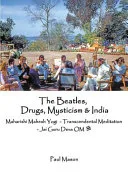
The Beatles, Drugs, Mysticism & India
 74
74

The Beatles, Drugs, Mysticism & India
Paul Mason's "The Beatles, Drugs, Mysticism & India" offers a compellingly detailed chronicle of the band's spiritual evolution. Its strength lies in the exhaustive use of primary source material, presenting a multifaceted view of their exploration into consciousness. The book excels at detailing the specific encounters and influences that shaped their interest, particularly the pivotal 1968 trip to Rishikesh. However, at times, the sheer volume of information can feel overwhelming, occasionally sacrificing narrative flow for comprehensiveness. A particularly striking aspect is the detailed account of John Lennon's disillusionment with the Maharishi, revealing the complexities and sometimes harsh realities of their spiritual pursuits. This work is essential for understanding the profound impact of Eastern thought on Western popular culture.
📝 Description
74
Paul Mason's 2009 book examines The Beatles' 1968 India trip and its spiritual impact.
This volume traces The Beatles' deep involvement with Eastern spirituality and consciousness-altering practices. It moves past superficial accounts to detail their actual search for self-knowledge, beginning with early psychedelic use and progressing to serious meditation. The author draws on direct accounts from band members, their associates, and people they met during their spiritual pursuits, giving an up-close view. The book discusses the band's significant experiences with LSD and psilocybin, showing them as tools for exploring different states of mind rather than just recreation. It connects these chemical explorations with their growing interest in meditation and Eastern thought, especially during their 1968 visit to India. The narrative highlights how their spiritual search changed from initial interest to a more committed practice. A large part of the book covers The Beatles' time in Rishikesh, India, in 1968, where they studied Transcendental Meditation with Maharishi Mahesh Yogi. This immersion influenced their songwriting and personal views, marking a key moment in their artistic and spiritual growth. The book emphasizes India's importance in their quest for a higher awareness. What makes this work stand out is its dedication to an unvarnished story, using many quotes and memories from those directly involved. The addition of previously unpublished color photographs gives visual context to their spiritual travels and experiences, aiming for a thorough and genuine depiction.
This book fits within the broader trend of Western musicians and artists in the mid-20th century turning towards Eastern spiritual traditions. It connects the specific case of The Beatles to a larger cultural movement that saw figures like Aldous Huxley and Alan Watts exploring altered states and non-Western philosophies. The focus on meditation, mysticism, and consciousness expansion aligns with various yogic and Vedantic schools that gained traction in the West during this era, often transmitted through figures like Maharishi Mahesh Yogi.
💡 Why Read This Book?
• Learn about the specific influence of Maharishi Mahesh Yogi's Transcendental Meditation on The Beatles' songwriting during their 1968 stay in Rishikesh, India, and how this practice was perceived to foster enlightenment. • Understand the role of psychedelic drugs, particularly LSD in the mid-1960s, as perceived catalysts for altered states of consciousness and spiritual inquiry by band members like George Harrison. • Discover previously unpublished color photographs that visually document The Beatles' journey through India, offering a unique perspective on their engagement with mysticism and Eastern philosophies.
⭐ Reader Reviews
Honest opinions from readers who have explored this book.
❓ Frequently Asked Questions
When did The Beatles travel to India to study meditation?
The Beatles traveled to Rishikesh, India, in February 1968. They spent several months there studying Transcendental Meditation under Maharishi Mahesh Yogi, a period that significantly influenced their creative output.
What role did psychedelics play in The Beatles' spiritual journey?
Psychedelics, such as LSD, are presented in the book as early catalysts for exploring altered states of consciousness and spiritual concepts. The work examines how these experiences paved the way for their later interest in formal meditation and Eastern mysticism.
Which members of The Beatles were most involved in Indian spirituality?
While all members participated, George Harrison was notably the most deeply and consistently engaged with Indian music, philosophy, and spirituality, becoming a primary conduit for these influences within the band.
Are there actual quotes from The Beatles in this book?
Yes, the book extensively uses quotes and recollections from The Beatles themselves, as well as from friends and associates who shared their spiritual journey, aiming for an 'unvarnished' account.
What is the significance of the 1968 Rishikesh trip for The Beatles' music?
The 1968 trip to Rishikesh is considered a highly productive period, resulting in the composition of a large number of songs that would later appear on the 'White Album' (The Beatles), many of which reflect their spiritual and philosophical explorations.
Does the book cover their later interest in gurus beyond Maharishi?
The book touches upon their broader engagements with spiritual figures and practices beyond Maharishi Mahesh Yogi, including their exploration of various Eastern philosophies and their ongoing search for meaning and transcendence.
🔮 Key Themes & Symbolism
Psychedelic Catalysts
The work details how substances like LSD and psilocybin in the mid-1960s were perceived by The Beatles not just as recreational but as tools for accessing altered states of consciousness. This section explores how these experiences served as a gateway, prompting deeper inquiry into the nature of reality and the self, leading them towards more structured contemplative practices and Eastern philosophies.
Transcendental Meditation
Central to the narrative is The Beatles' immersion in Transcendental Meditation (TM) under Maharishi Mahesh Yogi in Rishikesh, India, during 1968. The book examines the impact of TM on their songwriting, their personal lives, and their collective understanding of bliss and self-knowledge. It provides context for their disillusionment with some aspects of the TM movement as well.
The Appeal of India
This theme addresses why India became such a profound spiritual destination for The Beatles. It explores the allure of its ancient philosophies, yogic traditions, and meditative disciplines as a counterpoint to Western materialism and the pressures of global fame. The book highlights India as a crucible for their evolving spiritual consciousness.
From Bliss to Transcendence
The book charts the band's evolving spiritual goals, moving from a pursuit of 'bliss' often associated with early psychedelic experiences and meditation to a deeper quest for self-knowledge and ultimate transcendence. It chronicles their journey through various stages of spiritual seeking, influenced by both Eastern thought and Western counterculture.
💬 Memorable Quotes
Direct passages from the work, attributed to the author.
“The Beatles' search for bliss, self-knowledge & enlightenment - from psychedelia to transcendence.”
— This summary expresses the core trajectory of The Beatles' spiritual journey, highlighting their progression from seeking euphoric states to a more profound quest for understanding the self and achieving ultimate liberation.
“Their experiments with drugs & the practice of meditation.”
— This phrase points to the dual approach The Beatles took in exploring consciousness: through chemical means and structured contemplative disciplines, showing how these two paths often intersected in their quest.
“The unvarnished story as told by The Beatles, friends & others who shared the journey.”
— This emphasizes the book's commitment to authenticity and firsthand accounts, suggesting a narrative free from embellishment, relying on the direct experiences of those involved in The Beatles' spiritual explorations.
“A documentary-in-print, profusely illustrated with many previously unpublished colour photographs.”
— This highlights the book's visual and informational depth, positioning it as a comprehensive, illustrated record of The Beatles' mystical pursuits, offering visual evidence alongside detailed narratives.
“Their influential 1968 trip to India.”
— This pinpoints a critical period and location that served as a major catalyst for The Beatles' engagement with Eastern spirituality, particularly their study of Transcendental Meditation under Maharishi Mahesh Yogi.
🌙 Esoteric Significance
Tradition
This work engages with the modern dissemination of Vedic and yogic traditions into the West, particularly through the lens of Transcendental Meditation. It fits within the broader Neo-Vedanta movement that sought to present Hindu philosophy in accessible, often secularized terms for a Western audience. While not strictly adhering to a single lineage like Kabbalah or Hermeticism, it explores themes common to many esoteric paths: the search for inner peace, self-realization, and the transcendence of ordinary consciousness.
Symbolism
The lotus flower, often associated with purity and spiritual awakening in Eastern traditions, implicitly symbolizes the band's journey towards enlightenment amidst the 'mud' of fame and material culture. The 'Om' mantra, a fundamental sound in Hinduism representing the universe, signifies their attempts to connect with a universal consciousness. India itself functions as a potent symbol of ancient wisdom and spiritual refuge, a place where the mundane world's distractions could be shed for higher pursuits.
Modern Relevance
The legacy of The Beatles' spiritual exploration continues to influence contemporary mindfulness and meditation practices, which have become mainstream. Thinkers and practitioners in the wellness industry, as well as musicians exploring lyrical themes of consciousness and spirituality, still draw inspiration from this era. The book's exploration of the intersection between popular culture, spirituality, and the human desire for meaning remains highly relevant to modern seekers navigating similar paths.
👥 Who Should Read This Book
['• Fans of The Beatles interested in the deeper spiritual and philosophical underpinnings of their music and lives, beyond standard biographical accounts.', '• Students of 1960s counterculture and the global spread of Eastern spiritual practices in the West, seeking detailed historical context.', '• Individuals exploring the relationship between consciousness-altering experiences (psychedelics, meditation) and artistic creation, looking for case studies.']
📜 Historical Context
The mid-to-late 1960s witnessed a significant cultural shift, with Western youth increasingly drawn to Eastern spiritual traditions as an alternative to prevailing societal norms and religious institutions. The Beatles, at the zenith of their global fame, became prominent figures in popularizing these ideas. Their 1968 journey to Rishikesh, India, to study Transcendental Meditation under Maharishi Mahesh Yogi, was a highly publicized event that fueled widespread interest in meditation and Eastern mysticism. This period saw a burgeoning counterculture that embraced psychedelic experimentation alongside spiritual seeking, often challenging established Western philosophical and psychological paradigms. While figures like Timothy Leary advocated for psychedelic exploration, The Beatles' trajectory shifted towards more structured contemplative practices, exemplified by their engagement with TM. The reception of their spiritual leanings varied, from enthusiastic adoption by fans to skepticism from mainstream critics and religious authorities, highlighting the era's tension between tradition and burgeoning new age thought.
📔 Journal Prompts
The Beatles' journey from psychedelic highs to Maharishi's teachings.
The concept of 'bliss' as sought by John and Paul in the 1960s.
George Harrison's evolving spiritual convictions in India.
The impact of Rishikesh on the songwriting for the 'White Album'.
The contrast between external fame and internal spiritual seeking.
🗂️ Glossary
Transcendental Meditation (TM)
A specific form of silent mantra meditation developed by Maharishi Mahesh Yogi, intended to promote deep relaxation and spiritual awareness by allowing the mind to settle effortlessly to quieter levels.
Psychedelics
A class of psychoactive drugs, such as LSD and psilocybin, that can produce profound alterations in perception, mood, and cognitive processes, often explored in the 1960s for spiritual or consciousness-expanding purposes.
Enlightenment
In many spiritual traditions, a state of profound understanding, wisdom, and liberation from suffering; the ultimate goal of spiritual practice, often associated with self-realization and transcendence.
Rishikesh
A city in Uttarakhand, India, situated in the foothills of the Himalayas, renowned as a pilgrimage site and a center for yoga and meditation, famously visited by The Beatles in 1968.
Maharishi Mahesh Yogi
An Indian guru who introduced Transcendental Meditation to the West. He was a significant spiritual teacher for The Beatles during their 1968 stay in India.
Self-knowledge
A deep understanding of one's own character, motivations, and true nature, often considered a key component of spiritual development and personal liberation.
Transcendence
The state or experience of going beyond ordinary physical or mental limitations; moving into a higher or different field of consciousness or being.



![Camino de perfección [por] Santa Teresa de Jesús](/img/thumb/camino-de-perfección-por-santa-teresa-de-jesús-teresa-of-avila-574018.webp)








![Hindi Bangla Speaking Course[ S. P. Chakraborty]](/img/thumb/hindi-bangla-speaking-course-s-p-chakraborty.webp)