Science and the evolution of consciousness
 80
80

Science and the evolution of consciousness
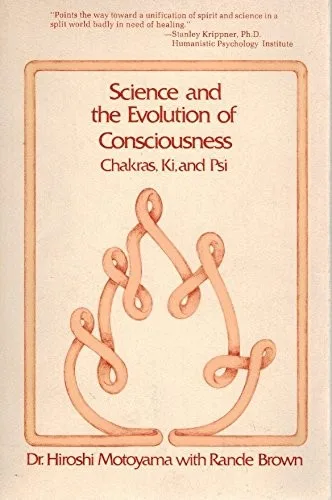
Hiroshi Motoyama's "Science and the Evolution of Consciousness" is an ambitious attempt to map the terrain of subjective experience using a framework that borrows from both yogic traditions and empirical science. The book's strength lies in its systematic approach to concepts often relegated to mysticism, particularly its detailed exploration of the chakra system as a physiological and psychological map. Motoyama's assertion that spiritual evolution can be empirically studied is compelling, though the methodology remains somewhat speculative by conventional scientific standards. A notable passage detailing the specific energetic qualities associated with each chakra provides a concrete anchor for abstract notions of consciousness. However, the primary limitation is the inherent difficulty in verifying the proposed energetic correlates through current scientific instrumentation. The work sometimes overreaches, presenting hypotheses as near-certainties without fully addressing the epistemological challenges. Despite these hurdles, Motoyama offers a valuable perspective for those seeking to integrate spiritual growth with a rational understanding of the self. It's a significant, if sometimes challenging, inquiry into the nature of being.
📝 Description
80
### What It Is
Hiroshi Motoyama's "Science and the Evolution of Consciousness," first published in 1978, offers a unique synthesis of scientific inquiry and esoteric philosophy. The work attempts to bridge the perceived gap between empirical observation and the subjective experience of consciousness, proposing that spiritual development is an observable, measurable phenomenon. Motoyama draws on a wide array of sources, including Eastern religious traditions and parapsychological research, to construct a framework where consciousness is not merely an epiphenomenon of the brain but a fundamental aspect of reality that can be cultivated and understood through rigorous, albeit unconventional, methods.
### Who It's For
This book is intended for readers who are dissatisfied with purely materialistic explanations of consciousness and seek a more integrated understanding of existence. It will appeal to individuals with a background in philosophy, psychology, or comparative religion, as well as those actively exploring spiritual development or esoteric disciplines. Those interested in the intersection of science and spirituality, particularly the potential for empirical investigation into subtle human energies and states of awareness, will find this work engaging. It requires an open mind and a willingness to consider hypotheses that extend beyond conventional scientific paradigms.
### Historical Context
Published in 1978, "Science and the Evolution of Consciousness" emerged during a period of heightened interest in consciousness studies and the burgeoning field of parapsychology. The late 1970s saw continued exploration into altered states of consciousness, Eastern mysticism's influence on Western thought, and early attempts to apply scientific methodologies to subjective phenomena. Motoyama's work arrived amidst discussions also featuring thinkers like Stanislav Grof, who was exploring transpersonal psychology, and the lingering impact of the Theosophical Society's efforts to synthesize science and spirituality. The book sought to provide a more structured, almost scientific, approach to these explorations, moving beyond anecdotal accounts towards a systematic theory of consciousness's growth.
### Key Concepts
Motoyama introduces several central concepts, including the "chakras" as energetic centers within the human body that correlate with different levels of consciousness and spiritual development. He posits a "spiritual body" distinct from the physical, which interacts with and influences the material realm. The book also explores the idea of "subtle energy" (prana or chi) as a quantifiable force that can be manipulated for healing and spiritual advancement. Furthermore, Motoyama outlines a developmental path for consciousness, suggesting that specific practices can lead to the evolution of these energetic centers and, consequently, a more expanded awareness and connection to universal principles. The work aims to demonstrate that these internal states are not merely psychological but have tangible, observable correlates.
💡 Why Read This Book?
• Gain a structured understanding of the chakra system as described by Motoyama, moving beyond generalized New Age interpretations to a more systematic view of consciousness evolution linked to specific energetic centers. • Explore Motoyama's hypothesis regarding the "spiritual body" and "subtle energy," providing a conceptual framework for understanding non-physical aspects of human experience that can be investigated through dedicated practice. • Examine the book's proposed evolutionary path of consciousness, first published in 1978, offering a historical perspective on attempts to reconcile scientific inquiry with esoteric development and understand how these ideas were presented during that era.
⭐ Reader Reviews
Honest opinions from readers who have explored this book.
❓ Frequently Asked Questions
What is the primary goal of Hiroshi Motoyama's "Science and the Evolution of Consciousness"?
The book aims to bridge the gap between science and spirituality by proposing that consciousness and its evolution are empirically observable phenomena, particularly through the study of energetic centers like chakras.
When was "Science and the Evolution of Consciousness" first published?
The original publication date for Hiroshi Motoyama's "Science and the Evolution of Consciousness" was 1978.
What role do chakras play in Motoyama's theory?
Motoyama views chakras as vital energetic centers within the human body that correspond to different stages and qualities of consciousness, suggesting their development is key to spiritual evolution.
Does the book offer practical exercises for consciousness development?
While primarily theoretical, the book lays the groundwork for understanding practices that can influence subtle energies and chakras, implicitly guiding the reader toward methods for spiritual growth.
Is "Science and the Evolution of Consciousness" considered a scientific text?
It is best described as an exploration at the intersection of esoteric philosophy and nascent consciousness studies, attempting to apply a scientific lens to spiritual concepts rather than being a peer-reviewed scientific paper.
Who was Hiroshi Motoyama?
Hiroshi Motoyama (1910-2014) was a Japanese philosopher and spiritual teacher known for his work integrating Eastern spiritual traditions with a scientific approach to consciousness and human potential.
🔮 Key Themes & Symbolism
Chakras as Consciousness Centers
Motoyama presents the seven primary chakras not merely as symbolic energy points but as distinct physiological and psychological centers that govern different aspects of human awareness and spiritual development. Each chakra is described with specific energetic qualities and associated states of consciousness, suggesting a map for internal exploration and growth. The evolution of consciousness is directly linked to the activation and purification of these centers, moving from basic survival instincts to higher states of cosmic awareness.
The Spiritual Body and Subtle Energy
Central to Motoyama's thesis is the concept of a "spiritual body" existing alongside the physical form, composed of "subtle energy" (akin to prana or qi). This energetic body is seen as the medium through which consciousness operates and interacts with the material world. The book explores how this subtle energy can be cultivated, directed, and measured, proposing that spiritual development involves refining this energetic matrix. This perspective offers a framework for understanding phenomena like intuition, psychic abilities, and healing.
Empirical Investigation of Spirituality
Motoyama's ambitious aim was to bring a scientific methodology to the study of spiritual experience. He posited that the subjective experiences described in various esoteric traditions could be correlated with observable physiological and energetic phenomena. This theme challenges the dichotomy between the material and the spiritual, suggesting that the latter can be investigated with rigor, offering a path for those seeking a rational understanding of profound inner states.
💬 Memorable Quotes
Direct passages from the work, attributed to the author.
“The spiritual body is an energetic body, and subtle energy is the energy of this spiritual body.”
— This statement captures Motoyama's core argument: that the non-physical aspects of human experience, often termed 'spiritual,' are grounded in a tangible, energetic structure distinct from the physical body.
“The work explores the potential for measuring subtle energies associated with psychic phenomena.”
— This interpretation points to Motoyama's attempt to quantify and scientifically validate esoteric concepts, positioning his research as an early effort to bring parapsychology and spiritual science into a unified field.
“The Muladhara chakra is associated with basic survival instincts and physical grounding.”
— This specific example illustrates the book's detailed mapping of the chakra system, linking each energy center to concrete psychological states and functions, moving beyond vague spiritual symbolism.
💡 Key Ideas
Editorial paraphrase of the work's core concepts — not direct quotes.
Consciousness evolves through the purification and activation of the chakras.
This paraphrase highlights the book's central thesis connecting the yogic chakra system directly to a progressive development of awareness, suggesting a systematic, almost biological, process of spiritual growth.
A scientific approach is necessary to understand the true nature of consciousness.
This paraphrase reflects Motoyama's belief that empirical methods, when applied correctly to the subtle realms, can unlock deeper truths about consciousness than purely philosophical or anecdotal approaches.
🌙 Esoteric Significance
Tradition
Motoyama's work draws heavily from Hindu yogic traditions, particularly the concept of chakras and kundalini, but reframes them through a lens informed by modern science and psychology. It can be seen as an attempt to create a bridge between Eastern esoteric philosophy and Western empirical investigation, moving beyond the more purely metaphysical or devotional aspects often found in traditional lineages. His approach seeks to make these ancient concepts accessible and verifiable within a contemporary scientific framework, positioning it as a form of 'esoteric science.'
Symbolism
The central symbols in Motoyama's work are the chakras, often depicted as lotuses with a specific number of petals, located along the spine. Each chakra represents a distinct level of consciousness and energetic function, from the grounding Muladhara (root chakra) to the transcendent Sahasrara (crown chakra). The concept of Kundalini, a coiled serpent-like energy at the base of the spine, symbolizes the latent spiritual power that, when awakened, ascends through the chakras, leading to expanded consciousness and spiritual realization.
Modern Relevance
Motoyama's ideas continue to resonate with contemporary thinkers and practitioners in fields like transpersonal psychology, consciousness studies, and integrative health. Modern neuroscientific research into meditation's effects on the brain, biofeedback, and energy medicine echo some of his foundational concepts about subtle energies and their correlation with physical and mental states. His systematic approach provides a valuable reference for those exploring the intersection of subjective experience and objective measurement in the pursuit of well-being and spiritual growth.
👥 Who Should Read This Book
• Students of comparative religion and esoteric traditions seeking a systematic, scientifically-informed perspective on concepts like chakras and subtle energy, particularly those interested in bridging Eastern philosophy with Western thought. • Practitioners of yoga, meditation, or other contemplative disciplines who wish to deepen their understanding of the energetic and psychological underpinnings of their practices, as presented in Motoyama's framework. • Researchers and thinkers in consciousness studies or psychology interested in historical attempts to empirically investigate subjective states and the potential for a 'science of consciousness' beyond purely materialistic explanations.
📜 Historical Context
Published in 1978, "Science and the Evolution of Consciousness" emerged during a period ripe with intellectual cross-pollination between Eastern mysticism and Western scientific inquiry. The late 20th century saw continued interest in altered states of consciousness, influenced by figures like Timothy Leary and the broader counterculture movement, alongside serious academic exploration within parapsychology and transpersonal psychology. Motoyama's work sought to provide a structured, systematic framework that could bridge the gap between subjective spiritual experiences and empirical observation, a departure from purely philosophical or religious dogma. This era also saw the lingering influence of Theosophy and Anthroposophy, which had already attempted similar syntheses. While not facing overt censorship, Motoyama's work occupied a space often viewed with skepticism by mainstream science, which was largely dominated by materialistic paradigms. His attempt to systematize concepts like chakras and subtle energy offered a unique, proto-scientific perspective on spiritual development, distinguishing it from more purely philosophical or intuitive approaches prevalent at the time.
📔 Journal Prompts
The energetic qualities of the Muladhara chakra and their connection to survival instincts.
Hiroshi Motoyama's concept of the spiritual body and its relationship to subtle energy.
The evolutionary path of consciousness as mapped by the activation of different chakras.
Motoyama's 1978 proposal for the scientific investigation of spiritual phenomena.
Correlating personal experiences with the described functions of the Anahata (heart) chakra.
🗂️ Glossary
Chakras
Energetic centers within the human body, particularly along the spine, that are believed to govern different states of consciousness, psychological functions, and spiritual development according to yogic and esoteric traditions.
Subtle Energy
A form of energy described in esoteric traditions (e.g., prana, qi, life force) that is believed to permeate the universe and constitute the energetic body, influencing physical and mental states.
Spiritual Body
A non-physical energetic body, distinct from the physical body, composed of subtle energy, which is considered the vehicle for consciousness and spiritual awareness.
Kundalini
A dormant, coiled spiritual energy believed to reside at the base of the spine, which, when awakened, ascends through the central energy channel (sushumna) and chakras, leading to expanded consciousness.
Muladhara Chakra
The root chakra, considered the first and lowest of the primary chakras, associated with grounding, security, survival instincts, and physical well-being.
Sahasrara Chakra
The crown chakra, the highest of the primary chakras, located at the top of the head, associated with spiritual enlightenment, cosmic consciousness, and unity.
Parapsychology
A field of study that investigates alleged psychic phenomena and other paranormal claims, such as telepathy, clairvoyance, precognition, and psychokinesis, often attempting to apply scientific methods.
🔮 Readers Also Liked
Browse all →








More by Hiroshi Motoyama
All books →


More Free Spiritual Development Books
View all →