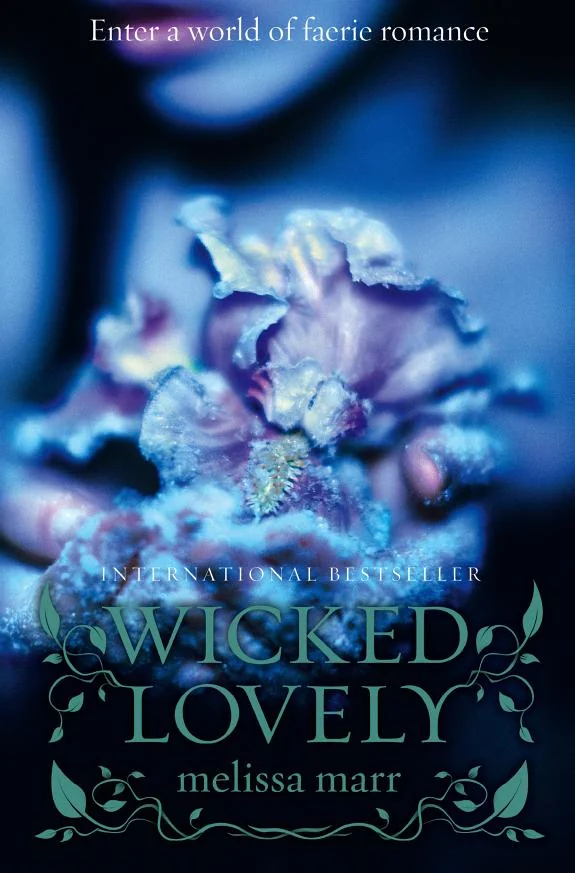
Wicked Lovely
 72
72

Wicked Lovely
Melissa Marr’s *Wicked Lovely* attempts to breathe new life into Fae mythology for a YA audience, and largely succeeds through its gritty atmosphere and compelling central conflict. Aislinn’s struggle with her unwanted psychic abilities, a common trope, feels particularly visceral here, amplified by the constant threat of the Fae courts. The Summer King, Keenan, is introduced as a charismatic but manipulative force, driving the plot with his desires. While the romance between Aislinn and Keenan is central, it’s the exploration of the brutal political landscape of the Fae that provides the book's most potent moments. A notable limitation is the sometimes-overly familiar YA romance arc, which occasionally overshadows the darker, more intriguing aspects of the Fae world. However, Marr's depiction of the Winter Queen Beira, a figure of icy, unforgiving power, is a strong anchor. The novel ultimately offers a dark, modern fairy tale that feels both familiar and fresh, making it a solid entry in the genre.
📝 Description
72
Melissa Marr's 2008 novel, Wicked Lovely, plunges readers into a hidden world of Fae.
Wicked Lovely, published in 2008, centers on Aislinn, a 17-year-old girl who can see spirits and the dead. Her life becomes entangled with Keenan, the Summer King, who intends to use her abilities in his conflict with Beira, the Winter Queen. This narrative unfolds in a concealed realm where ancient animosities and potent magic shape the existence of mortals and immortals alike.
The story is written for young adults and adults who enjoy dark fantasy with romantic elements. Readers interested in complex mythologies, particularly those drawing from Celtic and Norse traditions concerning the Fae, will find material here. Aislinn's character, a strong female protagonist facing dangerous supernatural circumstances and difficult relationships, is central to the appeal. The book offers a less conventional take on fairy tales, presenting a grittier, more modern interpretation of immortal struggles.
Published in 2008, Wicked Lovely entered a period of growing popularity for paranormal romance and urban fantasy aimed at younger audiences. While many contemporaries focused on vampires or werewolves, Marr's work distinguished itself by drawing on Fae folklore. It contributed to a trend of adapting ancient myths for contemporary settings, presenting a world of immortals with darker, more ambiguous motivations than often seen in traditional stories.
💡 Why Read This Book?
• Gain insight into the complex hierarchy and brutal politics of Fae Courts, as depicted through the conflict between the Summer King Keenan and the Winter Queen Beira, offering a unique perspective on immortal power struggles. • Experience a modern interpretation of Celtic Fae lore, focusing on the tangible, often dangerous, manifestations of magic and the burden of psychic sight, as Aislinn navigates her unique perception of spirits. • Understand the thematic exploration of chosen family and loyalty in the face of ancient feuds, particularly through Aislinn's relationships with her human friends and her reluctant entanglement with the Fae world.
⭐ Reader Reviews
Honest opinions from readers who have explored this book.
❓ Frequently Asked Questions
What is Aislinn's unique ability in Wicked Lovely?
Aislinn possesses the ability to see spirits and the dead, a form of psychic sight that makes her a target for the Fae who wish to exploit her powers for their own conflicts, particularly the Summer King Keenan.
Who are the main opposing Fae factions in Wicked Lovely?
The primary opposing factions are the Summer Court, led by the Summer King Keenan, and the Winter Court, ruled by the formidable Winter Queen Beira. Their ancient feud forms the backdrop for much of the story's conflict.
What is the significance of the year 2008 for Wicked Lovely?
2008 marks the initial publication year of Wicked Lovely, placing it within a burgeoning period for YA paranormal romance and urban fantasy, a trend it helped shape with its focus on Fae mythology.
Does Wicked Lovely draw from specific folklore?
Yes, the novel heavily draws from Celtic and broader European Fae folklore, adapting concepts like the Seelie and Unseelie Courts, fairy bargains, and the elemental associations of Summer and Winter into a contemporary setting.
What is the central conflict involving Aislinn and Keenan?
Keenan, the Summer King, wants to make Aislinn his queen, believing her unique sight will aid him in his war against the Winter Queen Beira. Aislinn, however, is reluctant to be drawn into the Fae world's dangerous politics.
Is Wicked Lovely considered an esoteric text?
While primarily marketed as young adult fantasy, Wicked Lovely engages with esoteric concepts like psychic abilities, the nature of spirits, and mythological frameworks of immortal beings, aligning it with broader esoteric themes.
🔮 Key Themes & Symbolism
The Fae Courts
The novel meticulously details the ancient and often brutal division of the Fae world into the Summer and Winter Courts. These are not merely seasonal allegories but represent deeply ingrained opposing forces, each with its own hierarchy, laws, and methods of warfare. The narrative explores the consequences of these divisions on the lives of both Fae and humans caught in their path. The concept of the Seelie and Unseelie dichotomy, a staple in folklore, is modernized here, emphasizing the constant struggle for power and dominance that defines immortal existence.
Psychic Sight and Perception
Aislinn's ability to see spirits and the dead is central to her character and the plot. This 'sight' functions as a form of heightened perception, bridging the gap between the mortal and supernatural realms. In an esoteric context, it mirrors concepts of clairvoyance or mediumship, the capacity to perceive realities beyond the mundane. The book explores the burden and danger of such abilities, particularly when they attract the attention of powerful, manipulative entities like the Fae kings and queens who seek to weaponize it.
Boundaries and Belonging
The narrative questions the boundaries between the human and Fae worlds, and between life and death. Aislinn constantly grapples with where she belongs, torn between her human life and the alluring yet perilous Fae realm. This theme extends to the concept of 'chosen family,' as Aislinn forms deep connections with her human friends, seeking to protect them from the supernatural dangers she encounters. The book examines the sacrifices made when one is caught between different worlds and the struggle to define one's identity amidst conflicting loyalties.
The Nature of Power
Power in *Wicked Lovely* is depicted as both seductive and corrupting. The Fae rulers, from the Summer King Keenan to the Winter Queen Beira, wield immense magical and political authority, but their reigns are often marked by ruthlessness and manipulation. The book explores the responsibilities and costs associated with power, whether it is inherited, seized, or, in Aislinn's case, possesses an inherent, almost dangerous, quality. The cyclical nature of conflict and the eternal pursuit of dominance underscore the often-unforgiving field of immortal power.
💬 Memorable Quotes
Direct passages from the work, attributed to the author.
“She was a creature of the Summer and the Winter, the light and the dark, the life and the death.”
— This describes Aislinn's unique, liminal position. It speaks to her ability to bridge opposing realms, a characteristic that makes her both powerful and a target for those who seek to control or understand such inherent duality.
“The Fae are not like us. They are wild, dangerous, and beautiful.”
— This sentiment, often echoed by characters aware of the Fae, emphasizes their alien nature and the inherent peril in interacting with them. It serves as a warning about the allure and destructive potential of the immortal world.
“He was the Summer King, and I was the girl who saw dead people.”
— This stark juxtaposition highlights the vast difference in their worlds and power dynamics. It underscores Aislinn's initial vulnerability and the immense gulf between her ordinary (though burdened) existence and Keenan's royal Fae status.
💡 Key Ideas
Editorial paraphrase of the work's core concepts — not direct quotes.
I could be a weapon. If he trained me.
This line expresses Aislinn's dawning realization of her own potential and the dangerous path laid out by Keenan. It highlights her agency, even as she considers becoming a tool for another's war, hinting at the complex choices she faces.
I wanted to be normal. I wanted to be safe.
This quote reflects Aislinn's core desire throughout much of the narrative: to escape the supernatural chaos that engulfs her. It underscores the theme of longing for peace and simplicity in a world that offers neither.
🌙 Esoteric Significance
Tradition
While not explicitly tied to a single esoteric lineage like Hermeticism or Kabbalah, *Wicked Lovely* draws heavily on themes prevalent in Western esoteric traditions concerning the spirit world and psychic perception. Its exploration of Fae, often viewed as elemental or nature spirits, aligns with certain branches of animism and folkloric magic. The narrative's focus on unseen realms and the human capacity to interact with them echoes concepts found in spiritualism and mediumship, positioning it as a modern, fictionalized exploration of the unseen.
Symbolism
The Summer and Winter Courts serve as primary symbolic motifs, representing duality, the eternal cycle of conflict, and opposing elemental forces. Keenan, as the Summer King, embodies warmth, passion, and potentially destructive intensity, while Beira, the Winter Queen, symbolizes coldness, control, and unyielding power. Aislinn's 'sight' symbolizes a bridge between worlds, a connection to the spirit realm that grants her unique insight but also isolates her, functioning as a metaphor for heightened spiritual or psychic awareness.
Modern Relevance
Contemporary readers interested in modern paganism, witchcraft, and folklore-based spirituality may find resonance in Marr's depiction of Fae. The book's exploration of psychic abilities and the interaction between human and spirit realms speaks to current interests in consciousness studies and the expansion of perceived reality. While fictional, it taps into a desire to understand and connect with the 'otherworldly,' making it relevant for those exploring the boundaries of the natural and supernatural in contemporary spiritual thought.
👥 Who Should Read This Book
• Young adult readers seeking dark fantasy with romantic elements, particularly those interested in modernized Fae lore and intricate supernatural politics. • Enthusiasts of comparative mythology and folklore who wish to see classic Fae tales reimagined with contemporary characters and conflicts. • Readers drawn to stories featuring protagonists with unique psychic abilities and those who enjoy narratives exploring the blurred lines between the human and spirit worlds.
📜 Historical Context
Published in 2008, *Wicked Lovely* emerged amidst a fertile period for young adult paranormal fiction, heavily influenced by the success of authors like Stephenie Meyer and the enduring popularity of urban fantasy. The early 2000s saw a significant rise in novels that reimagined folklore and mythology for contemporary teen audiences. While vampires and werewolves dominated much of the market, Marr's focus on Fae lore, particularly drawing from Celtic traditions, offered a distinct niche. This era was characterized by a growing interest in darker, more complex supernatural beings, moving beyond simpler monster tales. The book's reception contributed to the broader trend of YA literature exploring the intersection of magic, romance, and the often-brutal realities of immortal societies, positioning it alongside works that were redefining fairy tales for a new generation.
📔 Journal Prompts
Aislinn's perception of spirits and the dead.
The motivations of the Summer King Keenan.
The symbolic weight of the Winter Queen Beira.
The contrast between human life and Fae existence.
The concept of being a 'weapon' for others.
🗂️ Glossary
Fae
A broad category of supernatural beings from folklore, often associated with magic, nature, and a realm separate from the human world. In *Wicked Lovely*, they are divided into distinct courts with complex political structures.
Summer Court
One of the primary factions of the Fae, associated with warmth, light, and often intense, passionate energy. Led by the Summer King, it represents a powerful, sometimes volatile, force within the Fae world.
Winter Court
The opposing faction to the Summer Court, characterized by coldness, control, and ancient power. Ruled by the Winter Queen, it embodies a more rigid and perhaps unforgiving aspect of Fae existence.
Sight
A supernatural ability possessed by Aislinn, allowing her to perceive spirits, the dead, and other supernatural entities invisible to most humans. It is a form of heightened psychic perception.
Seelie Court
A term derived from folklore, often referring to the 'fair folk' or those Fae who are generally considered benevolent or less malevolent, though still dangerous. In the book, this concept is adapted into the broader court structures.
Unseelie Court
The counterpart to the Seelie Court in folklore, representing darker, more malevolent Fae entities. This concept informs the inherent dangers and conflicts within the Fae world presented in the novel.
Blood Bond
A magical or political tie that binds individuals or groups within the Fae world, often involving oaths and loyalty. These bonds carry significant weight and consequences.
This book appears in 1 collection
🔮 Readers Also Liked
Browse all →









From the “Fairies” Collection
View all →







More Free Occult Philosophy Books
View all →