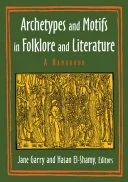
Archetypes and Motifs in Folklore and Literature
 83
83

Archetypes and Motifs in Folklore and Literature
The value of 'Archetypes and Motifs in Folklore and Literature' lies in its systematic, almost encyclopedic, cataloging of narrative structures. It moves beyond mere identification of symbols to analyze their functional placement within the narrative arc, a commendable approach for analytical readers. The section on the 'Shadow' archetype, for instance, provides a rigorous deconstruction of its manifestations in various cultural contexts, moving beyond simplistic interpretations. However, the anonymous authorship, while perhaps intended to emphasize the universality of the subject, unfortunately results in a certain dryness. The prose lacks a distinctive voice, and the sheer volume of cross-referenced examples, while comprehensive, can sometimes feel overwhelming rather than illuminating. It functions more as a reference manual than an engaging narrative exploration. Despite this, for those committed to deep textual analysis of myth and story, its detailed scholarship is undeniable.
📝 Description
83
Published in 2005, Archetypes and Motifs in Folklore and Literature examines recurring narrative patterns across global mythologies.
This book analyzes the fundamental human experiences and psychological structures that appear in stories, myths, and cultural expressions. It offers a systematic method for grasping the universal language of symbols and the archetypal figures present in our collective imagination. The work dissects how these elements manifest, providing a framework for understanding their significance. It aims to illuminate the underlying structures that shape narratives and cultural phenomena.
Scholars, students, and enthusiasts of comparative mythology, literary criticism, psychology, and esoteric studies will find this text useful. It is for those seeking an analytical understanding of storytelling's psychological roots and the enduring power of myth. The book addresses readers interested in the deep patterns that connect human narratives across different cultures and time periods.
Emerging in the early 21st century, this work engages with the continued academic interest in Jungian psychology and its application to cultural studies. It follows the tradition of comparative mythology, which investigated cross-cultural similarities in belief systems and rituals from the late 19th century onward. The book builds on foundational ideas about the collective unconscious and archetypes, theories that have long informed esoteric thought regarding universal symbols and psychic structures.
💡 Why Read This Book?
• Gain a structured framework for analyzing narrative patterns, understanding how specific motifs like the 'Quest' reappear across diverse cultures and time periods, offering a new lens for interpreting stories. • Explore the psychological underpinnings of archetypal figures, such as the 'Wise Old Man' archetype, and learn how their symbolic presence in myths reflects deeper human concerns and developmental stages. • Understand the concept of the 'Collective Unconscious' as presented in the work, recognizing how it informs the shared symbolic language evident in folklore and literature from different traditions, dating back to early mythic periods.
⭐ Reader Reviews
Honest opinions from readers who have explored this book.
❓ Frequently Asked Questions
What is the primary focus of 'Archetypes and Motifs in Folklore and Literature'?
The book's primary focus is the systematic analysis of recurring narrative patterns (motifs) and symbolic figures (archetypes) found in global folklore and literature. It explores how these elements reflect universal human psychological structures and experiences, drawing on mythological and literary examples.
Who is the author of 'Archetypes and Motifs in Folklore and Literature'?
The author is officially listed as unknown. The work was first published in 2005, and no specific author or editor has been publicly attributed to it, emphasizing the universal nature of the subject matter.
What are some key archetypes discussed in the book?
The book discusses numerous archetypes, including foundational figures like the Hero, the Great Mother, the Trickster, and the Shadow. It analyzes their typical roles, symbolic meanings, and variations across different cultural narratives.
Does the book connect folklore and literature to psychology?
Yes, a central theme is the connection between folklore, literature, and psychology, particularly through the lens of Carl Jung's concept of the Collective Unconscious. It posits that archetypes are expressions of this shared psychic inheritance.
What is a motif in the context of this book?
A motif, as explored in the book, is a recurring element, theme, or plot device within stories and myths. Examples include the 'journey,' the 'sacrifice,' or the 'magical helper,' which serve to structure narratives and convey deeper symbolic meanings.
Is this book suitable for beginners in mythology studies?
While comprehensive, the book's academic tone and detailed analytical approach may be more suited to those with some existing background in mythology, literary theory, or psychology. Beginners might find it dense, but it offers a robust foundation for serious study.
🔮 Key Themes & Symbolism
The Collective Unconscious
This work posits the existence of a Collective Unconscious, a concept originating with Carl Jung. It suggests a shared psychic inheritance influencing human thought and behavior across cultures and eras. The book demonstrates how archetypes and motifs are manifestations of this deep, universal reservoir of experience, appearing consistently in myths, dreams, and art forms from disparate societies, linking them through fundamental psychological structures.
Archetypal Figures
The book systematically identifies and analyzes key archetypal figures that populate global narratives. These are not mere characters but symbolic representations of fundamental human roles and psychological dynamics. Figures like the Hero, embodying the journey of individuation, or the Shadow, representing repressed aspects of the psyche, are examined through diverse mythological and literary examples, illustrating their consistent function and meaning.
Recurring Motifs
Beyond individual figures, the work scrutinizes recurring narrative patterns known as motifs. These are the building blocks of myths and stories, such as the 'initiation,' the 'fall,' or the 'quest.' The book illustrates how these motifs structure narratives, imbue them with meaning, and reflect universal human concerns like birth, death, transformation, and the search for knowledge, providing a framework for comparative analysis.
Symbolic Language of Myth
The book treats myth and folklore as a form of symbolic language that communicates profound truths about the human condition. It deciphers the symbolic significance of various elements, arguing that these symbols are not arbitrary but arise from shared psychological experiences. Understanding this symbolic language is presented as crucial for grasping the enduring power and cross-cultural appeal of these ancient narratives.
💬 Memorable Quotes
Direct passages from the work, attributed to the author.
“Archetypes are innate psychological structures that shape our perception and response to the world.”
— This statement emphasizes the book's core thesis: that figures and patterns in myths are not random but stem from fundamental, inherited psychological predispositions within the human mind.
“The motif of the journey consistently represents a process of transformation and self-discovery.”
— This highlights the analytical approach to motifs, presenting the 'journey' not just as a plot device but as a symbolic representation of internal growth and the quest for identity.
“The Shadow archetype embodies the unacknowledged aspects of the personality.”
— This concisely defines a key archetype, pointing to its function as a symbol for the darker, often repressed, elements within an individual's psyche that manifest in stories.
“Folklore and literature serve as a mirror to the collective human psyche.”
— This interpretation suggests that myths and stories function as reflections of our shared psychological landscape, revealing common fears, desires, and aspirations across humanity.
“Understanding symbolic patterns unlocks deeper layers of narrative meaning.”
— This emphasizes the interpretive power of the book's methodology, suggesting that by recognizing recurring symbols and motifs, one can access the profound, often subconscious, messages embedded within stories.
🌙 Esoteric Significance
Tradition
This work aligns most closely with the Analytical Psychology tradition established by Carl Jung. While not strictly esoteric in the sense of ceremonial magic or occult practices, Jungian thought itself explores the deeper, often hidden, layers of the psyche that connect to the mystical and symbolic. It explores the 'anima mundi' or world soul through the lens of shared psychic structures, bridging the gap between psychology and what might be termed esoteric cosmology.
Symbolism
Key symbols analyzed include the 'Serpent,' often representing primal energy, transformation, or hidden knowledge, and the 'Mandala,' symbolizing wholeness, the Self, and the ordered cosmos. The book examines how these symbols, found in diverse traditions from alchemy to Tantra, function archetypally to represent stages of psychological development or cosmic order within narrative frameworks.
Modern Relevance
Contemporary thinkers in depth psychology, trauma studies, and even narrative therapy continue to draw upon Jungian archetypal theory. Modern artists, writers, and filmmakers often consciously or unconsciously employ these archetypal patterns. The work's analytical framework remains relevant for understanding contemporary myth-making, digital storytelling, and the psychological impact of recurring narrative structures in media.
👥 Who Should Read This Book
• Students of Jungian psychology and its applications, seeking to understand how archetypal concepts manifest in cultural expressions beyond clinical settings. • Comparative mythology enthusiasts, looking for a structured approach to identifying and analyzing recurring themes and figures across global folklore and ancient texts. • Literary critics and scholars, interested in exploring the deeper psychological and symbolic layers of narrative, moving beyond surface-level interpretation to understand foundational story structures.
📜 Historical Context
Published in 2005, 'Archetypes and Motifs in Folklore and Literature' emerged during a period of sustained academic engagement with Jungian psychology and its application to cultural phenomena. The intellectual climate was receptive to theories exploring the unconscious mind and universal symbols, building upon the foundations laid by Carl Jung in the mid-20th century. This work can be seen as contributing to the ongoing discourse in comparative mythology and literary theory, fields significantly shaped by scholars like Mircea Eliade and Joseph Campbell. Unlike purely literary criticism of the time, which might focus on post-structuralist deconstruction, this book engages directly with the psychological and symbolic dimensions of narrative, offering an alternative framework for analysis. Its publication occurred well after the initial wave of Jungian archetypal criticism but sought to systematize and expand upon its principles for a new generation of researchers.
📔 Journal Prompts
Reflect on the recurring motif of the 'Trickster' in stories you know.
Analyze the symbolic meaning of a 'journey' in a recent film or book.
Consider the manifestation of the 'Great Mother' archetype in your own cultural context.
Explore how the concept of the 'Shadow' might be represented in contemporary media.
Identify a personal symbol that could relate to the Collective Unconscious.
🗂️ Glossary
Archetype
A universal, inherited pattern of thought or image derived from the Collective Unconscious, which shapes human experience and behavior. Examples include the Hero, the Mother, and the Wise Old Man.
Collective Unconscious
A concept proposed by Carl Jung, referring to a shared reservoir of instincts, memories, and psychic material common to all humanity, distinct from the personal unconscious.
Motif
A recurring element, theme, or plot device in a literary or mythological work. Examples include the quest, the sacrifice, or the forbidden."
The Hero
An archetypal figure representing the journey of individuation, often involving trials, transformation, and the overcoming of obstacles to achieve a goal.
The Shadow
An archetype representing the repressed, darker, or unknown aspects of the psyche. Its integration is often crucial for psychological wholeness.
The Great Mother
An archetype symbolizing nurturing, fertility, creation, but also potentially devouring or destructive aspects of the feminine principle.
Individuation
The psychological process described by Jung of integrating the conscious and unconscious aspects of the self to achieve wholeness and become a unique individual.
This book appears in 1 collection
🔮 Readers Also Liked
Browse all →









From the “Archetypes” Collection
View all →




More Free Occult Philosophy Books
View all →