The Last Enchantment
 72
72

The Last Enchantment
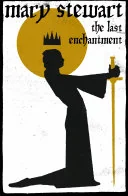
Mary Stewart's "The Last Enchantment" concludes her Arthurian cycle not with a bang, but with a profound sense of elegiac winding down. The novel captures the weariness of Arthur's long reign, a stark contrast to the youthful vigor depicted in earlier retellings. Stewart’s prose, while elegant, sometimes feels weighed down by the sheer scope of Arthurian lore, slowing the narrative pace considerably. A particular strength lies in her nuanced portrayal of Merlin, now an aged, prescient figure whose magic is as much about wisdom as it is about overt power. The depiction of Mordred's nascent threat, born from Arthur's unwitting transgression with Morgause, is handled with Stewart's characteristic psychological depth. However, the sheer density of characters and political machinations can occasionally obscure the emotional core. The work ultimately offers a poignant reflection on the cyclical nature of power and the enduring pull of myth, even as its world becomes increasingly mundane.
📝 Description
72
Mary Stewart's 2012 novel revisits King Arthur's twilight years.
The Last Enchantment, published in 2012, concludes Mary Stewart's Arthurian saga. The narrative centers on King Arthur's final years, as his kingdom faces internal division and external threats. Arthur struggles to maintain control while the aging Merlin offers his diminishing wisdom. Stewart weaves together historical context with elements of magical realism to portray the legendary monarch's decline.
This novel is suited for readers of Arthurian legends, historical fiction, and character-focused stories. Those who appreciate detailed world-building and the examination of complex relationships will find the book engaging. It serves as a fitting conclusion for those familiar with Stewart's earlier works in the series, bringing established characters and plotlines to a close.
Published nearly four decades after the series began, The Last Enchantment engages with the enduring British tradition of Arthurian romance. This genre has long explored the interplay between the mortal and the magical, often depicting magic's retreat as the mundane world asserts itself. Stewart's work contributes to this tradition by examining the personal costs of power and the inevitable confrontation with destiny, set against the backdrop of Arthur's falling kingdom.
💡 Why Read This Book?
• Gain insight into the character arc of Arthur, particularly his later reign, as depicted in the context of 2012's literary landscape. • Understand the symbolic weight of Merlin's aging and fading sight, a key motif explored throughout the narrative's later stages. • Appreciate Stewart's unique interpretation of Arthurian legend, contrasting with earlier works like T.H. White's "The Once and Future King."
⭐ Reader Reviews
Honest opinions from readers who have explored this book.
❓ Frequently Asked Questions
What year was Mary Stewart's "The Last Enchantment" first published?
The Last Enchantment was first published on February 2, 2012, marking the culmination of Mary Stewart's extensive Arthurian saga.
Who is the author of "The Last Enchantment"?
The author is Mary Stewart, a renowned writer celebrated for her mastery of historical fiction and romantic suspense, who dedicated a significant portion of her career to the Arthurian legend.
What is the main focus of "The Last Enchantment"?
The novel focuses on the later years of King Arthur's reign, exploring themes of kingship, destiny, betrayal, and the fading of magic as Arthur faces the consequences of his past and the rise of Mordred.
Is "The Last Enchantment" part of a series?
Yes, it is the final book in Mary Stewart's Arthurian quartet, which includes "The Crystal Cave," "The Hollow Hills," and "The Last Enchantment."
What esoteric elements are present in "The Last Enchantment"?
The book incorporates elements of ancient British paganism, druidic lore, and the mythical magic associated with Merlin, exploring the liminal space between the historical and the supernatural.
How does "The Last Enchantment" compare to other Arthurian retellings?
Stewart's retelling is known for its psychological depth, focus on Arthur's perspective, and integration of magic into a realistically portrayed historical setting, distinct from more overtly fantastical or allegorical versions.
🔮 Key Themes & Symbolism
The Weight of Kingship
This theme explores the personal burden and political complexities Arthur faces in his later years as High King. It examines the sacrifices required to maintain unity and the internal conflicts that arise from his decisions, particularly regarding his lineage and the rise of Mordred. The narrative portrays kingship not as a crown, but as a constant, often solitary, struggle against fate and human frailty.
Fading Magic and Approaching Doom
The novel depicts a world where ancient magic is receding, symbolized by Merlin's aging and dimming sight. This decline parallels the encroaching darkness and the inevitable downfall of Arthur's reign. The narrative explores the tension between the old ways, tied to nature and mysticism, and the emerging order of men and their more mundane concerns, suggesting a world outgrowing its enchantment.
Destiny and Unknowing Transgression
Central to the plot is the concept of destiny, particularly the tragic path set by Arthur's unknowing union with his half-sister, Morgause, leading to the birth of Mordred. The work grapples with how actions, even those taken in ignorance, have far-reaching consequences that shape the future. It questions the extent to which one is truly free when caught in the tie of prophecy and ancestral curses.
Merlin's Evolving Role
Merlin transitions from a powerful sorcerer and advisor to an aging sage whose wisdom is paramount. His foresight is crucial, yet his physical decline mirrors the vulnerability of the magical world. The narrative emphasizes his role as a chronicler and observer, his magic shifting from overt manipulation to profound understanding and guidance, reflecting a different kind of power.
💬 Memorable Quotes
Direct passages from the work, attributed to the author.
“By land and water shall it go home, and lie hidden in the floating stone until by fire it shall be raised again.”
— This enigmatic prophecy, appearing early in the narrative, hints at the cyclical nature of Arthur's legend and the eventual fate of his kingdom and perhaps Excalibur itself, suggesting a hidden power awaiting rediscovery or a final transformation.
“Merlin is growing old, and his sight is dimming.”
— This statement signifies more than just physical aging; it represents the waning of magic and ancient wisdom in the world, a thematic a core part of the novel as the Arthurian age approaches its end.
“Mordred, child of Arthur's unknowing union with his half-sister Morgause, will be...”
— This foreshadows the central tragedy of Arthur's reign – the consequence of incestuous union and the birth of his destined destroyer, highlighting themes of fate, familial curse, and the unavoidable repercussions of past actions.
“Arthur has raised the sword and claimed his birthright as High King of Briton...”
— This sets the stage for Arthur's reign, emphasizing his legitimate claim to the throne and his initial ambition to unite the fractured kingdoms, establishing the heroic premise before the inevitable descent into conflict and loss.
“He knows that Mordred... will be...”
— This fragment underscores the pervasive sense of impending doom that looms over Arthur's Camelot. It highlights Merlin's prescience and the inescapable nature of the prophecy concerning Mordred's destructive role.
🌙 Esoteric Significance
Tradition
This work fits within the broader tradition of modern Arthurian fantasy, which often draws from Celtic mythology and Druidic lore. While not strictly a grimoire or systematic magical text, it engages with themes of prophecy, fate, and the interplay between the mundane and the magical, echoing a Neo-Druidic or nature-based spiritual current that gained traction in the late 20th and early 21st centuries.
Symbolism
Merlin's dimming sight symbolizes the ebbing of ancient magical knowledge and the transition to a more rational, less enchanted world. The 'floating stone' mentioned in the blurb could allude to magical artifacts or sacred sites, representing hidden power or spiritual anchors awaiting rediscovery. Mordred embodies the shadow aspect of destiny, the inevitable consequence of transgression, serving as a potent symbol of internal division and self-destruction within the kingdom.
Modern Relevance
Contemporary neo-pagan and fantasy literature often revisits Arthurian themes, exploring the archetype of the wounded king and the cyclical nature of societal rise and fall. Readers interested in modern interpretations of folklore, the archetypal hero's journey, and the intersection of history and myth find Stewart's nuanced portrayal of Merlin and Arthur relevant for its psychological depth and exploration of fading magic.
👥 Who Should Read This Book
• Readers fascinated by the Arthurian legend seeking a mature, character-focused conclusion to the saga, particularly those who enjoyed "The Crystal Cave." • Students of British folklore and mythology interested in how modern authors interpret and reinterpret ancient tales, exploring the transition from myth to historical narrative. • Individuals drawn to narratives exploring the twilight of an era, the weight of leadership, and the inevitable confrontations with destiny and personal failings.
📜 Historical Context
Mary Stewart's "The Last Enchantment," published in 2012, emerges from a long tradition of Arthurian reimagining that flourished throughout the 20th century. While authors like T.H. White in "The Once and Future King" (1958) offered a blend of satire and myth, and C.S. Lewis explored Christian allegory in his "Space Trilogy" (which touched upon Arthurian themes), Stewart's approach remained rooted in a more grounded, psychologically driven historical fantasy. Her Arthurian quartet, initiated with "The Crystal Cave" in 1970, offered a unique perspective by focusing on Merlin's early life and Arthur's rise, treating the magical elements with a subtle, almost naturalistic hand. The extended gap between the earlier books and this final installment allowed Stewart to mature her vision, presenting Arthur's reign not as a heroic golden age, but as a period fraught with internal decay and the inevitable fading of the old ways, a perspective that resonated with a contemporary audience accustomed to more complex, less idealized historical narratives.
📔 Journal Prompts
Arthur's struggle to unite Briton and the encroaching shadow of Mordred.
Merlin's aged perspective on the fading of magic in his world.
The consequences of Arthur's unknowing union with Morgause.
Reflect on the symbolism of Merlin's dimming sight within the narrative.
The prophecy of the 'floating stone' and its potential interpretations.
🗂️ Glossary
High King of Briton
The supreme ruler of the various kingdoms and territories that constituted ancient Britain, a legendary title held by Arthur in the mythos.
Camelot
The legendary castle and court of King Arthur, serving as the center of his kingdom and the Round Table fellowship.
Merlin
The enigmatic sorcerer, prophet, and advisor to King Arthur, a central figure in Arthurian legend known for his magical abilities and deep knowledge.
Mordred
Arthur's illegitimate son, born from his incestuous relationship with his half-sister Morgause, destined to be Arthur's betrayer and downfall.
Morgause
A sorceress and one of Arthur's half-sisters, mother to Mordred, often depicted as a figure of dark magic and ambition.
Arthurian Saga
The collection of legends, stories, and literary works centered around the mythical King Arthur and his knights, a core part of British literature.
Floating Stone
A cryptic element from the book's blurb, possibly referring to a magical object, a sacred place, or a prophecy connected to Arthur's fate.
This book appears in 1 collection
🔮 Readers Also Liked
Browse all →








From the “Enchantment” Collection
View all →



More Free Occult Philosophy Books
View all →