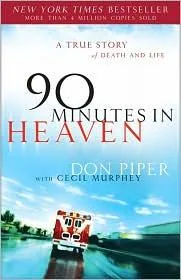
90 Minutes in Heaven
 80
80

90 Minutes in Heaven
Don Piper’s account of his 90 minutes in heaven is a powerful testament to faith for many, but its impact is undeniably tied to the reader's pre-existing beliefs. The specificity of Piper's celestial vision—the golden streets, the heavenly choir, the reunion with his deceased aunt—is compelling within its own framework. However, for the skeptical or those from different theological traditions, these details can read as archetypal rather than uniquely revelatory. The limitation lies in its singular perspective; while deeply personal, it offers little room for the ambiguity or varied interpretations that often accompany discussions of the afterlife. The passage describing his aunt meeting him at the "pearly gates" is particularly emblematic of the book's earnest, unwavering conviction. Ultimately, *90 Minutes in Heaven* serves as a deeply personal affirmation for believers, offering a comforting vision of eternal reward.
📝 Description
80
Don Piper recounts his 1989 near-death experience after a fatal car accident.
Published in 2015, Don Piper's book details his experience following a severe car accident on January 18, 1989. Piper describes his consciousness leaving his body and journeying to what he identifies as heaven, before returning to life. The narrative presents this as a personal testimony of the afterlife, aiming to offer solace to those contemplating death or loss.
This account is intended for readers wrestling with questions about mortality, the afterlife, and spiritual reality. It will resonate with individuals who find comfort in faith testimonies and seek confirmation of Christian beliefs about the end times. Those experiencing grief, fear of death, or doubt may find Piper's story particularly meaningful. The book also speaks to those interested in near-death experiences from a Christian perspective.
Piper's account fits within a tradition of Christian apologetics that utilizes personal testimonies to validate spiritual claims. It intersects with the broader cultural interest in near-death experiences, a phenomenon explored in various spiritual and psychological contexts since the late 20th century. The book offers a specific narrative within discussions of consciousness and the possibility of existence beyond the physical body, framed by evangelistic theology.
💡 Why Read This Book?
• Gain a firsthand narrative of a specific near-death experience, offering a concrete vision of the afterlife as described by Don Piper following his January 18, 1989 accident. • Explore the concept of divine intervention and miraculous recovery through Piper's detailed account of his return to consciousness and subsequent life. • Understand how personal testimonies of faith, like the one presented in *90 Minutes in Heaven*, can provide comfort and a renewed perspective on mortality for those facing grief or existential questions.
⭐ Reader Reviews
Honest opinions from readers who have explored this book.
❓ Frequently Asked Questions
What happened to Don Piper on January 18, 1989?
On January 18, 1989, Don Piper was involved in a severe car accident where he was declared dead at the scene. His book, *90 Minutes in Heaven*, details his experience during this period of clinical death.
What is the central claim of 90 Minutes in Heaven?
The central claim is that Don Piper's consciousness departed his body after the accident and traveled to a heavenly realm for approximately 90 minutes before returning to his body.
What is the tone of 90 Minutes in Heaven?
The tone is deeply personal, spiritual, and reassuring. Piper writes with earnest conviction, aiming to convey the reality and peace of the afterlife as he experienced it.
Who is the author Don Piper?
Don Piper is an author and ordained minister known for his book *90 Minutes in Heaven*, which recounts his purported experience of the afterlife. He has spoken widely about his testimony.
When was 90 Minutes in Heaven first published?
The book *90 Minutes in Heaven* was first published in 2015, bringing Don Piper's personal account of his near-death experience to a wide audience.
What kind of afterlife does Don Piper describe?
Piper describes a Christian vision of heaven, characterized by immense peace, light, angelic music, reunion with deceased loved ones, and the presence of God.
🔮 Key Themes & Symbolism
The Heavenly Realm
The book presents a vivid, personal depiction of heaven, moving beyond abstract theological concepts to a detailed, sensory experience. Piper describes the environment, the inhabitants, and the overwhelming sense of peace and joy. This focus on a tangible afterlife offers readers a specific vision that counters the fear of the unknown associated with death, grounding spiritual belief in a narrative of direct encounter. The celestial city and its inhabitants are portrayed with an earnestness that seeks to affirm the reality of eternal existence for believers.
Divine Intervention and Miracles
A core theme is the author's miraculous return to life after being declared dead. Piper frames this not merely as a medical anomaly but as a profound act of divine intervention. The narrative emphasizes that his survival and subsequent healing were orchestrated by God, serving as a evidence of divine power. This aspect of the book aims to strengthen faith by illustrating that life and death are ultimately in God's hands, and that extraordinary outcomes are possible through divine will.
Faith and Testimony
*90 Minutes in Heaven* functions as a powerful religious testimony, designed to bolster the faith of readers. Piper shares his experience to validate Christian beliefs about the afterlife and to provide comfort to those who are grieving or fearful of death. The book's structure relies on the power of personal narrative to convey spiritual truths, suggesting that direct experience is a potent form of evidence for the unseen world. It encourages readers to hold onto their faith through personal accounts of divine encounters.
Transformation of Perspective
The experience profoundly altered Don Piper's perspective on life, death, and spiritual matters. The book explores how this journey to heaven reshaped his understanding and priorities, leading to a greater appreciation for life and a deeper commitment to his faith. This transformative element serves as an inspiration, suggesting that confronting mortality and experiencing the divine can lead to significant personal growth and a reorientation toward eternal values.
💬 Memorable Quotes
Direct passages from the work, attributed to the author.
“I felt the most incredible peace I have ever known. It was a peace that surpassed all understanding.”
— This statement captures the overwhelming sense of tranquility Piper claims to have experienced in the heavenly realm. It highlights the emotional and spiritual impact of his near-death experience, suggesting a state of being far removed from earthly anxieties.
“I saw my aunt, who had died when I was a child. She was so happy to see me.”
— This refers to a specific encounter with a deceased loved one in the afterlife. It illustrates the theme of reunion and recognition beyond death, providing a comforting image of continued relationships in heaven.
“The light was unlike anything I had ever seen or imagined. It was pure, radiant, and filled with love.”
— Piper uses this description to convey the luminous and benevolent nature of the heavenly environment. The emphasis on light and love serves to portray heaven as a place of ultimate good and divine presence.
“I was not ready to come back. I wanted to stay there forever.”
— This expresses Piper's reluctance to return to his earthly body and life. It underscores the perceived perfection and desirability of the heavenly experience compared to earthly existence.
“My return to my body was as sudden as my departure.”
— This phrase describes the abrupt transition back to physical consciousness. It emphasizes the disorienting and perhaps miraculous nature of his revival after being clinically dead.
🌙 Esoteric Significance
Tradition
While not strictly within a defined esoteric lineage like Hermeticism or Kabbalah, Piper's work touches upon themes common in spiritualist and certain Christian mystical traditions. It shares with Spiritualism the concept of communication with the deceased and a belief in an afterlife populated by souls. Within Christian mysticism, it aligns with accounts of divine visions and heavenly journeys, though Piper's narrative is presented with a directness and specificity that distinguishes it from more allegorical or symbolic mystical texts.
Symbolism
The 'heavenly light' described by Piper functions as a universal symbol of divine presence, purity, and ultimate reality, a motif found across many spiritual traditions. The 'celestial city' or heavenly realm itself symbolizes a perfected state of existence, a spiritual homeland contrasted with the transient nature of earthly life. Encounters with deceased loved ones symbolize the continuity of consciousness and the enduring power of familial bonds beyond physical death, offering reassurance of eternal connection.
Modern Relevance
Piper's account continues to be relevant for contemporary discussions on consciousness, death, and the afterlife, particularly within Christian circles. It serves as a reference point in popular media and religious discourse about NDEs. Thinkers and practitioners exploring the intersection of faith and personal experience, as well as those seeking comfort in the face of mortality, often engage with narratives like Piper's. It remains a touchstone for those who find empirical or testimonial evidence compelling for spiritual truths.
👥 Who Should Read This Book
• Believers seeking confirmation of Christian afterlife doctrines through personal testimony, offering specific details of a heavenly encounter. • Individuals grappling with grief or the fear of death, who may find comfort and reassurance in Piper's account of peace and reunion beyond life. • Researchers and enthusiasts of near-death experiences interested in a firsthand, religiously framed narrative that has gained significant popular attention.
📜 Historical Context
Published in 2015, *90 Minutes in Heaven* emerged within a landscape where near-death experiences (NDEs) had been a recurring topic of public interest since the mid-1970s, particularly following Raymond Moody's *Life After Life*. Piper's account, framed within a specific evangelical Christian worldview, contributed to a long tradition of personal testimonies used to affirm religious doctrine and offer hope regarding the afterlife. The book entered a discourse that often saw NDEs interpreted through diverse lenses, from the spiritual to the neurological. While figures like Moody popularized NDE studies, Piper's work specifically reinforced Christian eschatological narratives. Its reception was largely positive within religious communities, though it faced skepticism from secular and materialist perspectives, which often sought physiological explanations for NDE phenomena, a counterpoint to Piper's spiritual interpretation.
📔 Journal Prompts
The overwhelming peace described by Don Piper during his 90 minutes in heaven.
The specific details of the heavenly realm as recounted by the author.
Reunion with deceased loved ones in the afterlife.
The concept of divine intervention in Piper's survival and recovery.
The author's transformed perspective on life after his experience.
🗂️ Glossary
Near-Death Experience (NDE)
A profound personal experience associated with being close to death or undergoing a traumatic event, often involving altered states of consciousness, vivid imagery, and feelings of peace.
Clinical Death
The cessation of blood circulation and breathing, a state where life is technically over but can potentially be reversed through medical intervention.
Heavenly Realm
In Piper's account, the spiritual dimension he claims to have visited after his accident, described as a place of divine presence, peace, and eternal life.
Divine Intervention
The belief that God actively intervenes in the affairs of humanity, often resulting in miraculous events or interventions beyond natural explanation.
Testimony
A personal account of religious experience, often used to affirm faith and inspire others within a particular religious community.
Eschatology
The branch of theology concerned with death, judgment, and the final destiny of the soul and of the world.
Clinical Death
The cessation of blood circulation and breathing, a state where life is technically over but can potentially be reversed through medical intervention.
🔮 Readers Also Liked
Browse all →








More by Don Piper
All books →
More Free Occult Philosophy Books
View all →