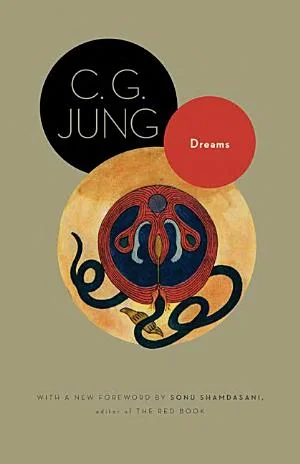
Dreams
 84
84

Dreams
Jung's "Dreams" is not a beginner's guide, but rather a dense, intellectually rigorous presentation of a lifetime's work on the subject. The strength lies in its systematic approach, laying out Jung's theoretical architecture for understanding the unconscious through its dream expressions. The limitation, for a modern reader, might be the sheer academic density and the reliance on case studies that, while illustrative, can feel distant. The section detailing the "amplification" method, contrasting it with mere interpretation, provides a concrete example of Jung's innovative approach, showing how to connect personal dream imagery to broader mythological motifs.
This collection offers a profound, if challenging, insight into the mechanics of the dreaming mind.
📝 Description
84
Carl Jung's collected writings on dreams were compiled in 2010-11-14.
This volume gathers key writings from Carl Jung's Collected Works, specifically volumes 4, 8, 12, and 16, focusing on the analysis of dreams. It presents a methodical approach to understanding dreams not just as random images, but as direct communications from the unconscious mind. Jung sought to establish a rigorous framework for deciphering the symbolic language of dreams, moving beyond simple interpretation to a deeper investigative tool.
The material is suited for psychoanalysts, depth psychologists, and students of Jungian thought. It also serves those interested in exploring their own inner life through dreams, provided they are prepared for complex theoretical engagement. This is not a superficial guide, but a resource for dedicated study of the unconscious, requiring a serious commitment to its study.
Jung's work on dreams emerged from early 20th-century European intellectual currents, diverging from Freudian psychoanalysis. He viewed dreams as expressing archetypal patterns and compensatory functions, engaging in intellectual dialogue with thinkers like Martin Buber. This compilation integrates his ideas into the broader study of the unconscious, positioning dream analysis within a tradition seeking to understand hidden psychic realities.
💡 Why Read This Book?
• Understand the symbolic language of your own unconscious, learning Jung's method of amplification to connect personal dream imagery to universal archetypes, as detailed in his exploration of dream analysis. • Grasp the distinction between the personal and collective unconscious, a core concept introduced by Jung in the early 20th century, to contextualize the origins of dream symbols. • Explore the compensatory function of dreams, recognizing how they can offer counter-balance to one-sided conscious attitudes, a principle Jung developed throughout his career.
⭐ Reader Reviews
Honest opinions from readers who have explored this book.
❓ Frequently Asked Questions
When were C. G. Jung's writings on dreams originally published?
While this specific compilation "Dreams" was published on November 14, 2010, the foundational essays and works from which it is drawn were published by C. G. Jung throughout the mid-20th century, beginning in the 1920s and continuing through the 1960s.
What is the difference between Jungian dream analysis and Freudian dream analysis?
Jung viewed dreams as compensatory and forward-looking, seeking to integrate unconscious material. Freud, conversely, primarily saw dreams as wish fulfillment, often rooted in repressed sexual desires from childhood.
What is the 'collective unconscious' in Jungian psychology?
The collective unconscious, a central concept in Jung's work, refers to a layer of the unconscious psyche inherited and shared by all humanity, containing archetypes or universal patterns of thought and imagery.
How does Jung's 'amplification' method work for dream interpretation?
Amplification involves expanding on dream images by associating them with myths, fairy tales, religious symbols, and historical parallels, thereby revealing their archetypal significance beyond personal associations.
Are Jung's 'Dreams' volumes suitable for someone new to psychology?
While "Dreams" offers critical insights, its academic rigor and theoretical density, stemming from its inclusion in the Collected Works (volumes 4, 8, 12, 16), make it more suitable for those with some background in psychology or a dedicated interest in Jungian analysis.
What are archetypes as discussed by Jung?
Archetypes are universal, archaic patterns and images that derive from the collective unconscious and are the psychic counterpart of instinct. They are predispositions to experience and perceive the world in certain ways.
🔮 Key Themes & Symbolism
The Unconscious Dialogue
Jung posits dreams not as random noise but as direct, symbolic communications from the unconscious mind. This collection highlights his methodical approach to deciphering this dialogue, moving beyond simplistic interpretation. He emphasizes that dreams serve a compensatory function, offering a counter-balance to conscious attitudes that may have become too rigid or one-sided. The work stresses that understanding these messages is vital for psychic wholeness and individuation, providing a bridge between the conscious ego and the deeper strata of the psyche.
Archetypes and the Collective
Central to Jung's dream theory is the concept of archetypes, inherited psychic structures residing in the collective unconscious. This book illustrates how dreams manifest these universal patterns—the Shadow, the Anima/Animus, the Wise Old Man, the Great Mother—which are common across cultures and time. Jung's method of amplification encourages readers to connect personal dream imagery to these broader mythological and symbolic frameworks, revealing the transpersonal dimensions of individual dream experiences. This connects the personal psyche to a shared human heritage.
Symbolic Language of Dreams
Jung argues that the unconscious speaks in symbols, not literal language. This volume looks at the nature of these symbols, differentiating between 'conventional' signs and 'synthetic' or 'creative' symbols that emerge organically from the psyche. He guides the reader to understand symbols contextually, appreciating their dynamic and multi-layered meanings. The work underscores that the meaning of a dream symbol is not fixed but evolves with the dreamer's psychological development and the specific psychic situation.
Dream Analysis Methodology
This collection offers a structured framework for analyzing dreams, diverging from purely subjective or speculative approaches. Jung outlines principles for working with dream series, understanding the role of projection, and differentiating between the 'objective' (external world) and 'subjective' (internal world) levels of interpretation. The emphasis is on a scientific, yet intuitive, process that respects the autonomy of the unconscious and aims for psychic integration rather than mere symptom removal.
💬 Memorable Quotes
Direct passages from the work, attributed to the author.
“The dream is a direct expression of the unconscious.”
— This core statement captures Jung's view of dreams as authentic, unfiltered messages from the psyche's less-obvious layers, serving as a vital source of information for self-understanding and psychological balance.
“The dream compensates for the conscious attitude.”
— This highlights the crucial function of dreams in balancing potentially one-sided conscious perspectives, offering alternative viewpoints or highlighting neglected aspects of the psyche to promote psychological equilibrium.
“Symbols are not fixed signs but living things.”
— This emphasizes the dynamic and evolving nature of dream symbols, suggesting that their meaning is not static but unfolds contextually and can change as the dreamer's consciousness develops.
“We must learn to understand the language of the unconscious.”
— This interpretation points to the necessity of developing a disciplined approach to dream analysis, viewing it as a skill requiring study and practice to effectively comprehend the symbolic communications from the deeper self.
💡 Key Ideas
Editorial paraphrase of the work's core concepts — not direct quotes.
The collective unconscious contains archetypes.
This paraphrase directly links the inherited, universal layer of the psyche (collective unconscious) with its fundamental contents (archetypes), explaining the source of common symbolic patterns found in dreams across humanity.
🌙 Esoteric Significance
Tradition
Jung's work on dreams is deeply embedded within the Western Esoteric Tradition, particularly drawing from Hermeticism, Gnosticism, and Neoplatonism, while simultaneously forging a new path. He sought to synthesize ancient wisdom with modern psychological understanding, viewing the unconscious as a realm akin to the alchemical *prima materia* or the Gnostic Pleroma—a source of profound transformation. His emphasis on individuation aligns with Hermetic ideals of self-mastery and the Gnostic quest for inner gnosis. However, Jung grounded these esoteric concepts in empirical observation and clinical practice, creating a bridge between the mystical and the scientific.
Symbolism
Key symbols Jung explores in dreams include the Serpent, often representing primordial life energy, transformation, and the unconscious itself, echoing ancient chthonic deities and alchemical symbolism. The Mandala, a circular geometric design, signifies wholeness, the Self, and the integration of psychic opposites, reflecting cosmic order and the divine pattern within the psyche. Water frequently appears, symbolizing the unconscious, the feminine principle, and the fluid, unpredictable nature of psychic life, mirroring baptismal and purification rites across traditions.
Modern Relevance
Contemporary thinkers and practitioners in depth psychology, transpersonal psychology, and even certain strands of consciousness studies continue to draw heavily on Jung's dream analysis. His concepts of archetypes and the collective unconscious are influential in fields like mythology studies, literary criticism, and comparative religion. Practices such as active imagination and the use of symbolic imagery in art therapy often trace their lineage back to Jung's work. Modern spiritual seekers and those engaged in personal growth often find his framework useful for navigating their inner landscapes.
👥 Who Should Read This Book
• Aspiring psychoanalysts and Jungian psychology students seeking foundational texts on dream interpretation and unconscious processes. • Individuals interested in comparative mythology and religious studies looking to understand the symbolic connections between ancient narratives and the individual psyche. • Serious practitioners of self-inquiry and personal development aiming to deepen their understanding of their own inner world through disciplined dream analysis.
📜 Historical Context
C. G. Jung's exploration of dreams occurred during a transformative period in psychology, roughly spanning the first half of the 20th century. Emerging from his initial collaboration and subsequent break with Sigmund Freud in 1913, Jung developed Analytical Psychology, placing a distinct emphasis on the symbolic and archetypal dimensions of the psyche. While Freud focused on repressed infantile sexuality, Jung argued for the significance of the collective unconscious and archetypes, concepts that distinguished his work sharply from psychoanalysis. His theories engaged with broader intellectual currents, including mythology, anthropology, and comparative religion. Unlike Freud, whose work was often met with widespread, albeit controversial, public recognition, Jung's ideas, particularly those concerning archetypes and the collective unconscious, were often seen as more esoteric and were debated vigorously within academic and psychiatric circles. His contemporaries included figures like Carl Gustav Jung himself and later scholars who continued his work, but his unique perspective on dreams positioned him as a distinct voice, challenging the prevailing mechanistic and reductionist views of the mind prevalent in many scientific circles of the era.
📔 Journal Prompts
The archetype of the Shadow in your dream imagery.
Your personal associations to the symbols appearing in recent dreams.
The compensatory message of a recurring dream.
How the dream's narrative structure reflects conscious attitudes.
The connection between a specific dream image and mythological parallels.
🗂️ Glossary
Archetype
Universal, archaic patterns and images that derive from the collective unconscious. They are predispositions to experience and perceive the world in certain ways, manifesting in dreams, myths, and fairy tales.
Collective Unconscious
A deeper layer of the unconscious psyche, inherited and shared by all humanity. It contains the archetypes and serves as a reservoir of ancestral experiences and psychic predispositions.
Individuation
The lifelong psychological process of differentiation of the self, by which an individual integrates their conscious and unconscious aspects to achieve psychological wholeness and self-realization.
Compensation (in dreams)
The principle by which dreams aim to balance or correct one-sided conscious attitudes, offering an alternative perspective or highlighting neglected aspects of the psyche.
Amplification
A method of dream interpretation that involves expanding upon dream images by associating them with mythological, cultural, and historical parallels to reveal their archetypal significance.
Anima/Animus
The unconscious feminine aspect in the male psyche (Anima) and the unconscious masculine aspect in the female psyche (Animus). They are archetypal figures that influence relationships and projections.
Personal Unconscious
The layer of the unconscious that contains an individual's repressed memories, forgotten experiences, and undeveloped aspects of the personality, distinct from the collective unconscious.
This book appears in 1 collection
🔮 Readers Also Liked
Browse all →









From the “Dream Interpretation” Collection
View all →




More Free Occult Philosophy Books
View all →