What is POSAT?

 68
68

What is POSAT?


Celeste Moreau (Divination & Symbolism Reviewer) — Phyllis Sterling Smith's 'What is POSAT?' is a rare gem that masterfully blends speculative fiction with profound esoteric insights. Smith doesn't just tell a story; she invites the reader into a symbolic universe, revealing the intricate workings of secret societies with a depth that resonates with practitioners and scholars alike. The narrative skillfully unpacks layers of meaning, offering a unique perspective on hidden knowledge and its transmission. Its strength lies in its ability to evoke a sense of wonder while simultaneously grounding the reader in philosophical contemplation. This is essential reading for anyone fascinated by the interplay of secrecy, ritual, and the quest for ultimate understanding, particularly those drawn to the philosophical underpinnings of Freemasonry.
📝 Description
68
Phyllis Sterling Smith published 'What is POSAT?' to explain a specific esoteric system.
Phyllis Sterling Smith's 'What is POSAT?' addresses a system of hidden knowledge and symbolism. The book describes clandestine organizations and ancient traditions that influence reality. It presents these ideas through a fictional narrative, aiming to initiate readers into understanding deeper aspects of existence. The work examines secret societies and their role in a larger cosmic order.
This text focuses on gnosis and esoteric philosophy. It discusses the potent forces that shape human destinies. The author uses a fictional approach to convey these complex subjects. Readers can expect their perceptions to be challenged as they encounter the book's subject matter.
This work engages with traditions that posit hidden knowledge accessible through initiation and study. It touches upon systems that view reality as layered, with forces and organizations operating beyond ordinary perception. Such texts often draw from Gnostic ideas, Hermeticism, or similar streams of thought that emphasize inner knowing and the uncovering of cosmic secrets. The book's approach through fiction suggests an attempt to communicate these often abstract concepts to a wider audience interested in the occult.
✍️ Author
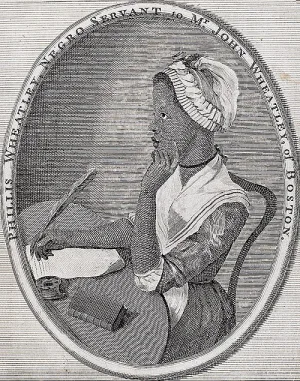
Smith, Phyllis Sterling
Phillis Wheatley Peters, also spelled Phyllis and Wheatly (c. 1753 – December 5, 1784), was an American writer who is considered the first African-American author of a published book of poetry.
💡 Why Read This Book?
Embark on a luminous quest for hidden truths and unlock the secrets of veiled societies. 'What is POSAT?' offers a unique blend of captivating fiction and profound esoteric philosophy, making it ideal for the curious seeker, the dedicated scholar of occult traditions, and the practitioner yearning for deeper symbolic understanding. Discover potent archetypes and ancient wisdom re-imagined.
⭐ Reader Reviews
Honest opinions from readers who have explored this book.
❓ Frequently Asked Questions
What does 'POSAT' represent in the context of the book?
'POSAT' is a symbolic construct within the narrative, representing a hidden nexus of knowledge and power accessible only through specific esoteric understanding and initiation into certain secret societies. It is not a literal entity but a conceptual key.
Is this book suitable for beginners interested in secret societies?
Absolutely. While it delves into complex themes, Smith's accessible prose and compelling narrative make it an excellent entry point for those new to the study of secret societies and their esoteric dimensions.
Does the book offer practical occult advice?
'What is POSAT?' focuses primarily on the philosophical and symbolic aspects of esoteric traditions and secret societies. While it inspires contemplation, it does not provide step-by-step practical instructions for occult practices.
What makes this book stand out from other fiction about secret societies?
Its unique strength lies in its deep engagement with genuine esoteric symbolism and philosophical underpinnings, rather than mere sensationalism. It offers a more authentic and thought-provoking exploration of these themes.
Can I find information about Freemasonry within this book?
Yes, the book draws significant inspiration from and explores themes relevant to Freemasonry and other clandestine organizations, offering a fictionalized yet insightful perspective on their symbolic language and potential hidden purposes.
🔮 Key Themes & Symbolism
The Labyrinth of Hidden Knowledge
This theme explores the concept of gnosis as a guarded treasure, accessible only through initiation and the deciphering of intricate symbolic languages. The narrative artfully illustrates how profound truths are often concealed within plain sight, requiring a shift in perception to reveal their true nature. It highlights the perpetual human quest for understanding the universe's deeper mechanisms and the role of clandestine organizations in preserving and transmitting such sacred wisdom across generations, emphasizing the transformative power of esoteric enlightenment.
The Architecture of Secret Societies
Phyllis Sterling Smith intricately designs the fictional framework of 'What is POSAT?' to mirror the hierarchical and symbolic structures inherent in real-world secret societies. This theme examines the rituals, oaths, and shared understanding that bind members, creating a unique culture of secrecy and collective pursuit. It examines how these societies function as conduits for esoteric teachings, shaping the consciousness of their initiates and, by extension, influencing the broader societal landscape through veiled actions and preserved knowledge. The focus is on the symbolic order and the power derived from collective intent.
Symbolism as a Cosmic Language
Central to 'What is POSAT?' is the exploration of symbolism not as mere decoration, but as a fundamental language of the cosmos. The book demonstrates how symbols, from hieroglyphs to architectural designs, serve as keys to unlocking profound metaphysical concepts. Smith illustrates how these potent icons can bridge the gap between the mundane and the divine, facilitating a deeper connection with universal truths. The narrative encourages readers to look beyond the literal, to perceive the deeper resonances and hidden meanings embedded within the fabric of existence and within the artifacts of ancient traditions.
💬 Memorable Quotes
Direct passages from the work, attributed to the author.
“Symbols are the whispers of the architects.”
— Suggests that symbols are the deliberate communications left by those who understand the fundamental structure of reality, guiding those who can interpret them.
“True power lies not in dominion, but in understanding.”
— Highlights a philosophical distinction between external control and internal wisdom, emphasizing the transformative nature of esoteric knowledge.
“The circle holds all, for it has no beginning or end.”
— A profound statement on the perfection and completeness of the circle as a symbol of eternity, unity, and divine essence.
“Initiation is the awakening of a dormant light within.”
— Defines initiation not as an external bestowal, but as an internal process of self-discovery and the realization of one's inherent spiritual potential.
💡 Key Ideas
Editorial paraphrase of the work's core concepts — not direct quotes.
The veil is thin for those who know where to look.
This quote expresses the core esoteric principle that hidden truths are not absent but merely concealed, accessible through specific knowledge and awareness.
🌙 Esoteric Significance
Tradition
This work resonates deeply with the Western Esoteric Tradition, drawing parallels to Hermeticism, Rosicrucianism, and the symbolic language of Freemasonry. It explores the concept of the 'Great Work' – the spiritual transformation of the individual and the universe – through the veiled mechanisms of secret societies, suggesting they act as custodians of ancient wisdom intended for the evolution of consciousness.
Symbolism
The book masterfully employs symbolism as a primary vehicle for conveying its esoteric messages. Key symbols likely include geometric shapes representing cosmic order, alchemical imagery signifying transformation, and archetypal figures embodying spiritual principles. These symbols are not merely decorative but are presented as active agents of understanding, unlocking deeper metaphysical truths for the initiated reader.
Modern Relevance
In an age saturated with information yet often lacking in wisdom, 'What is POSAT?' offers a timely reminder of the value of discerning knowledge and the potential for hidden structures to guide personal and collective evolution. Its exploration of secrecy, symbolism, and the pursuit of deeper meaning remains profoundly relevant for individuals seeking to navigate complexity and find authentic pathways to self-discovery and understanding.
👥 Who Should Read This Book
This captivating narrative is a must-read for the ardent seeker of esoteric wisdom, the diligent scholar of occult history and secret societies, and the contemplative practitioner seeking to deepen their understanding of symbolic language. Beginners to the study of metaphysics will find an accessible yet profound introduction, while seasoned practitioners will appreciate the nuanced portrayal of veiled traditions and their philosophical underpinnings. If you are drawn to mysteries that lie beneath the surface of everyday reality, this book promises to illuminate your path.
📜 Historical Context
Published during a period of burgeoning interest in occultism and societal critique, 'What is POSAT?' by Phyllis Sterling Smith emerges from a cultural milieu where secret societies like Freemasonry were both subjects of fascination and suspicion. The early to mid-20th century saw a surge in spiritual exploration, with many seeking answers beyond traditional religious dogma. This era witnessed a revival of interest in ancient mystery traditions, Hermeticism, and Rosicrucianism, fueled by scholars and practitioners alike. Smith's work taps into this zeitgeist, offering a fictional lens through which to examine the perceived influence and hidden philosophies of clandestine fraternities. The narrative reflects a broader societal questioning of established power structures and a yearning for alternative pathways to wisdom and self-realization, making it a product of its time yet timeless in its exploration of enduring human curiosities.
📔 Journal Prompts
What personal 'POSAT' or hidden knowledge do you feel compelled to seek or protect?
How do the symbols presented in the book resonate with your own life experiences?
In what ways do societal structures, both overt and covert, influence your understanding of truth?
Reflect on a time when you felt you ‘unveiled’ a hidden truth. What was the process like?
Consider the concept of initiation – what metaphorical or literal initiations have shaped your personal journey?
🗂️ Glossary
Gnosis
A Greek term meaning 'knowledge,' often referring to a specific type of spiritual or mystical insight that leads to enlightenment and salvation, distinct from ordinary empirical knowledge.
Hermeticism
A philosophical and religious tradition based on the purported teachings of Hermes Trismegistus, emphasizing the unity of all things and the potential for human spiritual ascent through esoteric knowledge.
Symbolism
The use of symbols to represent ideas and qualities, often in a way that conveys deeper meaning or connects the mundane to the spiritual or divine.
Initiation
A ritual or ceremony that marks a person's entry into a new stage of life, a new role, or membership in a society or group, often involving the transmission of secret knowledge.
Esoteric
Intended for or likely to be understood by only a small number of people with a specialized knowledge or interest; relating to or dealing with the occult.
This book appears in 2 collections
🔮 Readers Also Liked
Browse all →





From the “Secret Societies” Collection
View all →



More Free Freemasonry & Secret Societies Books
View all →