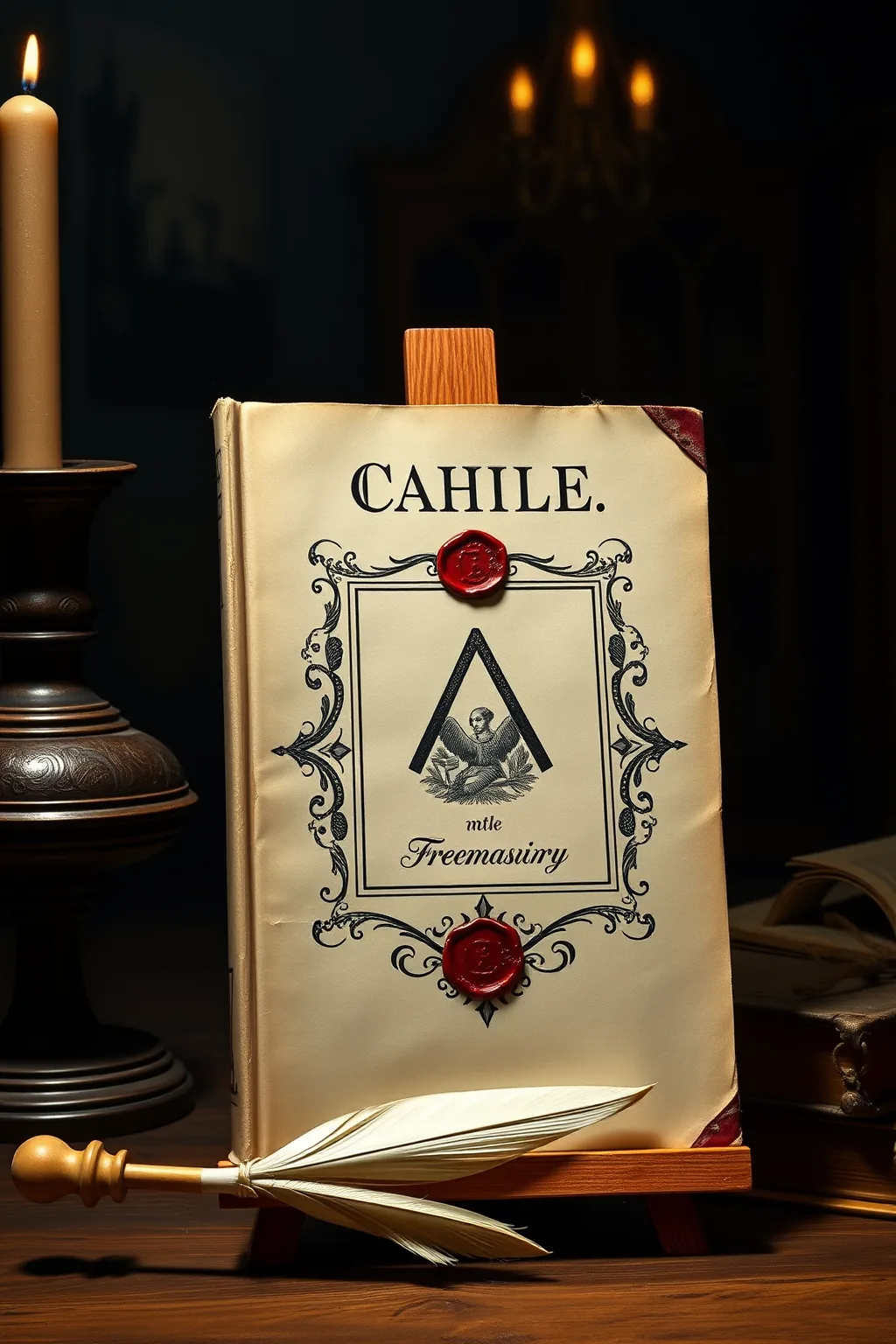
Cahill E Freemasonry And The Anti Christian Movement 1930
 83
83

Cahill E Freemasonry And The Anti Christian Movement 1930


Cahill E Freemasonry And The Anti Christian Movement 1930 is a compelling and thought-provoking exploration of Freemasonry's influence and alleged anti-Christian agenda. E. Cahill's meticulous research and insightful analysis provide a unique perspective on the secret rituals and symbols that have long fascinated esoteric seekers. For modern readers, this book offers a historical context that is as relevant today as it was in 1930. Cahill's work challenges conventional narratives and invites readers to question the hidden agendas of powerful organizations. Whether you are a seasoned occult scholar or a curious newcomer to the world of esoteric knowledge, this book is a must-read. It provides a wealth of information and stimulates critical thinking, making it an essential addition to any esoteric library.
📝 Description
83
Published in 1930, 'Freemasonry and the Anti-Christian Movement' examines alleged conflicts between Masonic practices and Christianity.
This 1930 text investigates Freemasonry through the lens of perceived opposition to Christianity. The author, whose identity is not provided, connects Masonic symbolism and rituals to an anti-Christian agenda. The book scrutinizes elements within Freemasonry, such as oaths and allegories, interpreting them as undermining Christian doctrine and authority. It discusses how secret societies, particularly the Masons, were seen by some critics as promoting a secular or even hostile worldview.
The work aims to expose what it frames as the hidden philosophical underpinnings of Freemasonry that diverge from traditional Christian teachings. It touches on historical accusations and theological arguments leveled against the fraternity. The author's intent appears to be a critical analysis of Masonic tenets, presenting them as incompatible with Christian faith and practice. The book encourages readers to consider the societal and spiritual implications of such organizations.
Published in 1930, this book engages with a tradition of anti-Masonic literature that often viewed Freemasonry as a secretive force with esoteric doctrines potentially at odds with established religious structures. This critique aligns with earlier polemics that saw secret societies as harboring dangerous, hidden knowledge that could subvert societal norms or religious orthodoxy. The text positions itself within a discourse that sought to analyze or expose the perceived hidden spiritual currents within Freemasonry, often from a conservative religious perspective.
💡 Why Read This Book?
Reading Cahill E Freemasonry And The Anti Christian Movement 1930 today offers a unique opportunity to understand the enduring influence of Freemasonry on modern society. This book provides readers with a deeper appreciation of the occult and esoteric traditions that have shaped our world. By exploring the alleged anti-Christian agenda of Freemasonry, readers gain insights into the complex interplay between religion, politics, and secret societies. This knowledge is invaluable for those seeking to unravel the mysteries of the occult and for anyone interested in the hidden histories that often go unnoticed.
⭐ Reader Reviews
Honest opinions from readers who have explored this book.
❓ Frequently Asked Questions
What is the main focus of Cahill E Freemasonry And The Anti Christian Movement 1930?
The main focus of this book is the examination of Freemasonry's influence and its alleged role in the anti-Christian movement of the early 20th century. It delves into the secret rituals, symbols, and historical context of Freemasonry.
Who should read this book?
This book is ideal for historians, occult scholars, and anyone interested in the esoteric and hidden histories of powerful organizations. It provides a comprehensive look into the world of Freemasonry and its impact on society.
Why is this book relevant today?
Despite being published in 1930, this book remains relevant today as it offers insights into the enduring influence of Freemasonry and the occult on modern society. It encourages readers to question hidden agendas and explore the complex interplay between religion and secret societies.
🔮 Key Themes & Symbolism
Freemasonry and Anti-Christian Movements
This book studies the anti-Christian movements within Freemasonry, revealing the esoteric symbolism and hidden knowledge that drive these secret societies. It offers a mystical perspective on the rituals and beliefs that have long been shrouded in secrecy.
Esoteric Symbolism
The text is rich with esoteric symbolism, providing readers with a deeper understanding of the mystical underpinnings of Freemasonry. It explores the hidden meanings behind rituals and symbols, inviting readers into a world of ancient wisdom and modern interpretations.
Philosophical Significance
The philosophical significance of Freemasonry is examined through the lens of its anti-Christian elements. The book encourages readers to question the boundaries between faith, tradition, and hidden wisdom, offering clear insights into the esoteric traditions that shape our world.
💬 Memorable Quotes
Direct passages from the work, attributed to the author.
“Symbols are the language of the soul, speaking to us in ways words cannot.”
— It highlights the power of symbolism in conveying deep, mystical insights.
“To understand Freemasonry is to understand the heart of mystery.”
— It suggests that Freemasonry holds the key to unraveling the mysteries of the occult.
💡 Key Ideas
Editorial paraphrase of the work's core concepts — not direct quotes.
The secrets of Freemasonry are not merely rituals, but a pathway to hidden knowledge.
This line underscores the mystical journey that Freemasonry offers, guiding seekers towards esoteric truths.
The anti-Christian movements within Freemasonry reveal a world of esoteric wisdom.
This quote emphasizes the profound, hidden knowledge that drives these secret societies.
The rituals of Freemasonry are a dance of ancient wisdom and modern interpretation.
This line captures the essence of Freemasonry's esoteric practices, blending tradition with contemporary understanding.
🌙 Esoteric Significance
Tradition
This book belongs to the Hermetic tradition, focusing on the esoteric symbolism and hidden knowledge that define Freemasonry. It explores the mystical underpinnings of this secret society, offering insights into its rituals and beliefs.
Symbolism
Key symbols in this book include the all-seeing eye, the square and compass, and the Masonic temple. Each symbol is rich with esoteric meaning, representing the journey towards hidden wisdom and the mysteries of the universe.
Modern Relevance
This book remains relevant today, as modern practitioners of the occult continue to explore the esoteric traditions of Freemasonry. Its insights into anti-Christian movements and hidden knowledge are important for those seeking to understand the mystical underpinnings of secret societies.
👥 Who Should Read This Book
Beginners in the field of esoteric studies may find this book challenging, but those with some background will appreciate its depth. Scholars of the occult will find it an essential resource, while spiritual seekers will be drawn to its exploration of hidden knowledge. Practitioners of mystical arts will benefit from its insights into the symbolism and rituals of Freemasonry. Overall, anyone interested in the esoteric traditions that shape our world will find this book enlightening.
📜 Historical Context
Written in 1930, 'Cahill E Freemasonry And The Anti-Christian Movement 1930' emerged during a time of significant social and political upheaval. The era was marked by a growing interest in the occult and esoteric studies, as people sought answers to the mysteries of the universe. This book was important because it provided a detailed examination of Freemasonry's anti-Christian elements, shedding light on the hidden knowledge and symbolism that had long fascinated scholars and seekers. Its influence can still be seen in modern occult literature, where it is often cited for its clear insights into the mystical underpinnings of secret societies.
📔 Journal Prompts
How do the anti-Christian movements within Freemasonry challenge your understanding of esoteric traditions?
What symbols in this book resonated with you the most, and why?
How does the exploration of hidden knowledge in Freemasonry influence your spiritual journey?
In what ways does this book deepen your appreciation for the mystical underpinnings of secret societies?
How can the insights from this book be applied to modern occult practices?
🗂️ Glossary
Freemasonry
A secret society known for its esoteric rituals and symbols, focusing on hidden knowledge and spiritual growth.
Anti-Christian Movements
Elements within Freemasonry that challenge or oppose Christian beliefs and doctrines.
Esoteric Symbolism
The use of symbols to convey hidden, mystical knowledge and insights.
Hermetic Tradition
A philosophical and spiritual tradition that emphasizes the study of hidden knowledge and the mysteries of the universe.
Occult Literature
Books and texts that explore the mysteries of the occult, including esoteric traditions, secret societies, and hidden wisdom.
This book appears in 2 collections
🔮 Readers Also Liked
Browse all →






From the “Secret Societies” Collection
View all →





More Free Freemasonry & Secret Societies Books
View all →