Weekly Meditations
 82
82

Weekly Meditations
Patsy Scala’s adaptation of Rudolf Steiner’s meditations presents a practical, if somewhat austere, guide for the dedicated student. The strength lies in its clear, week-by-week structure, offering a tangible path for consistent inner work that many practitioners crave. The integration of Steiner’s complex ideas into digestible daily practices is commendable. However, the sheer density of Steiner’s original thought, even when adapted, can feel overwhelming for those not already steeped in Anthroposophical terminology. For instance, understanding the precise function of the ‘astral body’ requires prior knowledge, which Scala assumes. A particular passage detailing the spiritual exercise for the 3rd week of November, focusing on overcoming egoistic impulses through conscious connection to higher beings, exemplifies the book’s demanding yet potentially rewarding nature. While the structure is a clear benefit, the lack of introductory material for absolute beginners is a limitation. It is a rigorous tool for deepening esoteric practice.
📝 Description
82
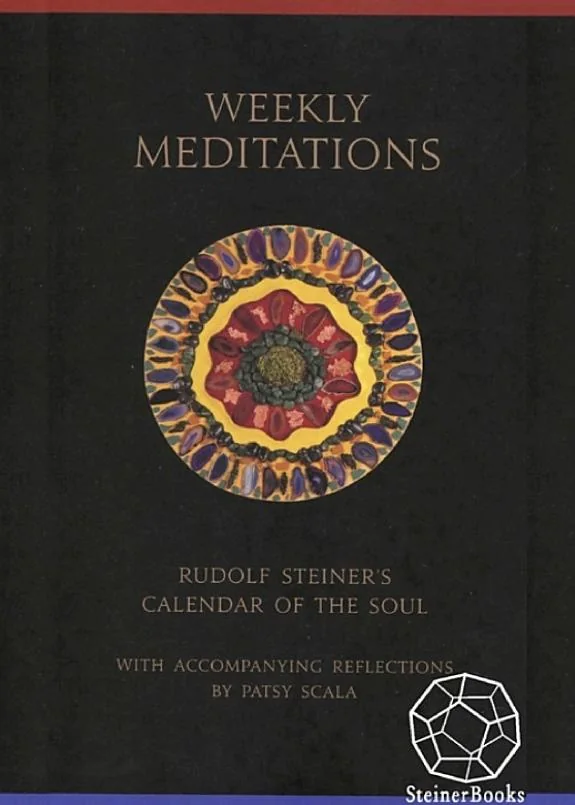
Patsy Scala adapted Rudolf Steiner's meditations for daily practice in 2008.
Weekly Meditations is a collection of exercises and meditations adapted from Rudolf Steiner's spiritual-scientific insights by Patsy Scala. Published in 2008, the book is not a narrative but a structured resource for regular engagement. Its aim is to foster inner development and a deeper connection with spiritual realities through consistent practice.
The content is organized into a weekly cycle, intended to align the practitioner with natural and spiritual rhythms. This methodical approach suits individuals dedicated to spiritual study and inner work, particularly those interested in Anthroposophy. It is designed for those seeking a disciplined, daily regimen to cultivate specific meditative capacities and enhance their understanding of spiritual hierarchies.
Rudolf Steiner, the originator of Anthroposophy, developed his spiritual-scientific method in the early 20th century. His work, initially influenced by movements like Theosophy, charted a distinct path focusing on the development of higher cognition and spiritual perception. This compilation engages with concepts Steiner introduced during a period of significant occult and philosophical activity, offering a modern adaptation for practitioners seeking to integrate a spiritual perspective into their daily lives.
💡 Why Read This Book?
• Gain a structured, daily contemplative practice directly informed by Rudolf Steiner’s spiritual-scientific insights, offering a unique method for inner development not found in generic mindfulness guides. • Cultivate specific spiritual faculties, such as the strengthening of the ego’s connection to the etheric and astral bodies, as detailed in Steiner's original lectures from the early 20th century. • Develop a conscious relationship with spiritual hierarchies and cosmic processes through guided meditations, providing a framework for understanding the human being’s place in the spiritual cosmos.
⭐ Reader Reviews
Honest opinions from readers who have explored this book.
❓ Frequently Asked Questions
What is the primary purpose of Rudolf Steiner's Weekly Meditations?
The primary purpose is to guide practitioners through daily contemplative exercises designed to foster spiritual development, strengthen the ego, and cultivate conscious connection with the spiritual world, based on Rudolf Steiner's spiritual-scientific insights.
Who is Patsy Scala and what is her role in this book?
Patsy Scala is the adapter and editor of this collection of Rudolf Steiner's meditations. She compiled and presented Steiner's material, originally published in 2008, to make his teachings more accessible for regular spiritual practice.
What is Anthroposophy and how does this book relate to it?
Anthroposophy, founded by Rudolf Steiner, is a spiritual philosophy and practice. This book is a direct application of Anthroposophical principles, offering meditations designed to develop the human being according to Steiner's understanding of physical, etheric, astral, and egoic bodies.
When were Rudolf Steiner's original lectures or writings on these meditations given?
Rudolf Steiner delivered lectures containing the material adapted in this book throughout the early 20th century, primarily between 1909 and 1924, forming the bedrock of his spiritual-scientific research.
Are these meditations suitable for complete beginners in esoteric study?
While the book offers a structured approach, it presumes some familiarity with Rudolf Steiner's core concepts. Absolute beginners may find it beneficial to first explore introductory texts on Anthroposophy before engaging with these specific meditations.
What does the 'spiritual-scientific' approach mean in the context of this book?
The 'spiritual-scientific' approach, as developed by Steiner, posits that the spiritual world can be investigated with a rigor comparable to natural science, using expanded consciousness and meditative faculties to perceive spiritual realities.
🔮 Key Themes & Symbolism
Ego and Spiritual Development
The collection centers on the development of the human ego as the core of individuality and the vehicle for spiritual perception. Steiner's work posits that through specific meditative practices, the ego can strengthen its connection to the subtler bodies—the etheric, astral, and physical—and thereby become capable of apprehending spiritual realities. This involves not just passive reception but active engagement, working to purify the soul and intellect to serve as a clear vessel for spiritual insight. The meditations aim to bridge the gap between the material world and the spiritual realms, fostering a conscious, evolving self.
Spiritual Hierarchies and Cosmic Rhythms
Weekly Meditations guides the reader to recognize and consciously interact with the spiritual beings or hierarchies that govern the cosmos and influence human life. These hierarchies, such as Angels, Archangels, and Archai, are presented not as distant deities but as active participants in the unfolding of evolution. The weekly structure of the meditations often corresponds to these cosmic rhythms and the activities of specific spiritual forces, encouraging the practitioner to align their inner work with these larger spiritual processes, thereby fostering a sense of cosmic belonging and purpose.
The Four Lower Members
A foundational concept within Steiner's work, the 'four lower members' refer to the human being's constitution: the physical body, the etheric body (life forces), the astral body (consciousness and feeling), and the ego (spirit individuality). The meditations in this volume are designed to work with and purify these members. By consciously engaging with each level, practitioners can gain a deeper understanding of their own being and develop the capacities needed for higher perception. Strengthening the ego's relationship with the astral and etheric bodies is crucial for reading through the spiritual world safely and effectively.
Spiritual Science as Practice
This book embodies Rudolf Steiner's vision of Spiritual Science (Anthroposophy) not as mere theoretical knowledge but as a living practice. The meditations are presented as exercises, akin to physical training, but for the spiritual organs. The aim is to cultivate specific clairvoyant faculties and moral qualities through disciplined inner effort. The 'scientific' aspect lies in the observable results within the practitioner's consciousness and spiritual perception, offering a path to verifiable inner experiences and a direct, experiential understanding of the spiritual dimensions of existence.
💬 Memorable Quotes
Direct passages from the work, attributed to the author.
“The human soul must learn to perceive the spiritual worlds through the same organs with which it perceives the physical world.”
— This statement expresses the core aim of Steiner's spiritual science: to develop faculties for perceiving spiritual realities with a clarity and objectivity akin to sensory perception of the material world, transforming consciousness through dedicated practice.
“Through diligent practice, the ego can become a luminous center within the human being.”
— This idea highlights the transformative potential of the meditations. The ego, seen as the true spiritual core, is strengthened and illuminated, enabling it to direct the other human members and serve as a beacon for spiritual insight and moral action.
“The etheric body carries the forces of life and growth, which must be consciously understood.”
— This emphasizes the importance of the etheric body beyond its biological function. The meditations aim to bring awareness to these life forces, allowing individuals to work with them consciously for health, renewal, and spiritual evolution.
“The astral body is the seat of feeling and consciousness, needing purification for higher perception.”
— This points to the role of emotions and instinctual consciousness. By purifying the astral body through meditative work, the capacity for clear spiritual perception is enhanced, moving beyond subjective emotional states.
“Cosmic forces are active within human evolution; we must learn to consciously participate.”
— This suggests a dynamic relationship between humanity and the cosmos. The meditations are designed to awaken an understanding of these cosmic influences and to enable conscious collaboration with them in personal and planetary evolution.
🌙 Esoteric Significance
Tradition
This work is firmly rooted in the Western Esoteric Tradition, specifically within the lineage of Anthroposophy founded by Rudolf Steiner. It departs from earlier esoteric movements like Theosophy by offering a more individualized, Christ-centered spiritual path and emphasizing the development of specific cognitive capacities for spiritual research. It builds upon Gnostic and Hermetic ideas of spiritual hierarchies and the human being as a microcosm, but reframes them through Steiner's unique spiritual-scientific lens.
Symbolism
Key symbols include the 'calendar of the soul,' representing the cyclical nature of spiritual development and the specific spiritual forces at play throughout the year, often linked to festivals. The 'four lower members' (physical, etheric, astral bodies, and ego) are fundamental conceptual symbols representing the human constitution, and the meditations work to differentiate and integrate them. The concept of 'spiritual hierarchies' (Angels, Archangels, etc.) symbolizes the organized intelligence and forces within the spiritual cosmos that guide evolution.
Modern Relevance
Contemporary thinkers and practitioners in fields influenced by Steiner, such as Waldorf education, biodynamic agriculture, and anthroposophical medicine, implicitly draw upon the foundational understanding of human development presented in works like this. Individuals seeking structured, disciplined meditative practices that go beyond generic mindfulness, and those interested in exploring consciousness and spiritual evolution through a detailed, systematic approach, continue to engage with Steiner's teachings today.
👥 Who Should Read This Book
• Students of Rudolf Steiner and Anthroposophy seeking a practical, daily regimen to deepen their understanding and experience of his teachings. • Individuals engaged in comparative esoteric studies looking to explore the specific methods and concepts of the Anthroposophical tradition. • Serious practitioners of meditation and inner work who desire a structured, intellectually rigorous approach to spiritual development that addresses the whole human being.
📜 Historical Context
Rudolf Steiner (1861-1925) developed his spiritual-scientific philosophy, Anthroposophy, in the early 20th century, a period of immense intellectual ferment and interest in the esoteric. He was initially associated with the Theosophical Society, led by Annie Besant, but broke away in 1913 due to fundamental disagreements, forming the Anthroposophical Society. His work offered a distinct path from Theosophy, emphasizing a more Christian-centric spiritual evolution and a rigorous, self-developed clairvoyance. This collection, adapted by Patsy Scala in 2008, draws from Steiner's extensive lecture cycles given between approximately 1909 and 1924, such as those focusing on the calendar of the soul or meditations on the Gospels. Steiner's ideas were often presented in contrast to purely materialistic scientific views and also engaged with contemporary philosophical currents like those of Nietzsche and Goethe, whose work he deeply admired and reinterpreted. His reception was varied, with both devoted followers and significant criticism from academic and religious circles.
📔 Journal Prompts
The purification of the astral body and its role in perceiving spiritual truths.
Reflecting on the specific spiritual forces active during the current week, as outlined in the meditations.
The strengthening of the ego through focused meditative practice.
Understanding the interplay between the physical, etheric, and astral bodies in daily life.
Connecting the weekly meditation theme to personal challenges and growth opportunities.
🗂️ Glossary
Anthroposophy
A spiritual philosophy and practice founded by Rudolf Steiner, aiming to investigate the spiritual worlds through a developed consciousness and to apply this understanding to human life and evolution.
Spiritual Science
Rudolf Steiner's term for his method of investigating the spiritual world with a rigor comparable to natural science, using meditative and clairvoyant faculties.
Etheric Body
In Steiner's cosmology, the subtle body responsible for life forces, growth, and formative processes; often called the 'life body'.
Astral Body
In Steiner's cosmology, the subtle body associated with consciousness, feeling, instinct, and desire; often called the 'soul body'.
Ego
The spiritual core of the human being, the principle of individuality and self-consciousness, seen by Steiner as the highest member to be developed.
Spiritual Hierarchies
Orders of spiritual beings (e.g., Angels, Archangels) that govern the cosmos and guide evolution, as described in Anthroposophy.
Calendar of the Soul
A series of verses by Rudolf Steiner, intended for daily meditation, that reflect on the spiritual processes of the year and the human soul's connection to them.
This book appears in 1 collection
🔮 Readers Also Liked
Browse all →







From the “Anthroposophy” Collection
View all →




More Free Theosophy & Anthroposophy Books
View all →