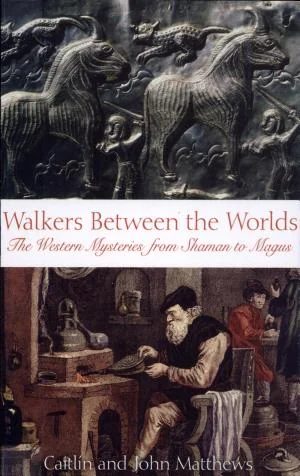
Walkers Between the Worlds
 72
72

Walkers Between the Worlds
Caitlín and John Matthews’ "Walkers Between the Worlds" attempts to bridge the gap between academic exploration of esoteric traditions and their practical application. The strength of the book lies in its clear presentation of complex ideas drawn from shamanism, Gnosticism, and Egyptian mysteries, making them accessible to a general audience. The inclusion of practical exercises is commendable, offering tangible ways for readers to engage with the material. However, the book occasionally feels like a survey, touching upon vast subjects without always achieving the depth one might hope for. A particular passage discussing the Gnostic concept of the Pleroma, while informative, could benefit from more nuanced exposition to fully capture its philosophical weight. Despite this, it serves as a valuable primer for those new to these particular esoteric streams, offering a well-structured introduction to interconnected ancient wisdom. It is a competent guide for those beginning their exploration.
📝 Description
72
Published in 2004, Walkers Between the Worlds connects readers with ancestral hermetic knowledge and practices.
"Walkers Between the Worlds," by Caitlín and John Matthews, examines esoteric currents that exist outside mainstream Western religions. The book looks at ancient earth wisdom, particularly shamanic traditions, alongside Gnostic and Egyptian mysteries. It seeks to connect readers with ancestral hermetic knowledge and practices, presenting them as living streams of spiritual understanding.
This work is for individuals who want a deeper understanding of Western esotericism beyond conventional religious frameworks. It will appeal to those interested in shamanism, Gnosticism, and ancient Egyptian spirituality. Readers looking for practical exercises to integrate these traditions into their lives will also find value here. The book addresses those who feel a pull toward ancestral earth wisdom and hidden spiritual lineages.
Central to "Walkers Between the Worlds" is the concept of the shaman as a mediator between worlds, a figure who traverses spiritual and physical realities. The book also examines Gnostic cosmology, emphasizing the search for hidden knowledge (gnosis) and the understanding of divine sparks trapped within the material world. Egyptian mysteries are explored through their symbolic language and initiatory structures, connecting them to themes of death, rebirth, and cosmic order. Practical exercises are woven throughout, enabling readers to engage directly with these ancient paradigms.
This book emerged in 2004 from a lineage of scholarship and practice focused on Celtic and European shamanism. It builds on the authors' extensive work in these areas, contributing to a contemporary resurgence of interest in pre-Christian European spirituality and comparative mysticism. The authors position their work within a broader context of esoteric traditions that offer alternative spiritual pathways.
💡 Why Read This Book?
• Gain practical methods for connecting with earth wisdom, such as the specific grounding techniques derived from shamanic practices mentioned in the book's exercises. • Understand the historical lineage of Gnostic thought, learning about its core tenets and its place within early Christian and Hellenistic philosophical currents, as detailed in the 2004 publication. • Explore the symbolic language of ancient Egyptian spirituality, discerning how concepts like the Duat and the role of Osiris inform the book's exploration of death and rebirth.
⭐ Reader Reviews
Honest opinions from readers who have explored this book.
❓ Frequently Asked Questions
What specific shamanic traditions are discussed in "Walkers Between the Worlds"?
The book draws from a broad spectrum of earth wisdom, referencing the shamanic role as a mediator between worlds and incorporating practices inspired by ancient European traditions and indigenous shamanism, rather than focusing on one specific tribe or culture.
Are the practical exercises in the book suitable for beginners?
Yes, the exercises are designed to be accessible to those new to esoteric practices. They are drawn from ancient traditions like shamanism and Egyptian mysteries, offering introductory steps for engaging with these spiritual paths.
When was "Walkers Between the Worlds" first published?
The book was first published on January 14, 2004, by Caitlín Matthews and John Matthews.
What is the relationship between the Matthews' work and Celtic shamanism?
Caitlín and John Matthews are well-regarded scholars and practitioners of Celtic traditions. "Walkers Between the Worlds" extends this focus by exploring universal shamanic themes and connecting them to broader Western esoteric currents.
Does the book cover Gnostic cosmology in detail?
It provides an overview of key Gnostic concepts, including the search for gnosis and the understanding of spiritual entrapment within the material world, presenting them within the context of Western esoteric traditions.
Can this book help someone understand ancient Egyptian mysteries?
The book offers an introduction to ancient Egyptian mysteries, focusing on their symbolic language and initiatory structures related to themes of death, rebirth, and cosmic order, as presented in the 2004 edition.
🔮 Key Themes & Symbolism
The Shamanic Bridge
The book posits the shaman as a crucial figure, a 'walker between worlds,' who can traverse spiritual and physical realities. This role is explored not as a relic of the past but as a fundamental human capacity for accessing deeper wisdom. It examines how this liminal state allows for healing, prophecy, and communion with the spirit realms, drawing parallels between ancient practices and the enduring human need for spiritual connection beyond the mundane.
Gnostic Quest for Hidden Knowledge
Central to the Gnostic current discussed is the pursuit of gnosis – direct, experiential knowledge of the divine. The work explores the Gnostic worldview, which often perceives the material world as an illusion or a prison created by a lesser deity, and the individual soul as a divine spark seeking liberation. This theme highlights the esoteric path as one of inner awakening and the retrieval of lost spiritual truths from forgotten traditions.
Egyptian Mysteries and Cosmic Order
The Egyptian mysteries are presented through their rich symbolic language and initiatory frameworks, focusing on concepts of death, resurrection, and the maintenance of cosmic balance (Ma'at). The book examines how these ancient beliefs offered a comprehensive worldview, guiding individuals through life's transitions and connecting them to the cycles of nature and the divine. This exploration connects ancient Egyptian spirituality to universal themes of transformation and spiritual continuity.
Hermetic Traditions and Ancestral Wisdom
Underlying the specific traditions explored is the concept of hermeticism – the preservation and transmission of ancient, often concealed, spiritual knowledge. "Walkers Between the Worlds" emphasizes the continuity of this ancestral wisdom, suggesting that modern individuals can reconnect with these potent sources of insight. It frames esoteric traditions not as separate entities but as interconnected streams flowing from a common, ancient wellspring of human spiritual experience.
💬 Memorable Quotes
Direct passages from the work, attributed to the author.
“Beneath the orthodox religions... runs an esoteric current that has preserved the lore and hermetic traditions of our ancestors.”
— This statement frames the book's purpose: to uncover and illuminate the hidden spiritual pathways that have coexisted with, and often informed, mainstream religious expressions throughout Western history.
“The shaman's path is one of walking between worlds.”
— This concisely captures the core metaphor of the book, emphasizing the shaman's unique ability to mediate between the seen and unseen realms, a capacity explored through various traditions.
“Ancient Egyptian spirituality offers wisdom on death and rebirth.”
— This highlights a key aspect of the Egyptian mysteries explored, focusing on their rich symbolic narratives and initiatory practices that address profound themes of transformation and the afterlife.
“Practical exercises draw from these ancient traditions.”
— This indicates the book's intention to provide readers with actionable methods for engaging with the esoteric concepts discussed, bridging theory and personal practice.
💡 Key Ideas
Editorial paraphrase of the work's core concepts — not direct quotes.
Gnosticism seeks direct knowledge of the divine.
This paraphrased concept highlights the central tenet of Gnosticism as presented in the text: the pursuit of immediate, personal spiritual insight (gnosis) rather than relying solely on dogma or external authority.
🌙 Esoteric Significance
Tradition
The book aligns with the Western Esoteric Tradition, particularly drawing from Hermeticism, Gnosticism, and shamanic practices. It positions itself as a bridge, connecting these often disparate streams of ancient wisdom. Unlike purely academic treatments, it emphasizes the practical, initiatory aspects, suggesting these traditions offer viable paths for spiritual development today. It fits within a modern revival of interest in indigenous and pre-Christian European spiritualities, seeking to reclaim and reinterpret ancestral knowledge.
Symbolism
Key symbols include the 'walker between worlds' itself, representing the shamanic mediator and the human capacity to bridge the material and spiritual realms. The Gnostic concept of the 'divine spark' trapped within matter is another motif, symbolizing the soul's inherent divinity and its quest for liberation. The Egyptian focus often involves symbols of death and rebirth, such as the Osiris myth, representing cosmic cycles and personal transformation, providing a framework for understanding spiritual continuity.
Modern Relevance
Contemporary practitioners of shamanism, Gnosticism, and those interested in comparative religion find value in this work. Thinkers exploring animism, earth-based spirituality, and the integration of psychological and spiritual healing often reference or are influenced by the types of traditions discussed. The book's emphasis on practical application also speaks to modern spiritual seekers looking for embodied practices that connect them to ancient wisdom.
👥 Who Should Read This Book
• Aspiring practitioners of Western Esotericism: Individuals seeking to understand the foundational concepts of shamanism, Gnosticism, and Egyptian mysteries as interconnected parts of a larger esoteric heritage. • Students of Comparative Religion: Researchers and learners interested in the parallels and divergences between orthodox religions and the persistent esoteric currents within Western culture. • Individuals seeking practical spiritual tools: Readers looking for guidance on how to integrate ancient earth wisdom and hermetic principles into their daily lives through structured exercises.
📜 Historical Context
Published in 2004, "Walkers Between the Worlds" emerged during a period of renewed public interest in esoteric studies and alternative spiritualities, often referred to as the 'New Age' movement, though the Matthews' approach is more rooted in historical scholarship. This era saw a proliferation of books exploring ancient wisdom, comparative mythology, and shamanic practices. The work sits within a lineage of Western esotericism scholarship that examines traditions like Gnosticism and Hermeticism, often in dialogue with figures like Carl Jung, who explored archetypes and the collective unconscious. While not directly engaging with contemporaries in a polemical way, the Matthews' work implicitly addresses a scholarly and popular fascination with pre-Christian European spirituality and the enduring power of shamanic states. The reception was generally positive within circles interested in earth-based spirituality and comparative mysticism, reinforcing the authors' established reputation in these fields.
📔 Journal Prompts
The shaman's role as a mediator: How might bridging different realities inform your personal understanding of healing?
Gnosis as direct knowing: Reflect on moments where intuitive insight felt more potent than logical deduction.
Ancient Egyptian symbolism of rebirth: Consider what cycles of transformation are currently unfolding in your life.
The concept of hermetic traditions: Explore the hidden streams of knowledge that have influenced your own beliefs.
Connecting with earth wisdom: Describe a natural setting that evokes a sense of deep, ancestral connection for you.
🗂️ Glossary
Shaman
An individual believed to have the ability to interact with and influence the spirit world, often acting as a mediator between the physical and spiritual realms for healing or guidance.
Gnosticism
A diverse set of religious and philosophical movements emphasizing salvation through gnosis (spiritual knowledge), often viewing the material world as flawed or evil and the divine as transcendent.
Hermeticism
A philosophical and religious tradition based primarily upon writings attributed to Hermes Trismegistus, involving esoteric knowledge, alchemy, astrology, and the pursuit of spiritual enlightenment.
Esoteric
Intended for or likely to be understood by only a small number of people with a specialized knowledge or interest; relating to hidden or secret matters.
Lore
A body of traditions and knowledge on a subject or held by a particular group, typically passed from person to person by word of mouth.
Ma'at
In ancient Egyptian religion, the personification of truth, balance, order, law, morality, and justice. It was the divine order established at creation.
Pleroma
In Gnostic cosmology, the fullness of the godhead; the totality of divine powers and emanations surrounding the supreme God.
This book appears in 1 collection
🔮 Readers Also Liked
Browse all →








From the “Occultism” Collection
View all →






More Free Occult Philosophy Books
View all →