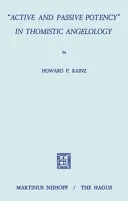
“Active and Passive Potency” in Thomistic Angelology
 79
79

“Active and Passive Potency” in Thomistic Angelology
Kainz’s "Active and Passive Potency" in Thomistic Angelology offers a granular look at Aquinas’s complex thought on angelic beings. The strength lies in its precise deconstruction of terminology, particularly the careful distinction Aquinas makes between "angel" and "separate substance." Kainz excels at showing how these semantic choices reflect deeper metaphysical commitments. A potential limitation for some readers might be the sheer density of scholastic argument; this is not introductory material. The section discussing Aquinas’s preference for "angel" in the *Summa Theologiae* versus "separate substance" in the *Summa contra Gentiles* is particularly illuminating, revealing subtle shifts in argumentative strategy and audience. It is a work that demands close attention but rewards it with clarity on a niche but significant theological-philosophical topic. Kainz delivers a focused, scholarly analysis that clarifies a specific aspect of Thomistic metaphysics.
📝 Description
79
H.P. Kainz's 2012 book meticulously dissects Aquinas's metaphysical framework for angelic existence.
H.P. Kainz's "Active and Passive Potency" in Thomistic Angelology, published in 2012, offers a detailed examination of Thomas Aquinas's metaphysical ideas about angels. The book focuses on Aquinas's concept of "separate substances" and the philosophical language he used to describe beings beyond physical bodies and the divine mind. This work is not a devotional text but a scholarly analysis of a specific problem in medieval scholastic thought.
It is aimed at academics in medieval philosophy, theologians focused on angelology, and students of Aquinas. Readers should have some familiarity with scholastic terms and Aristotelian metaphysics. The book also serves those studying the history of metaphysics and ideas about non-material existence, as well as historians of science and philosophy interested in 13th-century intellectual life.
This study engages with the complex scholastic tradition that sought to reconcile Aristotelian philosophy with Christian theology, particularly concerning spiritual beings. It examines how Thomas Aquinas, a central figure in 13th-century thought, developed his concepts of angels and "separate substances." The book situates Aquinas's unique approach within the intellectual currents of his time, which included Neoplatonic influences alongside Aristotelian categories, highlighting debates over the nature of spiritual entities.
💡 Why Read This Book?
• Gain a precise understanding of "active and passive potency" as applied to angelic beings, a core concept in Thomistic metaphysics, as detailed in Kainz's analysis. • Grasp the nuanced distinction between Aquinas's use of "angel" and "separate substance," key terminological insights for understanding his angelology, as explored in the text. • Explore the 13th-century intellectual context surrounding Aquinas's angelology, including the influence of Aristotelianism and Neoplatonism, providing historical depth to the study.
⭐ Reader Reviews
Honest opinions from readers who have explored this book.
❓ Frequently Asked Questions
What is the primary focus of "Active and Passive Potency" in Thomistic Angelology?
The book primarily focuses on H.P. Kainz's rigorous examination of how Thomas Aquinas conceptualized angelic existence through the philosophical lenses of "active and passive potency" and distinctions between "angel" and "separate substance" within his theological works.
When was "Active and Passive Potency" in Thomistic Angelology first published?
The work by H.P. Kainz was first published on December 6, 2012, making it a relatively recent scholarly contribution to the study of Thomistic thought.
What specific works by Thomas Aquinas are central to Kainz's analysis?
Kainz's analysis heavily references Thomas Aquinas's *Summa Theologiae*, *Summa contra Gentiles*, and *De substantiis separatis*, examining Aquinas's varying terminology and arguments within these foundational texts.
Who would benefit most from reading this book?
Scholars of medieval philosophy, theologians specializing in angelology, and advanced students of Thomas Aquinas's metaphysics and theological system will find this book particularly beneficial.
Does the book discuss the historical reception of Aquinas's ideas on angels?
While the book centers on Aquinas's own arguments, it provides the necessary historical context of 13th-century scholasticism and intellectual currents, implicitly addressing the milieu in which these ideas were formed and debated.
What is the significance of the terms "active potency" and "passive potency" in Thomistic angelology?
These terms, as explored by Kainz, describe how Aquinas viewed angels: possessing an inherent capacity for action (active potency) and being dependent on God for their existence and nature (passive potency), thereby defining their created, spiritual being.
🔮 Key Themes & Symbolism
Angelology and Metaphysics
This work explores the metaphysical architecture of angelic existence as conceived by Thomas Aquinas. It scrutinizes concepts like "separate substances" and "angels," exploring how Aquinas employed Aristotelian categories of "active and passive potency" to articulate the nature of beings that are neither purely material nor divine. The discussion illuminates the philosophical tools used to understand spiritual entities, their operations, and their place within Aquinas's comprehensive system, bridging philosophy and theology.
Thomistic Terminology
A significant focus is placed on the precise language Thomas Aquinas utilized when discussing angelic beings. Kainz examines the strategic preference for "angel" in works like the *Summa Theologiae* versus "separate substance" in the *Summa contra Gentiles*. This analysis reveals how subtle shifts in terminology reflect Aquinas's intent, audience, and the specific philosophical problems he was addressing, offering insight into scholarly communication in the 13th century.
Active vs. Passive Potency
The core of the book dissects the application of "active and passive potency" to angelic intellects and wills. It investigates how these concepts define angels as created, spiritual entities that possess inherent capacities for action (active) yet are wholly dependent on God for their existence and essence (passive). Understanding this dynamic is crucial for grasping Aquinas's view of creaturely being and divine causality.
13th Century Intellectual Landscape
Kainz situates Aquinas's angelology within the broader intellectual currents of the 13th century. The work implicitly engages with the synthesis of Aristotelian philosophy and Christian doctrine that characterized scholasticism, as well as potential influences from Neoplatonism. By examining Aquinas's specific contributions, the book sheds light on the philosophical debates of this important era.
💬 Memorable Quotes
Direct passages from the work, attributed to the author.
“St. Thomas generally uses the term "angel", in preference to "separate substance"; while in works with a less explicit theological intent... he generally prefers the term "separate substance".”
— This observation highlights a key analytical point: Aquinas's choice of terminology was not arbitrary but reflected the context and purpose of his writing, indicating a deliberate strategy in presenting his ideas on angelic beings.
“It is interesting to note that, in an expressly theological treatise such as the Summa theologiae, St. Thomas generally uses the term "angel", in preference to "separate substance".”
— This points to the inherent theological nature of the *Summa Theologiae*, suggesting that when directly addressing divine matters and angelic orders within a theological framework, Aquinas favoured the more common and religiously resonant term "angel."
“But at any rate there is little doubt that the two terms, "separate substance" and "angel" have...”
— This incomplete sentence from the blurb suggests a core thesis of the book: despite different usages, the terms "separate substance" and "angel" are fundamentally intertwined in Aquinas's thought, referring to the same category of spiritual beings.
“A. "SEPARATE SUBSTANCES" AND lOR" ANGELS"?”
— This framing suggests the book directly confronts the potential ambiguity or overlap between these two key terms in Aquinas's writings, posing the central question that Kainz's analysis seeks to resolve.
“The work explores how Aquinas applied concepts of active and passive potency to angelic beings.”
— This interpretation signifies the book's central philosophical contribution: detailing the application of specific metaphysical principles, namely "active and passive potency," to understand the nature and operation of angels within Aquinas's system.
🌙 Esoteric Significance
Tradition
While primarily a work of academic philosophy and theology, "Active and Passive Potency" touches upon themes relevant to Western esoteric traditions that engage with angelic hierarchies and non-corporeal intelligences. It operates within the lineage of Scholasticism, which, though mainstream theology, provided the metaphysical bedrock upon which later esoteric systems built or reacted. It doesn't belong to Hermeticism or Kabbalah directly but offers foundational definitions of spiritual entities.
Symbolism
The core "symbolism" here is not visual but conceptual. The terms "active potency" and "passive potency" themselves function as symbolic representations of inherent capacities and divine dependence. "Separate substance" symbolizes an entity existing apart from matter, a concept crucial in many mystical cosmologies. "Angel" symbolizes a messenger or intermediary, a motif pervasive across spiritual traditions, representing divine will and knowledge.
Modern Relevance
Contemporary thinkers in process philosophy, analytic theology, and even some branches of speculative metaphysics might find Kainz's detailed analysis of Aquinas's potency concepts relevant. For esoteric practitioners, understanding these precise Scholastic definitions of angelic nature can provide a more rigorous philosophical framework for contemplating angelic interaction and hierarchy, moving beyond purely symbolic or devotional interpretations.
👥 Who Should Read This Book
• Students of Medieval Philosophy: Those studying the works of Thomas Aquinas and the broader scholastic movement will gain a precise understanding of his angelological arguments. • Comparative Theologians: Researchers interested in how different religious traditions conceptualize non-corporeal beings and divine intermediaries will benefit from this detailed analysis. • Metaphysical Inquirers: Individuals exploring the philosophical nature of existence, consciousness, and non-material reality will find valuable insights into historical attempts to define such concepts.
📜 Historical Context
H.P. Kainz's "Active and Passive Potency" engages with the intellectual ferment of the 13th century, a period defined by the scholastic project of harmonizing Aristotelian philosophy with Christian theology. Thomas Aquinas, the central figure, was active in this era, producing seminal works like the *Summa Theologiae* (c. 1265–1274) and *Summa contra Gentiles* (c. 1259–1265). Kainz's study situates Aquinas's angelology within this milieu, contrasting Aquinas's approach with earlier and contemporary discussions of "separate substances," which often carried strong Neoplatonic influences. The work implicitly addresses how Aquinas differentiated his system, particularly through his precise use of philosophical terminology like "active and passive potency," to define spiritual beings. This scholarly exploration contributes to understanding the complex reception and integration of Aristotelian metaphysics within medieval Christian thought.
📔 Journal Prompts
The distinction between "angel" and "separate substance" in Aquinas's thought.
Applying "active and passive potency" to non-material beings.
Aquinas's use of Aristotelian terminology for spiritual entities.
The intellectual context of 13th-century scholastic angelology.
How does Aquinas's concept of angelic "potency" inform our understanding of created spiritual existence?
🗂️ Glossary
Separate Substance
In Thomistic philosophy, a being that exists independently of physical matter. Angels are considered "separate substances" because they are pure intellects, lacking physical bodies.
Active Potency
The inherent capacity of a being to perform actions or to change, driven by its own nature. Applied to angels, it refers to their ability to think, will, and act according to their angelic essence.
Passive Potency
The capacity of a being to be acted upon or to receive existence and form from another. For angels, this signifies their dependence on God for their very being and nature.
Angel
In Thomistic theology, a spiritual, intellectual creature that serves as a messenger or intermediary between God and humanity. Aquinas often uses this term in theological contexts.
Summa Theologiae
Thomas Aquinas's monumental theological work, intended as a comprehensive summary of theological knowledge, organized systematically and employing detailed philosophical arguments.
Summa contra Gentiles
Another major work by Aquinas, written for a broader audience (including non-Christians), which uses philosophical reasoning to defend Christian doctrine, often focusing on arguments accessible through reason alone.
De substantiis separatis
A treatise by Thomas Aquinas specifically dedicated to the nature of "separate substances" (angels), exploring their existence, properties, and operations.