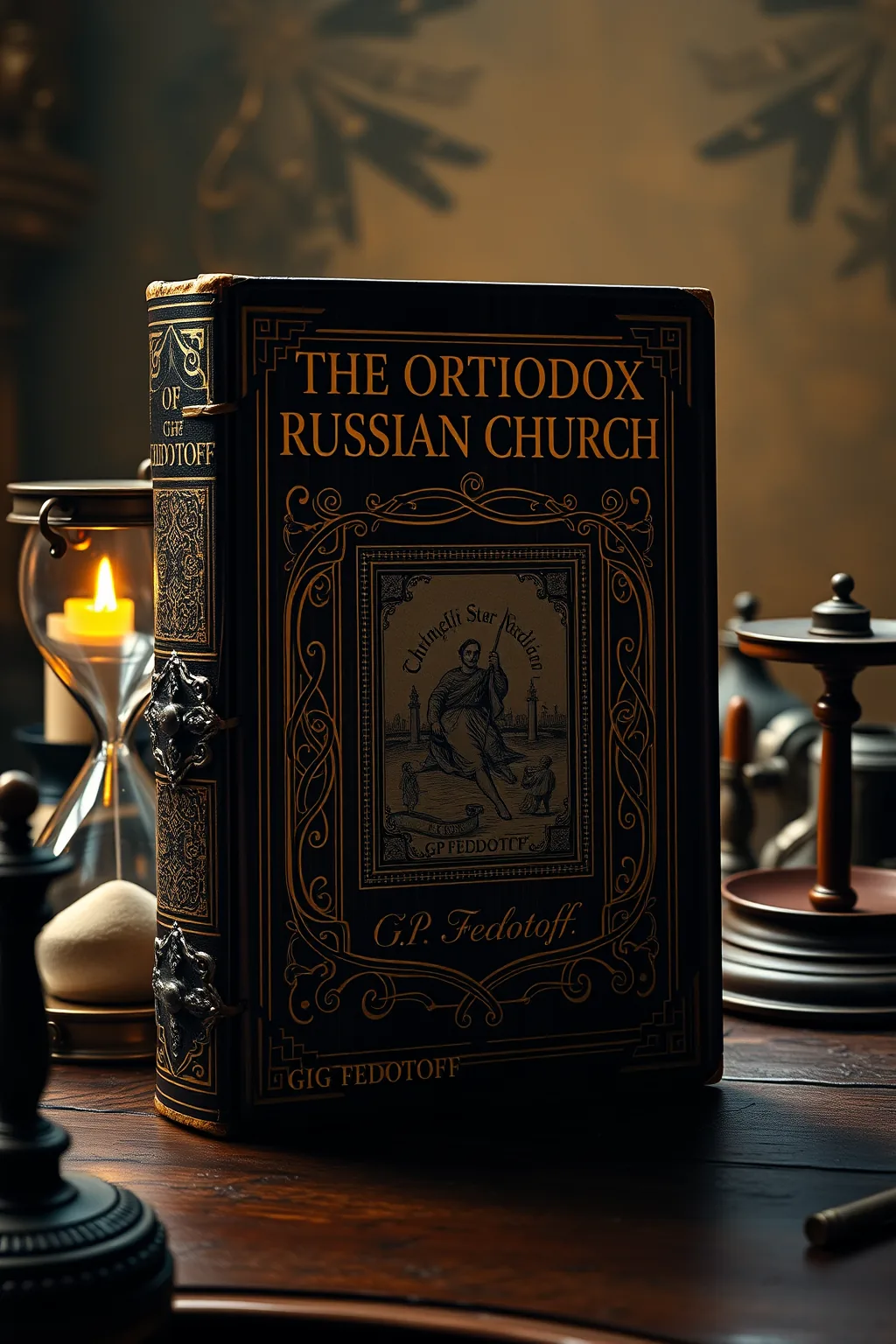
The Orthodox Russian Church Since The Revolution GP Fedotoff 1928 State Religion nwo illuminati freemasons
 81
81

The Orthodox Russian Church Since The Revolution GP Fedotoff 1928 State Religion nwo illuminati freemasons


The Orthodox Russian Church Since The Revolution by G.P. Fedotoff is a fascinating exploration of the occult and political forces that shaped the Russian Orthodox Church post-revolution. Published in 1928, this book offers a unique perspective on how Freemasonry and other secret societies influenced religious institutions for political gain. Fedotoff's detailed analysis of the historical context and the hidden agendas of these groups provides valuable insights for modern esoteric seekers. The book is well-researched and presents a compelling argument for the role of Freemasonry as a state religion in the West. It is a must-read for anyone interested in the intersection of religion, politics, and the occult. This text is particularly relevant today as it sheds light on the enduring influence of these secret societies on contemporary religious practices.
📝 Description
81
GP Fedotoff's 1928 book examines the Orthodox Russian Church's fate after the revolution, linking it to state power and Freemasonry.
Published in 1928, GP Fedotoff's work investigates the condition of the Orthodox Russian Church following the revolution. Fedotoff argues that the church became subservient to the state, a situation he likens to the Anglican Church's relationship with its own government. He posits that Freemasonry, in effect, replaced the church as the true state religion in Russia. The book scrutinizes the interplay between religious institutions, political authority, and clandestine societies.
This text draws connections between ancient traditions and contemporary alleged conspiracies, suggesting deeper symbolic meanings within religious structures. It appeals to those interested in hidden knowledge and the historical underpinnings of modern secret societies. Fedotoff's analysis offers philosophical reflections and historical accounts concerning the church's transformation.
This book engages with esoteric traditions by analyzing religious and political structures through a lens of hidden influence and symbolic meaning. It aligns with currents of thought that seek to uncover secret hierarchies and the manipulation of public institutions by clandestine groups. Fedotoff's work fits within a tradition of examining the occult dimensions of power, suggesting that overt religious forms mask deeper, less visible forces at play in shaping society and belief systems. It connects the fate of a major religious body to broader patterns of secret society activity.
💡 Why Read This Book?
Reading The Orthodox Russian Church Since The Revolution today offers readers a deeper understanding of the historical and occult influences that continue to shape religious and political landscapes. It provides valuable insights into the role of Freemasonry and other secret societies in manipulating religious institutions for political gain. This knowledge is crucial for modern esoteric seekers who wish to understand the hidden agendas that drive contemporary events. By exploring the historical context of the Russian Revolution, readers can gain a broader perspective on the enduring impact of these influences on modern religious practices.
⭐ Reader Reviews
Honest opinions from readers who have explored this book.
❓ Frequently Asked Questions
What is the main focus of The Orthodox Russian Church Since The Revolution?
The main focus of this book is the occult and political influences on the Russian Orthodox Church following the Russian Revolution, particularly the role of Freemasonry and other secret societies.
Who should read this book?
This book is ideal for readers interested in esoteric studies, the history of the Russian Revolution, and the intersection of religion and politics.
What makes this book relevant today?
This book provides valuable insights into the enduring influence of secret societies on religious and political landscapes, making it relevant for understanding contemporary events.
🔮 Key Themes & Symbolism
The State Religion of Freemasonry
Fedotoff reveals how Freemasonry, guided by Talmudic and Kabbalistic principles, became the true state religion of the West. This theme studies the occult symbolism and hidden knowledge that underpins this powerful secret society.
The Orthodox Church as a State Tool
This book explores how the Orthodox Russian Church, like the Anglican Church, was transformed into an instrument of the state. It examines the esoteric and mystical forces that shaped this transformation and its implications for religious and political power.
The Influence of the Russian Revolution
The Russian Revolution was an important event that reshaped the spiritual range of Russia. This theme examines the occult and mystical influences that emerged from the revolution and their enduring impact on the Orthodox Church and Freemasonry.
💡 Key Ideas
Editorial paraphrase of the work's core concepts — not direct quotes.
The real state religion of the West is Freemasonry.
This quote underscores the book's central thesis, revealing the hidden power of Freemasonry in shaping modern institutions.
Like the Anglican Church, the Orthodox Russian Church is a tool of the state.
This line highlights the book's exploration of how religious institutions can be manipulated for political ends.
The true state religion of the West is Freemasonry and that's a tool of the talmudists/kabbalists.
This quote studies the occult influences behind Freemasonry, revealing its connection to ancient esoteric traditions.
The Orthodox Russian Church since the judaeo-masonic Russian Revolution is only a tool of the state.
This passage emphasizes the book's focus on the occult and mystical forces that shaped the post-revolutionary range of Russia.
The real state religion of the West is Freemasonry and that's a tool of the talmudists/kabbalists.
This quote underscores the book's central thesis, revealing the hidden power of Freemasonry in shaping modern institutions.
🌙 Esoteric Significance
Tradition
This book belongs to the Hermetic and Kabbalistic traditions, exploring the hidden knowledge and occult symbolism that underpin modern institutions. It studies the mystical threads that connect ancient esoteric teachings to contemporary political and religious dynamics.
Symbolism
Key symbols in this book include the cross, the all-seeing eye, and the square and compass. These symbols are examined in the context of Freemasonry and their role in shaping the spiritual range of Russia and the West.
Modern Relevance
This book remains relevant today as it offers insights into the hidden influences of secret societies on global events. Modern practitioners of the occult and mystical arts can use its teachings to deepen their understanding of the esoteric forces that shape our world.
👥 Who Should Read This Book
Beginners in occult studies will find this book accessible and enlightening, providing a solid foundation for understanding the deeper, esoteric influences on modern institutions. Scholars of Freemasonry and the occult will appreciate its in-depth analysis and historical context. Spiritual seekers will benefit from its exploration of the mystical threads that connect ancient traditions to contemporary events. Practitioners of the occult and mystical arts will find it a valuable resource for deepening their understanding and practice.
📜 Historical Context
Published in 1928, 'The Orthodox Russian Church Since The Revolution' provides a unique perspective on the post-revolutionary range of Russia. The Russian Revolution of 1917 marked a significant shift in the country's political and spiritual dynamics, leading to the transformation of the Orthodox Church into a tool of the state. This book explores the occult and mystical influences that emerged from this period, revealing how Freemasonry and other secret societies played an important role in shaping the new religious and political order. Its insights continue to resonate today, offering a deeper understanding of the hidden forces that drive global events.
📔 Journal Prompts
How does the transformation of the Orthodox Church into a state tool reflect the broader influences of Freemasonry?
What are the key occult symbols in this book and how do they relate to modern-day institutions?
In what ways does the Russian Revolution continue to influence the spiritual range of Russia and the West?
How can the insights from this book be applied to contemporary political and religious dynamics?
What are the mystical threads that connect ancient esoteric traditions to modern-day events?
🗂️ Glossary
Freemasonry
A secret society with a complex system of symbols and rituals, often associated with occult and mystical themes.
Talmudic
Relating to the Talmud, a central text of Rabbinic Judaism, often associated with esoteric and mystical teachings.
Kabbalistic
Relating to Kabbalah, a school of thought in Jewish mysticism, known for its esoteric and mystical interpretations of the scriptures.
Esoteric
Relating to knowledge that is accessible only to a small group of people, often involving mystical or occult themes.
Occult
Relating to mysterious, supernatural, or secret knowledge, often involving the study of hidden powers and influences.
This book appears in 2 collections
🔮 Readers Also Liked
Browse all →








From the “Secret Societies” Collection
View all →



More Free Freemasonry & Secret Societies Books
View all →