Tai Chi
 75
75

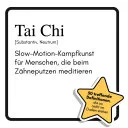
Tai Chi
Lily Müller’s "Tai Chi" approaches its subject with a refreshing irreverence. Instead of the usual solemn pronouncements, Müller offers 50 definitions that playfully dissect the essence of this ancient practice. The book’s strength lies in its ability to make complex ideas like the Dantian or Silk Reeling accessible and, dare I say, fun. It’s a welcome antidote to overly academic or dogmatic texts. However, this very lightness, while charming, sometimes means deeper philosophical explorations are only sketched. For instance, the discussion on Chi, while witty, could benefit from more detailed elaboration on its energetic mechanics. The passage comparing Zen to tooth-brushing is a prime example of the book’s ingenious, albeit brief, connections. Müller’s work is a delightful primer, particularly for those intimidated by the genre.
📝 Description
75
Lily Müller's 2025 book introduces Tai Chi through accessible definitions and humorous explanations.
This book reintroduces Tai Chi not just as a martial art, but as a system of mindful movement. Müller uses clear, often funny, definitions to explain its philosophy and practice. The work connects Tai Chi's deliberate motions to daily activities, suggesting that everyday tasks can embody its core principles.
It breaks down key concepts and terminology for newcomers. The book aims to make Tai Chi understandable for people interested in Eastern philosophies and mind-body practices. It is especially helpful for those who find traditional explanations too serious or intimidating. Readers who prefer a lighthearted approach to complex topics will find this book engaging. It’s for anyone who believes slow movement holds more meaning than it appears.
Müller acknowledges Tai Chi's history, tracing its lineage through Chinese martial arts. The book discusses its development for health, longevity, and spiritual growth, separating it from purely combative styles. While a modern publication, it references historical figures and ideas that have shaped Tai Chi over centuries. These ancient practices are presented within a contemporary, easy-to-understand discussion, placing Tai Chi alongside other mind-body disciplines.
This work situates Tai Chi within the Taoist tradition, emphasizing its roots in internal alchemy and cultivation of vital energy (Chi). It connects the practice to concepts of balance, harmony, and the flow of life force, aligning with broader esoteric ideas about aligning the body, mind, and spirit with natural principles. The book bridges the gap between ancient philosophical concepts and modern understanding of mind-body integration, treating the physical form as a vehicle for spiritual development.
💡 Why Read This Book?
• You'll learn how the concept of 'Chi' is explained through humorous, concrete analogies, offering a unique perspective beyond standard energy work texts, specifically referencing the 'Chi Ball' definition. • You will gain an understanding of specific Tai Chi forms like 'Silk Reeling' and 'Crane's Beak Hand' presented with accessible, non-intimidating language, making advanced techniques approachable. • You can discover the philosophical underpinnings of Tai Chi, such as the 'Dantian' as an energetic core, through witty definitions that reframe esoteric concepts for modern practitioners first published in 2025.
⭐ Reader Reviews
Honest opinions from readers who have explored this book.
❓ Frequently Asked Questions
What is the main focus of Lily Müller's book on Tai Chi?
The book focuses on demystifying Tai Chi through 50 humorous definitions, presenting it as a 'slow-motion-kung fu' applicable to everyday life. It explores concepts like Chi, Dantian, and specific movements with a lighthearted approach.
Who would benefit most from reading 'Tai Chi: Slow-Motion-Kampfkunst für Menschen, die beim Zähneputzen meditieren'?
Individuals new to Tai Chi or interested in Eastern philosophies who prefer a non-traditional, humorous introduction. It's also for those who find conventional explanations daunting and seek a more relatable entry point.
What are some specific Tai Chi terms explained in the book?
The book explains terms such as 'Silk Reeling,' 'Crane's Beak Hand,' 'Dantian,' and 'Chi Ball.' These are presented within definitions designed to make the practice more accessible and understandable.
When was the book 'Tai Chi' by Lily Müller first published?
The book 'Tai Chi' by Lily Müller was first published on July 9, 2025. This modern publication date places it within contemporary discussions of esoteric practices.
Does the book explain the martial aspects of Tai Chi?
While acknowledging Tai Chi's martial art roots, the book primarily emphasizes its meditative, philosophical, and health-promoting aspects. It frames the practice as 'slow-motion-kung fu' with a focus on internal cultivation.
What is the unique selling proposition of this Tai Chi book?
Its unique angle is the use of 50 humorous definitions to deconstruct Tai Chi, linking it playfully to everyday activities like brushing teeth. This approach aims to make the esoteric accessible and entertaining.
🔮 Key Themes & Symbolism
Everyday Esotericism
This work champions the idea that profound spiritual and energetic principles, like those found in Tai Chi, are not confined to formal practice but can permeate everyday life. It suggests that activities as mundane as brushing one's teeth can be approached with the same mindfulness and energetic awareness cultivated in Tai Chi. By redefining concepts and linking them to relatable actions, the book invites readers to find the 'Zen' in the ordinary, suggesting that the practice of Tai Chi is less about specific postures and more about a cultivated state of being accessible at all times.
Deconstructing Chi
The concept of 'Chi' (vital energy) is central, but Müller tackles it with a playful skepticism towards overly mystical interpretations. The book aims to clarify Chi by presenting it through concrete, albeit humorous, definitions and analogies. It explores how Chi manifests in movements like 'Silk Reeling' and how practitioners learn to sense and direct it, for instance, in the creation of a 'Chi Ball.' The goal is to make the understanding of vital energy tangible and less abstract, bridging the gap between esoteric theory and practical experience.
Humor as a Pedagogical Tool
Müller employs humor extensively as a method for teaching complex esoteric concepts. The book's structure, featuring 50 definitions, allows for bite-sized explorations of Tai Chi terminology and philosophy. This lighthearted approach serves to disarm potential readers who might be put off by the seriousness often associated with martial arts and spiritual disciplines. By turning established terms and poses upside down with witty observations, the book makes learning engaging and memorable, encouraging a less rigid and more intuitive understanding of Tai Chi.
The Art of Slow Motion
The book frames Tai Chi as a 'slow-motion-kung fu,' highlighting the deliberate and controlled nature of its movements. This emphasis on slowness is presented not as a limitation but as a pathway to deeper awareness, balance, and energetic cultivation. Concepts like 'Dantian' are explained in relation to the body's center of gravity and energy storage, underscoring how slow, precise movements enhance internal connection. The 'slow motion' aspect is key to unlocking the meditative and therapeutic benefits of the practice.
💬 Memorable Quotes
Direct passages from the work, attributed to the author.
“Wie viel Zen steckt eigentlich im Zähneputzen – und was hat das mit Kampfkunst zu tun?”
— This opening question from the original blurb perfectly captures the book's unique angle: finding profound principles in mundane activities and connecting them to the practice of Tai Chi.
“Silk Reeling to Crane’s Beak Hand”
— These specific movement names highlight the book's approach: dissecting identifiable techniques within Tai Chi and explaining their essence through accessible, often surprising, definitions.
“Ob legendäre Meister, rätselhafte Tier-Posen”
— This phrase suggests the book covers both the historical figures and iconic postures associated with Tai Chi, promising a broad yet approachable overview of the art's elements.
“Hier wird die Welt des Tai Chi mit einem Augenzwinkern entmystifiziert und liebevoll auf den Kopf gestellt.”
— This statement from the original blurb emphasizes the book's playful, deconstructive method, aiming to make Tai Chi less intimidating by humorously challenging conventional perceptions.
“Dantian bis Chi Ball”
— By listing core concepts like Dantian and Chi Ball, the book signals its intent to explain fundamental energetic principles of Tai Chi in a way that is understandable and perhaps even fun.
🌙 Esoteric Significance
Tradition
While not strictly adhering to a single lineage, this work engages with the Taoist principles inherent in Tai Chi, particularly its emphasis on balance, flow, and the cultivation of 'Chi.' It departs from rigid traditional interpretations by employing modern, often secular, language and humor. The book positions Tai Chi within a broader spectrum of mind-body practices that seek energetic harmony and personal well-being, aligning with contemporary New Age and self-help movements that draw eclectically from Eastern traditions.
Symbolism
Key symbols include the 'Dantian,' representing the body's energetic center and a locus of internal power, crucial in Taoist internal alchemy. 'Chi' itself functions as a primary symbol for vital life force, the unseen energy that animates all things and is manipulated through Tai Chi practice. Specific postures like the 'Crane's Beak Hand' symbolize grace, precision, and a connection to natural forms, illustrating the integration of observation and martial application within the practice.
Modern Relevance
This work speaks to contemporary wellness trends and the growing interest in accessible mindfulness practices. Thinkers and practitioners in fields like somatic psychology, embodied cognition, and even secularized meditation movements find value in its approach. It serves as a bridge for those curious about traditional practices like Tai Chi but are hesitant due to perceived complexity or cultural barriers, offering a gateway through humor and relatable analogies.
👥 Who Should Read This Book
• Beginners to Tai Chi or mind-body practices seeking an unintimidating and humorous introduction to its core concepts and terminology. • Individuals interested in Eastern philosophies who appreciate witty, unconventional explanations of complex subjects, rather than purely academic or instructional texts. • Practitioners of other contemplative disciplines who wish to explore the combination of martial art, meditation, and health cultivation that Tai Chi offers, presented in a fresh, modern light.
📜 Historical Context
Published in 2025, Lily Müller's 'Tai Chi' emerges in an era where interest in holistic health, mindfulness, and Eastern philosophies continues to grow. It arrives decades after the widespread popularization of Tai Chi in the West, which began in earnest in the mid-20th century, often presented through more traditional, serious martial arts or therapeutic lenses. Müller's work distinguishes itself by adopting a humorous, definition-based approach, contrasting with the more academic texts or instructional manuals prevalent in the field. While specific reception events for this 2025 publication are not detailed here, its style offers a modern counterpoint to the earnestness of figures like Dr. Paul Lam, a prominent proponent of Tai Chi for health, suggesting a broader spectrum of discourse around the practice.
📔 Journal Prompts
The comparison of Zen to brushing teeth: What mundane activity can you infuse with mindful intention?
Reflecting on 'Silk Reeling': How can you apply the principle of continuous, flowing energy to a task you find difficult?
The 'Dantian' as a core energetic center: Where do you feel your body's primary energy resides during moments of calm?
Defining 'Chi Ball': How does the concept of directing energy change your perception of physical exertion?
Humorous definitions: Identify a concept in your life that could benefit from a playful, 'turned on its head' redefinition.
🗂️ Glossary
Chi
The fundamental concept of vital life force or energy that flows through all living beings and the universe, central to many Eastern philosophies and practices like Tai Chi.
Dantian
An energy center in the body, often located in the lower abdomen, considered a reservoir and focal point for vital energy (Chi) in practices like Tai Chi and Qigong.
Silk Reeling
A fundamental Tai Chi exercise and principle that involves developing circular, spiraling movements of the joints and body, mimicking the unwinding of silk thread.
Crane's Beak Hand
A specific hand posture in Tai Chi, characterized by a sharp, pointed finger formation resembling a crane's beak, often used in dynamic or defensive movements.
Chi Ball
A conceptual exercise in Tai Chi and Qigong where practitioners visualize and gather energy into a ball, often in the Dantian area, to cultivate and direct Chi.
Zen
A school of Mahayana Buddhism emphasizing meditation and intuition over scripture, often associated with mindfulness, simplicity, and direct experience of reality.
Slow-Motion-Kampfkunst
Literally 'slow-motion martial art,' this phrase describes Tai Chi's unique characteristic of performing martial techniques at a deliberately slow and controlled pace.