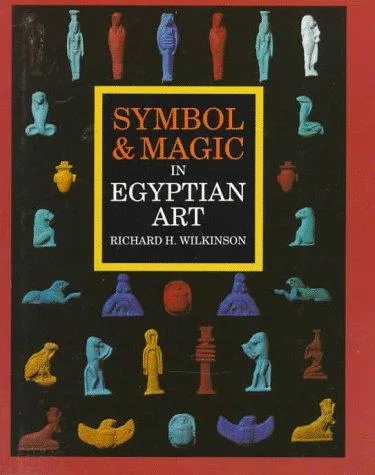
Symbol & Magic in Egyptian Art
 82
82

Symbol & Magic in Egyptian Art
Richard H. Wilkinson's "Symbol & Magic in Egyptian Art" is a dense, scholarly exploration that bypasses the sensational for the substantive. Rather than offering speculative interpretations, the work rigorously examines the iconographic evidence. Its strength lies in its systematic cataloging of symbols and their contextual usage, particularly its detailed explanation of animal deities and their associated attributes. For instance, the section on the various manifestations of Horus, from the kingly falcon to the protective Wadjet eye, is particularly illuminating. A potential limitation for some readers might be its academic tone; it prioritizes detailed analysis over accessibility for the casual enthusiast. However, for those committed to understanding the intricate symbolic grammar of ancient Egypt, this book provides an indispensable, well-researched foundation. It is a critical reference for any serious student of Egyptian iconography.
📝 Description
82
Richard H. Wilkinson's 1994 book explains the magical intent behind Egyptian art.
Published in 1994, "Symbol & Magic in Egyptian Art" examines the magical and symbolic meanings embedded within ancient Egyptian art. The work moves beyond simple iconographic identification to understand how symbols functioned in religious rituals, funerary practices, and daily life. Wilkinson's study provides a window into the worldview of the ancient Egyptians through their artistic creations. The book addresses the representation of deities through animal forms, like Horus and Anubis, and the potent meanings of objects such as the ankh, djed pillar, and scarab. It also analyzes cosmological diagrams and funerary scenes found in tombs and temples, clarifying their purpose in ensuring rebirth and maintaining cosmic order. This volume is a resource for Egyptologists, art historians, and students of ancient religions. It also benefits those interested in the origins of Western occult symbols, many of which trace back to Egyptian motifs.
This book addresses the magical symbolism in ancient Egyptian art, a tradition that has long influenced Western esoteric thought. Many practices and symbolic systems within Western occultism, including some forms of ceremonial magic and Qabalah, draw direct inspiration from Egyptian motifs. Wilkinson's work details specific symbols and their intended effects within the Egyptian context, which provides a historical and conceptual basis for understanding their later adoption and adaptation in esoteric traditions. It clarifies the original magical intent behind figures like Horus and concepts like cosmic order, offering a scholarly perspective on the roots of these esoteric currents.
💡 Why Read This Book?
• Understand the foundational symbolism behind many Western esoteric traditions, as the book details the meaning of concepts like the ankh and the scarab beetle, which have been adopted and adapted through centuries. • Gain insight into the ancient Egyptian worldview by exploring how their art served not just as decoration but as a crucial tool for religious ritual and magical practice, as evidenced in tomb art. • Decipher the complex iconography of deities and kingship by learning to recognize specific animal forms and their divine associations, such as the falcon representing Horus, a central figure in their pantheon.
⭐ Reader Reviews
Honest opinions from readers who have explored this book.
❓ Frequently Asked Questions
What is the primary focus of "Symbol & Magic in Egyptian Art"?
The book's primary focus is on deciphering the magical and symbolic meanings embedded within ancient Egyptian art, examining how these visual elements functioned within religious, funerary, and daily life contexts.
Who is the author, Richard H. Wilkinson, and what is his expertise?
Richard H. Wilkinson is a respected Egyptologist whose work centers on Egyptian religion, mythology, and iconography. His expertise lies in interpreting the complex symbolism of ancient Egyptian civilization.
When was "Symbol & Magic in Egyptian Art" first published?
The book "Symbol & Magic in Egyptian Art" was first published in 1994, contributing to scholarship on Egyptian iconography during that period.
Does the book cover hieroglyphic writing systems in detail?
While the book discusses symbols found in Egyptian art, its main emphasis is on the magical and symbolic meanings of images, not a comprehensive study of hieroglyphic script itself.
What kind of symbols are discussed in the book?
The book discusses a wide array of symbols, including divine representations (like animal deities), amuletic objects (such as the ankh and djed pillar), and cosmological diagrams found in temples and tombs.
Is this book suitable for beginners interested in ancient Egypt?
While accessible to motivated beginners, the book's depth and academic approach make it particularly valuable for students, scholars, and those with a serious, focused interest in Egyptian symbolism and religion.
🔮 Key Themes & Symbolism
Divine Animal Forms
The work meticulously details the symbolic significance of animals in Egyptian art, illustrating how creatures like the falcon (Horus), jackal (Anubis), and cat (Bastet) were not merely depicted but imbued with divine essence and specific attributes. This section explores how these animal forms served as visual shorthand for complex theological concepts and divine powers, integral to understanding the Egyptian pantheon and its relationship with the natural world.
Amuletic Objects and Their Power
Central to Egyptian magical practice were potent symbols like the ankh (life), the djed pillar (stability), and the was scepter (power). Wilkinson explains their visual vocabulary and their application in both religious contexts and personal adornment, highlighting their function as conduits of divine protection and cosmic order. The book demonstrates how these objects were believed to actively influence events and ensure well-being.
Cosmology and the Afterlife
This theme examines the symbolic representations of the Egyptian cosmos and the journey into the afterlife. Through analysis of tomb paintings and temple reliefs, the book deciphers scenes of judgment, divine judgment, and the journey of the sun god Ra, revealing the intricate belief system surrounding death and rebirth. It showcases how art served as a crucial map for working through the underworld and achieving eternal life.
The Symbolism of Kingship
The book explores how art reinforced the divine authority of the pharaoh. It discusses the symbolic regalia, titles, and iconography associated with kingship, often linking the ruler directly to the gods, particularly Horus. This section reveals how artistic representations were used to legitimize and perpetuate the pharaoh's role as the intermediary between the divine and human realms.
💬 Memorable Quotes
Direct passages from the work, attributed to the author.
“The iconography of the dead was intended to ensure their survival and rebirth.”
— This statement highlights a core function of Egyptian art: its active, magical role in securing a favorable afterlife. It suggests that funerary art was not merely commemorative but a vital tool for transforming the deceased's existence.
“Animal forms were frequently used to represent deities.”
— This simple observation underscores the anthropomorphic and zoomorphic nature of Egyptian religion, where animal characteristics were seen as direct manifestations of divine power and attributes, allowing for visual identification of gods.
“The ankh symbol represents life.”
— This concisely explains the fundamental meaning of one of ancient Egypt's most recognizable symbols. It points to the symbol's importance in contexts related to both earthly existence and eternal life.
“Symbols in tombs were meant to provide protection.”
— This interpretation emphasizes the apotropaic function of Egyptian art within funerary contexts. The imagery was believed to actively ward off malevolent forces and ensure the deceased's safe passage.
“The scarab beetle was associated with rebirth and the morning sun.”
— This links the scarab beetle, a common motif, to powerful concepts of regeneration and the daily cycle of the sun god Ra, illustrating how natural phenomena were integrated into religious symbolism.
🌙 Esoteric Significance
Tradition
This work aligns with the Hermetic and Theosophical traditions by exploring ancient symbolic systems as keys to understanding deeper spiritual realities. It departs from purely academic Egyptology by emphasizing the magical efficacy and esoteric meaning inherent in Egyptian art, viewing it as a living tradition of symbolism rather than solely historical artifacts.
Symbolism
The book illuminates symbols like the ankh, representing eternal life and divine breath, and the djed pillar, symbolizing stability and Osiris's backbone. It also details the many-sided meanings of animal deities, such as the falcon god Horus, embodying kingship and protection, and the jackal god Anubis, guiding souls through the underworld.
Modern Relevance
Contemporary practitioners of Western esotericism, including those involved in ceremonial magic and comparative mythology, draw upon Wilkinson's work to understand the roots of many occult symbols. It informs modern interpretations of Egyptian deities and their associated powers within magical systems and spiritual practices.
👥 Who Should Read This Book
• Students of comparative religion and mythology seeking to understand the visual language and belief systems of ancient civilizations. • Practitioners of Western esoteric traditions, such as Hermeticism or modern paganism, interested in the origins of archetypal symbols and deities. • Art historians and archaeologists specializing in ancient Egypt who require a detailed reference for iconographic interpretation and symbolic analysis.
📜 Historical Context
Published in 1994, Richard H. Wilkinson's "Symbol & Magic in Egyptian Art" emerged in an academic landscape where Egyptology was well-established, yet the specific focus on the magical and symbolic dimensions of art offered a nuanced perspective. Works by scholars like Jan Assmann had already begun to explore the conceptual world of ancient Egypt, but Wilkinson's volume provided a more focused, visual lexicon. It contributed to the ongoing discourse on the interconnectedness of art, religion, and magic, moving beyond earlier, more descriptive cataloging. The book's reception was generally positive within academic circles, appreciated for its systematic approach and detailed analysis, filling a specific niche for those interested in the semiotics of Egyptian visual culture.
📔 Journal Prompts
The symbolic representation of the djed pillar in funerary contexts.
The magical function of amulets like the ankh.
How animal forms conveyed divine attributes in Egyptian art.
The cosmological diagrams depicted in tomb art.
The visual symbolism associated with the pharaoh's divine authority.
🗂️ Glossary
Ankh
A hieroglyphic symbol shaped like a cross with a loop at the top, representing 'life' and often associated with divine breath and immortality.
Djed Pillar
An ancient Egyptian symbol resembling a column with four parallel horizontal lines, representing stability, endurance, and the backbone of the god Osiris.
Scarab Beetle
An amuletic symbol in the form of a beetle, associated with the sun god Ra, rebirth, and regeneration due to its association with the sun's daily cycle.
Horus
A major Egyptian deity, typically depicted as a falcon or a man with a falcon's head, associated with kingship, the sky, and divine protection.
Anubis
An Egyptian god of the afterlife, mummification, and the underworld, often depicted as a jackal or a man with a jackal's head.
Iconography
The visual images and symbols used in the study or identification of the subjects treated in a work of art.
Apotropaic
Having the power to ward off evil or bad luck; used to describe symbols or objects intended for protection.
🔮 Readers Also Liked
Browse all →








More by Richard H. Wilkinson, Richard H. Wilk
All books →
More Free Occult Philosophy Books
View all →