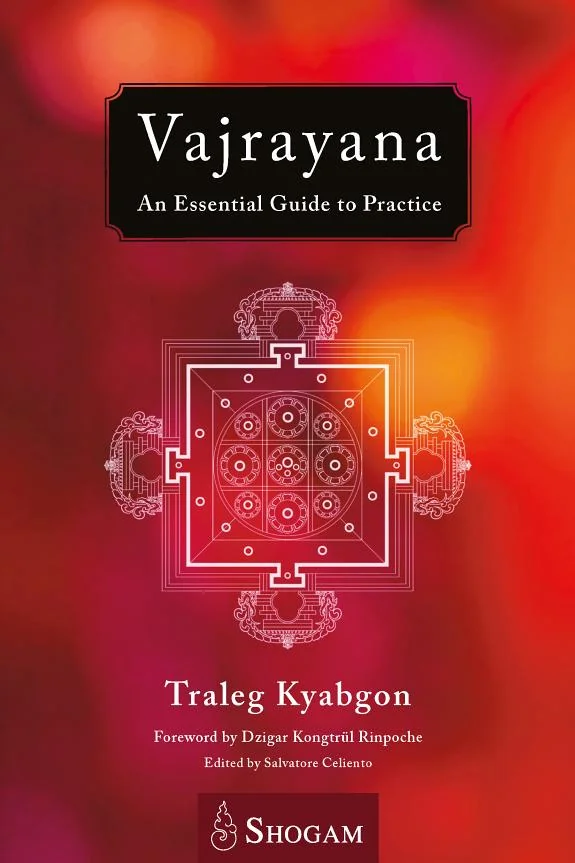
Vajrayana
 73
73

Vajrayana
Traleg Kyabgon Rinpoche's "Vajrayana" attempts a significant feat: to render the esoteric tantric path accessible without diluting its essence. The strength lies in Rinpoche's pedagogical approach, evident in his clear explanations of intricate concepts like the Six Yogas of Naropa. He particularly shines in his detailed exploration of Dream Yoga, offering a nuanced perspective on consciousness and its potential. However, the book occasionally feels dense, perhaps requiring more introductory material for absolute beginners. A passage detailing the visualization practices associated with the Six Yogas, for instance, demands considerable concentration. Despite this, it serves as a valuable guide for those ready to engage with advanced Buddhist practice. Rinpoche's work provides essential clarifications for navigating the Vajrayana path.
📝 Description
73
Traleg Kyabgon Rinpoche's "Vajrayana" demystifies tantric Buddhist practices for a modern audience.
This book offers a structured introduction to Vajrayana, a branch of Mahayana Buddhism. Traleg Kyabgon Rinpoche aims to clarify the meanings and practices of the tantric path, moving beyond common misunderstandings to present its core tenets. The text is intended for serious students of Tibetan Buddhism who possess some background in Buddhist philosophy and wish to understand advanced techniques.
Specific practices like the Six Yogas of Naropa are detailed, with a particular focus on Dream Yoga. The book discusses the nature of the mind, the subtle body, and the importance of the guru within the Vajrayana framework. It situates these explanations within the historical development of the tradition, which originated in India and flourished in Tibet from the 8th century.
Vajrayana, originating in India and developing significantly in Tibet from the 8th century, represents an esoteric path within Buddhism. It incorporates accelerated methods for achieving enlightenment, often involving specialized practices and visualizations. This tradition emphasizes direct experience and the transformation of consciousness, building upon the philosophical foundations of Mahayana Buddhism. The book situates these practices within this historical and philosophical lineage.
💡 Why Read This Book?
• Gain specific instructions on the Six Yogas of Naropa, including detailed guidance on Dream Yoga, directly from Traleg Kyabgon Rinpoche's teachings, offering a practical approach to advanced tantric methods. • Understand the profound meaning of Vajrayana beyond common misconceptions, benefiting from Rinpoche's elucidations that clarify the tantric path's intricacies and dispelling uncertainty. • Explore the human condition and spirituality through the lens of Vajrayana practices, particularly through the in-depth analysis of Dream Yoga as presented in the 2020 publication.
⭐ Reader Reviews
Honest opinions from readers who have explored this book.
❓ Frequently Asked Questions
What is Vajrayana, as explained in Traleg Kyabgon Rinpoche's book?
Traleg Kyabgon Rinpoche explains Vajrayana as a profound path within Mahayana Buddhism. His 2020 book demystifies tantric practices, including the Six Yogas of Naropa, offering necessary elucidations for practitioners.
What are the Six Yogas of Naropa discussed in the book?
The Six Yogas of Naropa are advanced tantric practices within Tibetan Buddhism. Traleg Kyabgon Rinpoche's "Vajrayana" provides explanations and insights into these techniques, with a specific focus on Dream Yoga.
How does the book address Dream Yoga?
The book explores Dream Yoga in depth, offering remarkable insight into the human condition, mind, and spirituality. It provides clarifications to help readers approach this specific tantric practice.
Is this book suitable for beginners in Buddhism?
While it aims to demystify, the book delves into advanced tantric concepts. It is most beneficial for those with some foundational understanding of Buddhist philosophy seeking to explore Vajrayana practices.
When was Traleg Kyabgon Rinpoche's book on Vajrayana first published?
Traleg Kyabgon Rinpoche's "Vajrayana: An Essential Guide to Practice" was first published on July 31, 2020.
What is the main goal of the "Vajrayana" book by Traleg Kyabgon?
The primary goal is to explain the profound meaning of Vajrayana, demystify its practices like the Six Yogas of Naropa, and provide necessary clarifications to dispel confusion about approaching tantric paths.
🔮 Key Themes & Symbolism
The Tantric Path
This theme focuses on the Vajrayana as a specific vehicle within Buddhism, distinct from Hinayana and Mahayana. The book elucidates the tantric path's unique methods, emphasizing accelerated means to achieve enlightenment. It addresses common misconceptions, presenting tantra not as mere ritual but as a sophisticated system for transforming consciousness, rooted in profound philosophical understanding and ethical discipline. The work clarifies how Vajrayana practices aim to directly engage with the nature of reality.
Six Yogas of Naropa
A central focus of the book is the detailed explanation of the Six Yogas of Naropa, a set of advanced Tibetan Buddhist tantric practices. Traleg Kyabgon Rinpoche breaks down these potent techniques, which include Tummo (inner heat), Gyulpo (illusory body), Phowa (consciousness transference), Ösel (clear light), Bardo (intermediate states), and Dream Yoga. The text aims to clarify these practices, offering practitioners a clearer understanding of their purpose and application within the Vajrayana framework.
Dream Yoga and Consciousness
Dream Yoga receives particular attention within the book, serving as a gateway to understanding the nature of mind and reality. Rinpoche explores how the practice of lucid dreaming within Vajrayana can offer clear insights into the human condition and spiritual development. By engaging with the dream state consciously, practitioners can investigate the fabricated nature of perception and cultivate greater awareness, leading to spiritual breakthroughs.
Guru-Disciple Relationship
The indispensable role of the guru within the Vajrayana tradition is implicitly and explicitly addressed. The book underscores the necessity of qualified guidance for reading through the potentially challenging tantric path. Traleg Kyabgon Rinpoche, as an accomplished master, embodies this principle. The text emphasizes that authentic transmission and correct understanding rely heavily on the relationship between an experienced teacher and a dedicated student.
💬 Memorable Quotes
Direct passages from the work, attributed to the author.
“The profound meaning of Vajrayana is explained, inclusive of the Six Yogas of Naropa.”
— This statement captures the book's core objective: to make the intricate teachings of Vajrayana, particularly the advanced practices like the Six Yogas, understandable and accessible to dedicated students.
“Dream Yoga is explored in depth, providing remarkable insight into the human condition, mind, and spirituality.”
— This highlights a key section of the book, emphasizing how the practice of lucid dreaming within Vajrayana offers a unique lens through which to examine our consciousness and spiritual nature.
“Clarifications illuminate the tantric path, dispelling confusion and uncertainty about how to approach Vajrayana practices.”
— This points to the book's practical value, suggesting that Rinpoche's explanations are designed to remove obstacles and provide a clear roadmap for those seeking to engage with Vajrayana.
“Understanding the Six Yogas of Naropa is key to advanced Vajrayana practice.”
— This interpretation underscores the significance of the Six Yogas as a critical component of the Vajrayana path, presented by Rinpoche as essential knowledge for serious practitioners.
💡 Key Ideas
Editorial paraphrase of the work's core concepts — not direct quotes.
The work explains the practices and provides necessary elucidations.
This paraphrase suggests the book's function is to simplify complex tantric methods, offering the essential explanations needed for practitioners to correctly engage with Vajrayana teachings.
🌙 Esoteric Significance
Tradition
This work is firmly situated within the Vajrayana tradition of Tibetan Buddhism, a lineage often considered the most esoteric branch of Mahayana. It departs from purely philosophical or monastic approaches by emphasizing direct experience, energetic practices, and accelerated paths to enlightenment, often utilizing visualization, mantra, and deity yoga. The book fits within this tradition by explaining these advanced methods, making them comprehensible to a wider audience while respecting their profound nature.
Symbolism
Key symbols in Vajrayana include the vajra (diamond scepter), representing indestructible wisdom and skillful means, often paired with a bell symbolizing emptiness and feminine principle. Deities, such as wrathful or peaceful manifestations, represent specific enlightened qualities or aspects of consciousness to be realized. Mandalas serve as symbolic representations of the enlightened mind and the cosmos, used in visualization practices to integrate the practitioner with these principles.
Modern Relevance
Contemporary thinkers and practitioners in mindfulness, transpersonal psychology, and meditation research often draw upon or find parallels in Vajrayana concepts. Schools exploring consciousness studies, lucid dreaming techniques, and non-dual philosophies find resonance with the Vajrayana’s sophisticated models of mind and reality. The emphasis on transforming negative emotions and utilizing all experiences, including difficult ones, for spiritual growth is particularly relevant in today's complex world.
👥 Who Should Read This Book
• Dedicated students of Tibetan Buddhism seeking to deepen their understanding of tantric practices beyond introductory levels. • Practitioners interested in the specific techniques of the Six Yogas of Naropa, particularly Dream Yoga, looking for clear instruction and conceptual framework. • Individuals engaged in the study of consciousness, meditation, and esoteric traditions who wish to explore a lineage known for its advanced methods for mind transformation.
📜 Historical Context
The Vajrayana tradition, as presented by Traleg Kyabgon Rinpoche, finds its roots in the Mahayana Buddhist movements that emerged in India around the 7th century CE. It gained significant momentum and developed into distinct lineages within Tibet starting from the 8th century, notably influenced by figures like Padmasambhava. The 2020 publication of "Vajrayana: An Essential Guide to Practice" arrives in an era where Western engagement with Tibetan Buddhism has matured considerably, moving beyond initial introductions to deeper inquiries into tantric methods. This work emerges in a landscape where scholars like David Snellgrove had already laid groundwork in academic study, while contemporary figures like the Dalai Lama continue to articulate the tradition's relevance. The book addresses a contemporary need for clear, practical guidance on practices that were historically transmitted through more exclusive channels, potentially facing periods of misunderstanding or esoteric secrecy in earlier eras.
📔 Journal Prompts
The Six Yogas of Naropa as a framework for understanding consciousness.
Dream Yoga's potential for spiritual insight and its connection to the human condition.
Clarifications needed for approaching Vajrayana practices effectively.
The role of demystification in understanding esoteric Buddhist teachings.
Traleg Kyabgon Rinpoche's approach to explaining profound tantric meanings.
🗂️ Glossary
Vajrayana
Literally 'Diamond Vehicle' or 'Thunderbolt Vehicle,' it is the esoteric branch of Mahayana Buddhism that utilizes tantric methods for rapid enlightenment. It is prominent in Tibetan Buddhism.
Tantra
A body of esoteric doctrines and practices within Hinduism and Buddhism, aiming at spiritual transformation through rituals, meditation, visualizations, and the manipulation of subtle energies.
Six Yogas of Naropa
A set of advanced tantric practices within Tibetan Buddhism, transmitted through the lineage of the Indian yogi Naropa, focused on manipulating subtle energies and consciousness.
Dream Yoga (Milam)
One of the Six Yogas of Naropa, this practice involves achieving lucidity within dreams and transforming the dream state into a spiritual practice for insight and realization.
Mahayana
One of the two major branches of Buddhism, emphasizing the path of the Bodhisattva and the goal of achieving enlightenment for the benefit of all sentient beings.
Elucidation
The act of making something clear; explanation or clarification.
Clarify
To make a subject or concept less mysterious, difficult, or obscure.
This book appears in 1 collection
🔮 Readers Also Liked
Browse all →









From the “Dream Yoga” Collection
View all →








More Free Occult Philosophy Books
View all →