Ritual Book of Magic

 79
79

Ritual Book of Magic
Clifford Bias's Ritual Book of Magic offers a straightforward, almost workmanlike, approach to ceremonial practice that distinguishes it from more florid or philosophically dense grimoires. Published in 1981, it arrived at a time when many were seeking structured magical systems, and Bias delivered precisely that: a manual. Its strength lies in its clarity and the systematic presentation of rituals, particularly its detailed instructions on creating and consecrating magical tools. However, this very systematic nature can sometimes feel reductive. The section on the Lesser Banishing Ritual of the Pentagram, for instance, while technically sound, lacks the deeper energetic or psychological context that some modern practitioners might seek. The book's directness is its greatest asset and, at times, its most significant limitation, leaving the reader to fill in the experiential gaps themselves. It is a functional text for those who prefer to learn by doing, provided they bring their own contemplative depth.
📝 Description
79
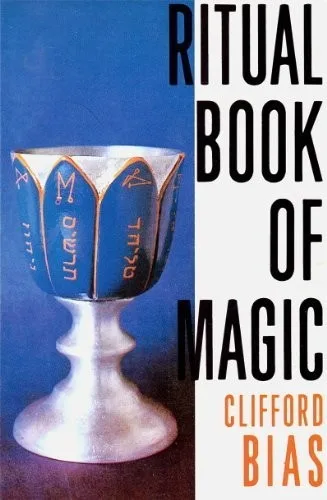
Clifford Bias published The Ritual Book of Magic in 1981 as a manual for magical operations.
Published in 1981, The Ritual Book of Magic by Clifford Bias is a practical guide to magical practice and theory. It moves beyond historical accounts to offer a working manual, detailing techniques for invocation, evocation, and the creation of ritual tools. Bias stresses the roles of intention, visualization, and symbolic language in ritual.
The book aims to help practitioners directly experience the subtle energies and intelligences that Bias believed shape reality. It provides detailed instructions for this purpose. Readers will find a systematic approach to magical work, focusing on concrete techniques rather than abstract philosophy. The text demands dedication to disciplined practice and engagement with complex symbolic systems.
The Ritual Book of Magic appeared in 1981 during a period when Western occult studies were experiencing a revival. This era saw a greater interest in various spiritual paths, including Hermeticism and Kabbalah, often blended with psychological ideas. Bias's work contributed to the growing literature that aimed to organize and present magical practices in a clear, yet thorough, way.
💡 Why Read This Book?
• Learn specific techniques for the construction and consecration of magical implements, providing a tangible connection to the tools of your practice, as detailed in the book's chapters on talismanic magic. • Understand the underlying principles of correspondence and sympathetic magic, enabling you to design your own focused rituals based on established esoteric laws. • Gain practical methods for establishing sacred space and performing banishing rituals, offering a structured approach to ritual purity and focus, as outlined in the book's operational sections.
⭐ Reader Reviews
Honest opinions from readers who have explored this book.
❓ Frequently Asked Questions
When was The Ritual Book of Magic first published and by whom?
The Ritual Book of Magic was first published in 1981. The author is Clifford Bias, and it was released during a period of renewed interest in esoteric studies.
What kind of magic does The Ritual Book of Magic focus on?
The book concentrates on ceremonial magic and practical occultism, offering structured rituals for invocation, evocation, and the creation of magical tools and talismans.
Is The Ritual Book of Magic suitable for complete beginners?
While it provides detailed instructions, the book is best suited for intermediate practitioners who already possess a foundational understanding of magical concepts and terminology.
Does the book explain the theoretical basis for its rituals?
Yes, it explores theoretical underpinnings such as the principle of correspondence and the magician's role as a conscious agent, alongside practical application.
What are some of the key elements discussed in the ritual sections?
Key elements include the establishment of sacred space, the use of sigils and talismans, elemental forces, and the invocation of divine or intermediary intelligences.
What historical period influenced the content of The Ritual Book of Magic?
The book reflects the esoteric revival of the late 20th century, drawing from Western esoteric traditions like Hermeticism and Kabbalah, and contributing to the codification of magical practices of that era.
🔮 Key Themes & Symbolism
Systematic Ritual Construction
The book emphasizes a methodical approach to crafting magical rituals, detailing each step from preparation to execution. Bias outlines the importance of precise timing, appropriate symbolism, and focused intent. This systematicity extends to the creation and consecration of magical tools, such as wands, staffs, and talismans, providing practitioners with a reliable framework for their work. The detailed instructions aim to minimize error and maximize efficacy, treating ritual as a craft requiring skill and discipline.
The Principle of Correspondence
Central to the magical operations described is the esoteric doctrine of correspondence, often summarized as 'As Above, So Below.' Bias explores how patterns in the macrocosm are mirrored in the microcosm, allowing for sympathetic magic. The book details how to identify and utilize these correspondences, whether through planetary hours, elemental associations, or symbolic language, to achieve desired effects in ritual work. This principle serves as the theoretical bedrock for many of the practical techniques presented.
Invocation and Evocation
Bias provides practical methodologies for interacting with subtle intelligences and divine forces. The text outlines specific techniques for both invocation, the drawing of power or consciousness into the magician, and evocation, the calling forth of external entities. These operations are presented with detailed instructions on preparatory rituals, the use of divine names, seals, and the necessary psychological and energetic attunements required for safe and effective contact within the magical paradigm.
Sacred Space and Tools
Establishing a consecrated space and utilizing properly prepared tools are fundamental aspects of the magical practice advocated in The Ritual Book of Magic. The book offers guidance on creating a temporary or permanent temple, including methods for purification and consecration. Similarly, it details the symbolic significance and practical construction of various magical implements, emphasizing that these tools are not merely symbolic but serve as conduits for focused magical energy and intent.
💬 Memorable Quotes
Direct passages from the work, attributed to the author.
“The magician must first establish the integrity of his working space.”
— This highlights the foundational importance of creating a pure and protected environment before commencing any magical operation, emphasizing ritual purity as a prerequisite for efficacy.
“Each tool is an extension of the will, a focus for power.”
— This emphasizes the functional and symbolic role of magical implements, framing them not as mere objects but as integral components of the magician's projected intent and energetic capabilities.
“Correspondence links the mundane to the divine.”
— This succinctly captures the core Hermetic principle that underlies much of ritual magic, suggesting a universal interconnectedness that can be leveraged through specific symbolic relationships.
“Intent must be clear, visualization precise.”
— This underscores the psychological requirements for successful magic, stressing the need for a well-defined purpose and a vivid mental projection of the desired outcome.
“The ritual is a bridge between worlds.”
— This poetic interpretation captures the transformative function of ritual, positioning it as a liminal act that facilitates passage and interaction between different planes of existence.
🌙 Esoteric Significance
Tradition
The Ritual Book of Magic is firmly rooted in the Western Esoteric Tradition, particularly drawing from the lineage of ceremonial magic exemplified by the Hermetic Order of the Golden Dawn. It synthesizes elements of Hermeticism, Kabbalah, and practical occultism, aiming to provide a coherent system for magical practice. Bias's approach emphasizes the practitioner's agency and the systematic application of occult principles, aligning with the goal of spiritual development and magical attainment central to these traditions.
Symbolism
Key symbols employed include the pentagram and hexagram, used for banishing and invoking elemental and planetary forces respectively. The book also details the use of talismans, imbued with specific sigils and correspondences, to harness particular energies or influences. The concept of the 'sacred space' itself functions as a potent symbol, representing the purified inner and outer environment necessary for effective magical work, separating the mundane from the sacred.
Modern Relevance
Contemporary practitioners of Western ceremonial magic, particularly those interested in systematized ritual work and the construction of magical tools, find value in Bias's practical approach. Modern occult authors and magical orders often reference or build upon the foundational techniques for ritual preparation and operation that are clearly laid out in this book, making it a relevant text for those seeking to engage with the practical aspects of the occult tradition.
👥 Who Should Read This Book
• Aspiring ceremonial magicians seeking a structured manual for ritual practice and the creation of magical tools. • Students of Western esotericism who wish to understand the practical application of principles like correspondence and symbolic magic. • Experienced occult practitioners looking to refine their techniques for establishing sacred space and performing invocations or evocations.
📜 Historical Context
The Ritual Book of Magic, published in 1981, emerged during a fertile period for Western esoteric revival. Following the spiritual explorations of the 1960s and 70s, there was a significant increase in the study and practice of occult traditions. Clifford Bias's work contributed to a growing corpus of texts that sought to codify and present ceremonial magic in a structured, accessible format. This era saw authors like Israel Regardie continuing to publish on Golden Dawn material, and Dion Fortune's writings gaining wider traction, creating an environment where practical magical manuals were in demand. Bias's book can be seen as part of this movement to explain and systematize practices, offering a practical guide that stood distinct from the more philosophical or historical accounts of magic prevalent at the time. Its publication reflects a broader societal engagement with alternative spiritualities.
📔 Journal Prompts
The consecration of magical tools and its effect on intent.
Reflecting on the principle of correspondence in daily life.
The creation of a personal sacred space: challenges and benefits.
Visualizing the Lesser Banishing Ritual of the Pentagram.
The role of elemental forces in personal magical work.
🗂️ Glossary
Invocation
A magical ritual or act of calling upon a deity, spirit, or force, typically for the purpose of drawing its power or presence into oneself or the working space.
Evocation
A magical ritual or act of calling forth or summoning spirits or entities from their own realms into a visible manifestation or a designated space.
Sigil
A symbol or emblem charged with magical intent, often created by abstracting letters or concepts, used to focus psychic energy for a specific purpose.
Talismans
Objects imbued with magical power through specific inscriptions, symbols, and rituals, designed to attract certain influences or provide protection.
Correspondence
The esoteric principle that posits relationships and sympathies between different levels of reality (e.g., planets, elements, colors, divine names), allowing for magical influence across these domains.
Sacred Space
A consecrated area, whether temporary or permanent, set apart for magical or religious rituals, purified and protected to facilitate communion with higher powers or focused magical work.
Lesser Banishing Ritual of the Pentagram
A foundational ritual in ceremonial magic, used to clear and protect a space by projecting pentagrams and invoking specific divine forces.
🔮 Readers Also Liked
Browse all →








More by Clifford Bias
All books →
More Free Magic & Ritual Books
View all →