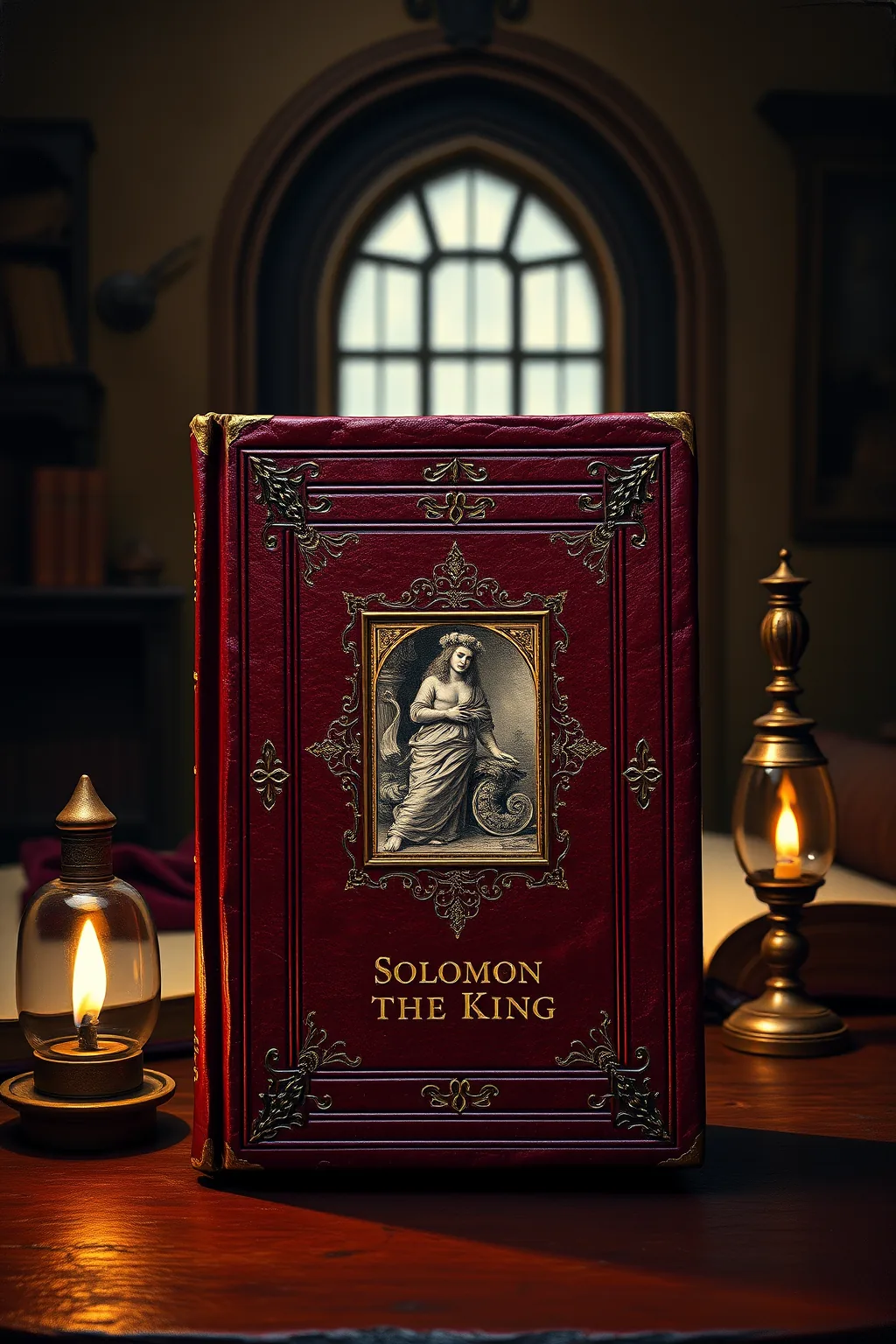
The Key of Solomon the King
 76
76

The Key of Solomon the King


Balthazar Finch (Senior Critic, Occult Philosophy) — S. L. MacGregor Mathers' rendition of 'The Key of Solomon the King' remains an indispensable pillar for any serious student of ceremonial magic. This translation breathes life into the ancient Clavicula Salomonis, offering not just theoretical knowledge but practical, actionable guidance. Mathers' meticulous scholarship ensures the integrity of the text, preserving the intricate details of ritual construction, angelic invocations, and astrological correspondences. Its strength lies in its comprehensive nature, serving as a veritable handbook for the adept. While demanding dedication, it rewards the persistent practitioner with profound insights into the mechanics of spiritual influence and the architecture of the cosmos. Essential reading for practitioners and historians alike.
📝 Description
76
S. L. MacGregor Mathers translated this 17th-century grimoire, 'The Key of Solomon the King,' in 1889.
This volume contains the 17th-century text known as the Clavicula Salomonis, or 'The Key of Solomon.' Mathers' 1889 translation makes available detailed instructions for magical operations attributed to King Solomon. The book outlines the construction and consecration of magical tools, the creation of talismans, and the performance of complex ceremonies. It specifies astrological timings for rituals and includes methods for invoking angelic or celestial intelligences.
The text covers the preparation of the magician, the purification of the space, and the proper conduct during operations. It is presented as a practical guide for those seeking to understand and enact Solomonic magic. Mathers' scholarly introduction provides context for the work and its place within Western ceremonial magic traditions.
The Key of Solomon is a significant grimoire within the Western esoteric tradition, particularly in ceremonial magic. Its origins trace to medieval and Renaissance magical practices that sought to synthesize biblical narratives with practical occult techniques. The text claims to be a direct legacy from King Solomon, a figure associated with wisdom and dominion over spirits in Jewish, Christian, and Islamic folklore. This grimoire influenced subsequent magical texts and practices throughout Europe and continues to be studied by occultists interested in historical magical systems.
✍️ Author
💡 Why Read This Book?
Unlock the foundational texts of Western ceremonial magic. 'The Key of Solomon the King' offers direct access to the ancient rituals, talismans, and astrological principles that underpin Solomonic magic. It is essential for practitioners seeking to understand the roots of their craft, scholars exploring esoteric history, and seekers yearning for a deeper connection to divine and angelic forces.
⭐ Reader Reviews
Honest opinions from readers who have explored this book.
❓ Frequently Asked Questions
What is the 'Greater Key of Solomon'?
The 'Greater Key of Solomon,' or 'Clavicula Salomonis,' is a medieval grimoire detailing magical rituals, incantations, and instructions for summoning spirits and manipulating natural forces, traditionally attributed to King Solomon. Mathers' translation is a key scholarly edition.
Is this book a practical guide for modern magic?
Yes, while ancient, the principles and instructions within 'The Key of Solomon the King' are still studied and applied by many modern practitioners of ceremonial magic, offering a rich foundation for ritual work.
Who was S. L. MacGregor Mathers?
S. L. MacGregor Mathers was a prominent occultist and one of the founders of the Hermetic Order of the Golden Dawn. His translations and editions of esoteric texts, like this one, were highly influential.
What kind of rituals are described in the book?
The book describes various rituals including consecration of magical tools, creation of talismans, astrological workings, and invocations of angelic beings for specific purposes.
Does this book contain actual spells?
Yes, it provides detailed instructions for performing magical operations, often referred to as spells or rituals, aimed at achieving various outcomes through the use of divine and angelic assistance.
🔮 Key Themes & Symbolism
The Art of Solomonic Magic
This theme looks at the wide range of Solomonic magic, a tradition deeply rooted in biblical lore and attributed to the wisdom of King Solomon. It explores the belief in Solomon's ability to command spirits and understand the secrets of the universe. The book meticulously outlines the principles and practices associated with this powerful magical system, including the construction of talismans, the use of divine names, and the invocation of celestial intelligences. It emphasizes the ethical and spiritual framework required for such potent workings, positioning magic not as mere manipulation but as a path to divine knowledge and spiritual ascent.
Ritual Purity and Divine Connection
Central to the practices described in 'The Key of Solomon the King' is the concept of ritual purity and the establishment of a direct connection with the divine. The text stresses the importance of meticulous preparation, both of the magician and the ritual space, advocating for abstinence, prayer, and specific cleansing rites. This emphasis on purity is not merely ceremonial but foundational to creating a vessel capable of channeling celestial energies and communicating with higher beings. The book illustrates how through disciplined practice and spiritual alignment, the practitioner can bridge the gap between the mundane and the sacred, fostering a profound communion with the divine forces.
Astrology and Celestial Correspondences
The intricate relationship between celestial bodies and earthly events forms a crucial pillar of the magical system presented. 'The Key of Solomon the King' meticulously details how astrological timings, planetary influences, and stellar configurations are integral to successful magical operations. It provides guidance on selecting auspicious moments for rituals, consecrating tools under specific planetary hours, and imbuing talismans with the energies of particular stars or planets. Understanding these correspondences is presented as essential for harnessing the cosmic forces and ensuring the efficacy of magical endeavors, transforming the practitioner into an orchestrator of divine will.
💬 Memorable Quotes
Direct passages from the work, attributed to the author.
“For the Kingdom of Heaven is at hand.”
— Suggests the imminence and accessibility of spiritual power and divine intervention, attainable through dedicated practice and inner transformation.
“The wisdom of Solomon is revealed.”
— Directly points to the book's purpose: to unveil the profound esoteric knowledge and magical capabilities traditionally attributed to the biblical King Solomon.
“The art of true magic is the art of understanding God's creation.”
— Positions magic as a sacred science, rooted in a deep comprehension and reverence for the divine order and the intricate workings of the universe.
“Let the circle be drawn, and the names invoked.”
— A call to action, signaling the commencement of ritual, emphasizing the importance of protective spaces and the invocation of spiritual authorities.
💡 Key Ideas
Editorial paraphrase of the work's core concepts — not direct quotes.
Seek ye first the kingdom of God, and His righteousness; and all these things shall be added unto you.
This quote highlights the spiritual prerequisite for magical efficacy, emphasizing that true power and attainment come from divine alignment, not mere technique.
🌙 Esoteric Significance
Tradition
This work is a core part of the Solomonic tradition within Western esotericism, a lineage of magic attributed to the biblical King Solomon. It is deeply intertwined with Kabbalistic principles, angelic hierarchies, and astrological correspondences, forming a sophisticated system for spiritual development and interaction with higher realms. The book's influence extends to ceremonial magic, grimoire studies, and the Hermetic arts, providing a foundational text for those seeking to understand and practice these ancient disciplines.
Symbolism
The symbolism within 'The Key of Solomon the King' is rich and complex. Tools like the wand, sword, and pentacle represent elemental forces and divine authority. Geometric figures, such as the magic circle and specific sigils, serve as sacred spaces and keys to invoking spiritual entities. Planetary symbols and astrological signs are not mere decorations but active conduits of cosmic energy, dictating the timing and nature of magical operations. The divine names and angelic invocations are potent symbolic expressions of divine power and accessible archetypes of spiritual assistance.
Modern Relevance
Despite its ancient origins, 'The Key of Solomon the King' remains profoundly relevant for contemporary practitioners and scholars. Its detailed instructions on ritual preparation, ethical considerations, and the symbolic language of magic offer timeless wisdom for working through the spiritual path. The book's emphasis on personal discipline, spiritual alignment, and the understanding of cosmic laws appeals to modern seekers interested in self-transformation, empowerment, and a deeper connection to the divine. It serves as a vital historical and practical resource for anyone exploring the depths of Western occult traditions.
👥 Who Should Read This Book
This important work is indispensable for serious practitioners of ceremonial magic and students of Western esotericism seeking to understand the roots of their craft. Scholars of occult history will find its scholarly translation and detailed appendices invaluable. For the dedicated seeker, it offers a profound, albeit challenging, path to spiritual knowledge and a deeper understanding of the divine architecture of the cosmos. Beginners are advised to approach with caution and ideally under guidance, as the text requires dedication and a serious commitment to study and practice.
📜 Historical Context
Published in 1889, S. L. MacGregor Mathers' translation of 'The Key of Solomon the King' emerged during a fervent period of occult revival in Victorian England. This era saw a widespread fascination with ancient mysteries, spiritualism, and esoteric traditions, fueled by a growing dissatisfaction with purely materialistic worldviews. Mathers himself was a central figure in this movement, co-founding the Hermetic Order of the Golden Dawn, which sought to revive and systematize Western magical practices. His translation of the Clavicula Salomonis, a text with roots stretching back to the Middle Ages, was instrumental in making these powerful grimoires accessible to a wider audience. It provided a crucial link to historical magical systems, influencing generations of occultists and shaping the trajectory of modern ceremonial magic by offering a tangible, structured approach to ritual and spiritual attainment.
📔 Journal Prompts
Reflect on the concept of 'divine righteousness' as presented in the text. How does it inform the practice of magic?
Choose one talismanic design and meditate on its symbolic elements. What energies does it seem to represent?
Consider the astrological timings mentioned. How might planetary influences affect your daily life and spiritual practice?
The text emphasizes purity and preparation. What personal rituals could you implement to enhance your own spiritual readiness?
Imagine you are preparing for a Solomonic ritual. What are your immediate thoughts and feelings regarding the undertaking?
🗂️ Glossary
Grimoire
A book of magic spells, rituals, and instructions for invoking spirits, often attributed to historical or legendary figures. 'The Key of Solomon the King' is a famous example.
Clavicula Salomonis
The Latin name for 'The Key of Solomon,' referring to the medieval grimoire that this book translates and presents.
Talisman
An object inscribed with magical symbols or sigils, believed to possess protective or empowering qualities when consecrated and charged with specific intentions.
Ceremonial Magic
A form of magic that utilizes elaborate rituals, symbolic actions, and specific timings to invoke spiritual entities or influence reality.
Invocation
The act of calling upon a divine being, spirit, or power, typically for assistance, guidance, or to imbue a ritual with its energy.
This book appears in 2 collections
🔮 Readers Also Liked
Browse all →







More by S L Macgregor Mathers
All books →
From the “Transcendental Meditation” Collection
View all →








More Free Magic & Ritual Books
View all →