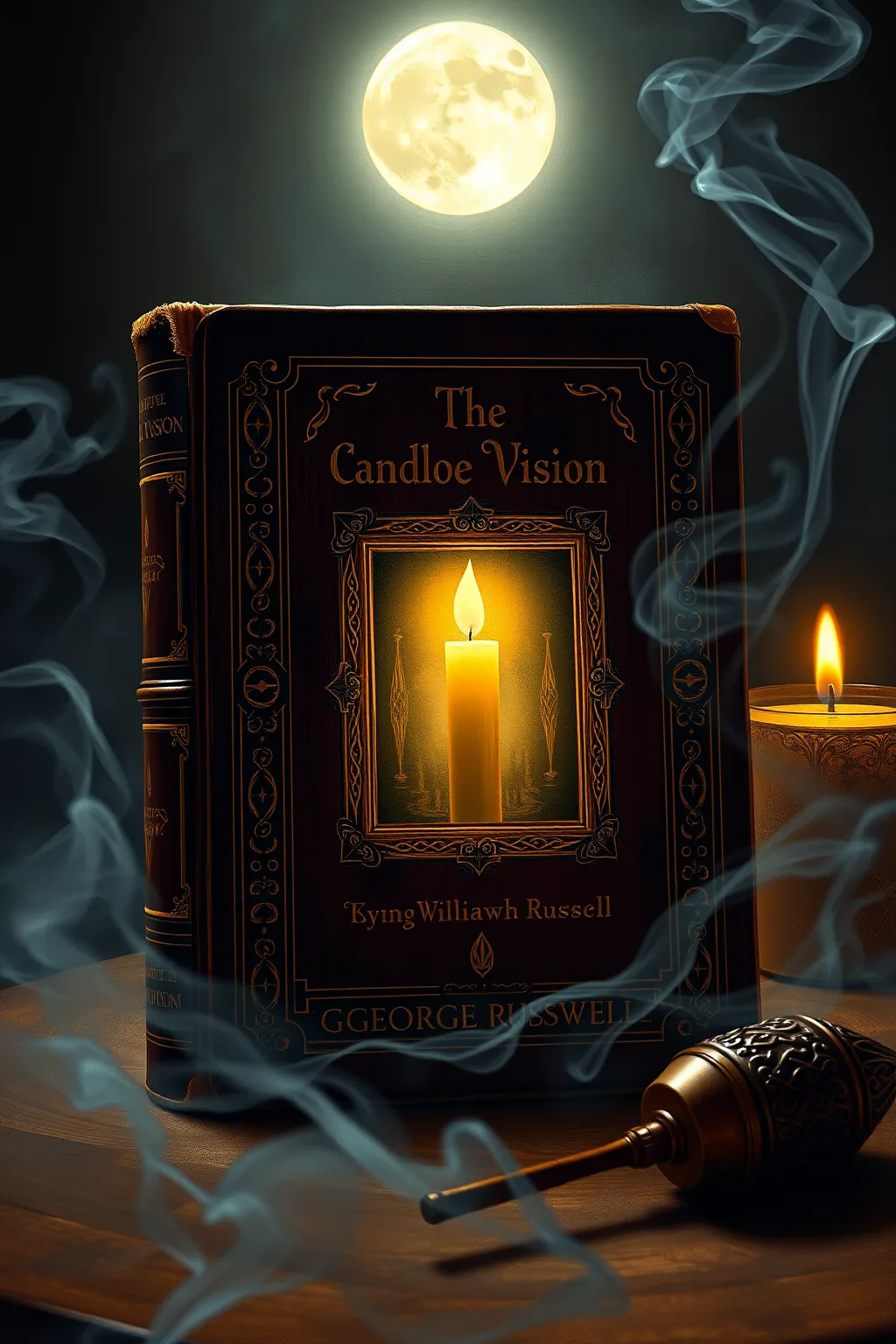
The Candle of Vision
 83
83

The Candle of Vision



Silas Hawthorne (Hermetic Studies Editor): George William Russell's 'The Candle of Vision' remains a potent testament to the power of inner sight. Æ masterfully articulates his profound visionary encounters, seamlessly blending Celtic mythos with perennial mystic wisdom. The book's strength lies in its intimate yet universal exploration of consciousness, revealing the artist's role as a conduit for divine inspiration. For seekers of hidden knowledge and practitioners of contemplative arts, this work offers a rare glimpse into the mechanics of spiritual perception and the vibrant, living presence of the unseen. A cornerstone for any serious student of esoteric philosophy.
📝 Description
83
George William Russell published 'The Candle of Vision' in 1918, detailing his clairvoyant experiences.
First published in 1918, George William Russell's 'The Candle of Vision' records his personal experiences with clairvoyance and esoteric insight. Russell, who wrote as Æ, details his perceptions of a living nature and the artist's role in expressing the ineffable. He uses poetic meditations to explain how the cosmos operates, the magic in myths, and the truths within the soul.
This book is more than a personal account; it encourages readers to find their own inner light and see the connections in existence. It suggests readers can use their own creative power. 'The Candle of Vision' appeals to those wanting to move beyond the ordinary and explore the potential of the human spirit and the interconnectedness of all things.
Published in 1918, 'The Candle of Vision' emerged from the Theosophical milieu and the broader interest in spiritualism and occultism of the late 19th and early 20th centuries. Russell, known as Æ, was a significant figure in Irish literary circles but also deeply involved with esoteric philosophy, particularly influenced by Theosophy and related movements. The book reflects a tradition of mystical autobiography where personal visionary experiences are presented as a path to understanding universal principles, divine immanence in nature, and the creative power of consciousness. It shares common ground with other esoteric writings that seek to reconcile inner spiritual states with external reality.
✍️ Author
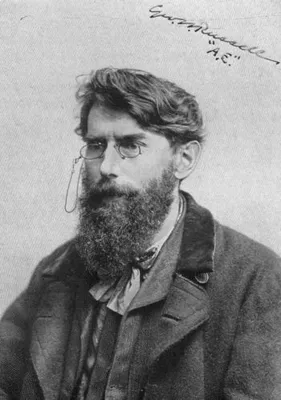
George William Russell
George William Russell (10 April 1867 – 17 July 1935), who wrote with the pseudonym Æ (often written AE or A. E.
💡 Why Read This Book?
Uncover the profound connection between the visible and invisible worlds. 'The Candle of Vision' offers a rare, personal account of clairvoyant experience and the artist's role in manifesting higher realities. Ideal for spiritual seekers, contemplative practitioners, and scholars of mysticism who wish to explore the depths of consciousness and the perennial wisdom traditions.
⭐ Reader Reviews
Honest opinions from readers who have explored this book.
❓ Frequently Asked Questions
What is the primary theme of 'The Candle of Vision'?
The primary theme is the exploration of visionary experiences and the nature of consciousness, guided by the author's personal insights and reflections on mysticism and the creative process.
Who was George William Russell, also known as Æ?
George William Russell (Æ) was a prominent Irish poet, mystic, editor, and painter, deeply involved in the Irish Renaissance and a significant figure in esoteric and Theosophical circles.
What is the writing style of the book?
The style is a blend of poetic meditation and confessional record, characterized by luminous prose, evocative imagery, and a deeply reflective, introspective tone.
Is this book suitable for beginners in mysticism?
While profound, the book's accessible yet rich language makes it suitable for dedicated beginners eager to delve into contemplative and visionary themes, offering a gentle yet illuminating introduction.
What is the historical context of 'The Candle of Vision'?
Published in 1918, it emerged during a period of intense interest in spiritualism, Theosophy, and esoteric thought, reflecting a broader societal quest for meaning beyond material realities.
🔮 Key Themes & Symbolism
The Nature of Visionary Experience
This theme explores the author's personal encounters with the subtle realms, exploring how clairvoyance and inner sight can be cultivated and understood. It examines the subjective range of mystical perception, the archetypal imagery encountered, and the wide impact these experiences have on one's understanding of reality. Russell posits that these visions are not mere hallucinations but rather glimpses into a deeper, more fundamental stratum of existence, accessible through dedicated contemplation and an open heart.
Nature as a Living Presence
Russell portrays the natural world not as inert matter, but as a vibrant, pulsating entity imbued with divine consciousness. He describes moments of deep communion with trees, rivers, and the very air, perceiving them as living beings with their own wisdom and energy. This perspective invites readers to re-enchant their relationship with the environment, recognizing the sacredness in every leaf and stone, and understanding that humanity is an integral part of this living, breathing cosmos.
The Artist as a Conduit for the Divine
The book illuminates the crucial role of the artist in translating the ethereal visions and inner truths into tangible forms—be it through writing, painting, or other creative expressions. Russell views the artist as a sacred intermediary, tasked with making the unseen visible and the ineffable comprehensible to others. This theme explores the discipline, intuition, and spiritual attunement required to channel these higher inspirations, emphasizing art as a vital tool for spiritual awakening and collective evolution.
💬 Memorable Quotes
Direct passages from the work, attributed to the author.
“The world is a spirit.”
— This concise statement expresses Russell's pantheistic and animistic worldview, suggesting that all existence, including the material realm, is fundamentally imbued with consciousness and life.
“Vision is the language of the soul.”
— Here, Russell elevates inner perception beyond mere sight, defining it as the primary mode of communication and understanding for the spiritual essence of a human being.
“Nature dreams, and we are her dreams.”
— A poetic articulation of interconnectedness, suggesting that all of creation, including humanity, arises from and participates in the grand, unfolding consciousness of the natural world.
“To see is to be.”
— This profound aphorism links the act of perception with existence itself, implying that true being is achieved through conscious awareness and the ability to perceive beyond the superficial.
💡 Key Ideas
Editorial paraphrase of the work's core concepts — not direct quotes.
The artist must be a priest of beauty.
This quote highlights the sacred duty and elevated purpose of the artist, positioning them as a spiritual officiant dedicated to revealing and manifesting the divine essence of beauty in the world.
🌙 Esoteric Significance
Tradition
This work is deeply rooted in the perennial philosophy, drawing heavily from Theosophical concepts, Neoplatonism, and Celtic mysticism. Russell's personal visionary experiences and his emphasis on the interconnectedness of the material and spiritual realms align with Hermeticism and various forms of nature-based spirituality. His exploration of archetypes and the artist's role as a mediator between worlds also connects it to Gnostic and Hermetic traditions of divine emanation and spiritual alchemy.
Symbolism
Key symbols abound, including the 'candle of vision' itself, representing inner illumination and spiritual insight. Nature elements like trees, light, and water are imbued with potent symbolic meaning, signifying divine presence, life force, and purification. Archetypal figures from Celtic mythology and the author's own visionary encounters serve as symbols for universal forces and states of consciousness. The act of 'seeing' is presented as a symbolic key to unlocking deeper realities and spiritual understanding.
Modern Relevance
'The Candle of Vision' remains remarkably relevant for contemporary seekers. In an age often characterized by disconnection and superficiality, Russell's call to perceive nature as alive and to cultivate inner vision offers a powerful antidote. His insights into the artist's role as a spiritual conduit resonate with current discussions on creativity as a path to healing and awakening. The book provides timeless guidance for anyone interested in deepening their consciousness, exploring the mystical dimensions of existence, and fostering a more sacred relationship with the world around them.
👥 Who Should Read This Book
This luminous work is essential for spiritual seekers yearning to understand the nature of consciousness and the hidden dimensions of reality. Scholars of mysticism and esoteric history will find invaluable primary source material on early 20th-century spiritual thought. Contemplative practitioners will benefit from Russell's meditations on inner sight and communion with the divine. Artists and creatives will discover profound inspiration regarding their role as conduits for higher inspiration and the translation of the ineffable into form.
📜 Historical Context
Published in 1918, 'The Candle of Vision' emerged from a fertile period of intellectual and spiritual ferment. The early 20th century saw a resurgence of interest in esoteric traditions, occultism, and mystical philosophies, partly as a reaction against the perceived materialism of the Victorian era and in the wake of global upheaval. Figures like Madame Blavatsky and Annie Besant had popularized Theosophy, while the Hermetic Order of the Golden Dawn and other mystical orders were active. George William Russell (Æ) was a central figure in this milieu, particularly within the Irish Renaissance, where he fostered a combination of Celtic mythology, Theosophy, and personal visionary experience. The book reflects the era's exploration of consciousness, the subconscious, and the potential for spiritual awakening through art and inner contemplation, resonating with a generation seeking deeper meaning.
📔 Journal Prompts
Describe a moment when you felt a profound connection with nature. What did you perceive?
In what ways does your 'inner vision' influence your perception of the 'outer world'?
Consider the concept of 'the artist as a priest of beauty.' How does this role manifest in your own creative or life practices?
What does the symbol of a 'candle' evoke for you in relation to spiritual or personal growth?
Reflect on a time you experienced a moment of 'seeing' beyond the ordinary. What was the impact of this experience?
🗂️ Glossary
Visionary Experience
A subjective experience involving heightened perception, often characterized by vivid imagery, symbolic encounters, and a sense of direct communion with spiritual or unseen realities.
Clairvoyance
The alleged psychic ability to perceive events, persons, or objects that are not perceived by the senses. In this context, it refers to a heightened, intuitive form of seeing.
Archetype
In Jungian psychology and esoteric thought, a universal, archaic pattern and image that derives from the collective unconscious and is inherited across generations.
Perennial Philosophy
The idea that all religions and spiritual traditions share a common, underlying metaphysical truth or wisdom, often referred to as the 'everlasting gospel'.
Theosophy
A spiritual philosophy founded in the late 19th century by Helena Blavatsky, aiming to synthesize Eastern and Western religious and philosophical traditions, emphasizing universal brotherhood and the study of comparative religion, philosophy, and science.
This book appears in 4 collections
🔮 Readers Also Liked
Browse all →



More by George William Russell
All books →

From the “Meditation” Collection
View all →





More Free Mysticism & Contemplation Books
View all →