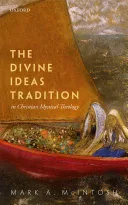
The Divine Ideas Tradition in Christian Mystical Theology
 75
75

The Divine Ideas Tradition in Christian Mystical Theology
Mark A. McIntosh's "The Divine Ideas Tradition in Christian Mystical Theology" meticulously excavates a theological framework that, while foundational for centuries, has largely faded from contemporary discourse. The book's signal achievement is its clear exposition of how the doctrine of divine ideas provided a robust understanding of the Trinity and the inherent reality of creation as grounded in God's intellect. McIntosh demonstrates a deep familiarity with patristic and scholastic sources, bringing neglected texts to light. A minor limitation might be the dense academic prose, which, while precise, could present a barrier for readers less familiar with theological terminology. The section discussing the Neoplatonic underpinnings, particularly the concept of the 'One' and its procession of 'Ideas,' is especially illuminating for understanding the tradition's metaphysical depth. This is a vital scholarly reconstruction for those seeking the philosophical architecture beneath Christian mysticism.
📝 Description
75
Mark A. McIntosh reconstructs the theological significance of divine ideas in Christian thought from early Christianity to modernity.
This volume traces the historical development of the divine ideas tradition within Christian theology, beginning with its roots in early Christianity and extending to the period just before modernity. The book details how this doctrine, which understands all beings as eternal concepts within God's mind, shaped fundamental Christian beliefs. It explains how this tradition offered a framework for comprehending the Trinity and for the spiritual renewal of creation through human contemplation.
The divine ideas tradition was a significant feature in Christian theology, impacting thinkers from Augustine through the scholastic era. The book examines the reasons for its decline in early modernity, a shift that saw theological discourse move from Neoplatonic ontology to more anthropocentric or voluntaristic views of God and creation. It situates this tradition within broader intellectual movements like Scholasticism and the Renaissance, analyzing its eventual marginalization.
The work clarifies the doctrine of divine ideas as inherent in God's being, distinct from but constitutive of creatures. It considers the implications for understanding divine knowledge, providence, and the basis of all reality. The practice of contemplating creation within these divine ideas is also discussed as a path toward spiritual insight and a clearer grasp of divine truth.
The divine ideas tradition represents a strain of Christian thought that sought to understand the created order as intimately connected to God's eternal being and knowledge. This perspective, drawing on Neoplatonic philosophy, posited that all things exist as intelligible forms within the divine mind before their manifestation in the world. Contemplation, in this context, involved a spiritual practice of apprehending these divine archetypes, leading to a deeper union with God and an understanding of creation's true nature. McIntosh's work places this tradition within the broader landscape of Christian mysticism, highlighting its role in shaping contemplative practices and theological speculation.
💡 Why Read This Book?
• You will learn how the doctrine of divine ideas, prominent before the early modern period, explained creation's existence as aspects of God's mind, offering a unique metaphysical lens absent in contemporary theology. • You will gain a concrete understanding of how this tradition illuminated Trinitarian theology and provided a theological basis for spiritual renewal through human contemplation, as detailed in its historical analysis. • You will discover the specific philosophical lineage, drawing from Neoplatonism, that informed Christian thinkers on the relationship between the divine and the created order, as explored in the book's conceptual framework.
⭐ Reader Reviews
Honest opinions from readers who have explored this book.
❓ Frequently Asked Questions
What is the core concept of the divine ideas tradition as presented in McIntosh's book?
The tradition posits that all created beings have an eternal existence as concepts or 'ideas' within the mind of God, serving as the archetypes for creation and the foundation of divine knowledge.
When did the divine ideas tradition begin to decline in Christian thought?
According to McIntosh's research, the tradition began to vanish by the time of early modernity, marking a significant shift in theological discourse from its medieval prominence.
Who were some influential figures associated with the divine ideas tradition?
While the book focuses on the tradition's broader impact, its roots are often traced to Neoplatonic philosophers and later adopted and adapted by Christian thinkers across centuries, including Augustine and scholastic theologians.
How did the divine ideas tradition relate to Trinitarian theology?
It provided a theological capacity to illuminate the Trinitarian ground of all creatures, understanding the divine persons in relation to these eternal ideas as expressions of God's immanent life.
What is the role of human contemplation in this tradition?
Human contemplation was seen as a means to renew the divine truth of creatures by apprehending them in their eternal existence as aspects of God's mind, fostering spiritual illumination.
What intellectual movements contributed to the decline of this tradition?
The work suggests that shifts occurring in early modernity, moving towards more anthropocentric or voluntaristic theological frameworks, contributed to the marginalization of the divine ideas tradition.
🔮 Key Themes & Symbolism
Divine Archetypes
The book explores the concept of divine ideas as eternal blueprints within God's mind, serving as the ultimate reality and ontological ground for all created existence. This perspective, deeply rooted in Neoplatonic thought and adopted by Christian theologians, posits that beings are not contingent but have a prior, perfect existence in the divine intellect. McIntosh examines how this understanding shaped doctrines of creation, providence, and the very nature of reality as participating in divine being.
Trinitarian Grounding
A central focus is how the divine ideas tradition offered a sophisticated framework for understanding the inner life of the Trinity. By positing these ideas as intrinsic to God's being, the tradition allowed theologians to explore the relationships between the Father, Son, and Holy Spirit in relation to the eternal generation and procession of these archetypes. It provided a way to see the Trinity not just as persons but as the very source and principle of all that is.
Contemplation and Illumination
The work details how apprehending creation through the lens of divine ideas was central to Christian mystical practice. Contemplation was not merely passive reception but an active spiritual discipline aimed at 'seeing' creatures in their eternal pattern within God. This practice promised renewed spiritual insight and a deeper apprehension of divine truth, fostering a direct experience of God's presence in the created order.
Theological Metamorphosis
McIntosh traces the trajectory of this tradition, highlighting its foundational role through the medieval period and its subsequent decline in early modernity. The book analyzes the intellectual shifts—such as the rise of voluntarism and nominalism—that gradually overshadowed the ontological emphasis of the divine ideas. Understanding this 'vanishing' is crucial for grasping the evolution of Western Christian thought.
💬 Memorable Quotes
Direct passages from the work, attributed to the author.
“All beings have an eternal existence as aspects of God's mind.”
— This is the core tenet of the divine ideas tradition, suggesting that reality is fundamentally rooted in divine consciousness and intention, not merely in physical existence.
“Providing Christian thinkers... a powerful theological capacity to illuminate the Trinitarian ground of all creatures.”
— This highlights the tradition's utility in theological discourse, enabling a deeper understanding of God's triune nature and its relationship to the created cosmos.
“To renew the divine truth of all creatures through human contemplation.”
— This points to the practical, mystical dimension of the tradition, where spiritual practice allows individuals to perceive the divine essence within all things.
“By the time of early modernity, a widely deployed tenet of Christian thought had begun to vanish.”
— This statement frames the historical problem addressed by the book: the loss of a significant and influential theological framework from Christian intellectual history.
“The divine ideas tradition... functioned across a wide range of central Christian doctrines.”
— This emphasizes the pervasive and foundational nature of the tradition, indicating its influence on multiple facets of Christian belief and practice.
🌙 Esoteric Significance
Tradition
This work engages with a tradition deeply rooted in Western esotericism, particularly its Neoplatonic and Hermetic antecedents. The concept of divine ideas aligns with the Hermetic principle of 'As Above, So Below,' where the macrocosm (divine mind) is reflected in the microcosm (created reality). It fits within the lineage of mystical theology that seeks direct apprehension of divine realities, bridging philosophical speculation with contemplative practice, distinct from purely dogmatic theology.
Symbolism
While not explicitly focused on symbolic interpretation in a ritualistic sense, the 'divine ideas' themselves function as potent symbols. They represent divine perfection, eternal order, and the inherent intelligibility of the cosmos. The act of 'seeing' creation in these ideas symbolizes spiritual enlightenment and the mystical union wherein the individual mind participates in the divine intellect, perceiving the true nature of reality.
Modern Relevance
Contemporary thinkers in perennial philosophy, integral spirituality, and certain branches of process theology echo aspects of this tradition by exploring immanence, divine consciousness, and the interconnectedness of all being. Scholars of esoteric Christianity and those seeking metaphysical underpinnings for contemplative practices continue to find value in McIntosh's work for understanding these historical roots.
👥 Who Should Read This Book
• Students of Western Esotericism: Those seeking to understand the philosophical and theological foundations of mystical traditions that influenced or ran parallel to Christian doctrine, particularly Neoplatonism's impact. • Scholars of Medieval and Early Modern Theology: Researchers interested in the evolution of Christian doctrine and the intellectual currents that shaped theological discourse before and during the Renaissance and Reformation. • Contemplative Practitioners: Individuals engaged in Christian or comparative mystical practices who wish to explore the metaphysical framework that historically supported such disciplines and understand the doctrine of divine ideas.
📜 Historical Context
The divine ideas tradition flourished within Christian thought for centuries, particularly from the Patristic era through the High Middle Ages, heavily influenced by Neoplatonism. Thinkers like Augustine and later scholastics integrated this concept, seeing creatures as participating in eternal archetypes within the divine mind. This framework offered a stable ontological basis for understanding God's relationship to creation and the Trinity. However, by the early modern period, competing theological currents, such as the increasing emphasis on divine will (voluntarism) and a more empirical approach to knowledge, began to challenge this metaphysical outlook. While the book doesn't detail specific censorship, the shift away from this tradition reflects broader intellectual transformations that favored different epistemological and theological models, moving away from the more Platonic and Augustinian emphasis that had previously dominated.
📔 Journal Prompts
The concept of divine ideas as archetypes within God's mind: how does this reshape your understanding of creation's inherent value?
Reflect on the theological capacity of the divine ideas tradition to illuminate the Trinitarian ground of all creatures.
Consider the role of human contemplation in renewing divine truth, as described in the book.
Analyze the historical trajectory of the divine ideas tradition from its prominence to its decline by early modernity.
Explore the connection between the divine ideas and the Neoplatonic concept of the One or the Good.
🗂️ Glossary
Divine Ideas
The eternal concepts or archetypes existing within the mind of God, serving as the patterns and ultimate reality for all created beings.
Early Modernity
The historical period generally spanning from the late 15th century to the late 18th century, characterized by significant intellectual, social, and political changes in Europe.
Neoplatonism
A school of philosophy founded by Plotinus in the 3rd century AD, heavily influenced by Plato, emphasizing emanation from a transcendent 'One'.
Trinitarian Theology
The branch of Christian theology concerned with the doctrine of the Trinity, the belief in one God in three co-equal persons: Father, Son, and Holy Spirit.
Contemplation
In a mystical context, a form of prayer or meditation involving intense focus on God or divine truths, often leading to spiritual insight or union.
Ontology
The philosophical study of being, existence, and reality; concerning what exists and its fundamental nature.
Voluntarism
A theological or philosophical emphasis on the will, particularly God's will, as the primary aspect of the divine nature or the source of moral obligation.